
Standing Glazed Cabinet
A standing glazed cabinet brings light and visibility to a room while holding books, ceramics or collections safely behind glass.
Standing Glazed Cabinet
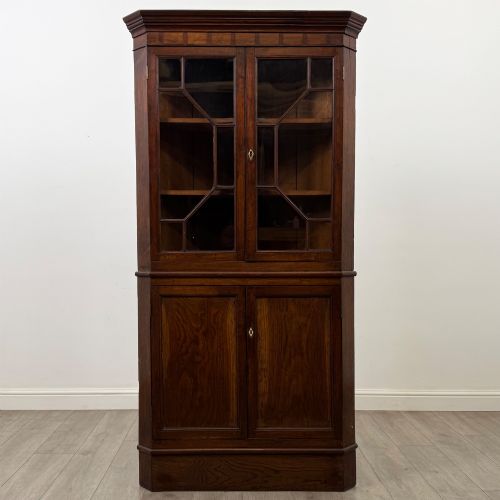
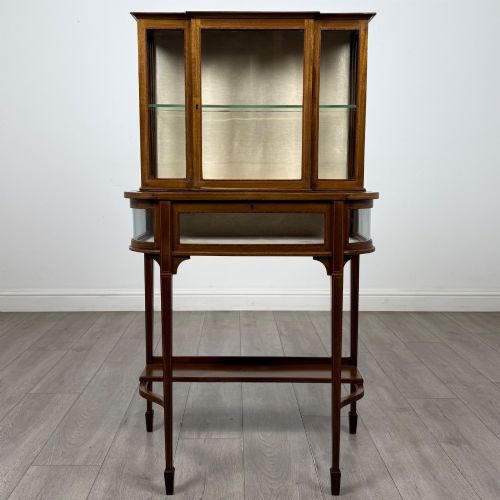
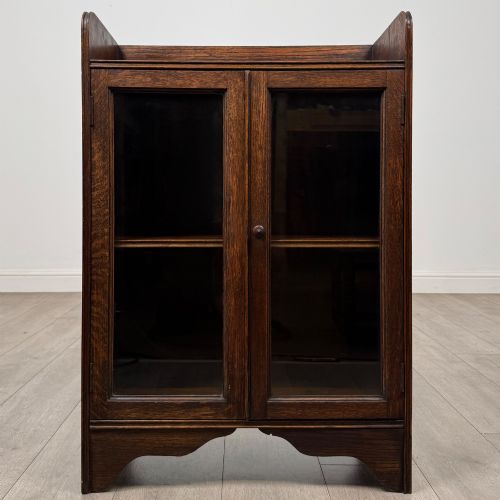
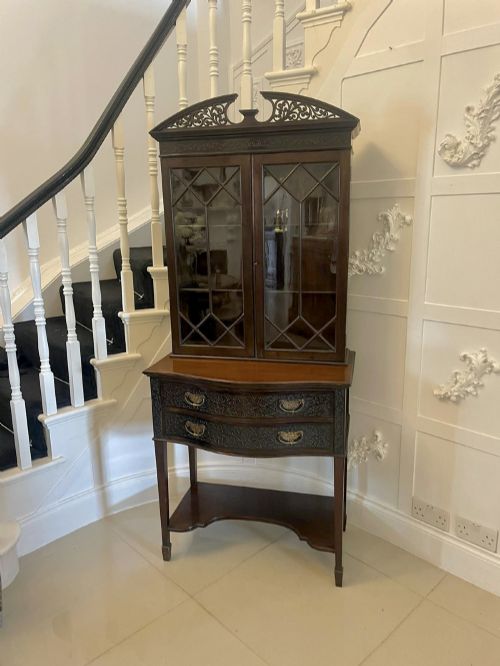
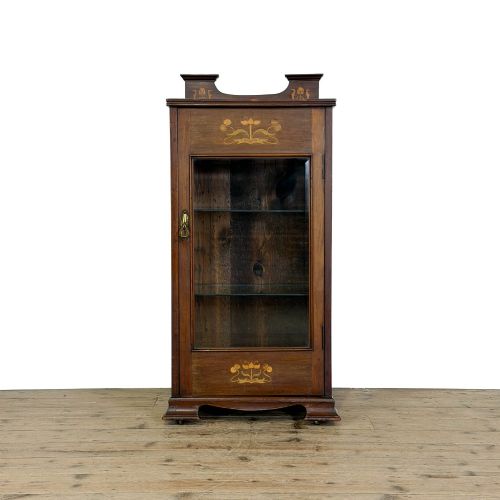
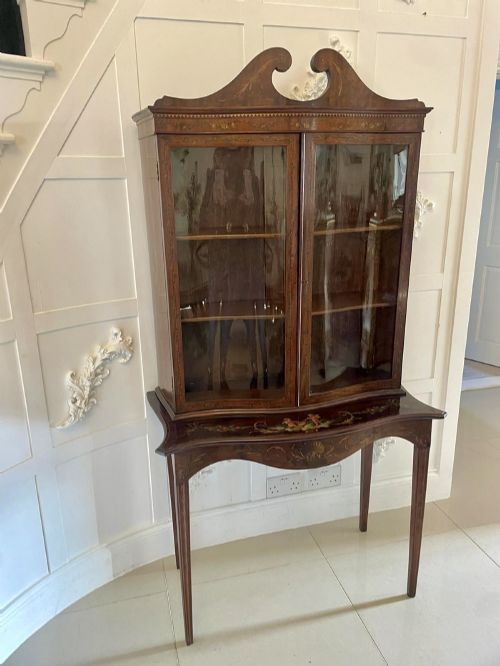
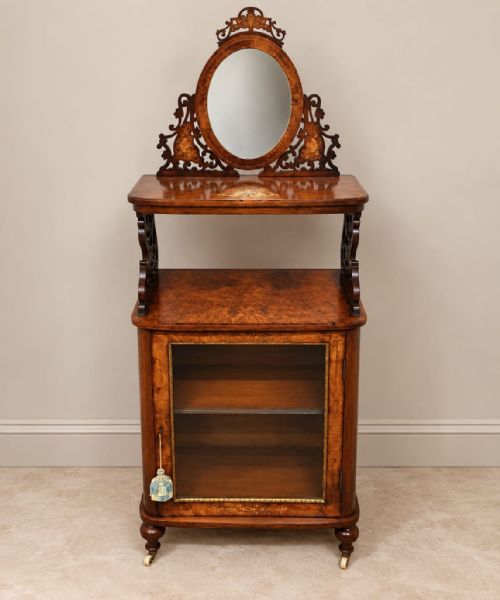
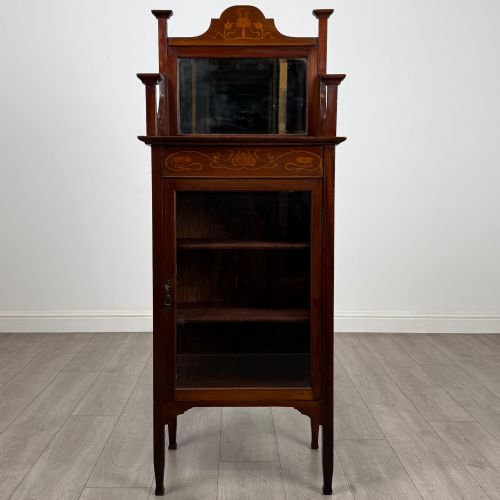
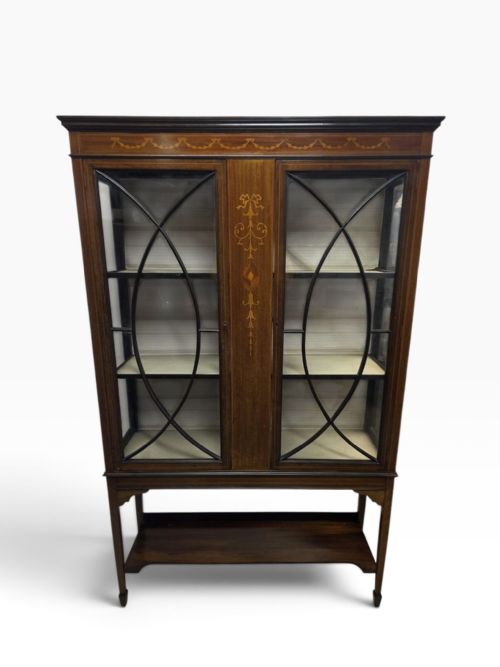
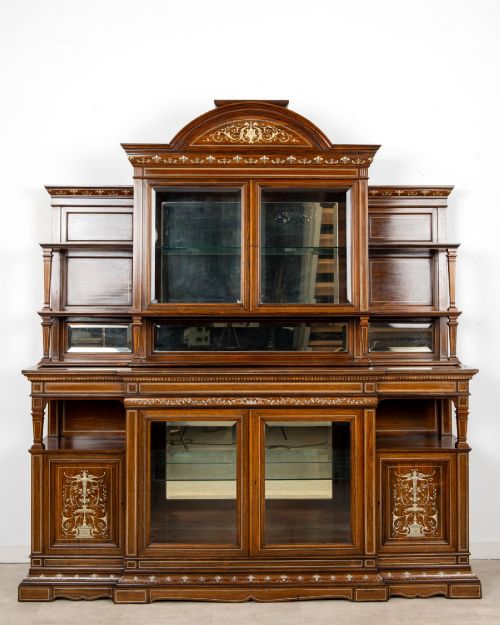
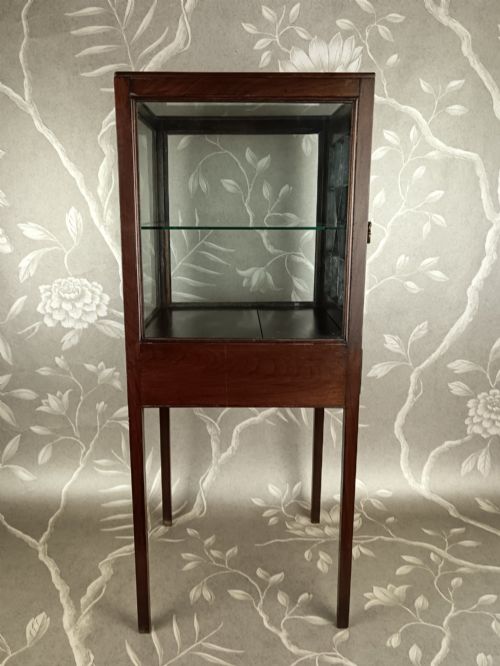
A standing glazed cabinet is a floor-based piece of furniture designed to display and protect objects behind glass doors or panels. These pieces span several centuries of design, appearing as tall display cabinets, bookcases, music cabinets, side cabinets, and floor-standing corner cupboards.
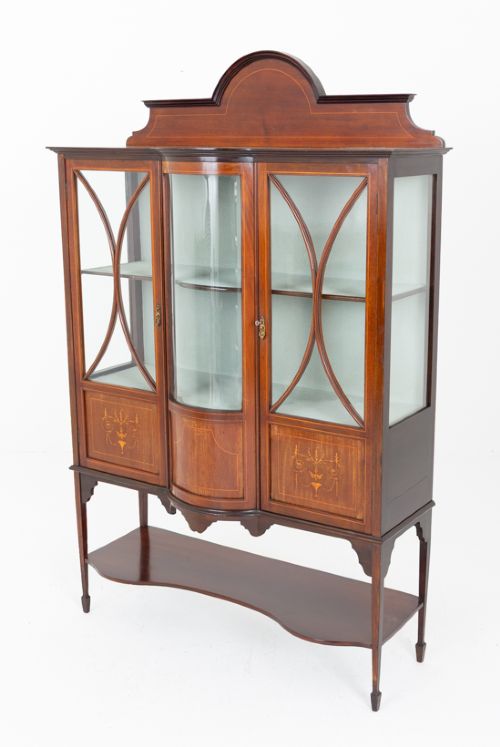
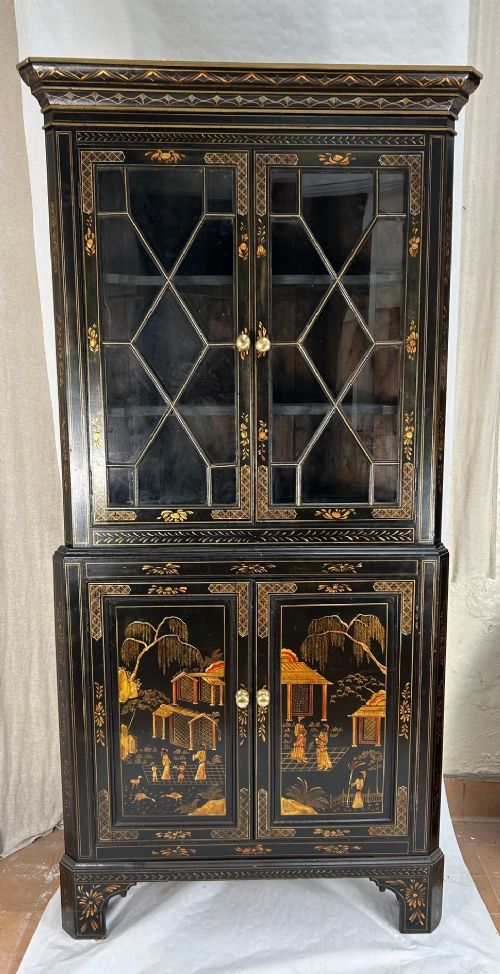
Edwardian and Victorian iterations dominate the selection here, alongside Georgian examples and early twentieth-century pieces. Makers constructed them in straight-fronted, bow-fronted, and two-part corner formats to suit both wall spaces and room angles.
The primary forms include tall upright display units, lower side cabinets, and architectural corner cupboards designed to fit snugly into architectural spaces. Many incorporate shelving behind astragal glazed or plain glass doors to show off contents clearly.
How they were made
Cabinet makers relied heavily on mahogany as a primary timber, frequently pairing it with satinwood inlay, marquetry, and brass hardware. Oak, walnut, rosewood, pine, and bamboo also form the structural carcasses of these pieces.
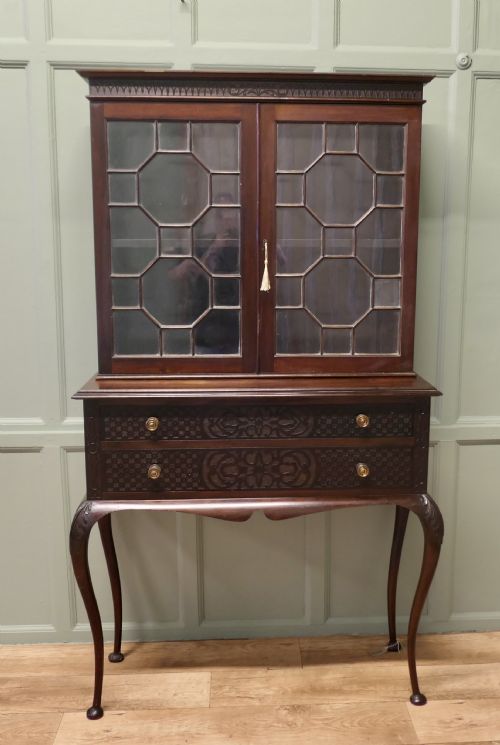
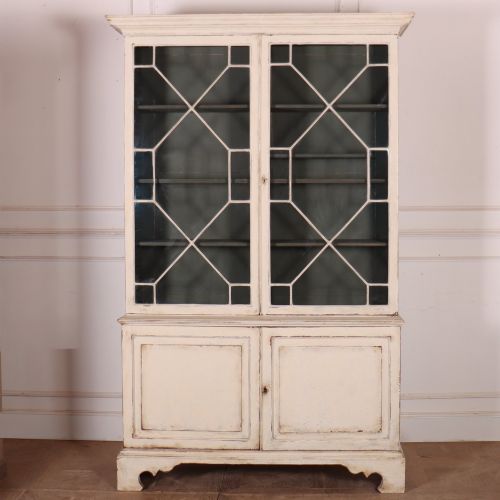
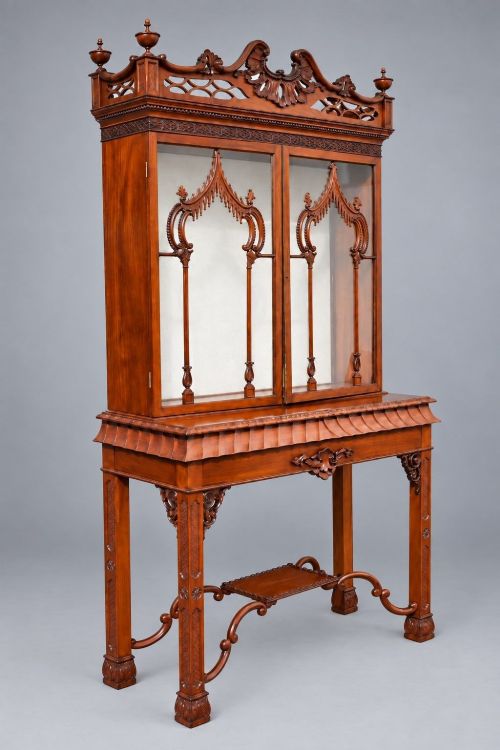
Glazing techniques range from simple flat glass panes held by timber bars to complex astragal glazed frameworks and Chinese Chippendale lattice patterns. Painted decoration, fabric linings, and carved wooden details finish the surfaces of finer examples.
Standing Glazed Cabinet Retail Price Guide 2026
Typical asking prices for standing glazed cabinet among the pieces listed under this phrase on Sellingantiques today, from the lower quarter to the upper quarter. They describe what is for sale here now, not the wider market.
Listings span cabinet-making traditions from the 18th century through the Georgian, Victorian, and Edwardian eras down to the 1930s.
What varies in quality
The standard of craftsmanship relies on the precision of the timber joinery, the subtlety of any inlay work, and the integrity of the original glass. Finer items exhibit careful selection of figured veneers such as burr walnut or patterned mahogany.
Proportion and decorative restraint separate standard production pieces from exceptional ones. Cabinets bearing attributed or known workshop designs often display more refined carving, superior brass fittings, and balanced architectural detailing.
Collinson & Lock·Maple & Co.·Leonard Wyburd·Liberty and Co
The Standing Glazed Cabinet Glossary
- Astragal glazed
- A method where wooden bars divide glass panes into smaller geometric sections. These delicate framework patterns define many Georgian and revival display pieces.
- Vitrine
- A glass-sided display cabinet used primarily for showing porcelain, silver, or curiosities. The term implies a lighter, more decorative construction than a heavy bookcase.
- Marquetry
- Decorative woodwork where pieces of veneer are fitted into a background panel to form pictures or ornamental patterns. It appears frequently on Edwardian cabinet doors.
- Corner cupboard
- A specialised storage unit built to fit directly into the internal corner of a room. Versions range from single-door floor-standing cupboards to grand two-part architectural forms.
- Sheraton Revival
- A late nineteenth and early twentieth-century design movement mimicking the neoclassical furniture styles of Thomas Sheraton. Pieces usually feature refined mahogany, satinwood inlay, and tapered legs.
Standing Glazed Cabinet: Frequently Asked Questions
What is a standing glazed cabinet used for?
These pieces were traditionally built to protect and display delicate ceramics, silver, glassware, and treasured library books. The glass doors kept dust at bay while allowing the owner to view the contents easily from across the room.
Today, they serve much the same purpose in modern homes, providing upright storage that turns everyday collections into a decorative feature.
How do I tell an Edwardian cabinet from a Victorian one?
Victorian cabinets tend to feature heavier proportions, deeper wood tones, and robust carvings reflecting nineteenth-century industrial and artistic shifts. Mahogany and walnut dominate this period with an emphasis on solid presence.
Edwardian cabinets often showcase lighter construction, brighter mahogany veneers, and delicate Sheraton Revival satinwood inlay or marquetry. The overall aesthetic feels airier and more restrained than earlier Victorian output.
Where should I place a corner cabinet?
Corner cabinets are specifically engineered to occupy unused internal room angles efficiently without projecting far into the main floor space. Floor-standing variants rest securely on a bracket or plinth base directly against the walls.
They work well in dining rooms or drawing rooms to anchor empty corners while adding vertical display area.
What woods were commonly used?
Mahogany is the predominant timber found across these listings, prized for its stability and rich reddish-brown grain. Walnut, figured walnut, oak, and pine also appear frequently depending on the regional origin and period.
Cabinet makers often enhanced these woods with contrasting satinwood inlays, boxwood stringing, or painted decorative motifs.