
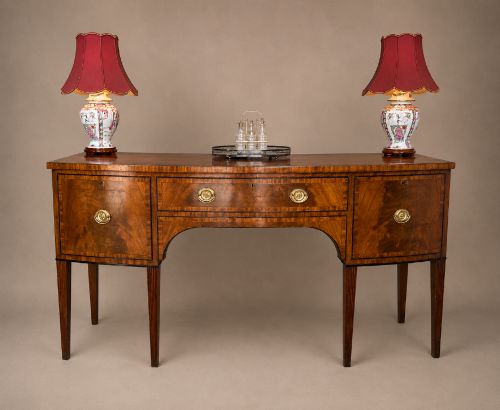
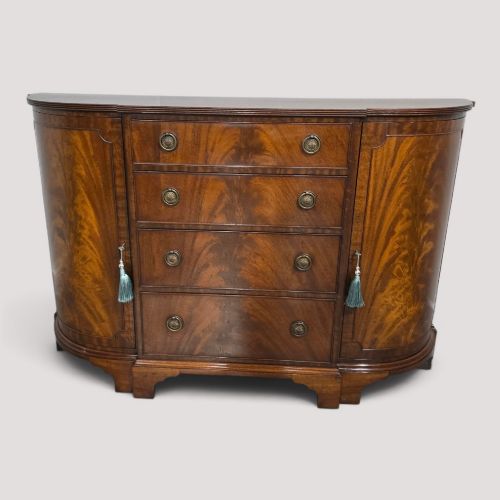
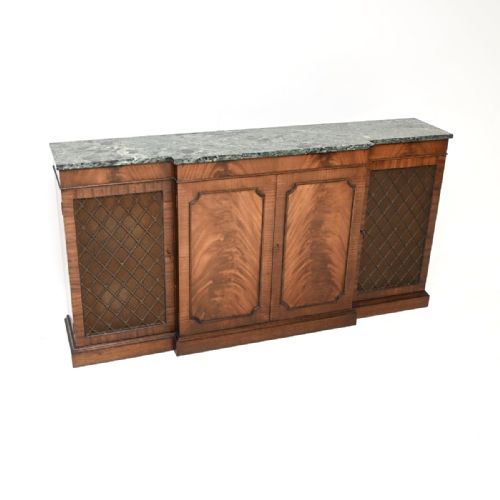
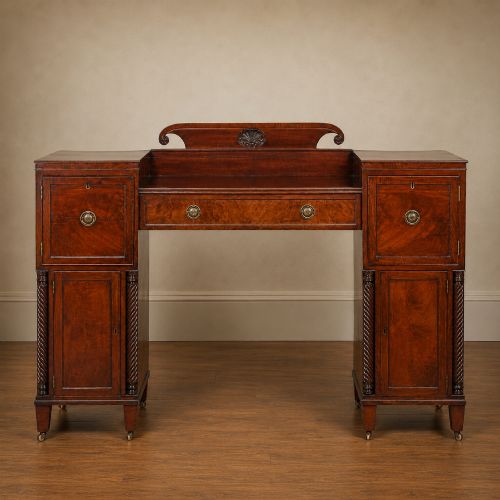
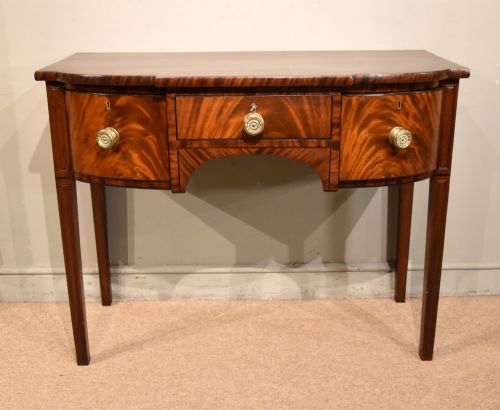
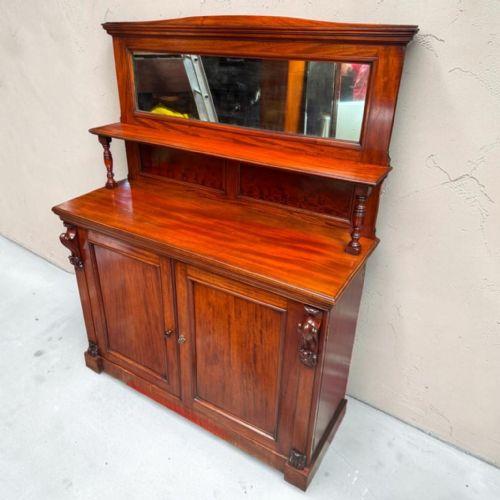
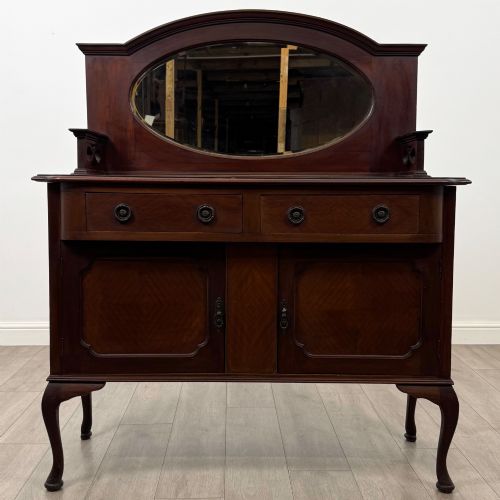
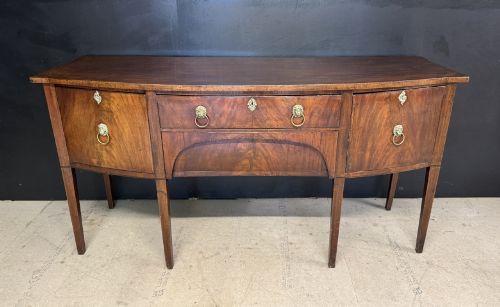
Vintage Mahogany Dining Credenza
A vintage mahogany dining credenza brings enduring timber character and formal presence to a room, offering deep storage for silver and linen.
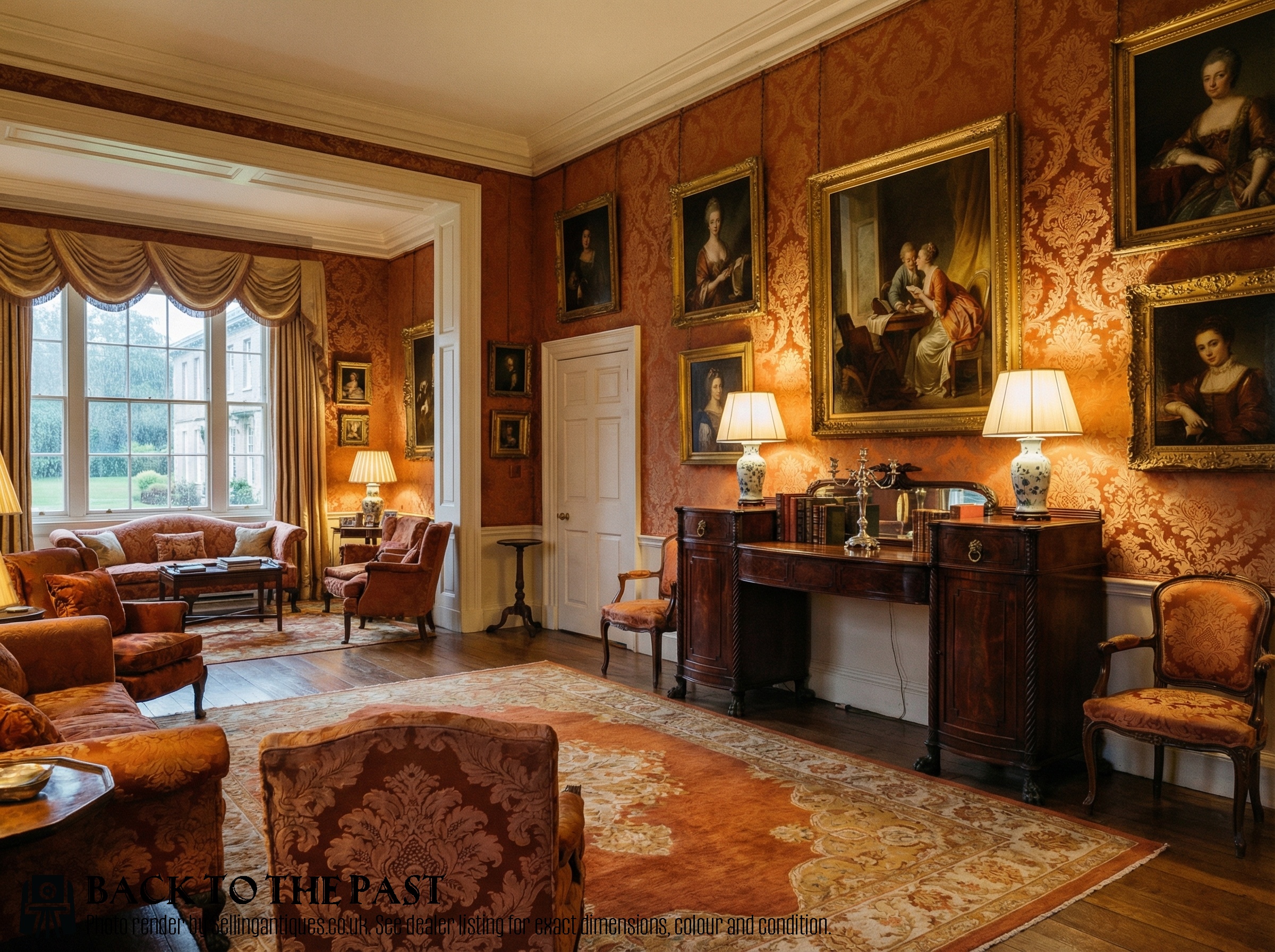
Vintage Mahogany Dining Credenza
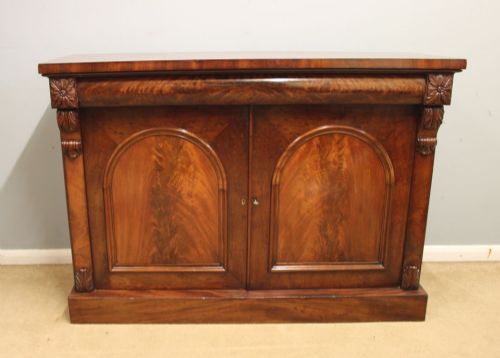
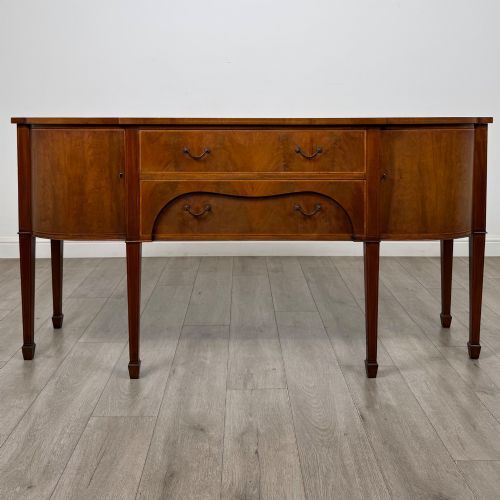
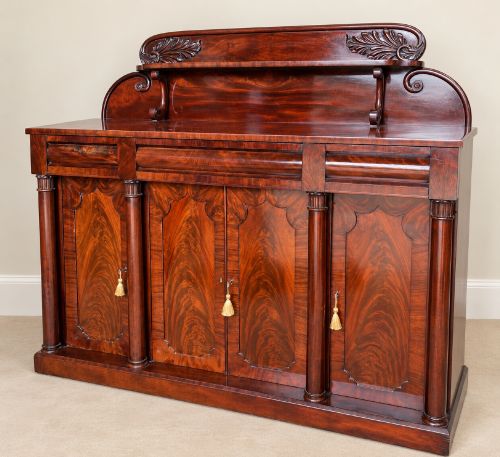
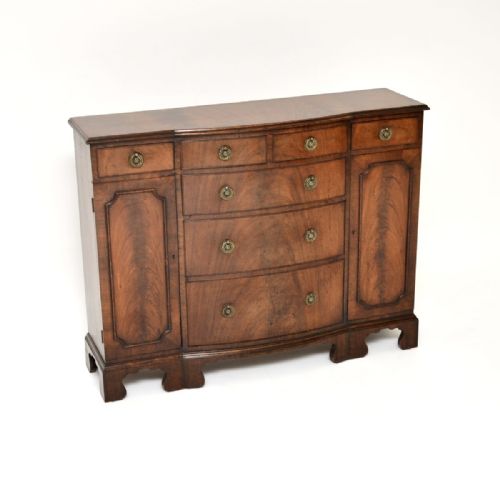
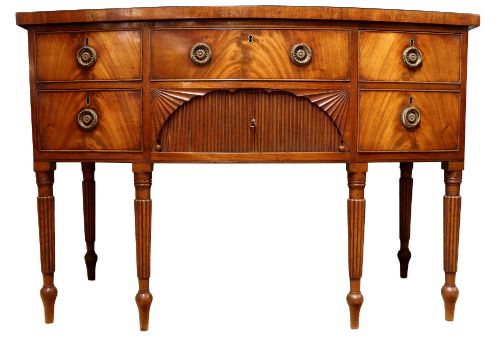
When you search for a vintage mahogany dining credenza, you encounter a variety of substantial storage furniture built for the dining room. These pieces appear under several historical names including sideboards, buffets, chiffoniers, and side cabinets.
The selections span distinct historical eras, ranging from authentic Georgian and Regency origins through Victorian designs to Edwardian and early twentieth century revivals. The forms include bow fronts, breakfronts, demi lune shapes, and pedestal configurations.
Most examples you meet on this page lean towards the Edwardian period and early twentieth century revivals, alongside nineteenth century pieces. They utilise rich timber figures to anchor a dining space with functional surface area and enclosed shelving.
Distinguishing quality across the range
Quality rests primarily in the selection of the timber veneer and the precision of the cabinet work. Pieces featuring bookmatched flame mahogany or intricate satinwood inlay sit at a higher level than plain surfaces.
The architectural ambition of the form dictates distinction. A breakfront or pedestal sideboard demands greater joinery skill than a simple straight or bow front cupboard.
Proportion and hardware integrity complete the distinction between standard production and exceptional work. Original brass mounts, crisp stringing, and balanced proportions elevate the presence of the piece.
Listings span multiple eras from Georgian and Regency origins through Victorian designs to Edwardian revivals.
M. D. Miller & Sons
The Vintage Mahogany Dining Credenza Glossary
- Bow front
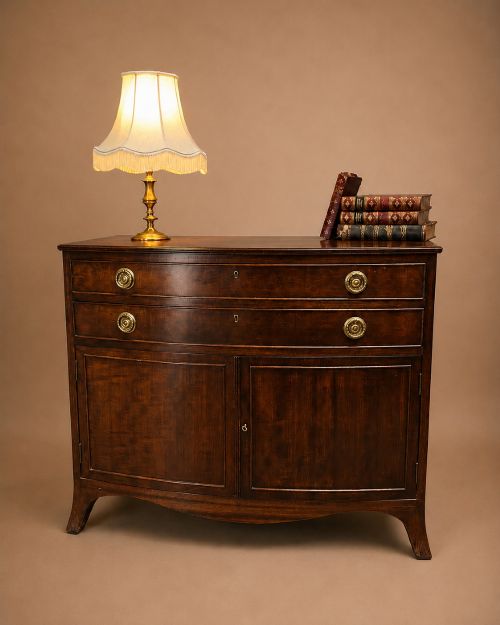
- A cabinet front that curves outward in a convex arc. This shape softens the linear geometry of a dining room.
- Breakfront
- A large piece where the central section projects forward from the flanking outer cabinets. It creates a layered architectural facade.
- Flame mahogany veneer
- Thin slices of timber cut from wood where branches meet the trunk, revealing a flickering flame pattern. Cabinet makers applied these to drawer fronts for visual movement.
- Pedestal sideboard
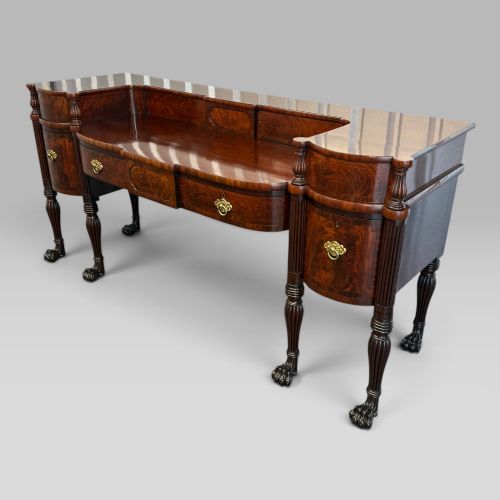
- A form featuring two independent pedestals flanking a central serving table, typical of the Regency period. It offers substantial cupboard storage beneath tabletop surfaces.
- Satinwood inlay
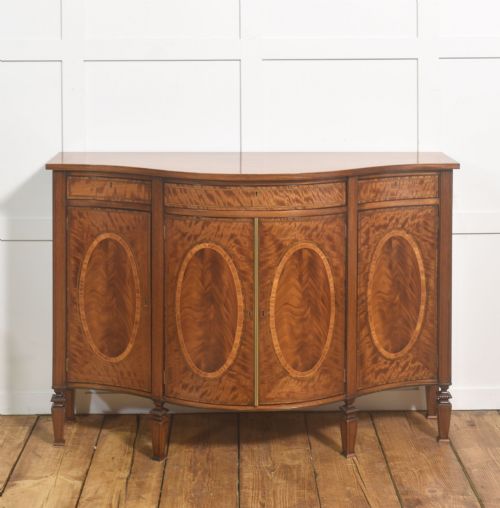
- Contrasting pale yellow timber inserted into recessed channels within the darker mahogany surface. It provides delicate linear framing to drawers and doors.
Vintage Mahogany Dining Credenza: Frequently Asked Questions
What is a vintage mahogany dining credenza?
A vintage mahogany dining credenza is a large storage unit designed for the dining room, combining drawers and cupboards for tableware.
These pieces draw on historical styles from the Georgian, Regency, Victorian, and Edwardian periods, utilising rich mahogany timbers.
How do I identify a Regency sideboard?
Regency sideboards often feature bold architectural lines, lion paw feet, or pedestal designs reflecting early nineteenth century neoclassical tastes.
They rely on figured mahogany veneers and minimal brass hardware rather than heavy Victorian ornamentation.
Where should I place a bow front sideboard?
A bow front sideboard suits a dining room or large hallway where its curved profile softens the surrounding walls and corners.
Ensure adequate clearance around the piece so doors and drawers can open fully without obstruction.
What is Sheraton revival style?
Sheraton revival furniture reinterprets late eighteenth century neoclassical designs during the Edwardian era.
These pieces typically showcase symmetrical proportions, satinwood inlay, and tapered legs.