


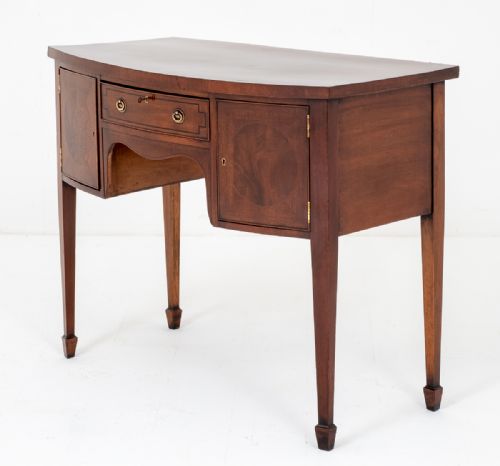


Classic Georgian Buffet Table
A classic georgian buffet table brings structural grace and rich timber tone to a dining room.
Classic Georgian Buffet Table
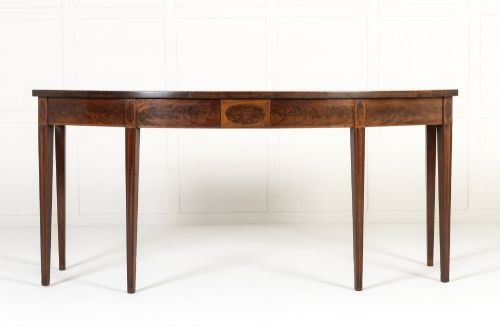
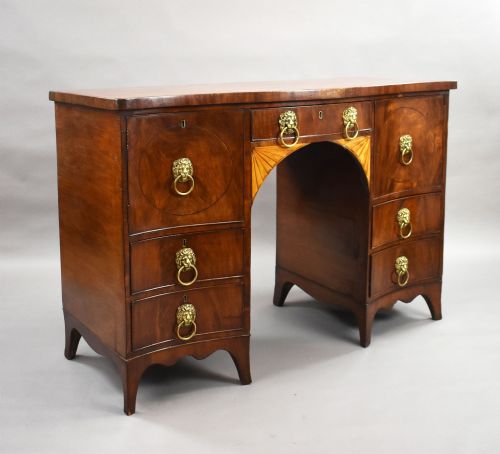
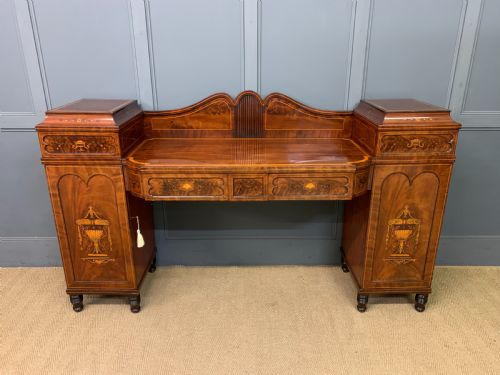
When you search for a classic georgian buffet table, you are looking at substantial dining furniture designed for serving food and displaying silver during the eighteenth and nineteenth centuries. The pieces on this page span the 18th century, the Georgian era, and later revivals from the Victorian period up to 1910.
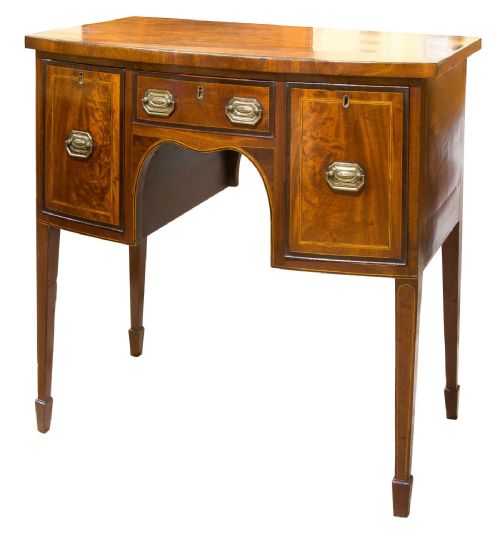
You will most frequently meet sideboards, serving tables, and bowfront forms rather than pedestals. Makers constructed these items primarily in mahogany, often incorporating boxwood and satinwood inlay to define the edges and drawer fronts.
How they were made
Cabinet makers worked predominantly in solid mahogany and mahogany veneers, selecting timber for deep grain patterns and warm colour. They built rigid frames to support heavy porcelain and silver serving dishes during large meals.
Craftsmen added decorative contrast by incorporating boxwood inlay and satinwood inlay around drawer borders and tabletops. These linear details required precise hand-cutting and fitting into recessed channels within the primary mahogany structure.
The furniture spans several eras, including eighteenth-century pieces, Georgian items, and later revival styles up to 1910.
What varies in quality
The distinction between standard and superior pieces rests on the choice of timber and the precision of the cabinet work. Finer examples display carefully matched mahogany grain across multiple drawers and crisply executed satinwood and boxwood inlay.
Structural integrity and original surface patination separate modest interpretations from exceptional ones. Tables that retain their original brass hardware and smooth drawer operation hold greater integrity than those altered over time.
The Classic Georgian Buffet Table Glossary
- Bowfront
- A curved cabinet front that swells outward in the centre. This shape softens the rectangular geometry common in dining room furniture.
- Inlay
- A decorative technique where contrasting woods are inserted into the surface of a primary piece. Boxwood and satinwood provide pale linear contrast against dark mahogany.
- Serpentine
- A gently undulating front edge featuring a convex centre flanked by concave curves. It requires advanced woodworking skill to shape accurately.
- Pedestal
- A separate supporting pillar or column structure beneath the ends of a sideboard. These support the main serving surface above.
Classic Georgian Buffet Table: Frequently Asked Questions
What is a classic georgian buffet table used for?
These tables served primarily as auxiliary surfaces in dining rooms during formal meals. Households placed dishes, platters, and silverware upon them before serving.
Today, buyers utilise them in dining spaces or large hallways for storage and display purposes. Their substantial top surfaces and drawer compartments offer practical utility for modern homes.
How do I identify a georgian piece?
Look for traditional timber choices such as mahogany combined with boxwood or satinwood inlay. The proportions follow classical design rules established during the eighteenth century.
Note that listings also include revival periods from the nineteenth century and 1910. Examining construction methods and timber ageing helps determine the exact period of manufacture.
How should I care for mahogany furniture?
Keep wooden surfaces away from direct sunlight and extreme temperature shifts to prevent timber splitting. Regular dusting with a soft, dry cloth preserves the finish.
Avoid chemical polishes that can build up a hazy residue over time. A traditional wax application applied sparingly maintains the natural lustre of the wood.