


Antique Wooden Dining Server
An antique wooden dining server brings architectural presence and practical surface space to a room, anchoring the service of food with period craftsmanship.
Antique Wooden Dining Server
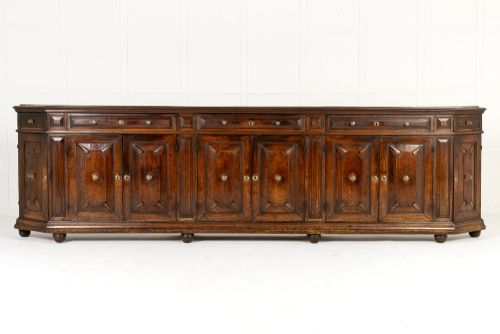
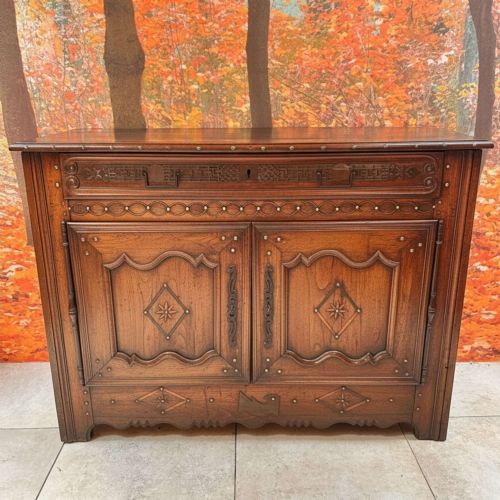
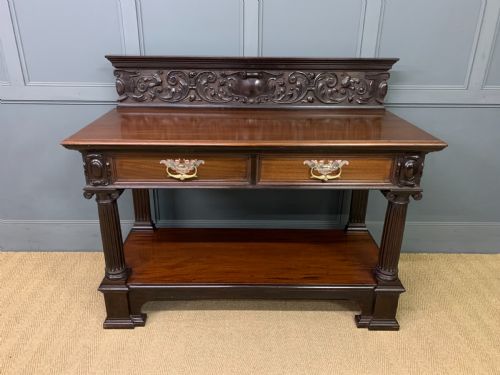
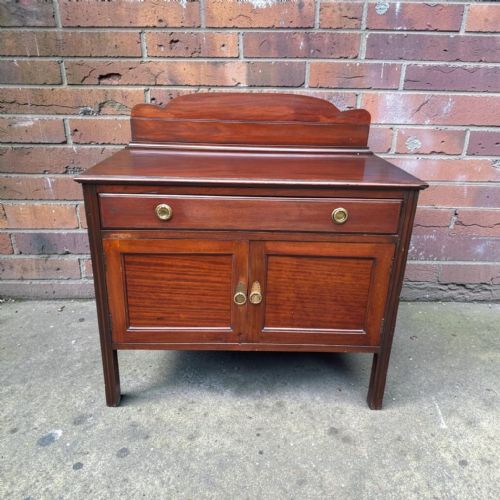
An antique wooden dining server encompasses sideboards, buffets, credenzas, and serving tables designed for the dining room. These pieces function as heavy storage and display units for tableware, linens, and food service items during meals.
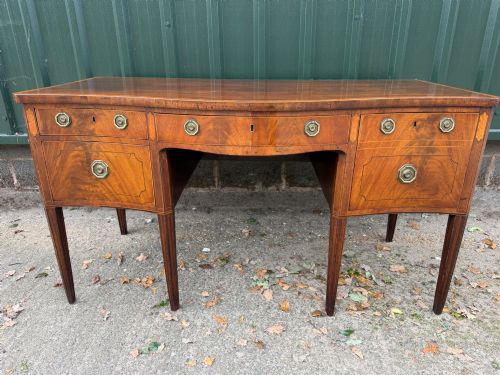
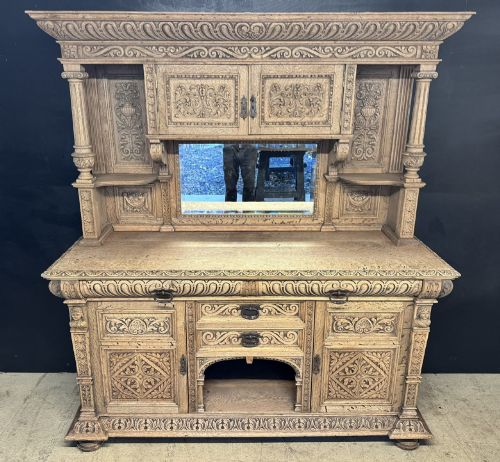
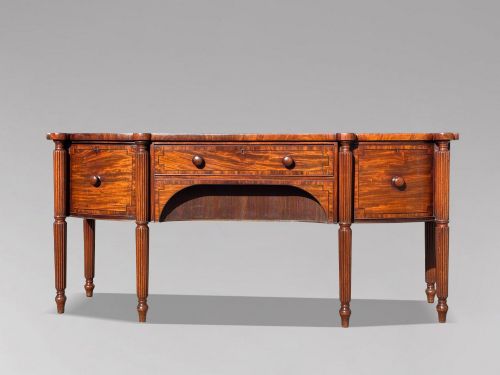
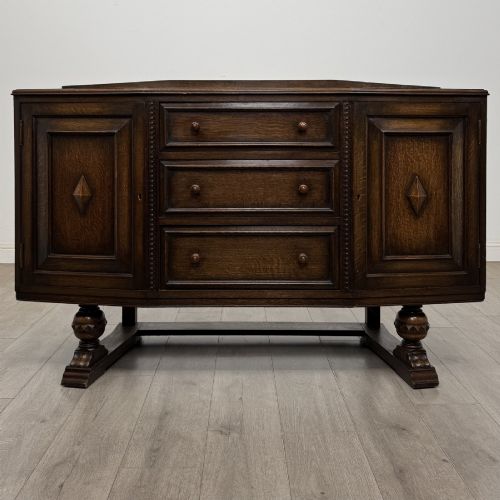
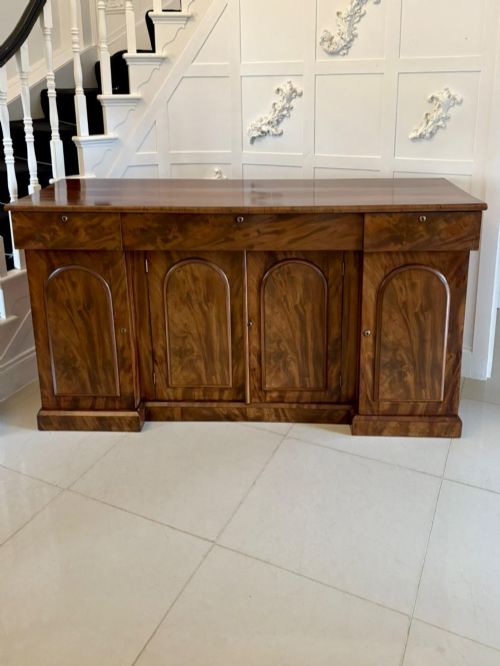
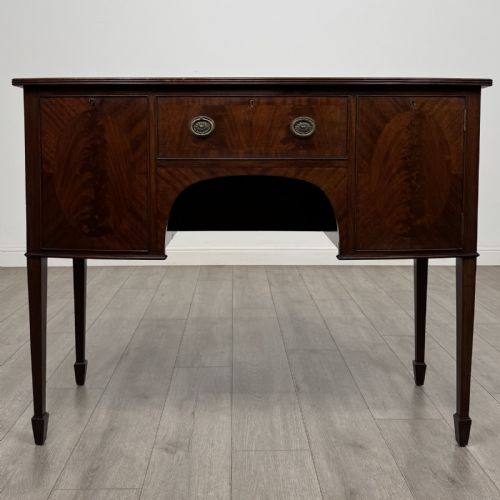
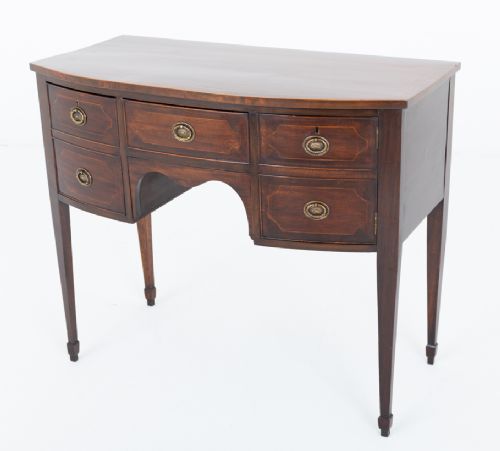
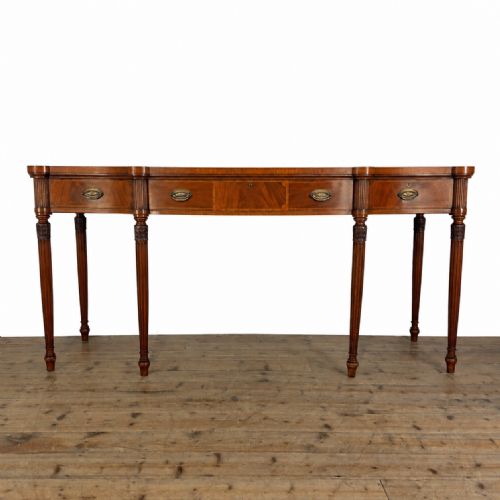
The versions most commonly found here date from the Georgian, Victorian, and Edwardian eras, executed in forms ranging from straightforward bow-fronts to grand mirror-backed credenzas. Makers of the 18th and 19th centuries utilised substantial timber frameworks to build these heavy storage units.
Regional variations and stylistic movements, such as Regency curves or Art Deco geometries, dictate the specific silhouette of each piece. Buyers encounter forms ranging from two-tiered chiffoniers to large breakfront sideboards.
Materials and construction methods
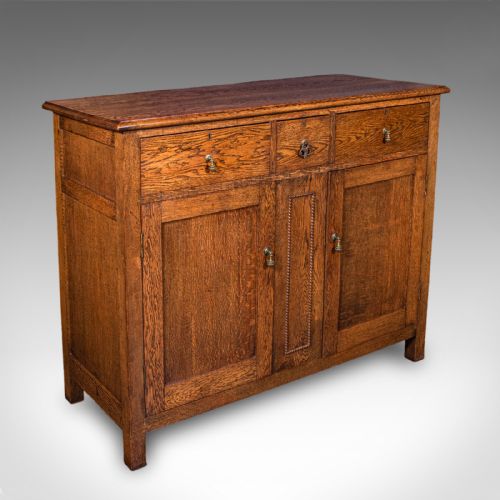
Cabinet makers relied heavily on solid hardwoods like mahogany and oak, frequently applying flame mahogany veneer, burr walnut, or satinwood to primary surfaces for visual depth. Secondary structural components utilised sturdy timbers to support the weight of marble tops, glass inserts, and heavy cutlery sets.
Decorative detailing involved intricate boxwood and brass inlay, hand-carved mouldings, and figured grain matching across drawer fronts and cupboard doors. These techniques required precise joinery to ensure timber stability across large serving surfaces over centuries of use.
Antique Wooden Dining Server Retail Price Guide 2026
Typical asking prices for wooden dining server among the pieces listed under this phrase on Sellingantiques today, from the lower quarter to the upper quarter. They describe what is for sale here now, not the wider market.
Listings span several centuries of cabinet making, ranging from 18th-century Georgian designs to 1930s Art Deco pieces.
Distinguishing quality across pieces
The tier of a piece rests upon the selection of timber veneers, where highly figured mahogany or burr walnut demonstrates superior material choice. Finer examples display meticulous grain continuity across multiple drawers and doors rather than mismatched sections.
Construction integrity separates standard utility items from exceptional works, visible in the precision of inlaid boxwood lines, hand-carved botanical motifs, and the smooth operation of heavy timber drawers. Superior hardware, such as original brass fittings and integrated cutlery storage, elevates the standing of a server.
Maurice Adams
The Antique Wooden Dining Server Glossary
- Serpentine
- A curved front shape featuring a convex centre flanked by concave sides. This undulating profile requires advanced woodworking skill.
- Chiffonier
- A compact sideboard or low cupboard often fitted with shelving or a raised superstructure. It served smaller dining spaces in Victorian households.
- Breakfront
- A cabinet design where the central section projects forward from the flanking wings. This architectural arrangement creates depth and visual interest.
- Buffet
- A sideboard specifically arranged for the placement of food and drink service. Examples often include multiple tiers or rise and fall mechanisms.
- Pedestal sideboard
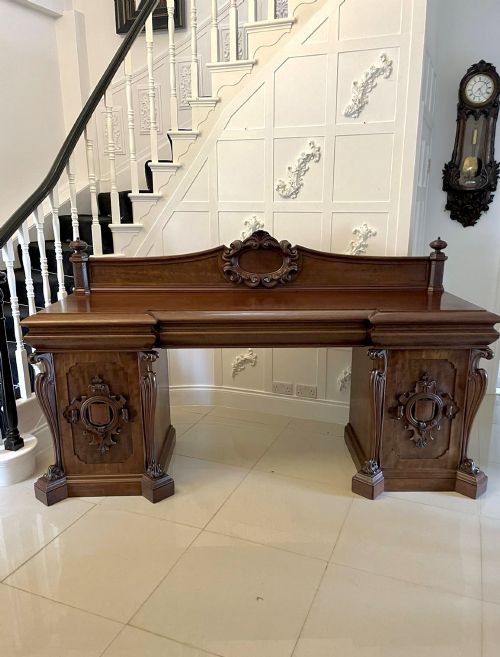
- A form consisting of two separate pedestals joined by a central serving table or board. This layout dominated formal dining rooms during the Regency period.
Antique Wooden Dining Server: Frequently Asked Questions
What is the difference between a sideboard and a buffet?
Sideboards generally focus on enclosed storage for dishes and linens, featuring cupboards and drawers beneath a flat top. Buffets emphasise open or tiered surfaces designed explicitly for food and drink service during meals.
Historical usage separated these functions within formal dining rooms, though makers often blended the terminology across the Georgian and Victorian periods.
How do I date an antique wooden dining server?
Dating relies on identifying stylistic markers, timber selections, and construction methods characteristic of specific periods like the Georgian era or the Edwardian decade. Straight lines and classical inlay point towards the late 18th century, while heavier carved mirror backs indicate Victorian manufacturing.
Examining the interior drawer construction and secondary timbers provides further chronological clues regarding when the piece was assembled.
Where should I place a serving table in my home?
These pieces suit dining rooms, large hallways, or spacious living areas where their long surface and internal storage prove practical. Placing them against a primary wall allows drawers and cupboards to open fully without obstruction.
Avoid positioning antique timbers in direct sunlight or beside intense heat sources to protect delicate veneers and solid wood panels.
Can I use an antique server for modern storage?
Modern homes frequently utilise these servers as media consoles, hallway storage units, or dining room credenzas for tableware and glassware. The deep cupboards and extensive drawer space accommodate contemporary items while adding architectural character to a room.
Internal modifications, such as removable cutlery trays, allow the furniture to adapt to present-day organizational needs.