
Georgian Dining Room Sideboard
A georgian dining room sideboard is a substantial timber server designed for domestic hospitality, offering deep drawers and cupboards for dining service.

Georgian Dining Room Sideboard
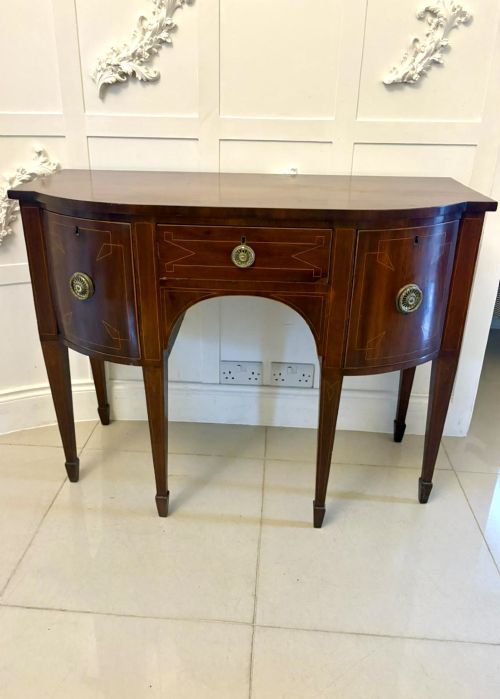
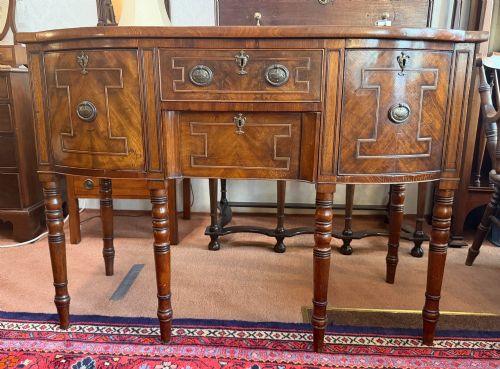
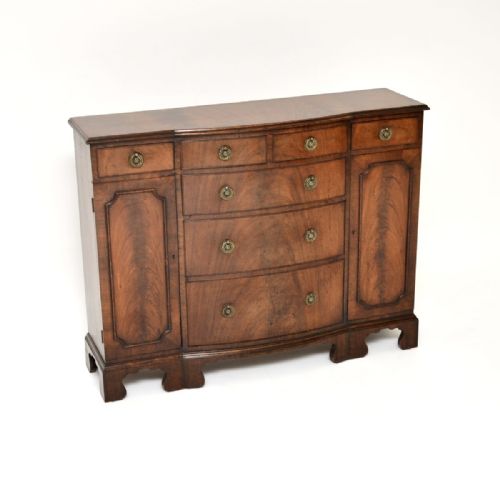
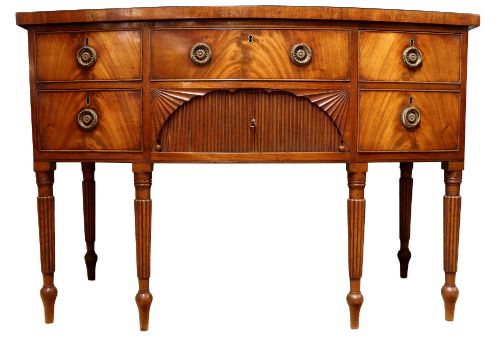
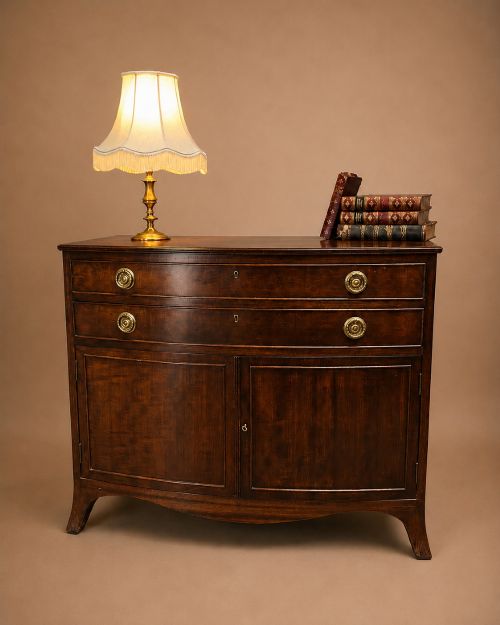
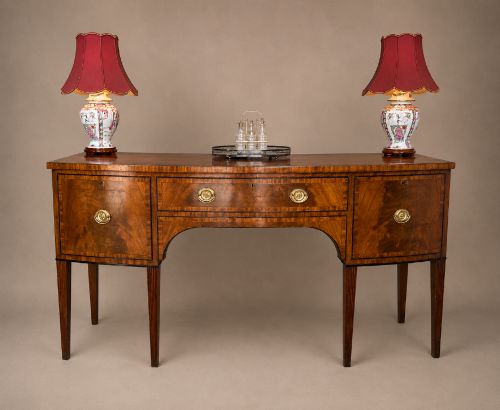
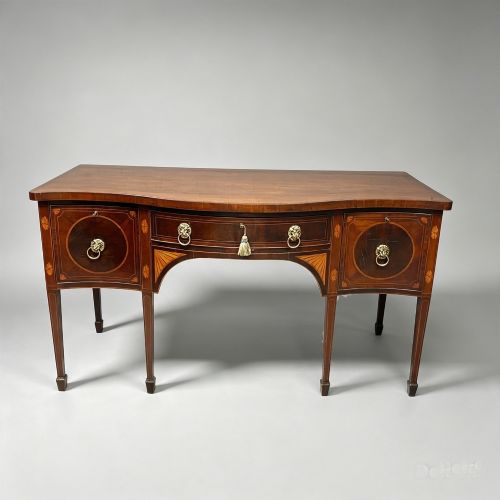
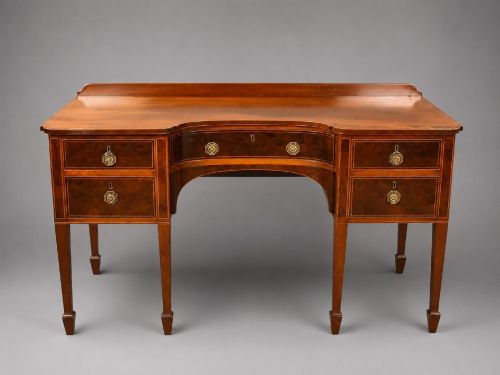
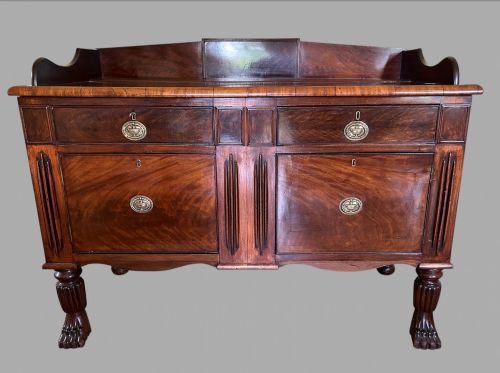
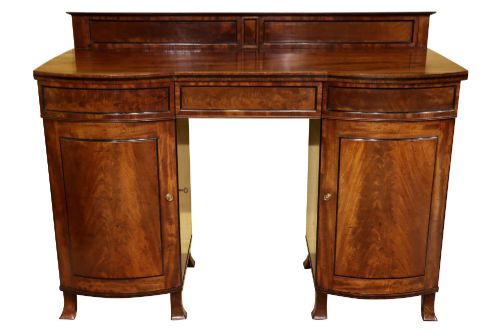
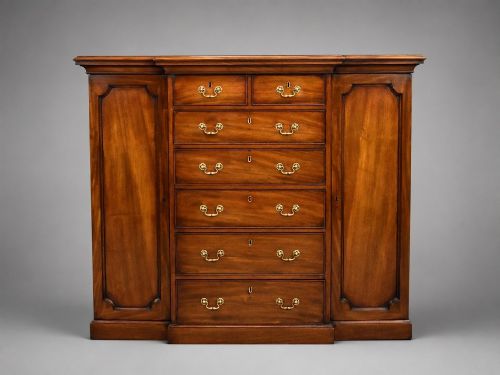
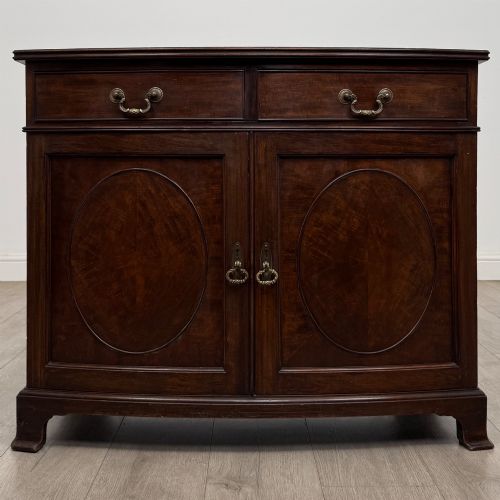
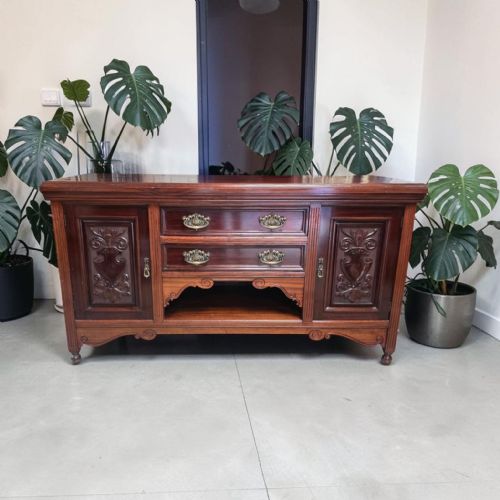
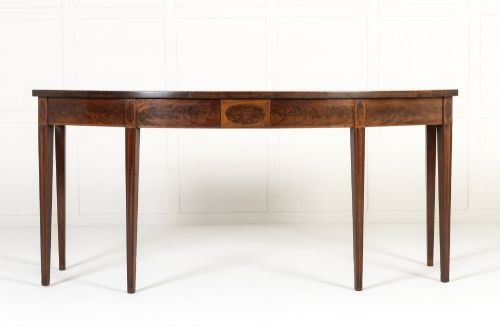
A georgian dining room sideboard spans pieces made during the Georgian, Regency, and George III periods alongside later Revival iterations. The selection encompasses serpentine fronts, bow-front designs, and breakfront profiles executed in solid timber and veneers.
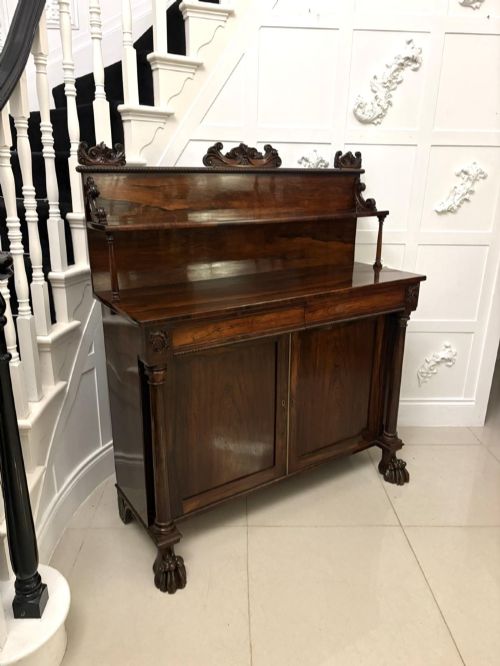
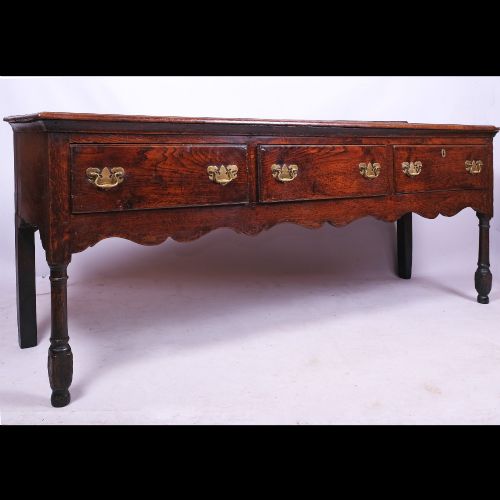
Makers and workshops produced serving tables, pedestals, and chiffoniers alongside traditional sideboards to furnish the dining rooms of large houses. Examples range from compact 18th-century pieces to substantial 19th-century and Edwardian interpretations.
Materials and construction
Construction relies predominantly on mahogany, frequently enhanced by flame mahogany veneer, satinwood inlay, and boxwood stringing. Brass mounts and handles provide functional and decorative contrast against the dark timber surfaces.
Cabinetmakers shaped timber into complex curves for bow-front and serpentine silhouettes, joining drawer linings with traditional hand-cut joints. Inlaid borders delineate panels and drawer fronts with precise geometric or floral motifs.
Several examples include dedicated cutlery boxes designed to keep silver knives secure and organised during grand Georgian dinners.
Craftsmanship and timber selection
The choice of timber creates distinct visual separation, with figured mahogany and matched flame veneers marking out superior examples. Symmetrical grain patterns across drawer banks reflect greater skill in timber selection and preparation.
Execution of inlay work and the integration of brass fittings indicate the standard of production. Clean lines on serpentine or breakfront forms demonstrate higher proficiency among cabinetmakers compared to simpler rectangular carcasses.
M. D. Miller & Sons
The Georgian Dining Room Sideboard Glossary
- Serpentine front
- A furniture front characterised by a curving contour that is convex in the centre and concave at the ends. This shape requires considerable skill from the cabinetmaker to construct.
- Bow front
- A convex, outward-curving front profile commonly found on sideboards and cupboards from the Georgian and Regency eras. It softens the linear appearance of the dining room.
- Breakfront
- A cabinet or sideboard whose central section projects forward from the flanking outer sections. This architectural arrangement creates depth and shadow across the piece.
- Chiffonier
- A low cabinet or sideboard equipped with shelving or cupboards, evolving during the 19th century for dining room storage. It serves a similar function to larger servers.
Georgian Dining Room Sideboard: Frequently Asked Questions
What is a georgian dining room sideboard used for?
These pieces function primarily as serving surfaces and storage units for dining rooms, holding plates, cutlery, and glassware behind cupboard doors and within deep drawers.
Their robust timber construction allowed them to bear heavy dishes during formal meals while adding architectural presence to the room.
How do I identify a George III sideboard?
George III pieces frequently exhibit straight, bow, or serpentine fronts executed in solid mahogany or flame veneer, often accented with fine satinwood and boxwood inlay.
They rely on proportion and timber figure rather than heavy ornamentation to establish their aesthetic authority.
What is the difference between an original and a revival piece?
Original pieces date from the 18th or early 19th centuries and carry the natural wear and structural characteristics of active domestic use over generations.
Revival examples were built during the Victorian, Edwardian, or later periods, copying earlier Georgian or Sheraton styles using period-appropriate construction methods.
How do I care for a mahogany sideboard?
Maintain the timber by keeping the piece away from direct heat sources and sudden humidity changes that can cause veneer to lift or wood to split.
Apply traditional wax polish sparingly to nourish the mahogany grain without building up a heavy, dull film.