
Inlaid Mahogany Sideboard Server
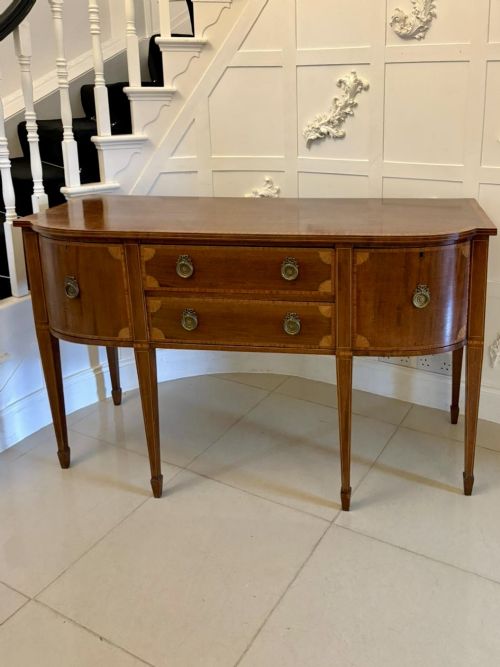
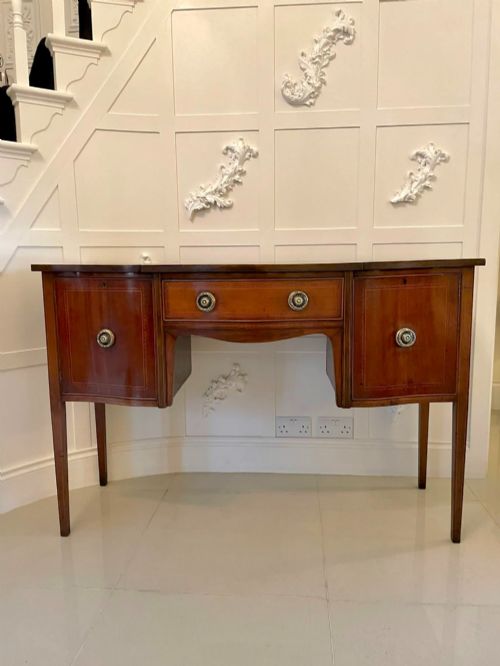
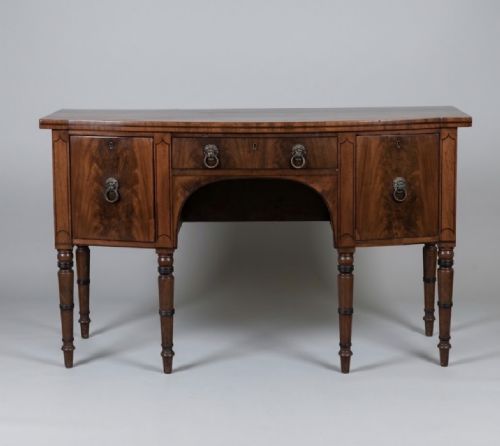
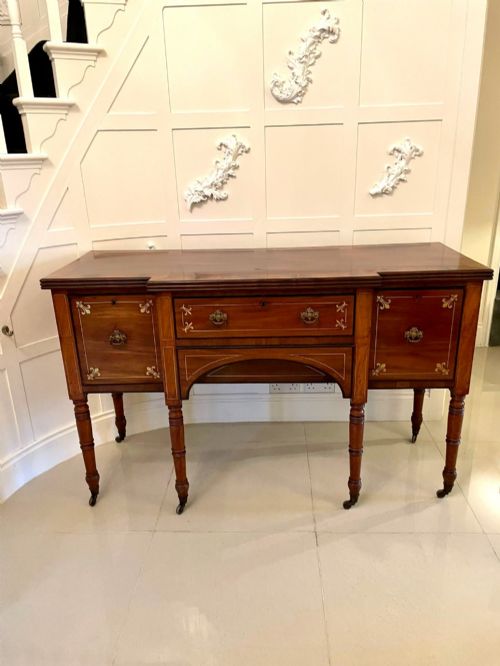
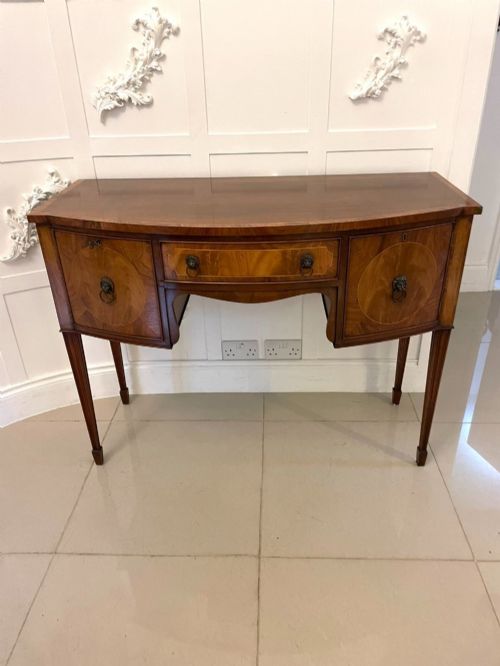
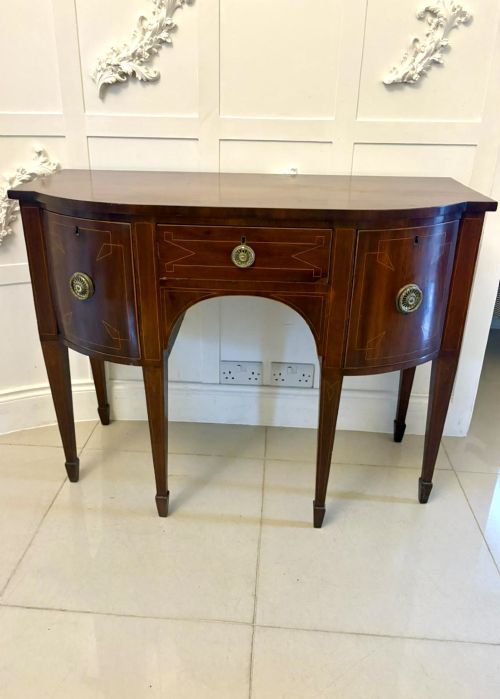
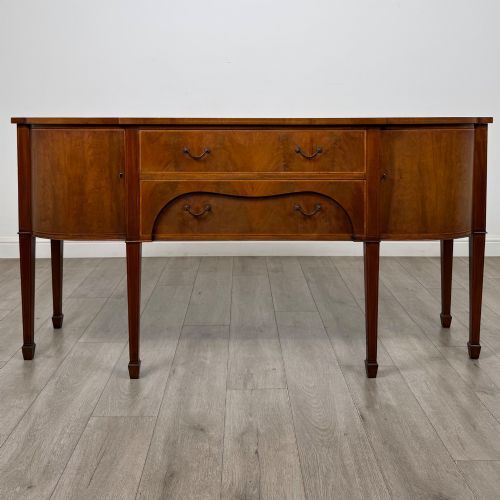
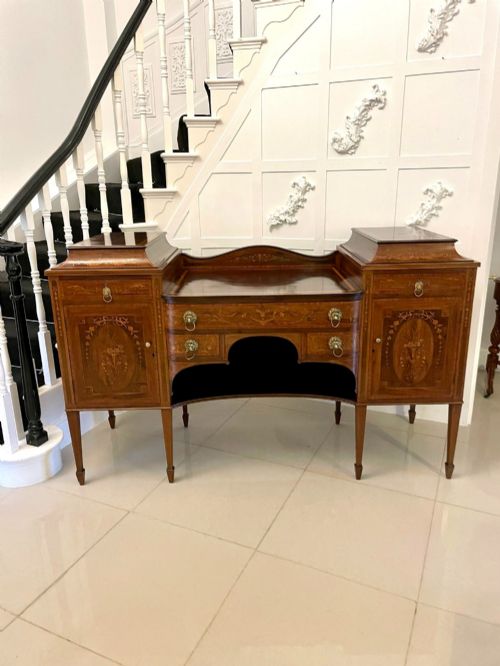
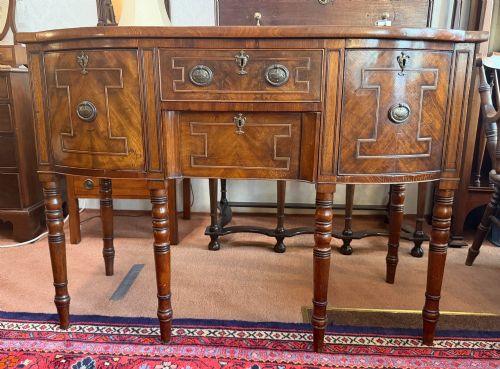
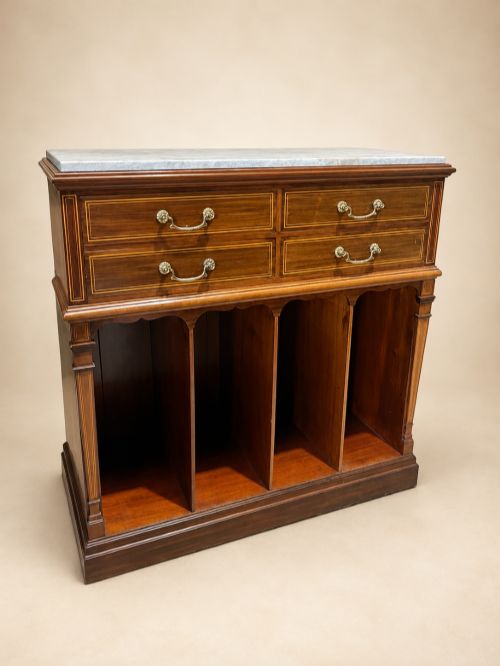
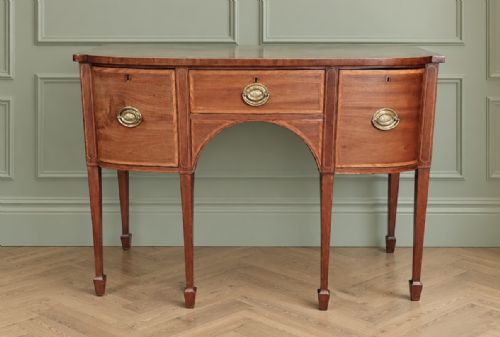
An inlaid mahogany sideboard server brings substantial dining room utility and refined timber grain to an interior.
Inlaid Mahogany Sideboard Server
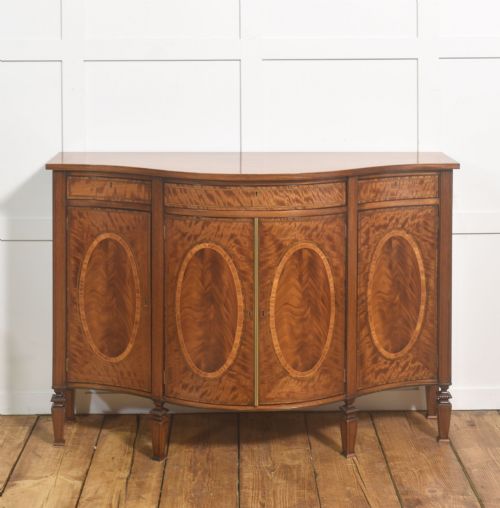
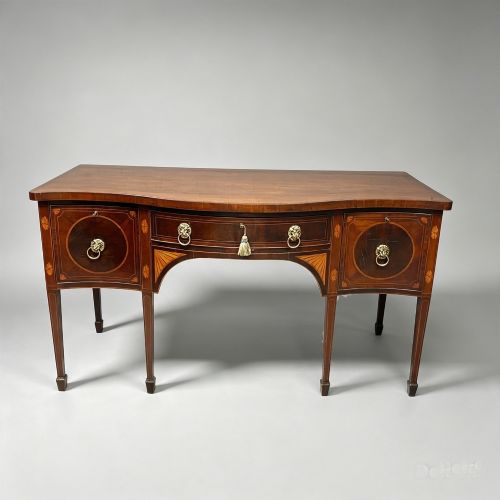
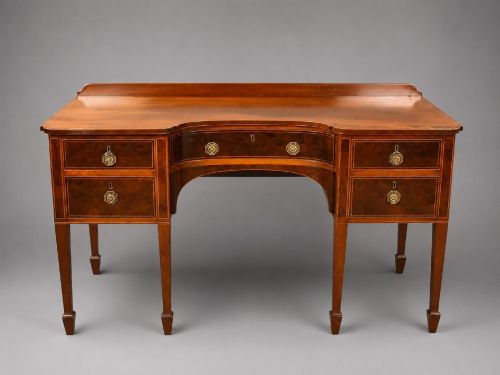
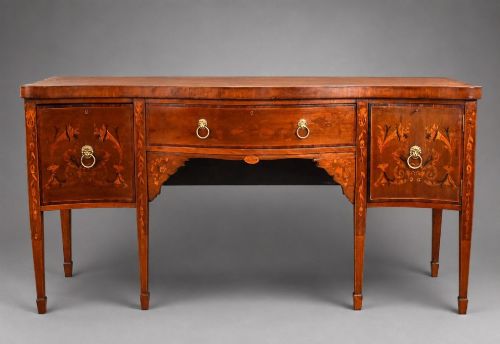
When buyers search for an inlaid mahogany sideboard server, they encounter large dining room storage pieces designed to hold silver, linen, and serving dishes. These items predominantly date from the Georgian, Regency, and Edwardian eras.
Revival pieces from the late nineteenth and early twentieth centuries also appear frequently alongside genuine eighteenth and nineteenth-century examples. They provide the classic formal dining aesthetic established during the Sheraton and Regency periods.
Factors Determining Quality
The sophistication of the timber figure and the precision of the contrasting inlay dictate the visual standard of the piece. Finer examples display complex flame mahogany veneers paired with meticulous boxwood and satinwood stringing.
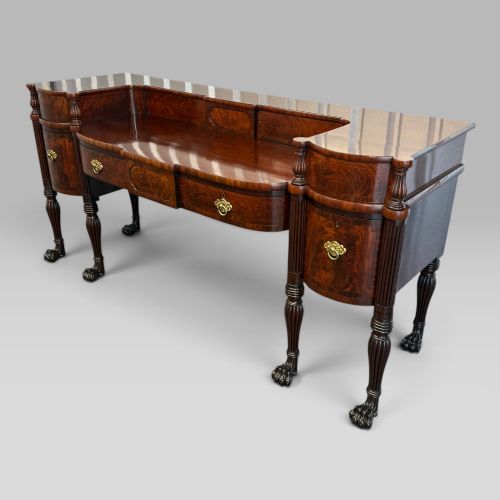
Proportion and form separate standard production from exceptional cabinet work, particularly in challenging shapes like serpentine and breakfront profiles. The integration of original brass hardware and well-executed feet, such as carved lion paw details, further elevates the status of the furniture.
The integrity of the structural carcass and the crispness of the secondary wood selection reflect the original workshop standards. Period authenticity versus later revival execution also shapes the relative standing of individual items.
Some resilient sideboards stand firmly upon carved lion paw feet, ready to pounce on the dinner service.
Hewetsons London
The Inlaid Mahogany Sideboard Server Glossary
- Bow-front
- A convex curved cabinet front that swells outward in the centre. This shape became popular during the late eighteenth century to soften formal dining room lines.
- Serpentine
- A front profile defined by a concave centre flanked by two convex ends, or vice versa. It requires advanced woodworking skill to execute cleanly in solid mahogany.
- Crossbanding
- A narrow strip of veneer laid across the grain of the primary surface, forming a neat border. It frames drawer fronts and table tops on better quality furniture.
- Marquetry
- Elaborate decorative inlay using various tinted woods to form pictorial or geometric patterns. These designs often adorn the central doors or drawer panels of late pieces.
- Breakfront
- A large cabinet form where the central section projects forward from the flanking outer cupboards. This layout creates depth and architectural presence in dining spaces.
Inlaid Mahogany Sideboard Server: Frequently Asked Questions
How do I style an inlaid mahogany sideboard server today?
These large serving pieces anchor a dining room or spacious hallway with strong period character and useful surface area. Pair them with simple lamps, ceramics, or silver to balance the dark timber tones.
Ensure adequate clearance around the bow-front or serpentine curves so the piece functions properly as a serving station during meals.
What is the difference between Georgian and Edwardian Sheraton revival pieces?
Georgian examples were produced during the eighteenth and early nineteenth centuries as functional dining room furniture. They carry the authentic wear and construction methods of active domestic use.
Edwardian Sheraton revival pieces date from around nineteen hundred and recreate the lighter neoclassical aesthetic of the Georgian era using modern workshop techniques.
How do I care for antique mahogany and satinwood inlay?
Keep the timber away from direct sunlight and strong heat sources to prevent the mahogany from fading and the delicate satinwood inlay from lifting. Regular dusting with a soft, dry cloth preserves the polished finish.
Apply a traditional beeswax sparingly when the wood appears dry, buffing gently to maintain the natural sheen of the grain.
What storage features should I expect inside?
Most variants contain a combination of central cutlery drawers flanked by deeper cupboards designed for bottles or linens. Stage-back versions include small shelving tiers mounted on the rear top surface.
Interior layouts vary by overall size, with smaller sideboards offering compact single cupboards and larger breakfronts providing extensive divided compartments.