

Georgian Credenza
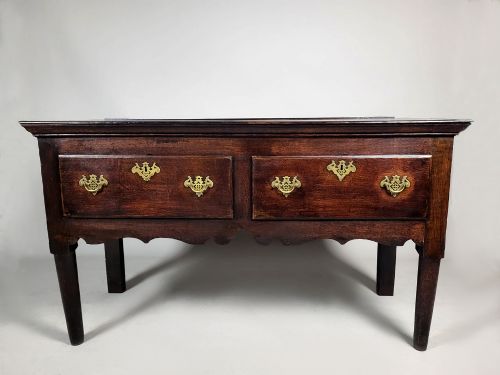
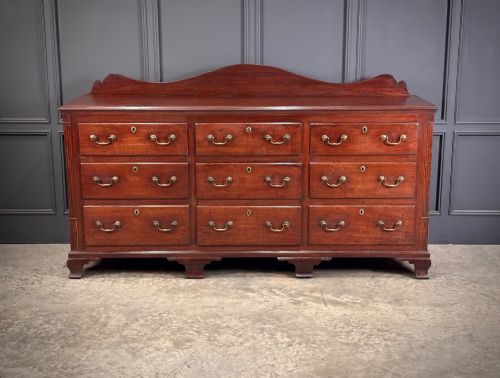
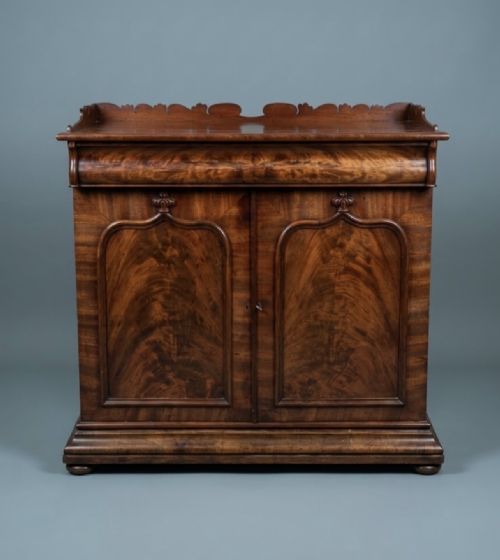
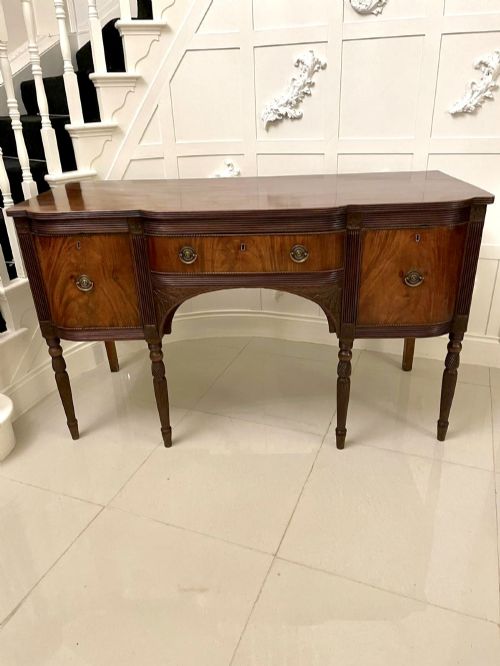
A georgian credenza is a substantial storage piece in mahogany or oak, prized for its architectural presence and fine timber figures in any dining room.
Georgian Credenza
Buyers seeking a georgian credenza often encounter related storage forms such as sideboards, chiffoniers, and breakfront dresser bases from the eighteenth and nineteenth centuries. These pieces serve primarily to store dining silver, linen, and china while anchoring the room with solid timber proportions.
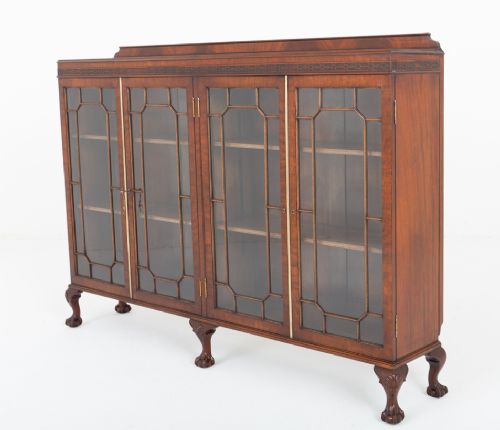
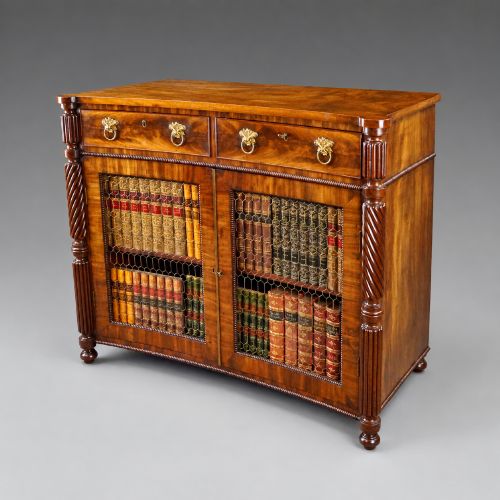
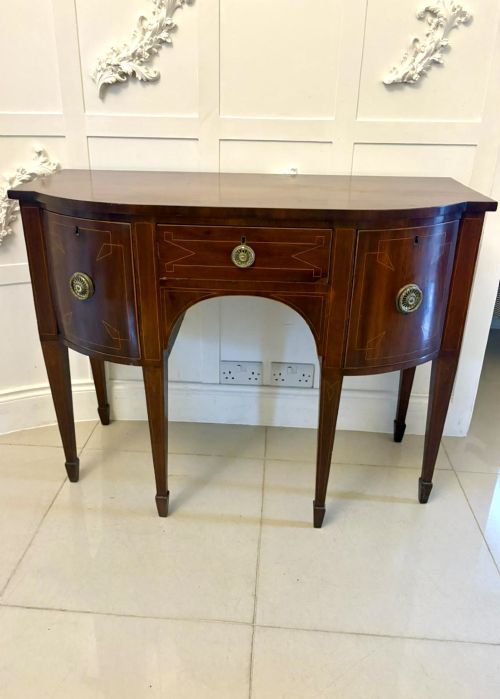
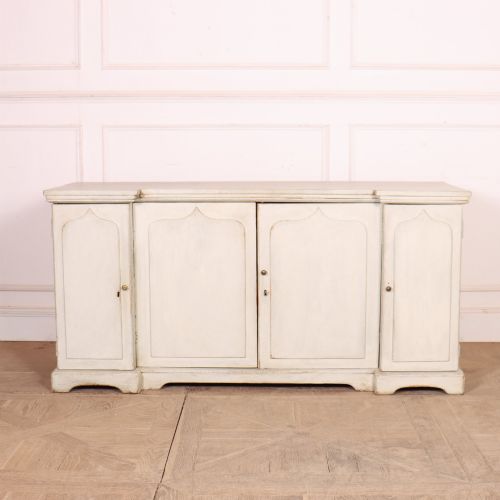
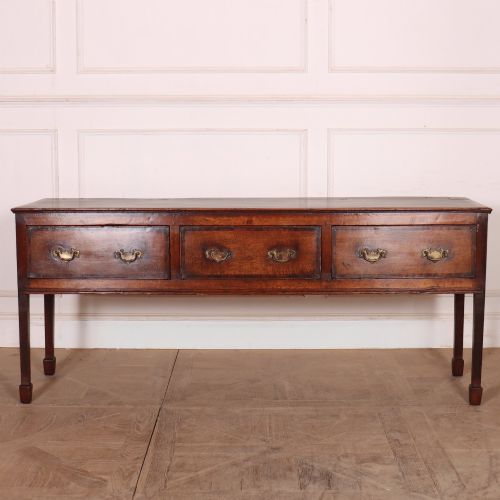
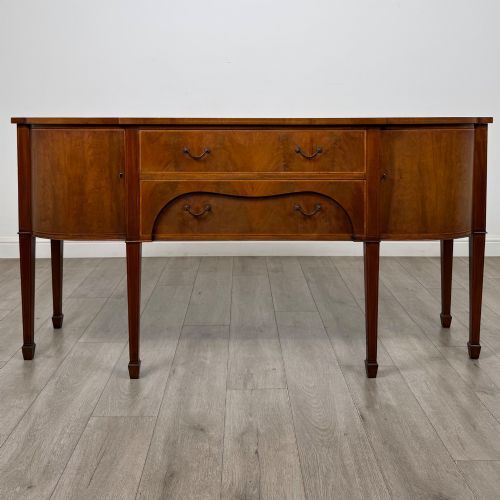
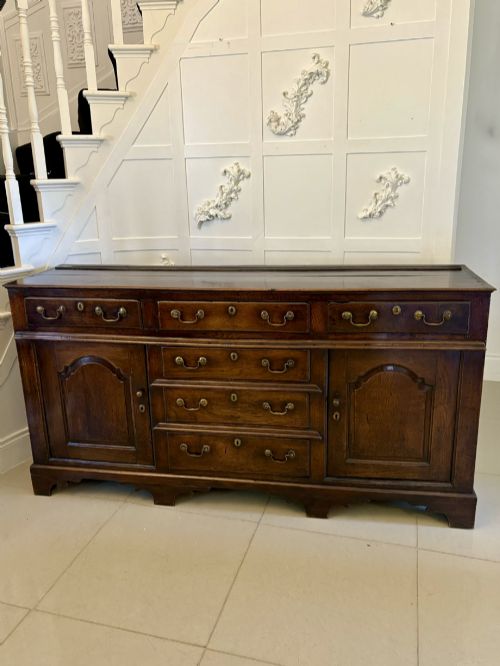
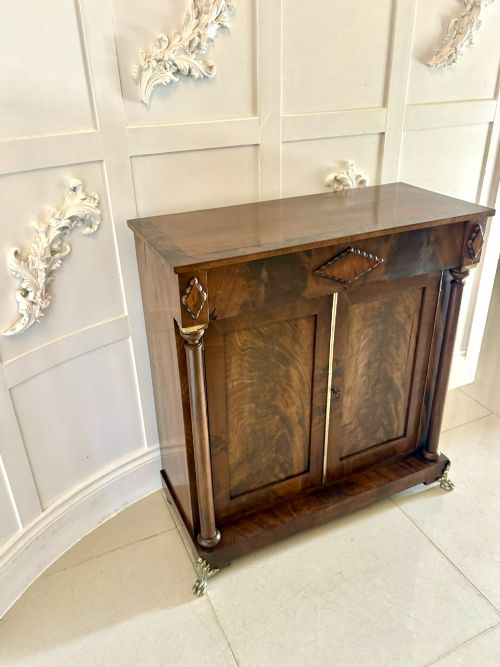
The selection ranges from George III breakfront sideboards to Regency chiffoniers and later revival pieces produced in mahogany and oak. Many examples display bow-fronted or serpentine profiles alongside cupboards and drawers.
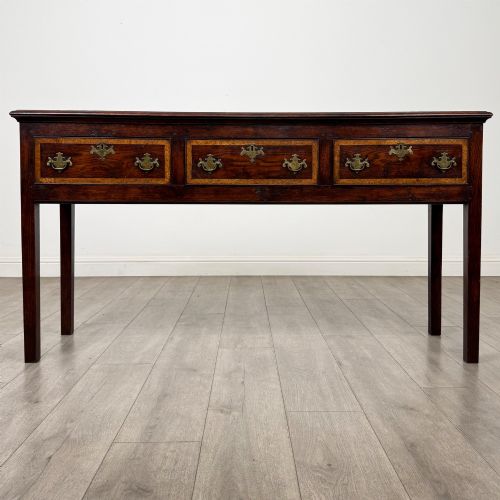
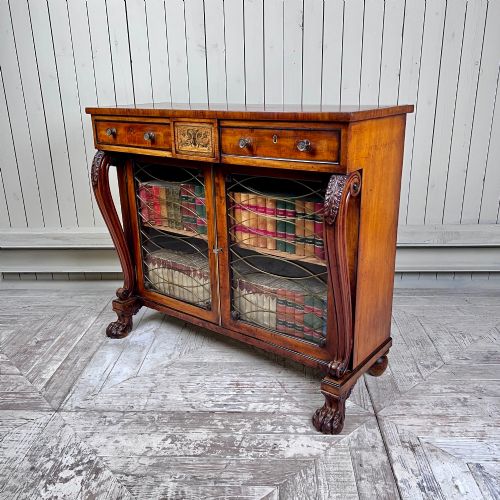
Earlier formats include oak potboard dresser bases and Welsh dressers, while nineteenth-century variations introduce brass inlays, glazed doors, and pedestal supports.
Defining quality in execution
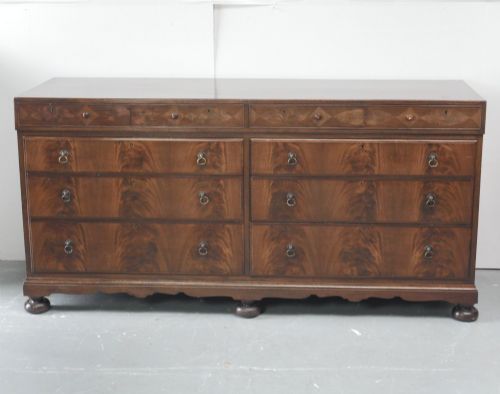
Quality rests upon the selection of timber figures, where richly grained flame mahogany or well-figured oak elevates a standard carcase into a piece of distinction. The crispness of inlaid brass and stringing further separates finer workshops from standard production.
Proportion and structural integrity dictate the standing of a piece, visible in the balanced sweep of a bow-front or serpentine outline and the seamless alignment of drawers and doors. Original feet and hardware maintain the architectural integrity established by the maker.
Listings feature pieces spanning the 18th Century, 19th Century, Regency, and Edwardian periods, constructed in mahogany, oak, and brass.
Whytock & Reid
The Georgian Credenza Glossary
- Breakfront
- A cabinet design where the central section projects forward from the flanking outer sections.
- Chiffonier
- A low cabinet with doors, often topped by a small bookcase or shelf unit, developed during the Regency period.
- Flame mahogany
- Timber sliced from the fork of the mahogany tree to produce a flickering, highly figured flame-like grain pattern.
- Potboard
- An open lower shelf on an oak dresser base originally intended for storing earthenware pots and heavy kitchen utensils.
- Serpentine
- A front contour characterised by a convex centre flanked by concave curves, creating an undulating outline.
Georgian Credenza: Frequently Asked Questions
What rooms suit a georgian credenza?
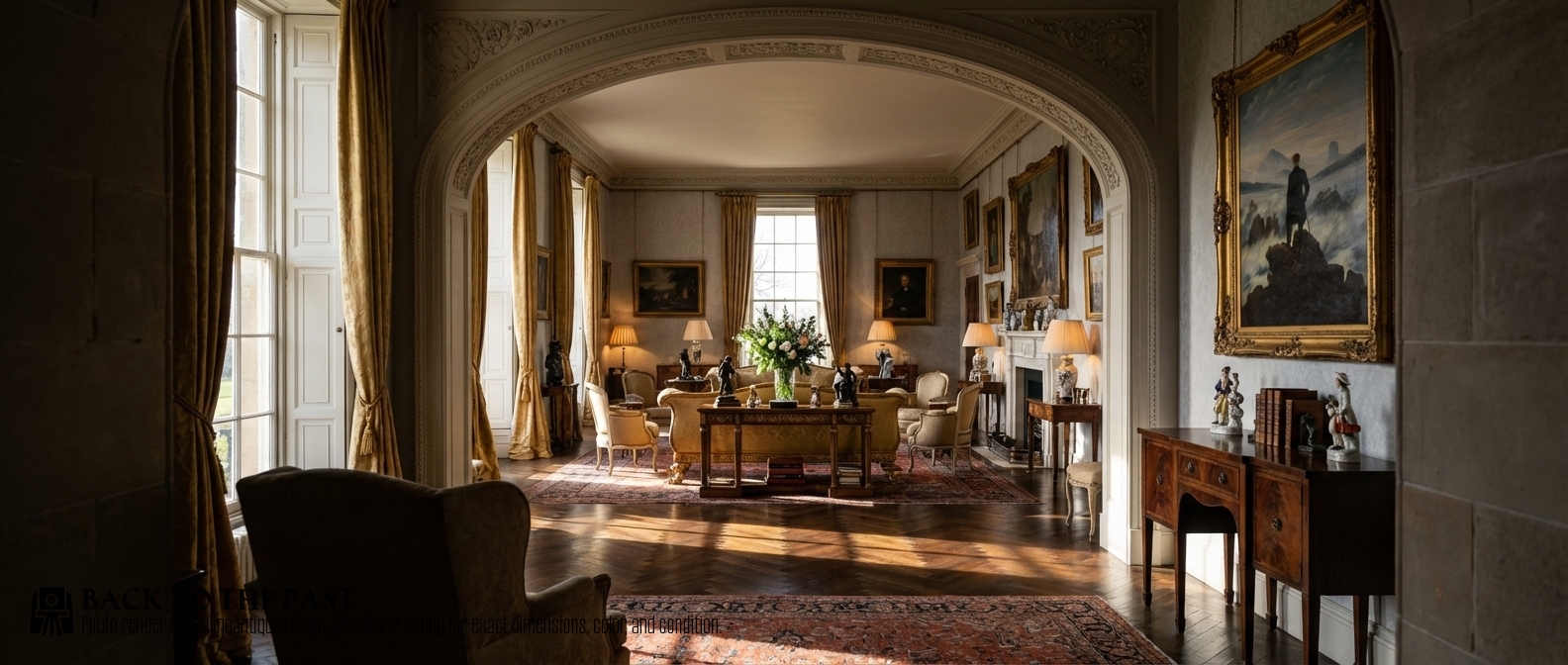
These storage pieces fit naturally into dining rooms and large hallways where their length and surface area provide both utility and presence.
They function effectively to hold tableware, linens, or books while offering a solid top surface for displays of lamps or silver.
How do I identify a George III piece?
George III pieces typically display classic proportions, restrained mahogany or oak construction, and subtle stringing or brass hardware.
Look for architectural lines, such as breakfront facades and finely dovetailed drawer construction, characteristic of the later eighteenth century.
What is a Regency chiffonier?
A Regency chiffonier is a compact sideboard cabinet often featuring enclosed cupboards below and sometimes a small bookcase superstructure above.
These examples frequently incorporate brass inlays and exotic wood veneers reflecting the aesthetic tastes of the early nineteenth century.
Are oak and mahogany finishes different?
Oak pieces generally offer a more rustic, heavier texture associated with earlier dresser bases and country houses, dating back to the eighteenth century.
Mahogany provides a smoother, darker surface often enhanced by flame veneers and polished finishes favoured in formal dining rooms.