

Sheraton Mahogany Credenza
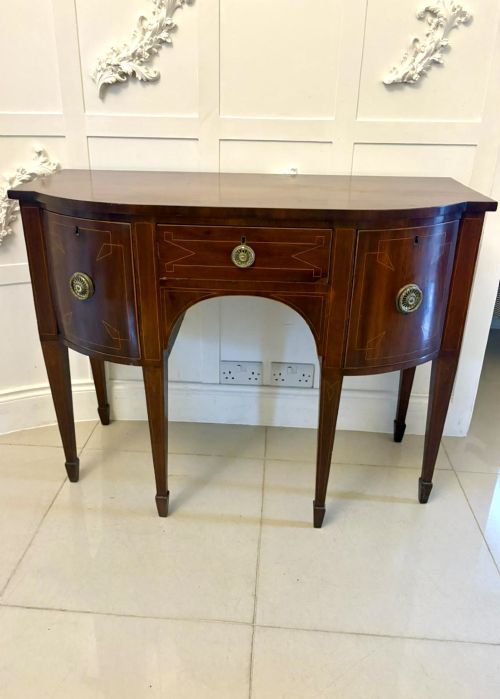
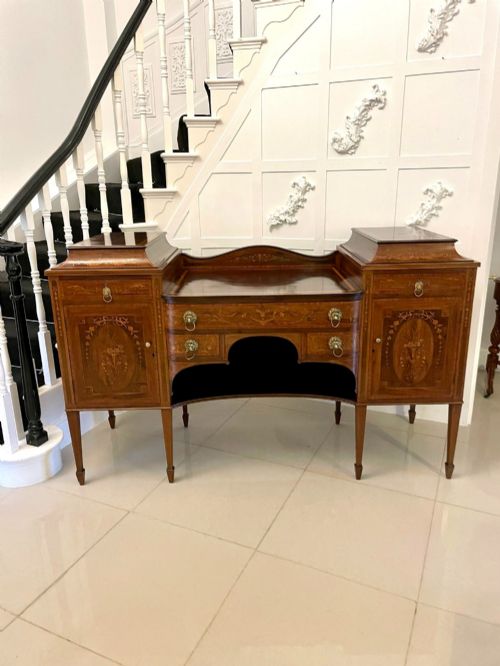
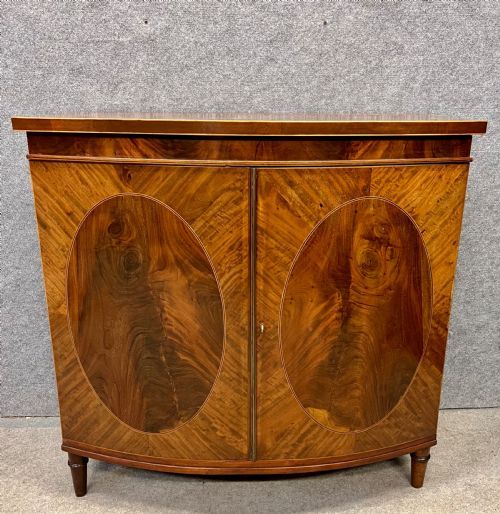
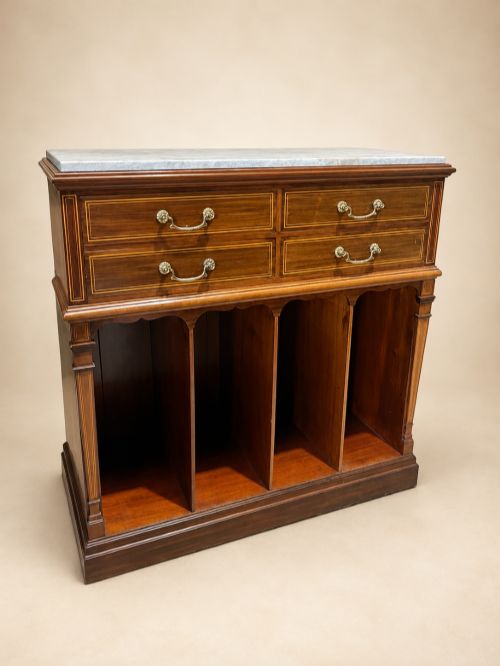
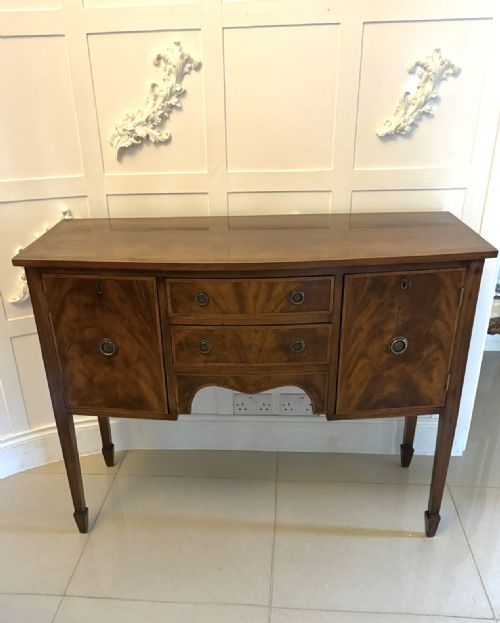
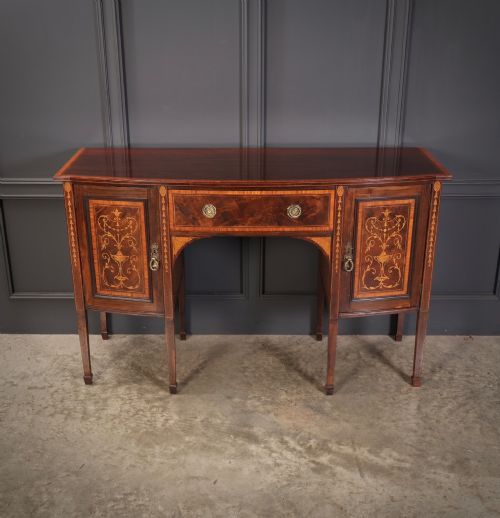
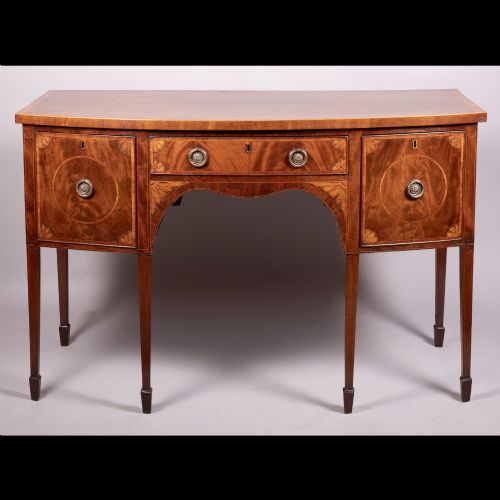
A sheraton mahogany credenza brings balanced proportions and fine classical inlay to a dining room or hallway.
Sheraton Mahogany Credenza
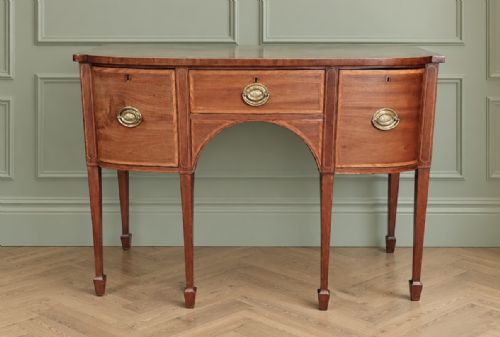
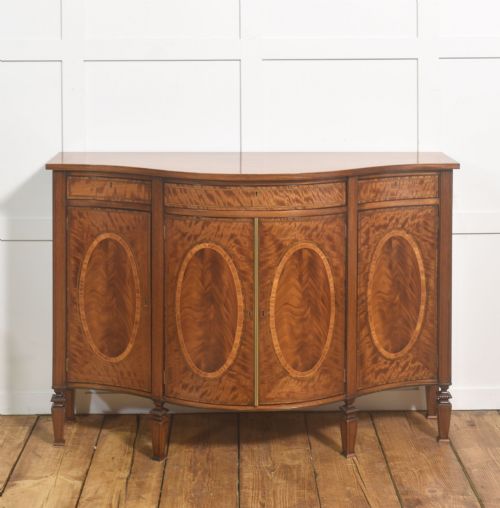
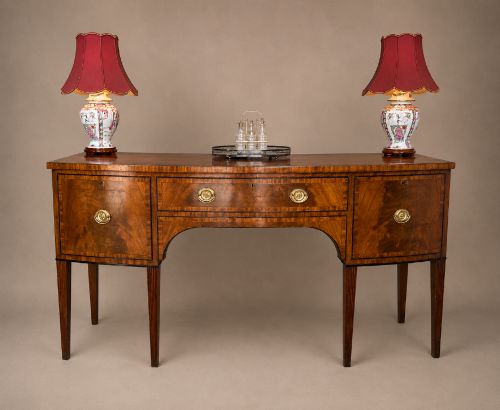
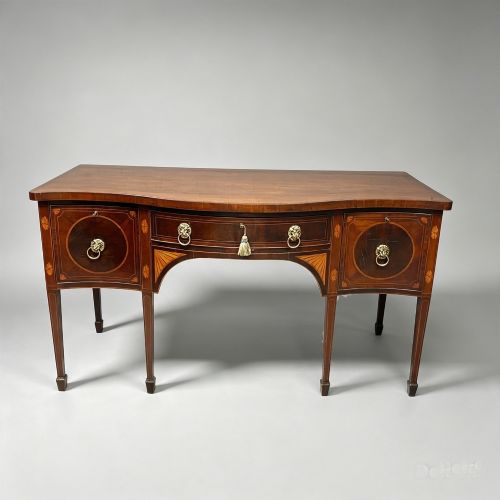
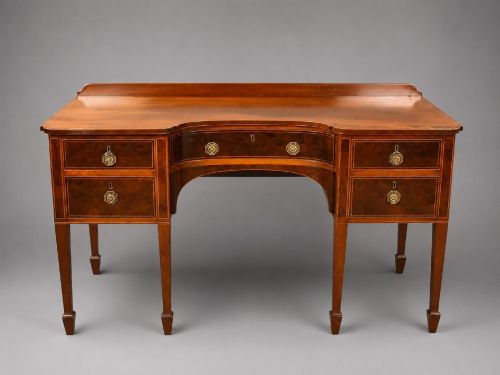
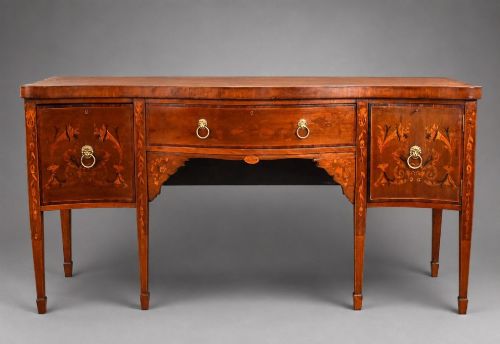
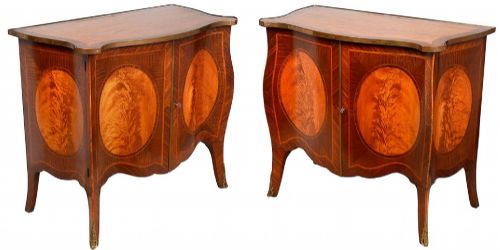
A sheraton mahogany credenza search brings up sideboards, side cabinets, servers and commodes originating from the eighteenth century through to the Edwardian period. The core of what you encounter here is the sideboard or server, spanning original Georgian pieces from around eighteen hundred alongside later Sheraton Revival interpretations.
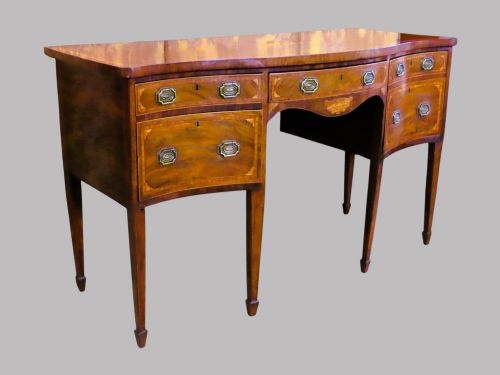
Makers and workshops of the nineteenth and early twentieth centuries produced serpentine, bow-front and demi-lune shapes in significant numbers. These forms follow classical lines, frequently incorporating cupboards and drawers behind symmetrical facades.
The selection ranges from substantial six-legged Georgian dining pieces to lighter satinwood-crossbanded servers and glazed display cabinets. Regional British cabinetmakers and London firms both contributed to this durable legacy of storage furniture.
Materials and Technique
Cabinetmakers built these pieces primarily from solid mahogany and flame mahogany veneers, applying contrasting boxwood and satinwood inlay to define drawers and borders. This timber selection provided a stable, richly grained ground for marquetry and stringing.
Crossbanding and delicate wood inlay formed the visual signature of the style, requiring precise hand-cutting to fit contrasting light woods into dark mahogany surfaces. Brass handles and mounts completed the construction, fastened securely to drawer fronts and doors.
Listings feature mahogany, satinwood, and brass alongside glass and marble components.
Distinctions in Execution
The degree of refinement in the timber preparation and the crispness of the marquetry define the upper tiers of these cabinets. Superior examples display carefully chosen flame mahogany veneers matched symmetrically across the front, paired with finely detailed satinwood and boxwood inlay rather than painted substitutes.
Structural integrity and the quality of internal joinery separate utilitarian pieces from exceptional ones. Well-made drawers feature hand-cut dovetails and cedar or oak linings that operate smoothly within their housings, maintaining alignment over centuries of use.
Hewetsons London·Edwards and Roberts
The Sheraton Mahogany Credenza Glossary
- Crossbanding
- A border strip of veneer laid around the edges of a tabletop or drawer front with the grain running perpendicular to the central panel. This technique creates a neat framing effect common in fine cabinetwork.
- Bow-front
- A convex curved cabinet front that swells outward in the centre. It became a popular shape for sideboards to maximise internal storage while softening room corners.
- Serpentine
- A front profile shaped with a central convex curve flanked by two concave curves, forming an undulating line. This contour demands advanced woodworking skill to execute cleanly.
- Demi-lune
- A half-moon shape used for console tables, commodes and small sideboards designed to stand flush against a wall. The curved top often lifts or opens above matching enclosed storage.
- Marquetry
- Decorative patterns formed by fitting together thin slices of various coloured woods into a prepared wooden ground. Artisans use this method to create floral motifs and geometric borders.
Sheraton Mahogany Credenza: Frequently Asked Questions
How do I distinguish original Georgian from revival pieces?
Original pieces from the eighteenth and early nineteenth centuries display the specific timber ageing, hand-cut joinery methods and patination typical of that era. Revival pieces manufactured around nineteen hundred often utilise more uniform machine-sawn elements and brighter inner linings.
Examination of the secondary woods inside drawers and carcass backs also clarifies the period. Georgian makers relied on native oak or pine framing, whereas later revival workshops integrated different softwood grades and standardised hardware.
Where should I place a bow-front sideboard?
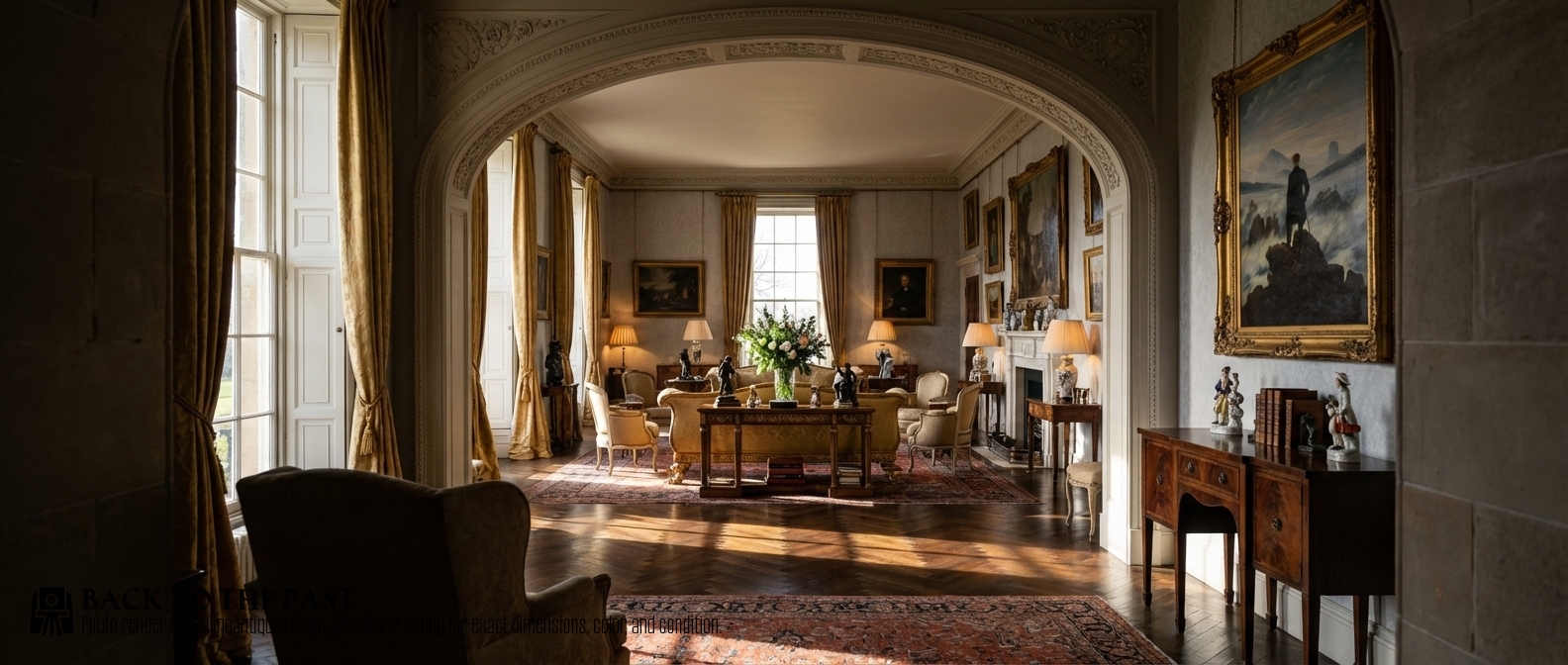
These cabinets suit dining rooms, large hallways and drawing rooms where their curved facades can be appreciated without blocking narrow traffic routes. Because the depth varies across the serpentine or bow shape, measuring the clearance space in front of doors is essential.
Keeping the piece away from direct heat sources and strong sunlight preserves the polished mahogany and delicate satinwood inlay. Adequate wall space allows the proportions of the server to sit comfortably within the room.
What maintenance does antique mahogany require?
Regular dusting with a soft, dry cloth prevents particle buildup on the veneered surfaces and carved edges. Waxing occasionally with a quality beeswax nourishes the timber and maintains a gentle sheen without building up sticky residues.
Avoiding silicone polishes ensures the original polish and wood grain remain breathable. Protecting the top surface from moisture rings using coasters preserves the finish over decades of daily use.
How were these sideboards used originally?
Dining rooms utilised these cabinets for storing heavy ceramics, glassware and silver cutlery within their cupboards and graduated drawers. The wide top surface served as a staging area for serving dishes and wine coolers during formal meals.
Smaller servers and demi-lune commodes acted as auxiliary display spaces for lamps and decorative objects. Their enclosed storage kept domestic dining accessories organised out of sight.