




Tapered Leg Buffet
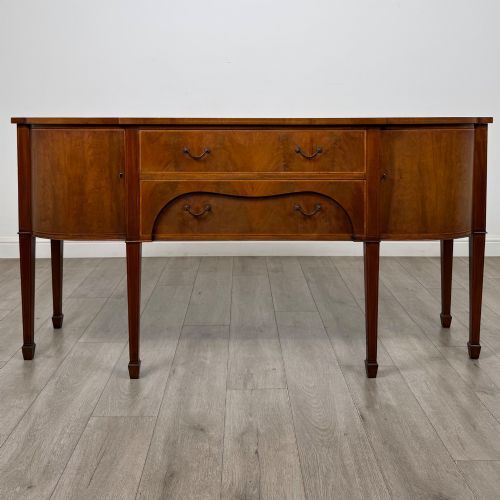
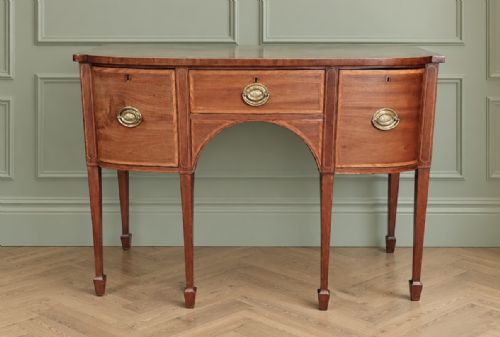
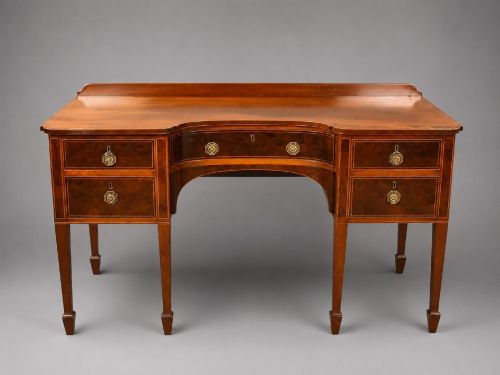
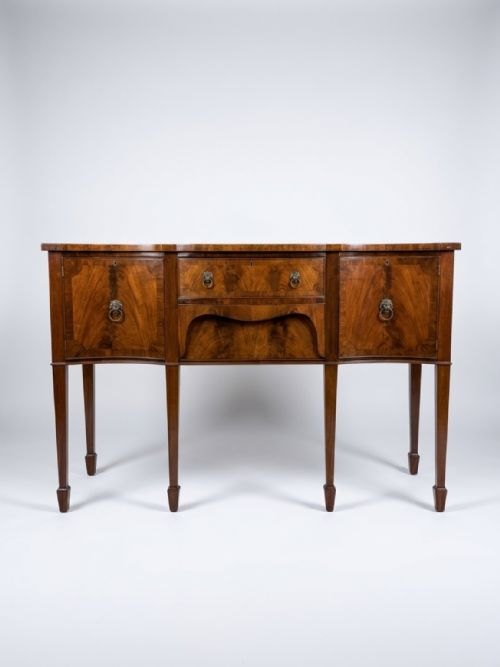
A tapered leg buffet brings formal dining grace to a room, offering generous storage alongside clean, rectilinear lines.
Tapered Leg Buffet
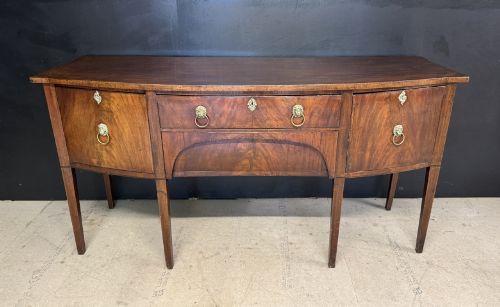
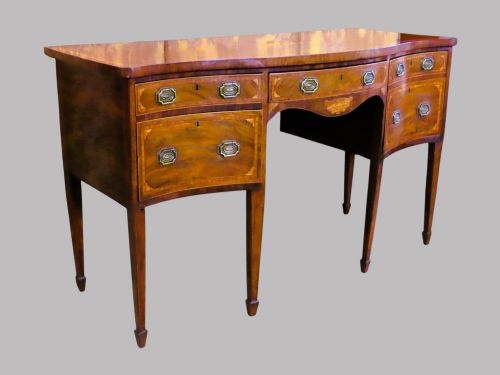
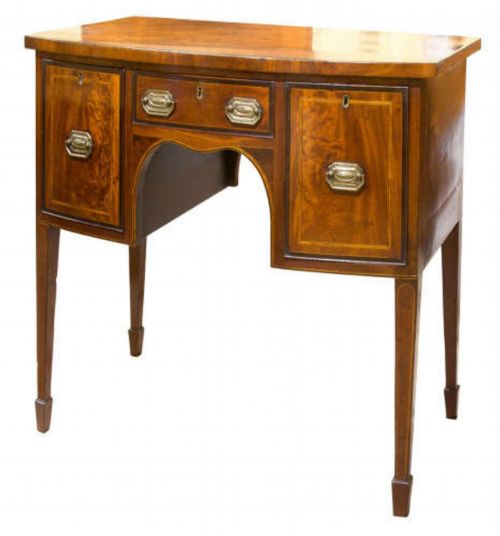
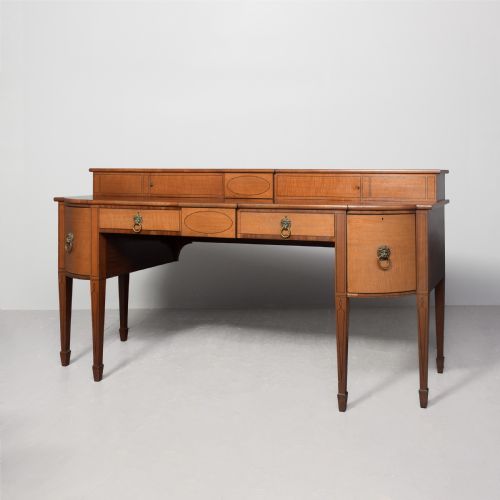
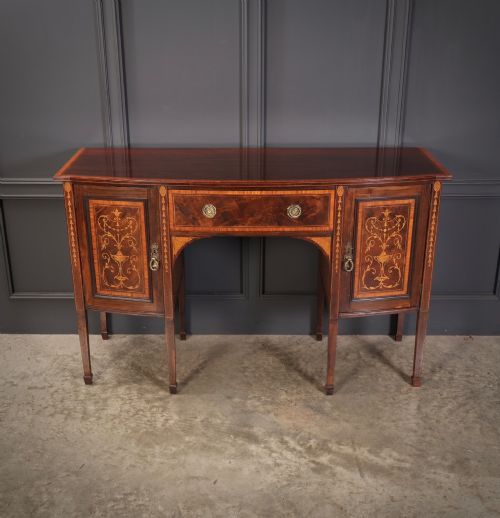
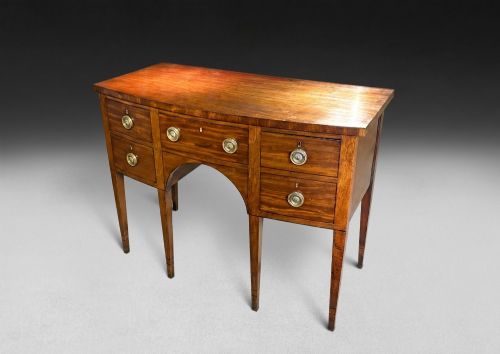
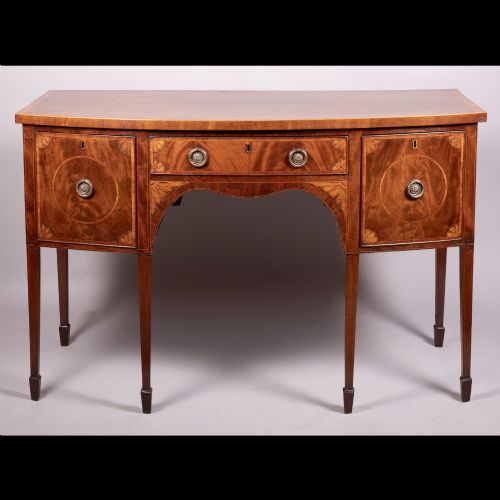
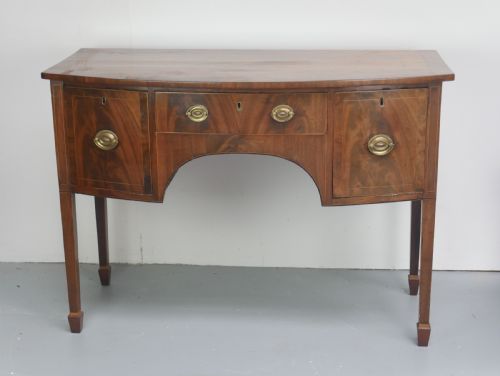
A tapered leg buffet serves as a formal dining room storage piece, designed to hold glassware, linen and serving dishes while occupying a commanding position against a wall. When you search for a tapered leg buffet, you encounter pieces that share the lineage of classic sideboards and serving tables from Georgian, Regency and Edwardian periods.
The pieces on this page appear primarily in forms such as bow-fronted sideboards, serpentine shapes and serving tables. Mahogany dominates the selection, frequently enhanced by satinwood, boxwood inlay and marquetry.
Origins trace back through the 18th century, George III eras, and into later revival styles like Sheraton Revival. Buyers select these items to anchor a dining space with traditional British cabinet-making and functional surface area.
Evaluating the standard of workmanship
Quality rests in the selection of the timber figures, where highly flamed mahogany veneer and crisp boxwood stringing elevate a piece above standard stock. The precision of the inlay work and the symmetry of the grain patterns across drawer fronts signal superior workshop output.
Proportion and scale dictate the desirability of these items, with smaller or bow-front examples demanding greater joinery skill to execute cleanly. Original brass handles and sound structural integrity without excessive timber replacement maintain the historical value of the item.
Some cabinet makers thoughtfully included hidden cellaret drawers lined in lead to keep your claret cool during long Georgian dinners.
The Tapered Leg Buffet Glossary
- Bow-front
- A cabinet front that curves outward in a convex shape, softening the rectangular profile of the furniture.
- Serpentine
- A shaped front featuring a concave centre flanked by convex outer sections, creating a rolling wave effect.
- Inlay
- A technique where pieces of contrasting wood or other materials are inserted into recessed cavities to form decorative patterns.
- Crossbanding
- A border of veneer laid around the edge of a surface with the grain running perpendicular to the centre panel.
- Stringing
- Thin strips of contrasting wood inlaid into channels to outline drawers, legs or tabletops.
Tapered Leg Buffet: Frequently Asked Questions
What is a tapered leg buffet used for?
These pieces function primarily as dining room servers, holding tableware, cutlery and serving platters during meals.
They also provide a display surface for lamps, silver and decorative objects in a hallway or formal reception room.
How do I identify a Georgian sideboard?
Georgian pieces display hand-cut joinery, solid timber carcases, and conservative proportions typical of 18th-century design.
Look for subtle boxwood stringing, brass ring handles, and flame mahogany veneers rather than heavy machine-carved motifs.
What distinguishes Sheraton Revival from original pieces?
Sheraton Revival furniture dates from the late 19th and early 20th centuries, recreating the lighter forms of the 18th century.
These later pieces often feature brighter satinwood inlays and machine-assisted construction while maintaining the classic stylistic proportions.
How should I care for antique mahogany?
Keep mahogany furniture away from direct sunlight and heat sources to prevent the timber veneers from drying and cracking.
Apply a traditional beeswax polish occasionally to nourish the wood and maintain a soft, natural lustre.