
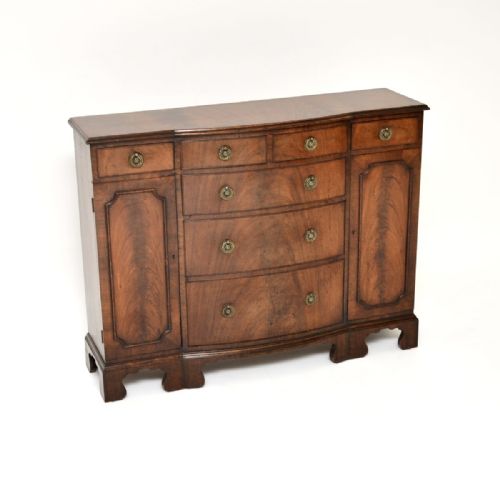
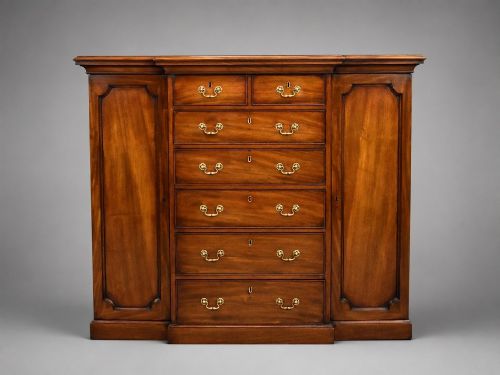
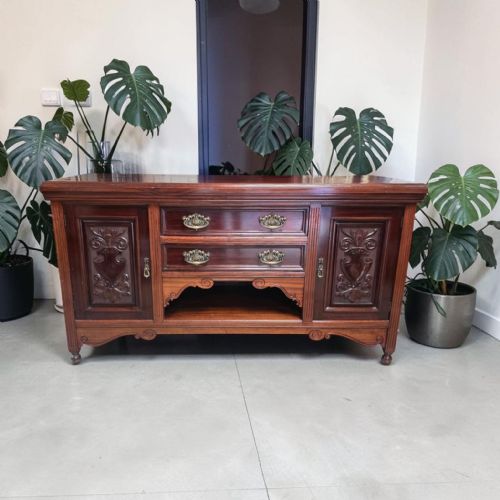
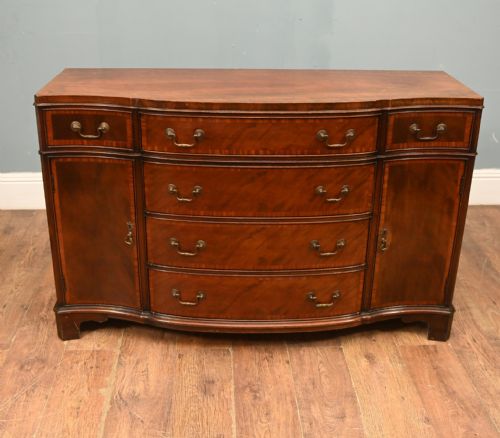




Georgian Dining Room Storage
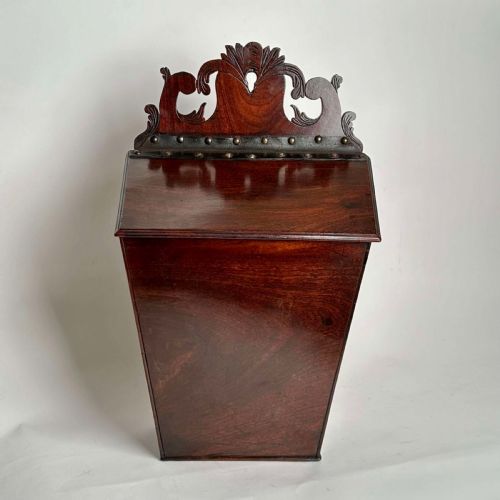
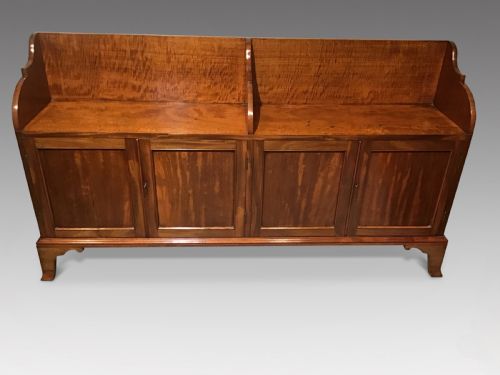
Georgian dining room storage encompasses the heavy mahogany sideboards, wine coolers and cellarettes that anchored elite dining rooms.
Georgian Dining Room Storage
Georgian dining room storage comprises the case furniture designed to hold plate, wine and cutlery during the dining rituals of the eighteenth and nineteenth centuries. Sideboards, cellarettes, wine coolers and cutlery boxes form the core of what is available.
The pieces appearing on this page span the George III and Regency periods through to later revival styles from the Edwardian era and the twentieth century. Sideboards dominate the selection, appearing in both straight and bow-fronted configurations.
Wine coolers and sarcophagus-shaped cellarettes also appear frequently, reflecting the specific demands of historic dining practices. Mahogany is the defining timber across nearly every object catalogued.
Materials and construction
Cabinet makers relied heavily on solid mahogany and flame mahogany veneer, often enhanced with contrasting boxwood inlay, line inlay and satinwood stringing. Carcass construction prioritised dense native hardwoods alongside imported tropical timber.
Metal mounts typically consist of brass for handles, feet and hinges, while lead lining is found within wine coolers to hold ice and bottles. Secondary timbers provide structural stability to the interiors of drawers and cupboards.
Georgian Dining Room Storage Retail Price Guide 2026
Typical asking prices for georgian dining room storage among the pieces listed under this phrase on Sellingantiques today, from the lower quarter to the upper quarter. They describe what is for sale here now, not the wider market.
Plate buckets made appearances in Georgian dining rooms to quietly store porcelain plates between courses.
Judging quality
Quality rests in the selection of timber figures, particularly the grain matching across drawer fronts and the choice of flame mahogany veneers. Crisp execution of boxwood stringing and inlay separates standard production from finer workshop output.
Structural integrity of the timber framing, original brass hardware and the retention of fitted interior divisions dictate the standing of individual sideboards and cellarettes.
M. D. Miller & Sons
The Georgian Dining Room Storage Glossary
- Cellarette
- A freestanding box or chest designed to hold bottles of wine, often lined and fitted for ice use within the dining room. These vessels sit low to the floor and frequently take a sarcophagus shape.
- Sideboard
- A large piece of dining room furniture used for serving food and storing plate or glassware. Forms range from straight-fronted server cabinets to grand breakfront designs.
- Boxwood inlay
- Narrow strips of pale boxwood inserted into dark mahogany surfaces to create linear decorative borders. This technique highlights the structural outlines of drawers and tabletops.
- Flame mahogany veneer
- A decorative wood veneer sliced from timber where the branch meets the trunk, producing a rippling flame effect. It is utilised on prominent exterior surfaces to catch the light.
- Breakfront
- A cabinet or sideboard whose central section projects forward from the flanking wings. This architectural arrangement creates depth and shadow across the front elevation.
Georgian Dining Room Storage: Frequently Asked Questions
What is a wine cellarette used for?
Cellarettes were constructed to hold wine bottles securely inside the dining room, often filled with ice to chill the contents before serving at the table. Their heavy lined interiors kept beverages at a stable temperature during lengthy meals.
Today, these lidded boxes function well as decorative containers or occasional side tables while retaining their original compartmented interiors.
How do I identify a George III sideboard?
George III sideboards are distinguished by their use of solid mahogany and flame veneers, often accented with delicate boxwood stringing and line inlay. Proportions tend to be elegant, with tapered legs or shaped bow fronts.
Later revival pieces from the twentieth century imitate these proportions, so examining the secondary timbers and interior construction helps confirm the period of origin.
Where should I place a large sideboard?
These substantial case pieces suit principal dining rooms or spacious hallways where their length and depth can be accommodated without crowding the floor plan. Placing them against a blank wall allows the polished mahogany surfaces and brass mounts to anchor the room.
Ensure adequate clearance for opening cupboard doors and drawers, as many historic sideboards feature deep pedestals or cellarette drawers.
How do I care for antique mahogany furniture?
Maintain polished mahogany surfaces by dusting with a dry lint-free cloth and applying occasional quality wax to nourish the grain. Avoid placing pieces in direct sunlight or near heat sources to prevent the timber from splitting.
Protect the top boards from moisture by using coasters under glasses, particularly on wine coolers and serving surfaces that see regular use.