


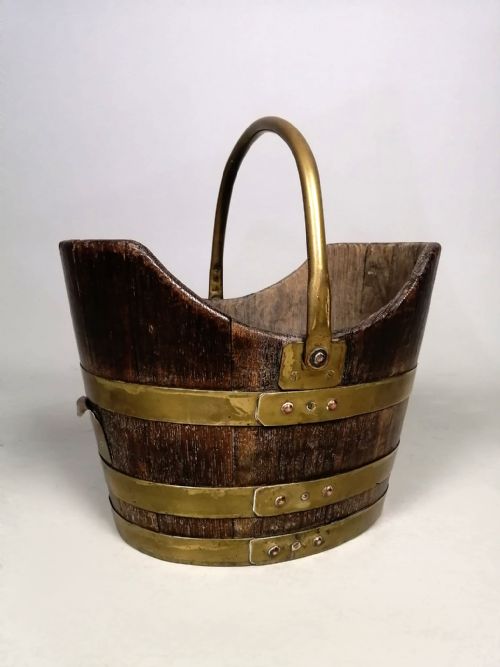
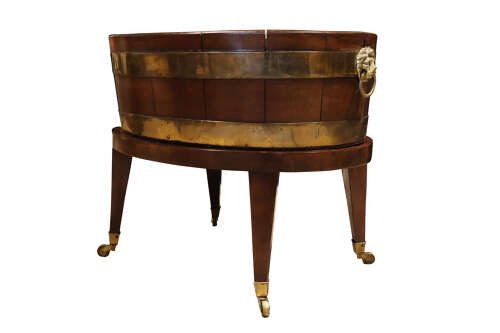


Georgian Brass Bound Bucket
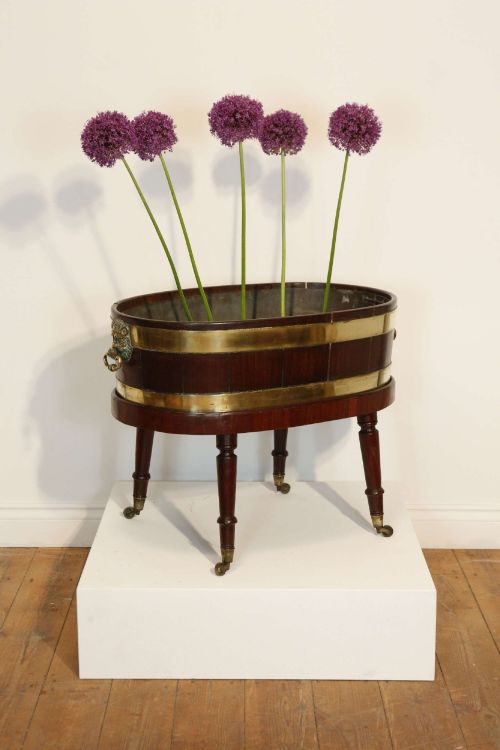
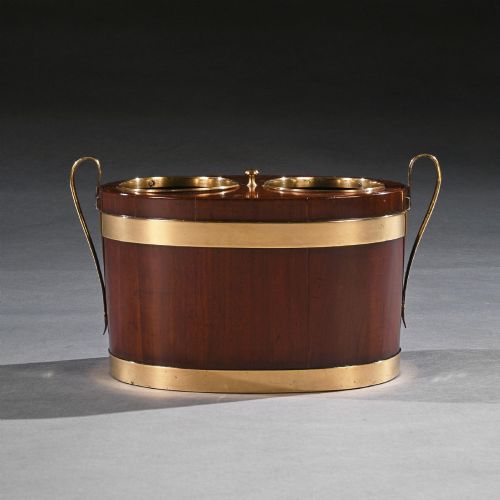
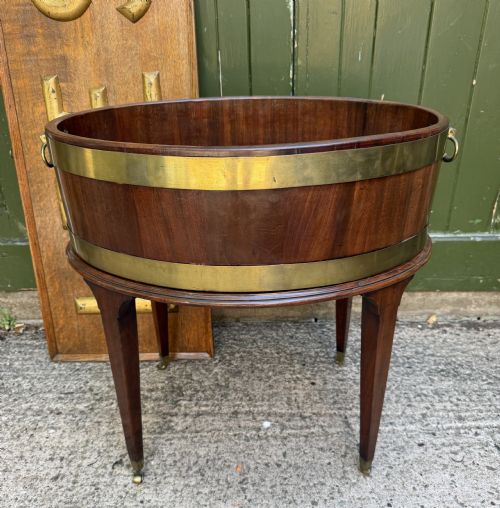
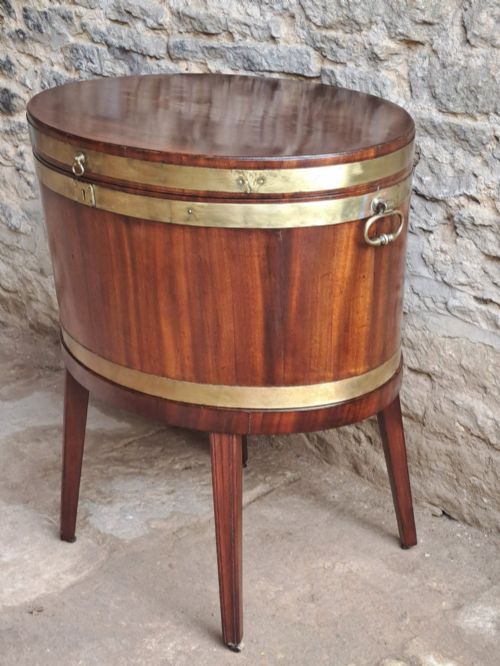
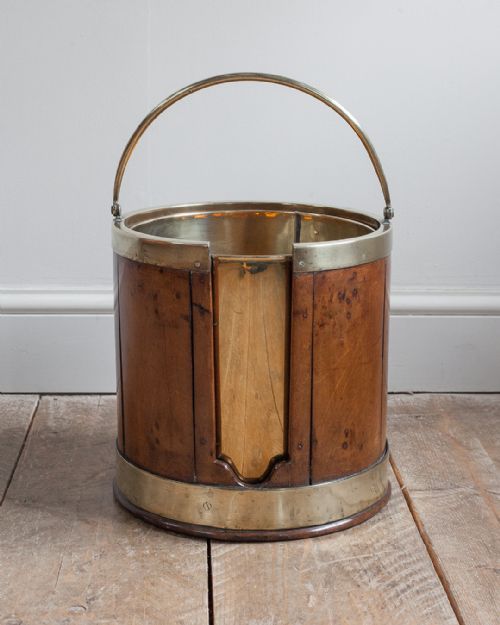
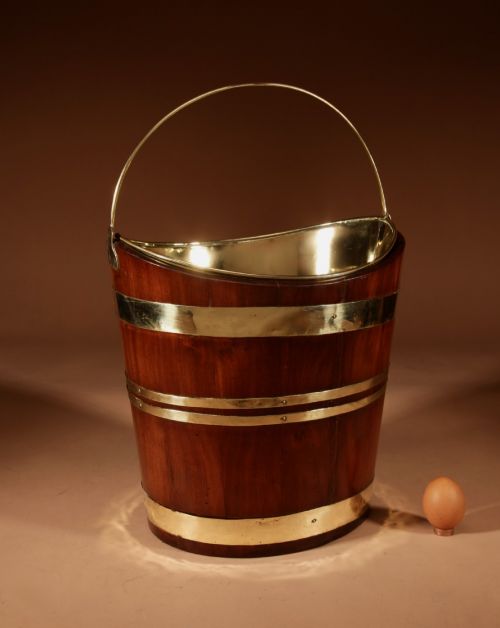
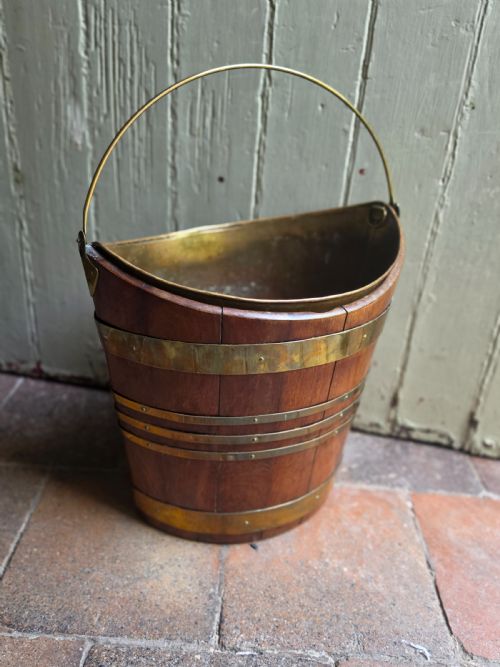
These Georgian brass bound bucket examples are traditional mahogany containers finished with metal bands, prized for their classic utility.
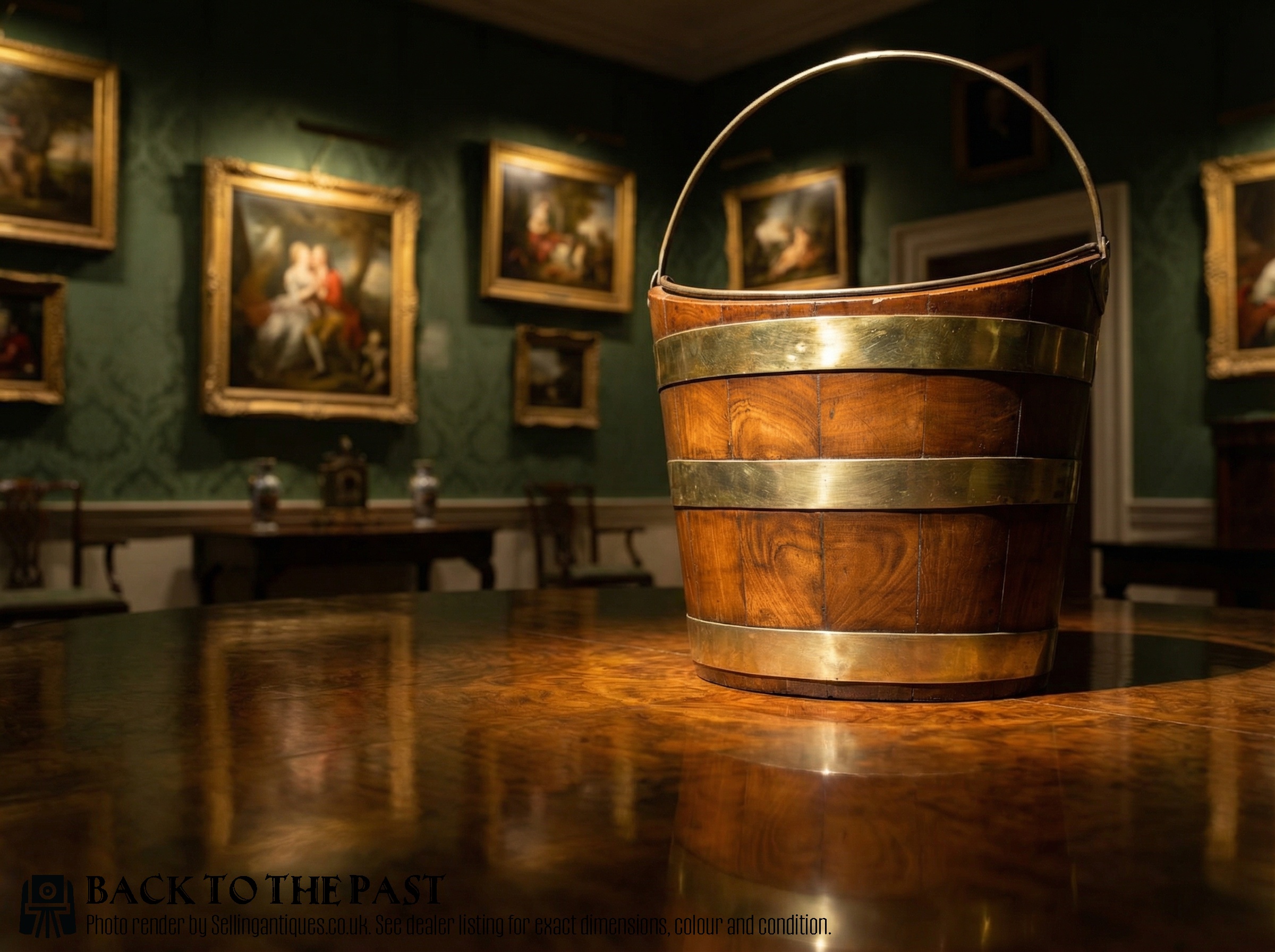
Georgian Brass Bound Bucket
A georgian brass bound bucket is a timber vessel defined by metal hoops and sturdy construction. These items appear across the eighteenth century and the George III period.
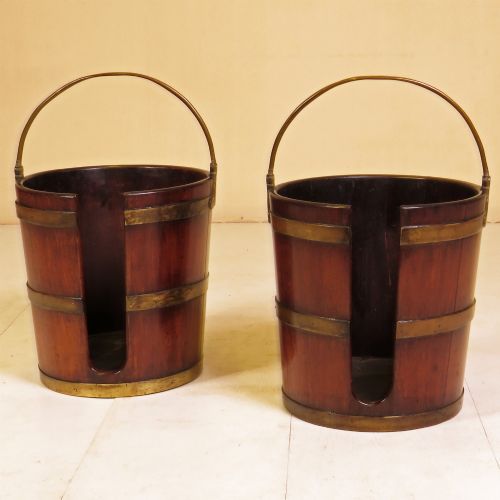
The evidence shows various forms including plate buckets, log buckets, peat buckets, and oval pails or containers. Most examples on this page are mahogany vessels equipped with brass bands.
How they were made
Maker construction combines solid mahogany timber with fitted brass bands to secure the staves. The joinery relies on traditional coopering techniques to handle heavy contents.
Metalwork involves securing polished brass hoops around the timber body using small pins or rivets. Surfaces display the natural grain of the wood alongside the gleaming metal mounts.
Georgian Brass Bound Bucket Retail Price Guide 2026
Typical asking prices for georgian brass bound bucket among the pieces listed under this phrase on Sellingantiques today, from the lower quarter to the upper quarter. They describe what is for sale here now, not the wider market.
Every single logged bucket shares a fondness for mahogany and shiny brass.
What varies in quality
Quality separates through the selection of timber grain and the precision of the brass binding. Finer examples display carefully matched mahogany staves and crisply finished metalwork.
The distinction between standard containers and superior items rests on proportion and decorative restraint. Pieces show varying degrees of handling wear on both the wood and the brass.
The Georgian Brass Bound Bucket Glossary
- Mahogany
- A durable tropical hardwood used extensively for eighteenth-century furniture and containers. It provides a rich dark ground for brass mounts.
- Brass
- A copper and zinc alloy used for the structural and decorative bands on these vessels. It polishes to a bright golden finish.
- Cooper
- A craftsman who builds wooden staved vessels such as buckets and pails. Their work requires precise angles to ensure watertight or structural integrity.
- Stave
- One of the narrow vertical strips of wood that form the sides of a bucket. Fitted together tightly, they create the circular or oval body.
Georgian Brass Bound Bucket: Frequently Asked Questions
What were these buckets used for originally?
These vessels held coal, peat, or dining plates depending on their specific form. They served functional roles in large houses.
Plate buckets kept dinnerware organised, while log and peat buckets carried fuel to hearths.
How do I tell a log bucket from a plate bucket?
Plate buckets typically feature specific interior divisions or shapes suited for holding ceramics. Log and peat buckets are open to accommodate loose fuel.
Examining the internal depth and configuration reveals the intended domestic purpose.
Are all these buckets from the Georgian period?
The recorded items belong to the eighteenth century and the George III era. They carry the stylistic traits of Georgian design.
Matching materials and construction methods confirm their period origin.
How should I care for the brass and mahogany?
Maintain the wood with appropriate furniture wax to preserve the finish. Clean the brass gently without harsh abrasives to retain its aged lustre.
Keeping the pieces away from direct heat sources protects the timber staves.