

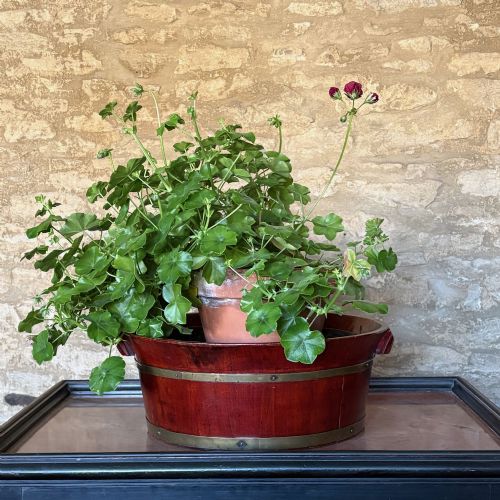
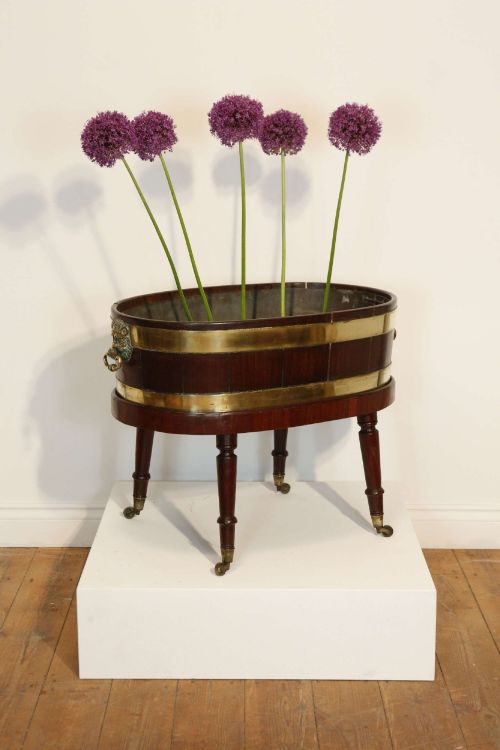
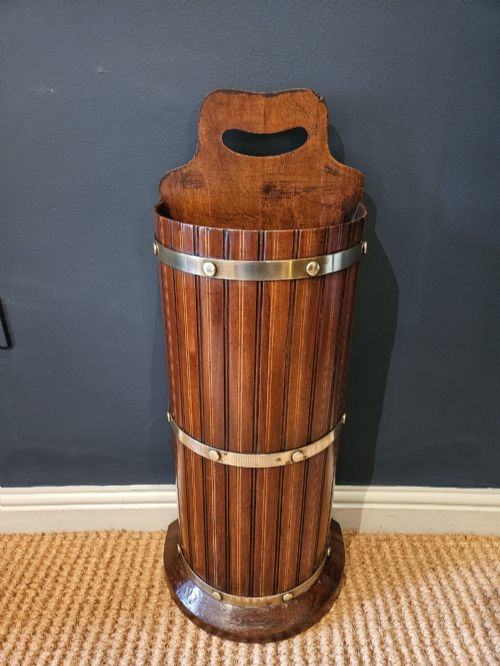
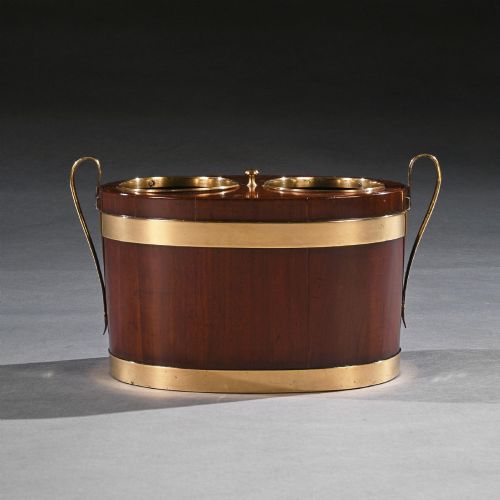

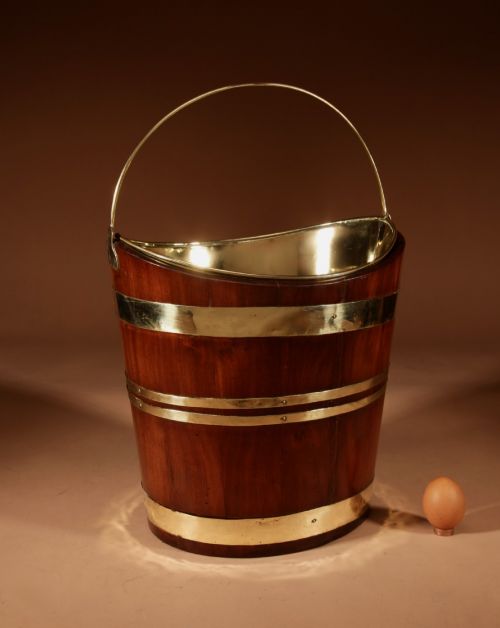
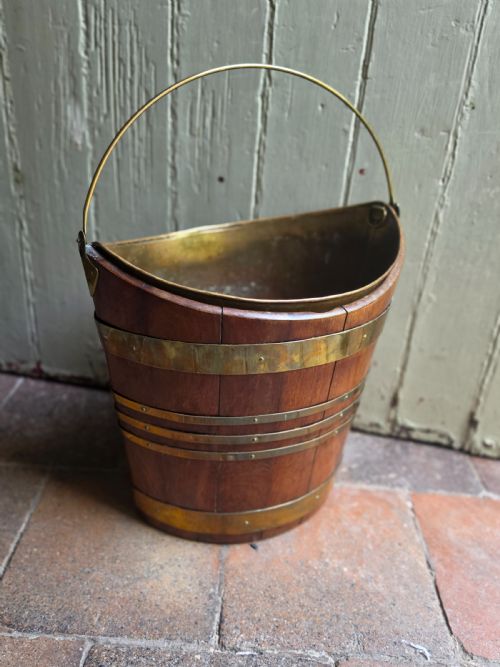
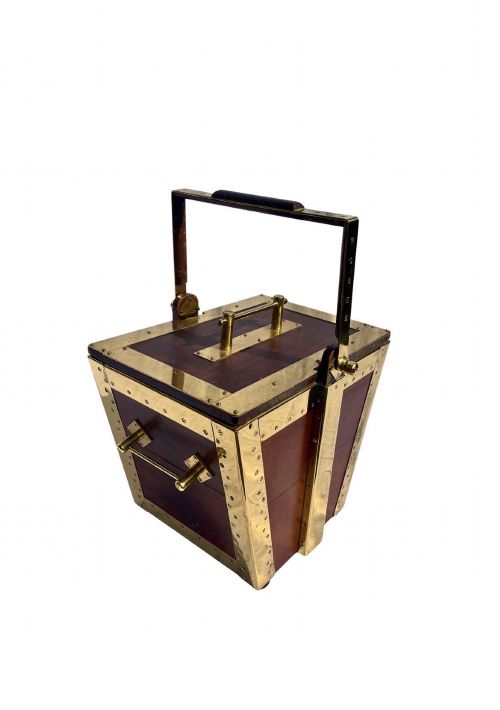
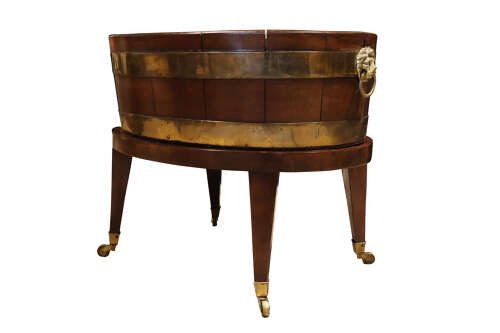


Brass Bound Mahogany Bucket
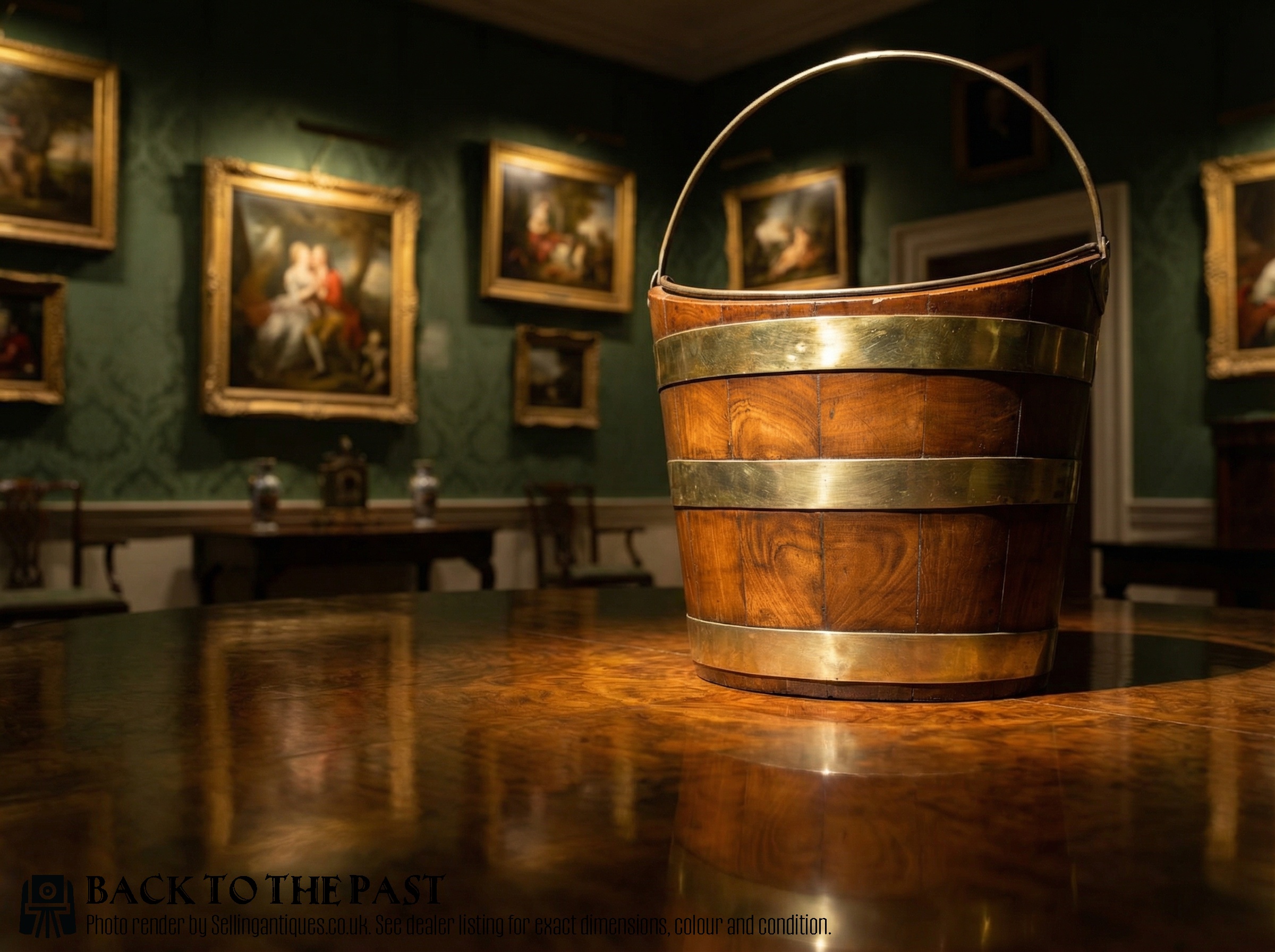
A brass bound mahogany bucket brings tactile Georgian warmth to a room through dark timber and heavy metal straps.
Brass Bound Mahogany Bucket
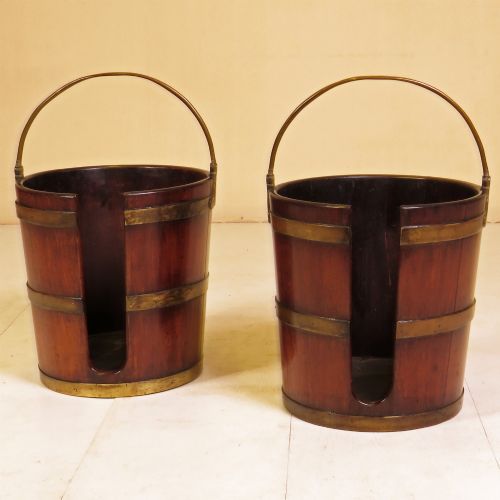
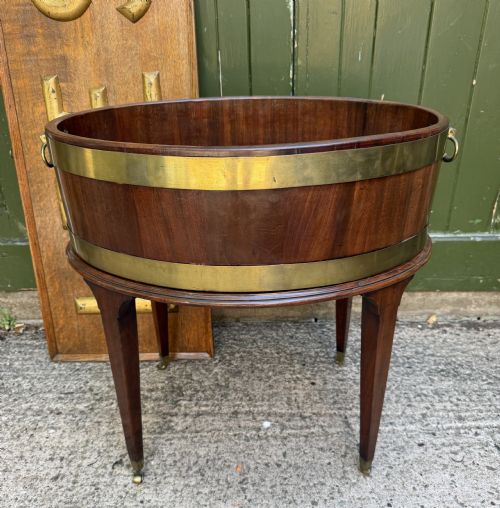
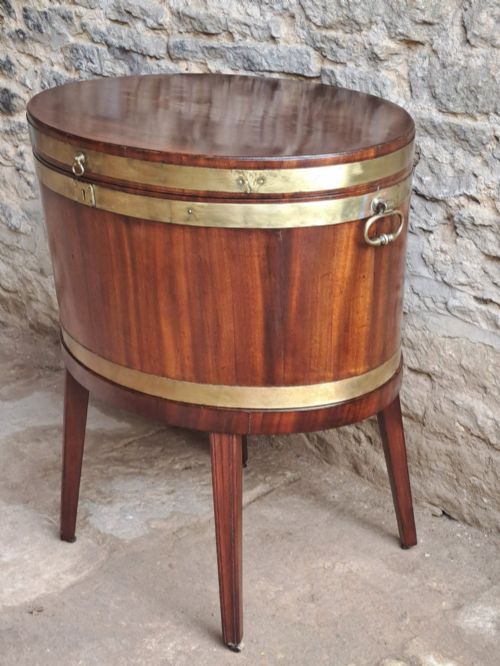
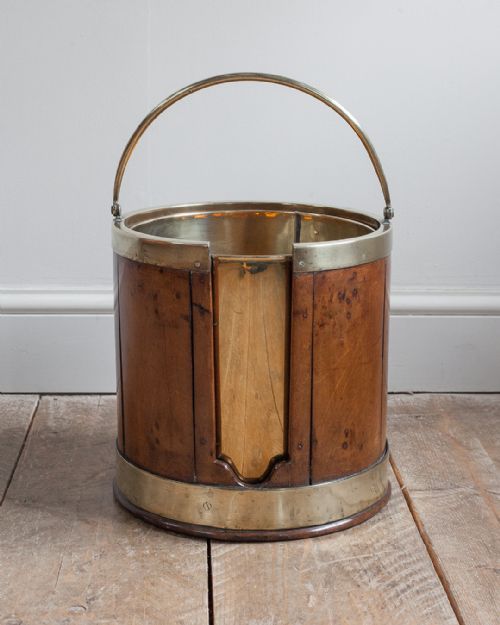
A brass bound mahogany bucket is a sturdy container formed from rich dark timber reinforced with metal bands, dating principally from the Georgian and 18th Century periods. These pieces appear in forms designed for specific domestic tasks, including wine cooling, holding peat, storing logs, and carrying plates.
Buyers meet examples shaped for fireside service and dining utility, with circular and oval profiles predominating across the selection. The construction unites durable wood with decorative metalwork to create objects that served practical functions in elite households.
How they were made
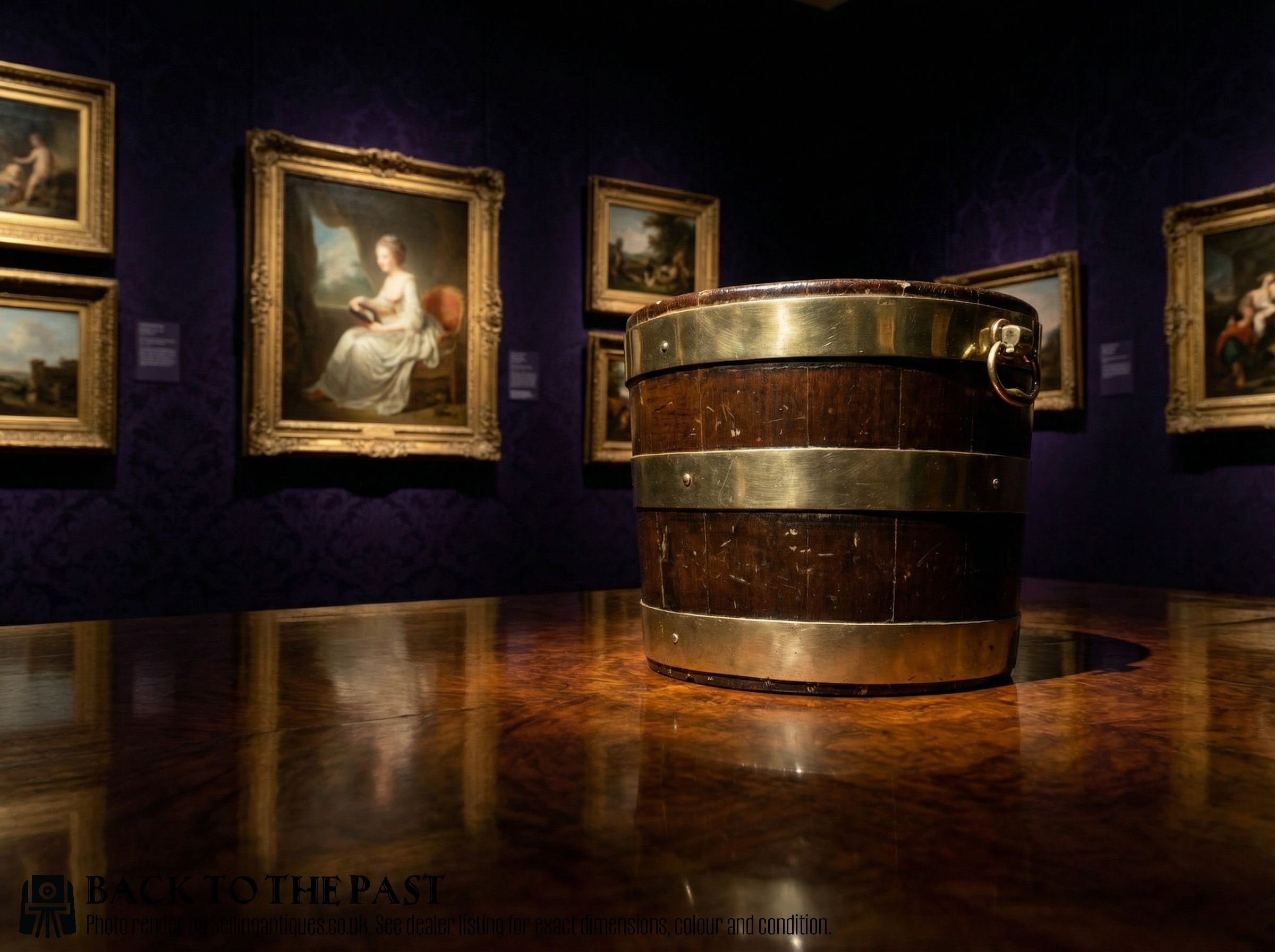
The makers constructed these vessels using solid mahogany staves joined tightly together, mirroring the traditional techniques of cooperage. Craftsmen then secured the timber bodies with fitted brass bands that provided both structural strength and visual contrast.
Additional hardware such as swinging brass handles and liner fittings completed the construction, ensuring the containers could hold weight safely. The integration of brass and mahogany reflects the period's standard cabinetmaking practices.
Brass Bound Mahogany Bucket Retail Price Guide 2026
Typical asking prices for brass bound mahogany bucket among the pieces listed under this phrase on Sellingantiques today, from the lower quarter to the upper quarter. They describe what is for sale here now, not the wider market.
The site's records show pieces spanning the Georgian and 18th Century periods alongside later 1880 examples, all constructed from mahogany and brass.
What varies in quality
Quality reveals itself in the grain selection of the mahogany and the weight of the brass used for the binding and handles. Better examples display careful stave alignment and refined joinery that withstands centuries of atmospheric change.
The sophistication of the silhouette and the integrity of the original metal components separate standard utility vessels from those made with greater decorative ambition. Proportions and the crispness of the brass work govern the visual appeal of each piece.

The Brass Bound Mahogany Bucket Glossary
- Stave
- A narrow strip of shaped wood that forms the curved side of a bucket or wine cooler. Tight joints between staves keep the vessel structurally sound.
- Plate bucket
- A specialised container designed with vertical divisions or slots to hold porcelain plates safely during dining service. These items formed part of formal Georgian dining room equipment.
- Peat bucket
- A deep timber vessel used to store and carry turf fuel to the fireplace. They often feature robust brass handles for heavy lifting.
- Wine cooler
- A large bucket intended to hold bottles and ice during meals. These pieces sometimes serve as decorative jardinieres in modern settings.
Brass Bound Mahogany Bucket: Frequently Asked Questions
What were brass bound mahogany buckets used for?
These vessels served practical domestic roles in Georgian households, holding wine bottles, dining plates, peat, or logs near the hearth. Their robust construction allowed servants to carry heavy materials safely.
Over time, many of these containers transitioned from utilitarian duties to decorative interior accessories, finding new life as planters or umbrella stands.
How do I date a mahogany bucket?
Dating relies on examining the construction methods, timber characteristics, and the style of the brass hardware. Pieces from the Georgian period often exhibit hand-cut dovetails, specific patination, and heavy cast brass straps.
Later Victorian interpretations from around 1880 sometimes show subtle shifts in proportion and machine-finished components that distinguish them from 18th-century work.
Are these buckets waterproof?
Most antique pieces were coopered to hold damp contents like ice and wine, but age can dry out the timber and shrink the wood. Using them with modern waterproof liners protects the historic structure from moisture damage.
Checking the interior helps determine if the original lining or waterproofing remains intact before exposing the timber to fresh water.
How do I care for mahogany and brass?
Maintenance involves dusting the mahogany regularly and applying appropriate wax sparingly to nourish the timber grain. Avoid harsh chemical cleaners that strip the historic surface patination.
The brass bands require gentle cleaning with a soft cloth to preserve their metallic finish without disturbing the surrounding wood.