

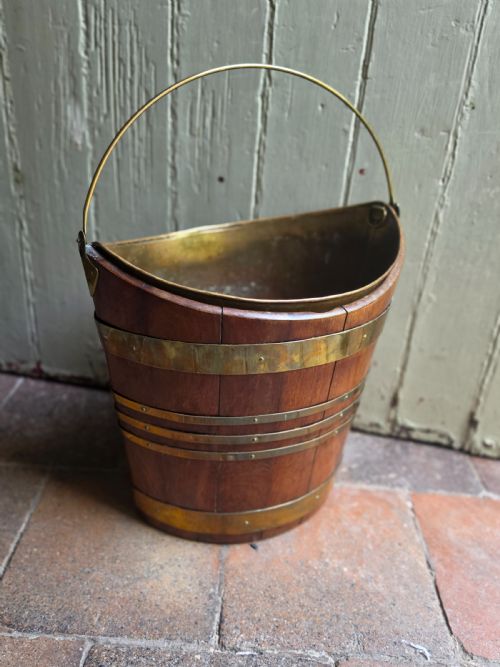


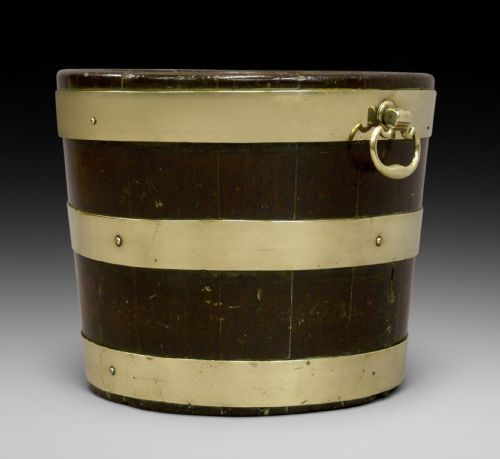


Staved Mahogany Bucket
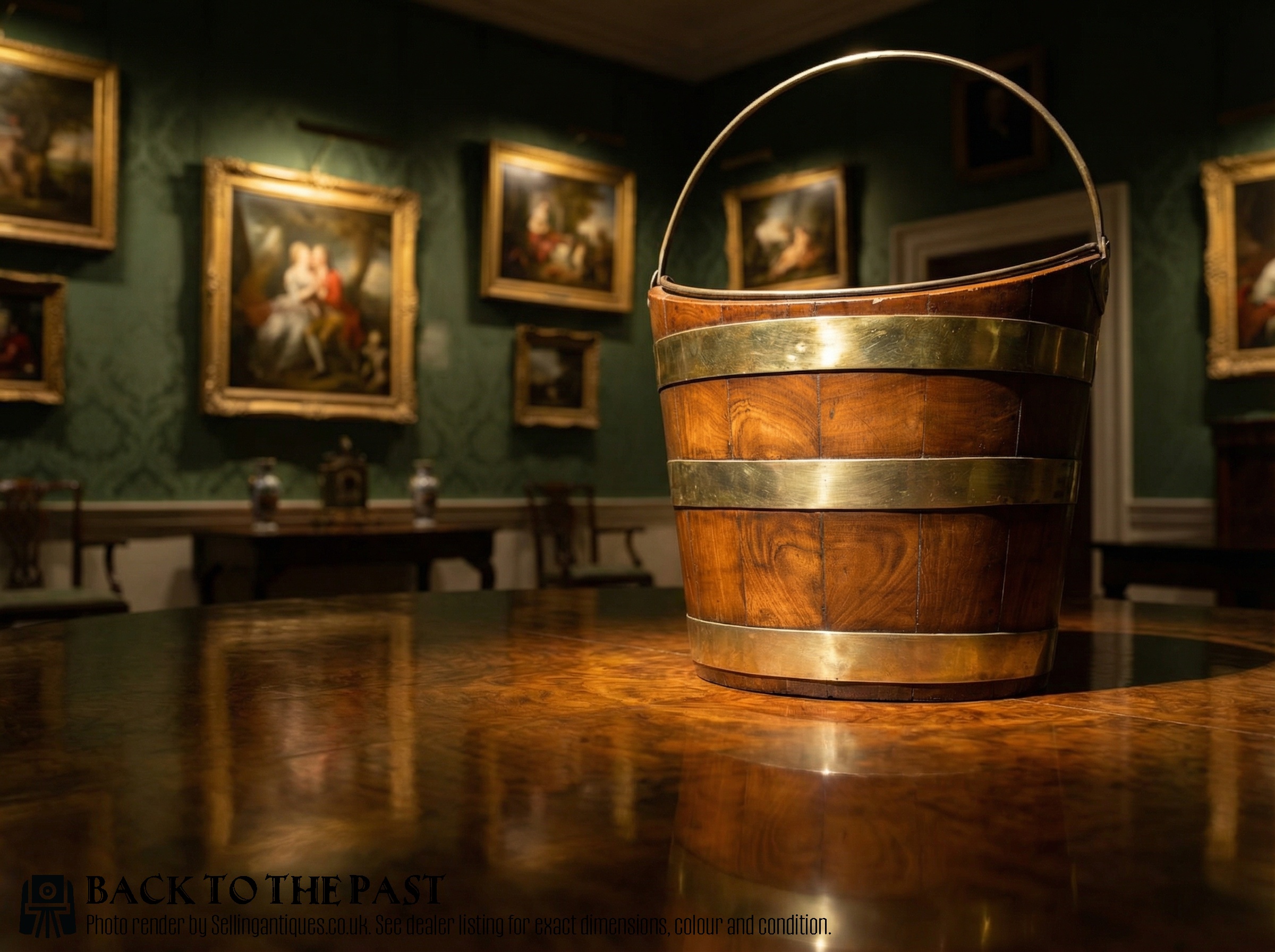
A staved mahogany bucket brings rich timber and gleaming brass to firesides and dining rooms, offering practical depth with period elegance.
Staved Mahogany Bucket
When buyers search for a staved mahogany bucket, they encounter functional vessels built from vertical strips of timber joined together. These pieces appear across Georgian, eighteenth-century, and nineteenth-century periods, alongside later twentieth-century interpretations in the George III style.
The forms span several domestic uses, functioning as wine coolers, plate buckets, oyster buckets, and peat buckets for the fireside. Some larger examples also serve as jardinières, adapting deep cylindrical or tapered bodies to hold potted plants.
Most entries combine solid mahogany staves with polished brass bands that hold the wooden construction secure. Buyers frequently meet simple utilitarian shapes as well as decorative items designed for formal entertaining.
Construction and materials
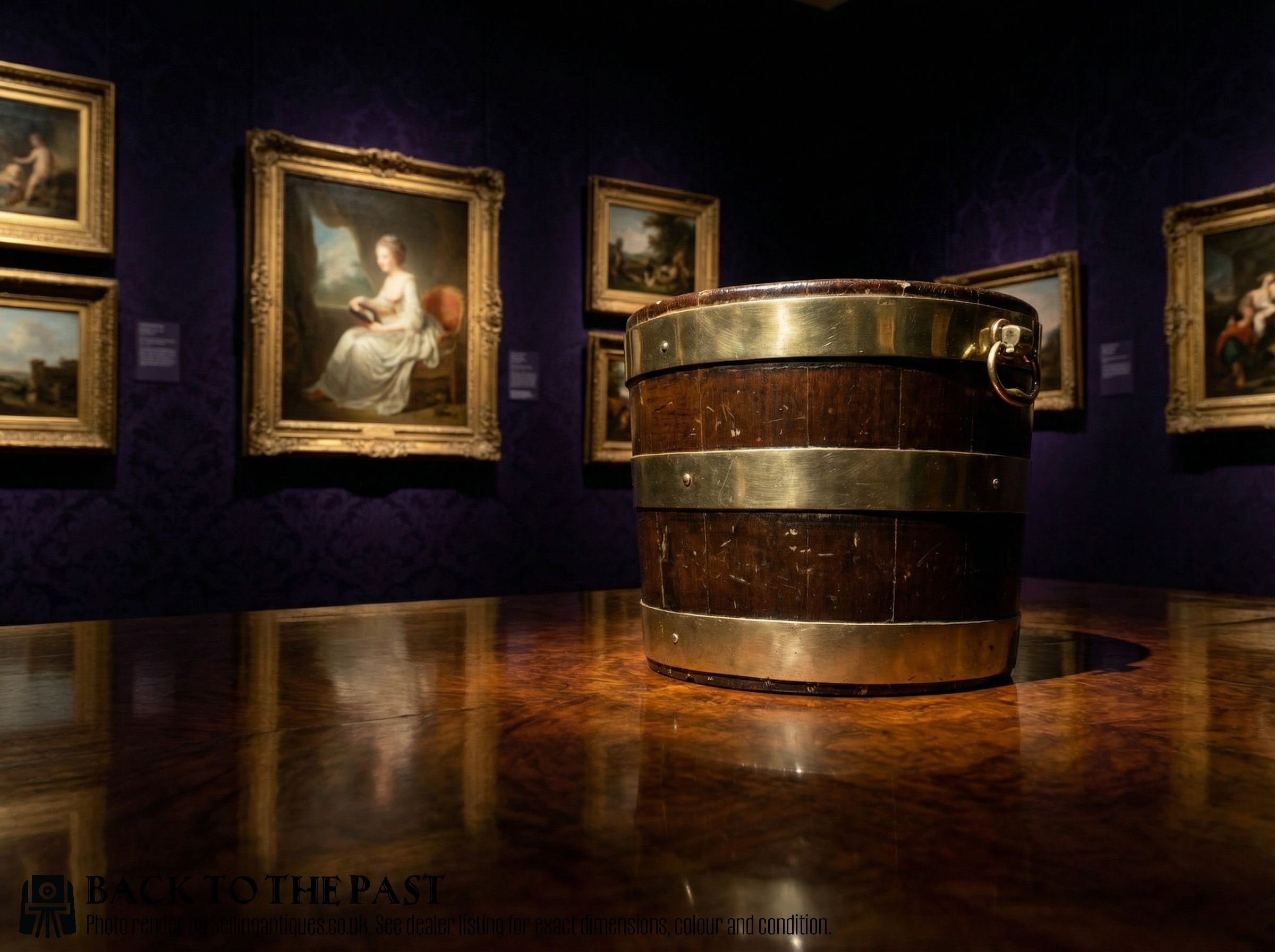
Coopers and cabinetmakers built these vessels using narrow vertical slats of mahogany, edge-joined to form a rounded, watertight or structurally rigid shell. The grain of the timber runs vertically down the exterior curve of each piece.
Bright brass bands encircle the mahogany bodies, secured with tightly fitted pins or rivets to maintain tension against the wood. These metal hoops contrast with the dark reddish-brown tones of the polished mahogany.
Staved Mahogany Bucket Retail Price Guide 2026
Typical asking prices for staved mahogany bucket among the pieces listed under this phrase on Sellingantiques today, from the lower quarter to the upper quarter. They describe what is for sale here now, not the wider market.
Materials across the selection combine solid mahogany bodies with polished brass bands.
Judging the standard of workmanship
Superior examples display tight, seamless joints between adjacent mahogany staves, showing masterly precision in shaping the bevels. Inferior work reveals wider gaps, poorly aligned grain, or heavy modern repairs.
The weight and finish of the brass hardware distinguish finer items from simpler utilitarian versions. Heavy, hand-beaten or cast brass hoops with clean lines indicate higher workshop standards than thin, machine-pressed metal.
The Staved Mahogany Bucket Glossary
- Stave
- A narrow vertical strip of wood shaped to form the curved side of a rounded vessel such as a bucket or tub. These pieces are bound together tightly by metal hoops.
- Mahogany
- A durable, reddish-brown tropical hardwood prized for its stability and rich grain. It forms the primary body of Georgian furniture and serving vessels.
- Peat bucket
- A deep container designed to hold dried turf or peat blocks beside a fireplace. They often feature robust brass handles for carrying heavy fuel.
- Jardinière
- An ornamental pot or stand used for holding growing plants. Large mahogany wine coolers are frequently adapted for this purpose in modern interiors.
- George III style
- A design descriptor reflecting the aesthetic of the late eighteenth century, often applied to revival pieces made around nineteen hundred.
Staved Mahogany Bucket: Frequently Asked Questions
What is a staved mahogany bucket used for?
These vessels originally served practical household functions such as chilling wine bottles, storing peat by the hearth, or carrying tableware. Eighteenth-century households relied on them for heavy domestic tasks during dining and entertaining.
Today, owners repurpose them as decorative plant holders, umbrella stands, or fireside storage bins. Their deep cylindrical cavities accommodate various items while displaying traditional cabinetmaking in living spaces.
How do I date a mahogany bucket?
Dating relies on examining the construction methods, timber characteristics, and style of the brass mounts. Eighteenth-century and Georgian pieces typically exhibit hand-cut dovetails, older patination on the wood, and hand-forged metalwork.
Later nineteenth-century examples or items built around nineteen hundred in the George III style often show more uniform machine-sawn timber and brighter, mass-produced brass bands. Comparing the wear patterns on the base helps confirm the age of the vessel.
Are these buckets waterproof?
Traditional staved construction relies on tight wooden joints and metal bands to hold liquids without adhesive. However, older timber shrinks and expands over centuries, meaning many surviving examples can no longer hold water safely.
Buyers intending to use wine coolers for ice should check the interior condition or insert a modern liner. Most owners prefer to protect the antique wood from direct moisture exposure.
Where should I place a peat bucket?
Peat buckets suit traditional hearths, entrance halls, or studies where their dark timber tones complement period interiors. Their sturdy handles make them easy to position beside a fireplace or bookshelf.
Keep these vessels away from direct heat sources and strong radiators to prevent the dry mahogany staves from cracking. Occasional application of appropriate wax maintains the lustre of the timber.