



Dark Mahogany Bucket
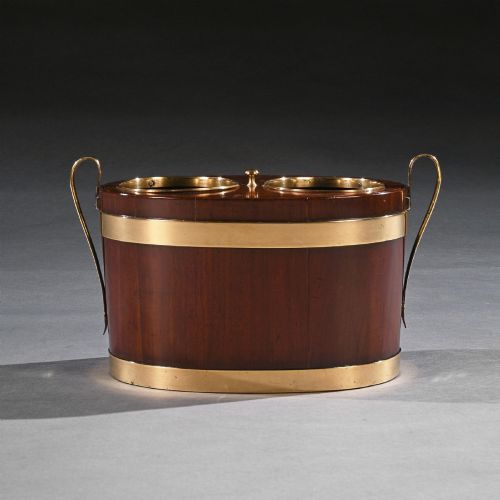
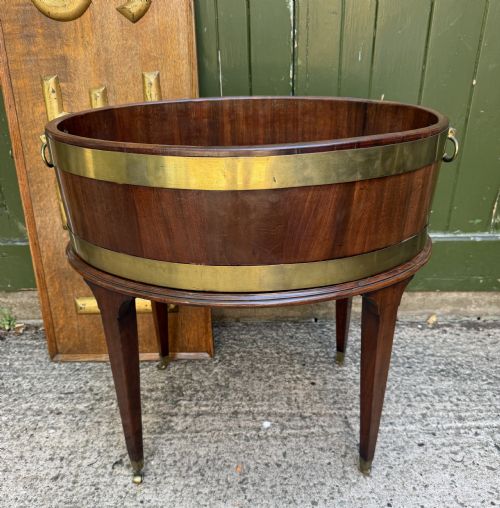
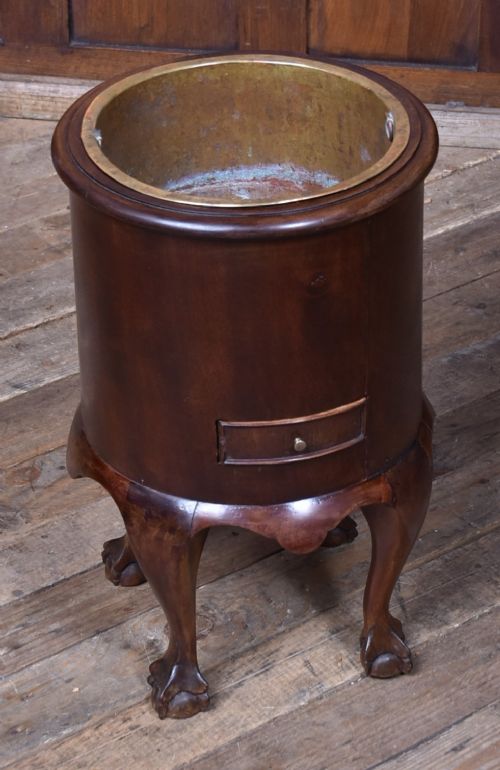
A dark mahogany bucket brings rich timber tones and gleaming metal bands to any room, serving as a handsome container for wine, fuel, or plants.
Dark Mahogany Bucket
You are most likely to meet Georgian and Victorian examples featuring rich, dark mahogany timber enhanced by contrasting brass bands and liner inserts. Many double in modern homes as statement planters or jardinières, adapting their robust historical utility to new domestic roles.
Materials and construction
Coopers and cabinetmakers built these pieces using solid dark mahogany, shaping staves to form curved bodies secured by tight tension. Metal bands of brass or iron were fitted around the timber to provide structural strength and sharp visual contrast.
Interior storage relied on fitted metal components, including zinc, iron, or metal liners designed to contain melting ice, damp peat, or ash. Stands and handles incorporated turned wood or cast brass elements, ensuring durable everyday service.
Materials recorded across the selection combine rich mahogany timber with functional metal components including brass, zinc, iron, and lead.
Judging quality
Quality rests upon the depth of the mahogany grain and the integrity of the original cooperage. Pieces displaying crisp brass bindings and well-maintained timber show superior workshop execution.
The presence of period liners and untouched surface patination elevates a vessel. Later revival interpretations rely on proportion and timber selection to match the presence of eighteenth and nineteenth-century originals.
The Dark Mahogany Bucket Glossary
- Cellarette
- A lockable or open container used for storing wine bottles near the dining table. They frequently mirror the oval or elliptical geometry found in traditional mahogany buckets.
- Cooperage
- The traditional craft of making wooden staved vessels bound with metal hoops. This method ensures the tight structural joinery essential for holding liquids or heavy materials.
- Purdonium
- A specialised Victorian coal box or scuttle designed for domestic hearth maintenance. These containers often feature drop fronts and integrated metal shovels.
- Jardinière
- An ornamental pot or stand intended for holding plants and flowers. Dark mahogany wine coolers are frequently repurposed into jardinières for interior display.
- Staves
- The narrow strips of shaped mahogany fitted together to form the curved walls of a bucket. Their precise assembly creates the watertight or sturdy vessel body.
Dark Mahogany Bucket: Frequently Asked Questions
What were mahogany buckets used for?
These vessels served practical domestic roles in elite households, functioning as wine coolers filled with ice, holders for peat or coal by the hearth, or storage for dinner plates.
Today, their robust construction and deep timber tones allow them to transition seamlessly into living spaces as decorative storage or planters.
How do I tell a wine cooler from a coal scuttle?
Wine coolers and cellarettes typically feature watertight metal liners and oval or elliptical bodies designed to rest on the floor or dedicated stands.
Coal scuttles and purdoniums often include hinged lids, drop fronts, or specialised shovels intended for hearth maintenance and fuel transfer.
Are these buckets waterproof?
Many historical examples retain their original zinc, iron, or metal liners intended to hold melting ice for wine cooling or damp peat for fireside use.
However, centuries of use mean liners may require inspection before holding water or wet potting soil directly inside antique timber.
How do I date a mahogany bucket?
Georgian pieces often display refined oval proportions with hand- dovetailed stands and bright brass bands, reflecting eighteenth-century dining customs.
Victorian and later revival examples tend to incorporate heavier brass mountings, coal scoops, or purdonium mechanisms suited to nineteenth-century domestic layouts.