

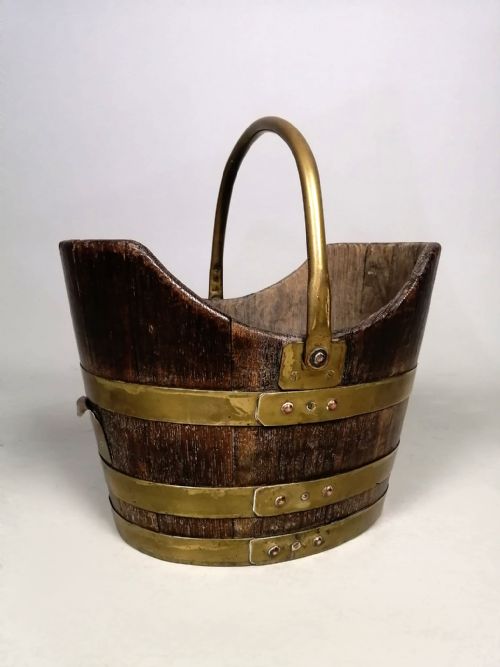


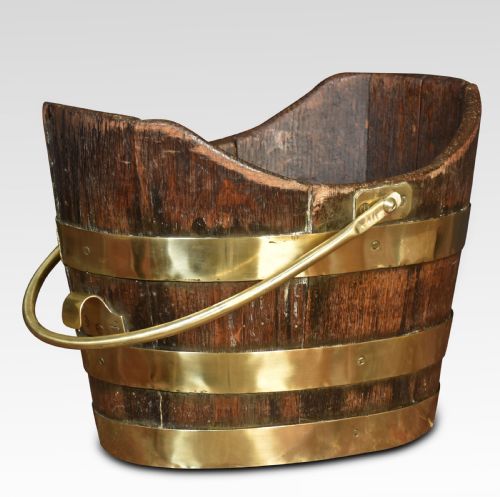
Georgian Coal Bucket
Georgian coal buckets are sturdy fireside vessels formed in brass, copper, and mahogany, prized for keeping hearths organised and fuel close to hand.
Georgian Coal Bucket
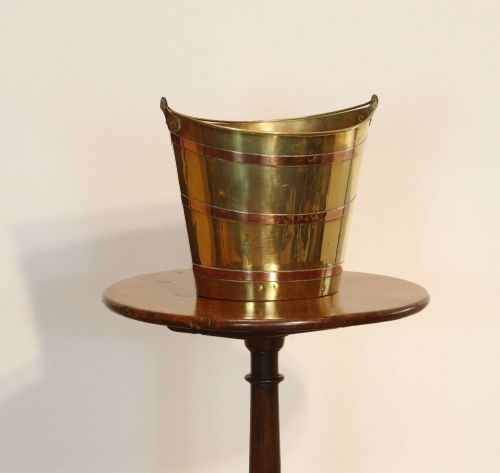
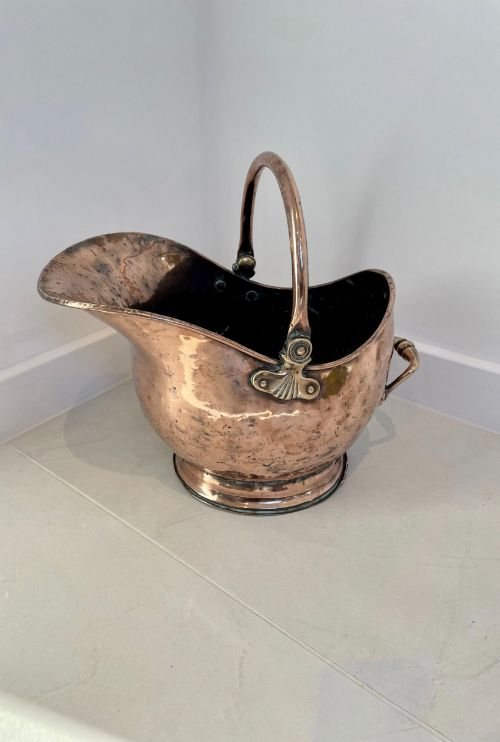
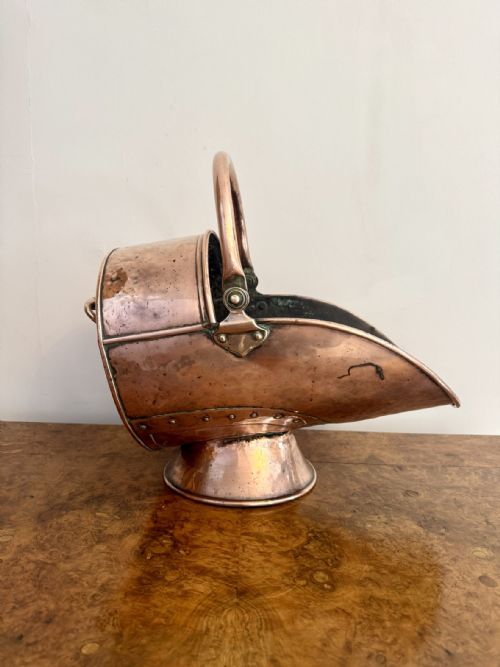
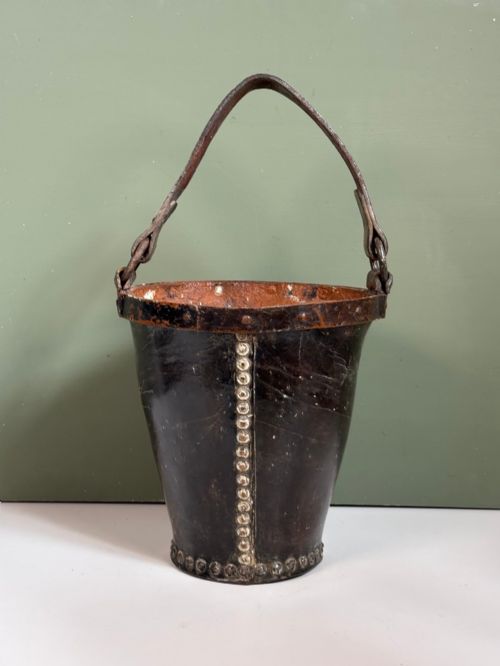
When you search for a georgian coal bucket, you encounter a robust class of fireside accessories designed to hold solid fuel by the hearth. The forms span helmet coal scuttles, boat-shaped peat buckets, log bins, and cylindrical wood buckets originating from the Georgian and Victorian eras.
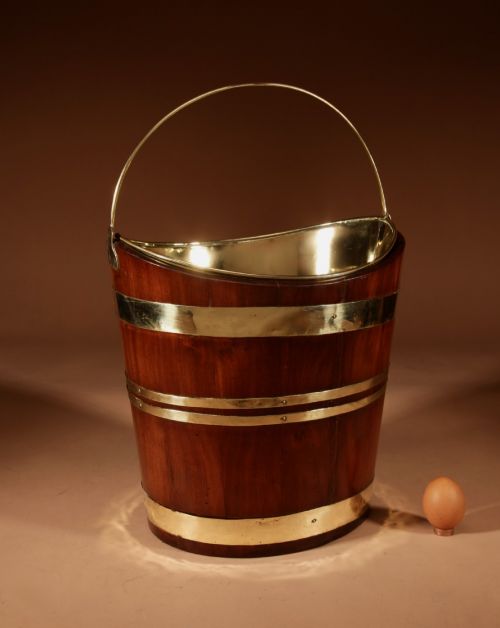
The versions most commonly met on this page combine timber staves with metal bands or consist entirely of heavy hammered copper and brass. Many examples bridge multiple uses, serving equally as log bins, peat buckets, and plant holders beside period fireplaces.
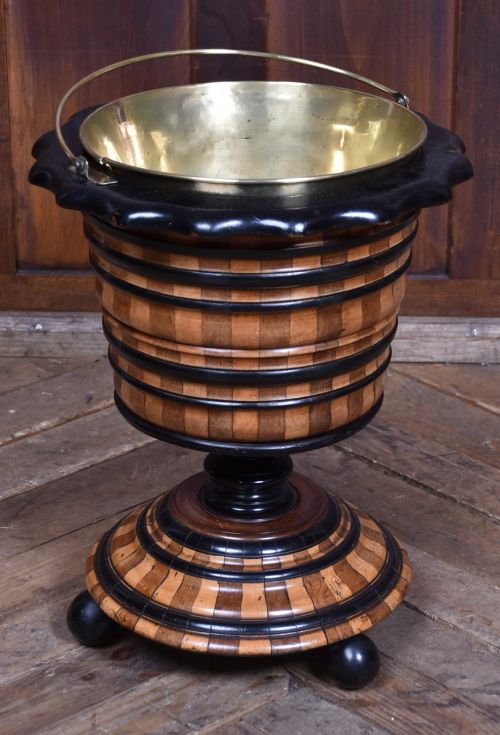
The origins reflect both English cabinet-making traditions and continental imports, including Dutch styles and Teestoofs. Pieces range from straightforward utilitarian containers to sophisticated coopered mahogany vessels fitted with brass handles and liners.
How they were made
Makers constructed wooden buckets using traditional cooperage techniques, binding staves of mahogany, oak, or fruitwood with hoops of polished brass or iron. These timber forms frequently feature spindle details, ribbing, and shaped or elliptical profiles.
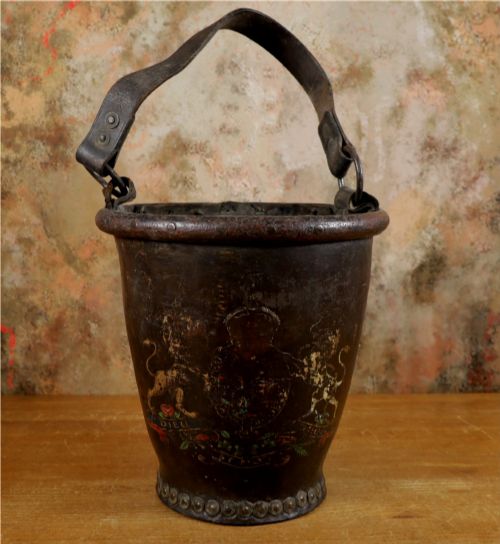
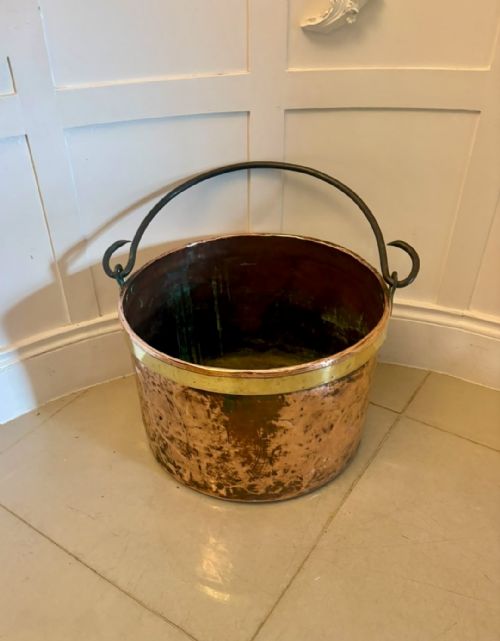
Metal iterations rely on heavy gauge copper and brass sheets joined with visible rivets and studs, often shaped into helmet profiles or cylindrical log bins. Handles are forged from iron or cast in brass, secured firmly to the body for heavy daily use.
Georgian Coal Bucket Retail Price Guide 2026
Typical asking prices for georgian coal bucket among the pieces listed under this phrase on Sellingantiques today, from the lower quarter to the upper quarter. They describe what is for sale here now, not the wider market.
What varies in quality
Quality rests heavily on the crispness of the cooperage and the gauge of the metal utilised in the construction. Finer examples display tight, uniform timber staves, substantial brass banding, and original liners, whereas simpler versions show heavier wear and lighter materials.
The distinction between standard utility items and exceptional pieces lies in decorative restraint and original patination. Untouched surfaces, subtle mouldings, and crisp brass studwork elevate certain mahogany peat buckets and copper scuttles far above basic hearth containers.
The Georgian Coal Bucket Glossary
- Coopered
- Made by a cooper using curved wooden staves bound together with metal hoops. This technique provides the structural strength needed for holding heavy loads of coal or peat.
- Peat bucket
- A traditional vessel designed to store dried peat for fuel. These are often coopered in mahogany with brass bands and distinct side handles.
- Teestoof
- A Dutch warming vessel or footstove incorporating a metal liner. These items appear alongside standard coal buckets in fireside collections.
- Helmet scuttle
- A coal container featuring a high back and a sloping front spout resembling a classical helmet. They are usually formed from heavy copper or brass with a fixed arched handle.
- Log bin
- A large cylindrical or shaped container built to house firewood. They utilise materials like copper, brass, and mahogany to withstand heavy logs.
Georgian Coal Bucket: Frequently Asked Questions
What is the difference between a coal scuttle and a log bin?
Coal scuttles generally feature a helmet shape with a pointed spout designed for pouring small fuel directly into a grate. Log bins are wider, straighter vessels built to hold larger pieces of firewood.
Both serve similar practical purposes by the fireplace but suit different types of solid fuel storage.
Were these buckets used only for coal?
Historical records show these vessels held various hearth fuels including coal, logs, and dried peat blocks. Many were also adapted over time as umbrella stands or decorative planters.
Their sturdy construction made them versatile additions to period rooms beyond simple fuel transport.
How do I identify a Georgian bucket?
Look for authentic construction methods such as hand-dovetailed joints, heavy gauge hand-beaten copper, and traditional brass banding on timber staves. Period pieces exhibit age-appropriate wear and patination on the interior and exterior.
Stylistic cues like helmet spouts and specific mahogany grain patterns also point towards eighteenth-century origins.
Can I use an antique bucket by a working fireplace?
Most copper and brass examples remain structurally capable of holding modern fuel when fitted with appropriate liners. Wooden versions benefit from careful handling to protect dry historic timber from extreme heat.
Many owners continue to use them daily for logs while keeping delicate liners protected.