


Brass Lined Peat Bucket
A brass lined peat bucket brings traditional hearthside utility into a room with rich timber and polished metal.
Brass Lined Peat Bucket
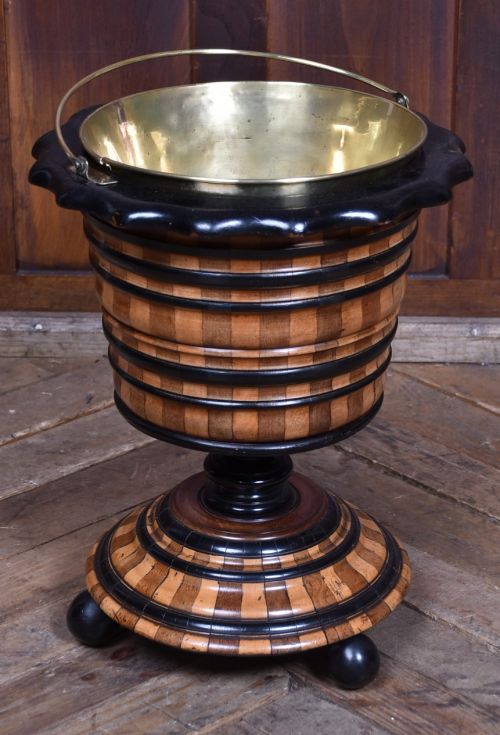
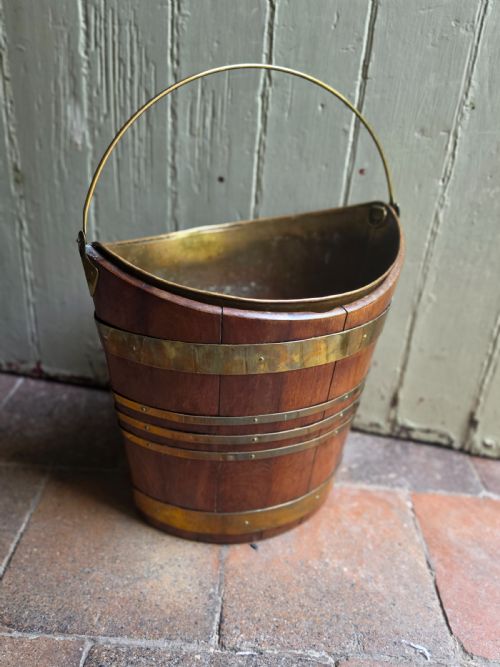
A brass lined peat bucket serves as a fireside container traditionally used for holding fuel such as peat or turf, alongside variations functioning as tea stoves or jardinieres. You will most frequently encounter mahogany examples alongside walnut, ebonised wood, and mixed hardwoods shaped into coopered or constructed vessels.
The selection ranges from Georgian pieces dated around 1760 and late Georgian designs to 19th-century Dutch and Victorian iterations. These objects often double in form as planters, tea stoves, or knitting baskets while retaining their characteristic metal liners.
Origins stretch across British and continental workshops, displaying distinct styles from Dutch Empire to Georgian Revival. The recurring presence of brass lining links fuel storage directly with functional hearth accessories.
How they were made
Cabinetmakers utilised dense timbers including mahogany, walnut, satinwood, and ebony, frequently employing coopered construction methods to build the curved bodies. Metal components such as brass bands, swing handles, and internal liners were fitted carefully to contain fuel or water.
Surface decoration relies on natural wood grains, inlay work, and ebonised details rather than heavy carving. The integration of a removable brass liner protected the timber staves from moisture and ash.
Some containers performed double duty keeping both peat warm and tea brewing.
What varies in quality
The distinction between standard and superior pieces rests on the choice of timber and the precision of the cooperage. Figured mahogany or richly grained walnut paired with robust brass binding elevates a piece beyond simpler mixed hardwood constructions.
Proportion and decorative restraint also define the upper tier. Finely fitted liners, well-turned handles, and subtle inlay work indicate careful execution by skilled makers.
The Brass Lined Peat Bucket Glossary
- Coopered
- Built from vertical staves of wood bound together with metal hoops, much like a traditional barrel. This technique provided the necessary strength for holding heavy loads of peat or water.
- Jardiniere
- An ornamental pot or stand designed to hold plants or flowers. Many peat buckets and tea stoves share this exact structural form.
- Teestoof
- A Dutch foot warmer or small stove designed to hold hot embers beneath a seat or container. These appear frequently in 19th-century Dutch designs associated with peat carriers.
- Elliptical
- Having an oval shape with gently curved sides rather than a strict circle. This form allows the bucket to sit comfortably beside a hearth without protruding too far into the room.
- Oyster bucket
- A specific tapering vessel form with stave construction, named for its silhouette. These timber carriers often feature similar brass banding and liners.
Brass Lined Peat Bucket: Frequently Asked Questions
What is a brass lined peat bucket?
A brass lined peat bucket is a traditional wooden container built with stave construction and fitted with a metal interior to hold fuel for the hearth. These pieces date primarily from the Georgian and Victorian periods.
Over time, many of these vessels transitioned into decorative roles such as planters, jardinieres, or tea stoves within the home. Their robust construction allowed them to carry heavy materials safely.
How were peat buckets used?
These buckets sat beside the fireplace to store and transport dry peat, turf, or coal for the fire. The metal lining prevented moisture and ash from damaging the surrounding timber.
Some variations incorporated internal heating elements or functioned as tea stoves to keep pots warm near the hearth. Others served multipurpose roles as knitting baskets or decorative plant holders.
How do I identify a Georgian peat bucket?
Georgian examples, typically dating around 1760, usually feature rich mahogany timbers with precise coopered staves and substantial brass bindings. They display classic proportions and restrained decorative details appropriate for formal period interiors.
Later 19th-century interpretations often show continental influences, particularly Dutch styles, incorporating walnut, ebony, or ebonised wood alongside oval or elliptical bodies.
Where can I use a peat bucket at home?
A peat bucket functions naturally beside a fireplace as a container for logs, kindling, or magazines. The waterproof brass lining makes them exceptionally practical for holding potted plants as jardinieres.
Their rich wood tones and polished metal accents suit traditional hallways, studies, or living rooms as standalone decorative objects.