
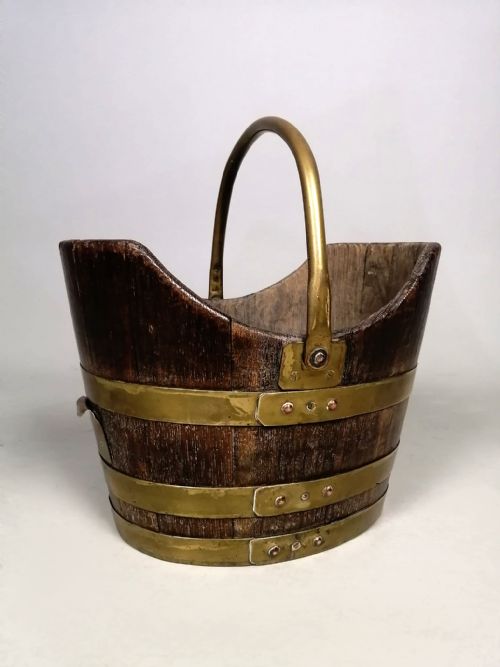
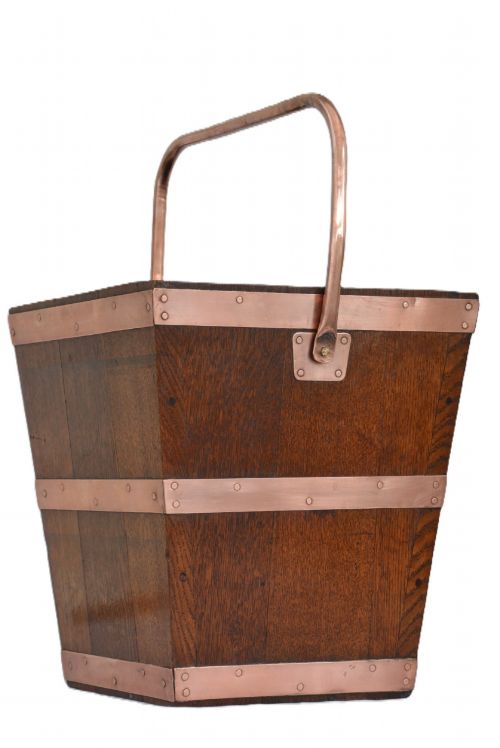
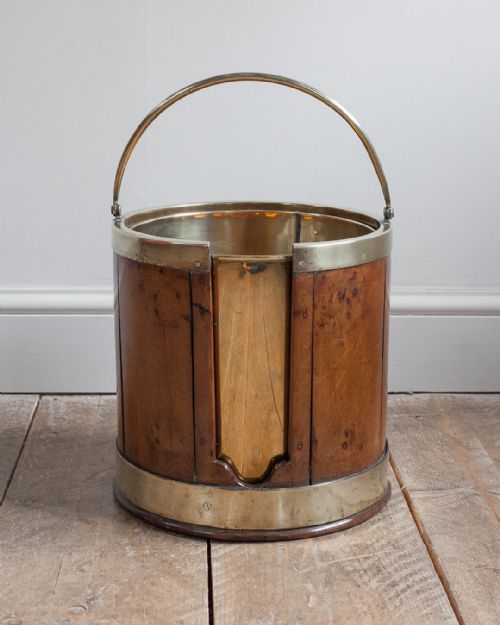


Wooden Hearth Bucket
A wooden hearth bucket brings honest utility to the fireside, combining timber and metal to hold coal, logs or peat.
Wooden Hearth Bucket
When you search for a wooden hearth bucket, you encounter a range of fireside containers spanning the Georgian, Victorian and Edwardian eras. These pieces include coal scuttles, peat buckets, log boxes and coal bins designed to keep fuel tidy beside the fireplace.
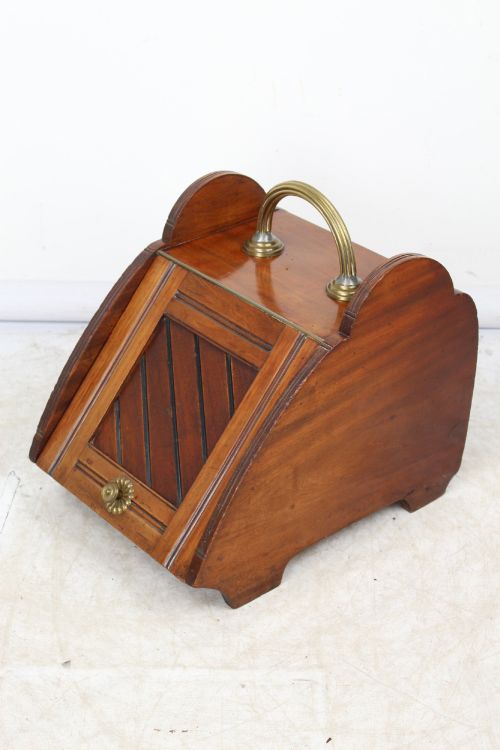
The version you are most likely to meet on this page is the Victorian oak or mahogany coal bucket, often reinforced with brass bands and fitted with a metal liner. Coopered staves and swing handles appear frequently across these nineteenth-century examples.
Originating in English, Scottish and Dutch traditions, these practical vessels also encompass plate buckets and well buckets adapted for hearthside use. Their construction reflects the functional demands of period domestic life.
How they were made
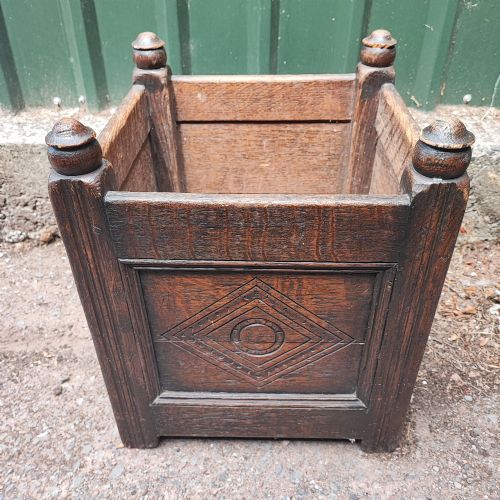
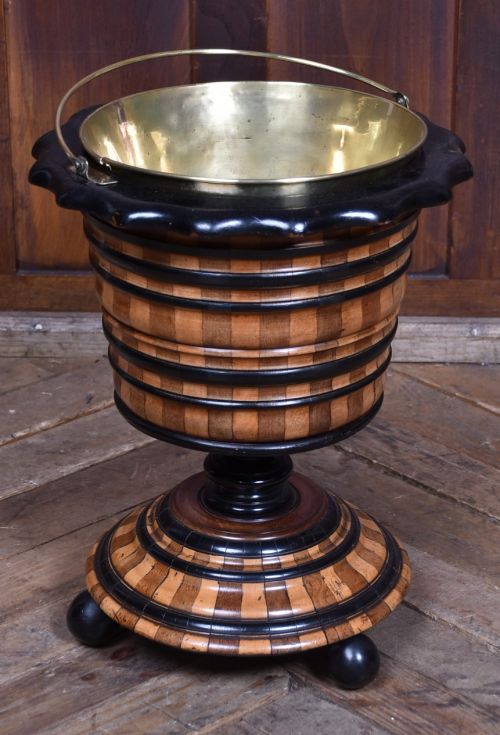
Cabinet makers and coopers constructed these vessels using solid timbers such as oak, mahogany and walnut, occasionally employing ebonised wood or pine. Staves were shaped and bound together with brass or iron hoops, creating robust cylindrical or oval bodies.
Makers added internal metal liners or inserts to contain damp fuel and ash, protecting the surrounding wood from moisture and heat. Brass swing handles, mounts and paw feet were then secured with screws or rivets to complete the hardware.
Listings feature oak, mahogany, walnut and ebonised wood, paired with brass and iron hardware across multiple centuries.
What varies in quality
The calibre of a piece rests upon the selection of timber and the precision of the cooperage or joinery. Finely figured mahogany and dense, well-matched oak staves demonstrate superior material choice compared to plain utility timbers.
The weight and finish of the brass hardware distinguish finer examples from standard workshop production. Heavy cast brass bands, sturdy handles and intact original metal liners indicate a higher standard of manufacture.
The Wooden Hearth Bucket Glossary
- Coopered
- Built using curved wooden staves fitted together side by side and bound with metal hoops, much like a traditional barrel. This method provides immense structural strength for holding heavy loads of coal.
- Purdonium
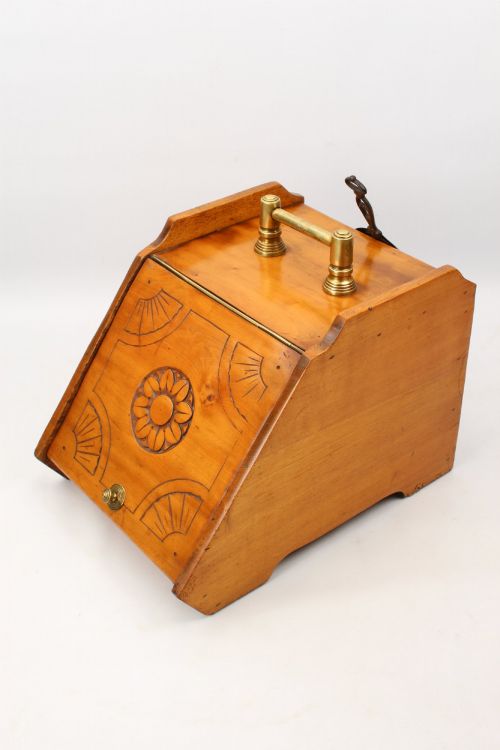
- A specific type of Victorian coal box featuring a sloping drop-front or scuttle mechanism that tips forward for easy access. They often incorporate a dedicated interior shovel compartment.
- Teestoof
- A Dutch warming vessel, sometimes lined with brass, used to keep tea or foot-warmers hot by containing embers. They share similar construction methods with contemporary peat buckets.
- Plate bucket
- A deep cylindrical wooden bucket fitted with vertical internal dividers to hold dining plates safely during transport or storage. They frequently share the brass banding and stave construction seen on hearth buckets.
Wooden Hearth Bucket: Frequently Asked Questions
How do I clean a wooden hearth bucket?
Wipe the exterior timber gently with a soft, dry cloth to remove dust, avoiding harsh chemical sprays that might damage the polish. Feed the wood occasionally with a suitable traditional wax to maintain its lustre.
Clean the interior metal liner separately after removing it from the wooden body. Ensure the metal is completely dry before placing it back inside to prevent moisture damage to the staves.
Can I still use these for real fires?
Many of these pieces remain robust enough to hold logs or coal beside a modern fireplace. The presence of a metal liner helps protect the original wooden structure from direct contact with fuel.
Exercise caution with very dry antique timber near intense heat sources. Using the removable inner container properly ensures the outer wooden shell stays safe.
How do I tell Georgian from Victorian pieces?
Georgian examples, particularly those from the eighteenth century, often display cleaner lines with fine mahogany construction and neat brass banding. They frequently take the form of straight-sided or gently tapered peat and plate buckets.
Victorian versions tend toward heavier ornamentation, including carved decoration, ebonised details and more complex purdonium mechanisms. Oak and walnut become particularly prominent during the later nineteenth century.
What is the metal liner for?
The internal metal liner serves as a protective barrier between the abrasive, dirty fuel and the polished wooden exterior. It contains coal dust, ash and moisture, preventing them from staining or rotting the staves.
Liners make emptying and cleaning the container straightforward without tipping the entire wooden structure. Most original liners are made from sheet metal, brass or zinc.