


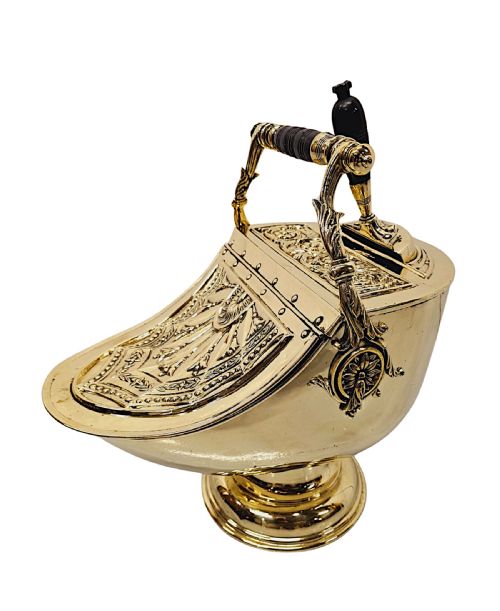


19th Century Coal Bucket
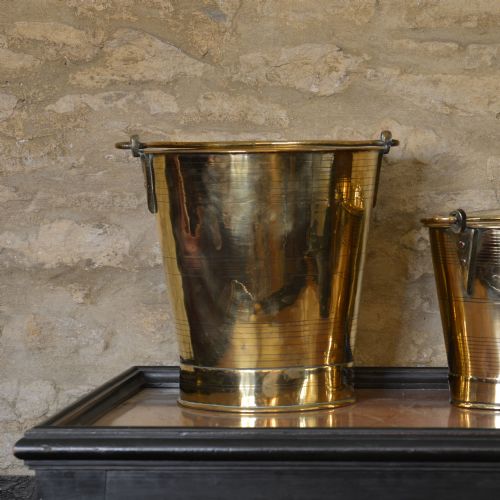
These heavy metal and timber vessels form the core of a traditional 19th century coal bucket selection, built to sit by the hearth and hold fuel for the fire.
19th Century Coal Bucket
A 19th century coal bucket encompasses heavy metal and timber hearth containers designed to store and transport solid fuel. They appear across various regional styles, including Victorian pieces, Dutch variants, and Arts and Crafts examples.
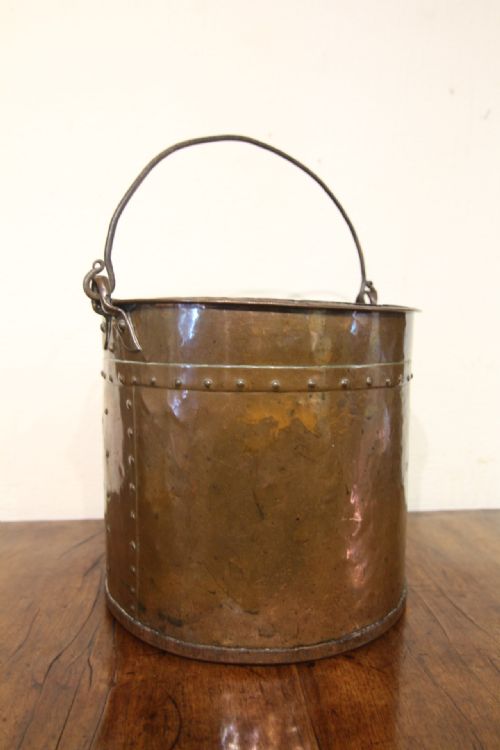
The most common forms on this page include riveted copper buckets, polished brass scuttles, and coopered timber log bins bound in brass or iron. Many retain specific functional traits like swing handles, drop handles, or internal metal liners.
Beyond standard hearth use, these vessels double as umbrella stands, jardinières, or decorative storage bins within period interiors. Their sturdy construction ensures they withstand practical service while adding historical character to a room.
How they were made
Makers constructed metal vessels using sheet copper and brass, often joining heavy plates with visible rivets and securing the rims with wrought iron handles. Many items incorporate cast brass elements such as claw feet or swing handles attached via sturdy brackets.
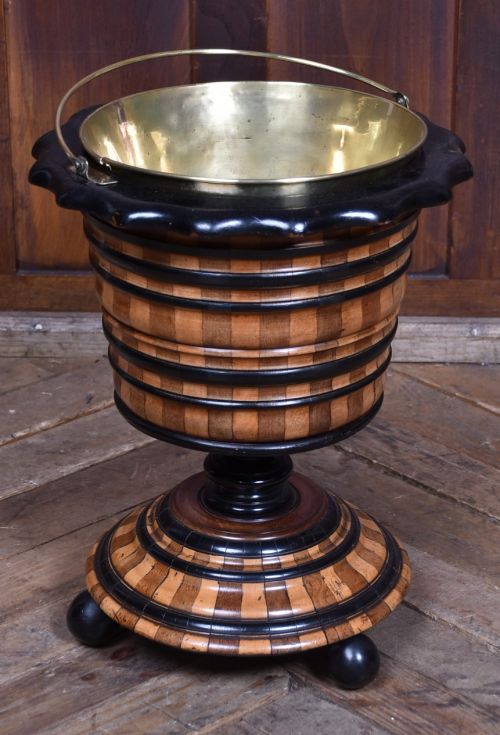
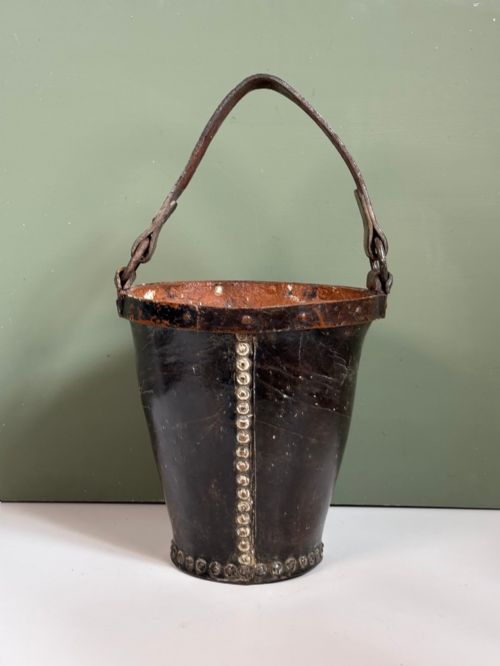
Timber versions rely on traditional cooperage techniques, binding staves of oak, mahogany, or walnut with tight metal bands. Several examples feature ebonised wood or spindle details, whilst specialised items utilise boiled leather or toleware painted surfaces.
What varies in quality
The distinction between standard utility items and finer examples rests upon the weight of the metal, the precision of the riveting, and the integrity of the timber staves. Thick-gauge copper with hand-beaten surfaces and secure, heavy-duty iron handles denotes superior construction.
Refinement in decorative detailing separates ordinary hearth containers from exceptional pieces. Cast brass claw feet, armorial crests, and well-executed joinery on mahogany or oak bodies indicate a higher standard of manufacture.
The 19th Century Coal Bucket Glossary
- Teestoof
- A traditional Dutch foot warmer or container featuring a brass liner. These pieces often incorporate perforated lids or decorative metalwork.
- Coopered
- Constructed from wooden staves joined tightly together with metal bands or hoops. This technique mirrors barrel-making and provides robust structural strength.
- Toleware
- Metalware coated with a dark lacquer or painted finish, frequently associated with folk art traditions. It offers a durable decorative surface.
- Purdonium
- A specific type of coal box or scuttle designed to store fuel with an internal liner and a drop-down front. They often accommodate a matching shovel.
- Jardiniere
- An ornamental container designed to hold potted plants or flowers. These vessels are frequently repurposed from metal coal buckets.
19th Century Coal Bucket: Frequently Asked Questions
What is a teestoof?
A teestoof is a traditional Dutch container featuring a brass liner, originally designed for warming feet or holding embers. These pieces often display characteristic craftsmanship from the Netherlands.
They appear alongside standard coal buckets and possess distinct internal metal components meant to contain heat or small fuel loads.
How do I clean a brass bucket?
Cleaning depends on whether you prefer to maintain an aged patina or a bright polished finish. Standard metal cleaner works on polished brass scuttles.
Heavier antique pieces often retain better character when left with minimal interference, preserving the marks of their 19th-century service.
Were these used only for coal?
While primarily designed for coal, these vessels held wood logs, peat, and general hearth fuel. Their durable construction suited heavy daily loading.
Many examples naturally transition into modern use as umbrella stands, plant holders, or general fireside storage bins.
What is coopered construction?
Coopered construction involves fitting curved wooden staves together and securing them tightly with metal bands. This method derives from traditional barrel-making.
It provides exceptional strength for oak and mahogany log bins designed to hold heavy loads of fuel without splitting.