

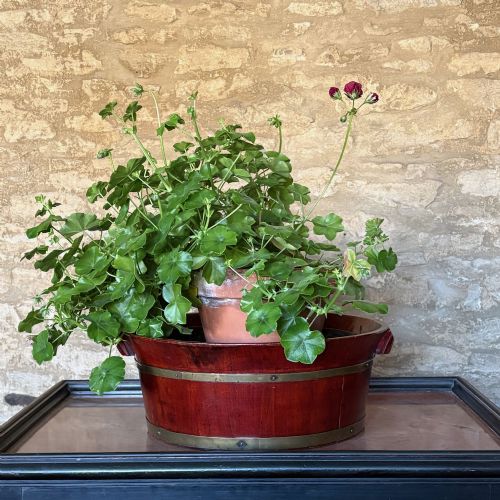
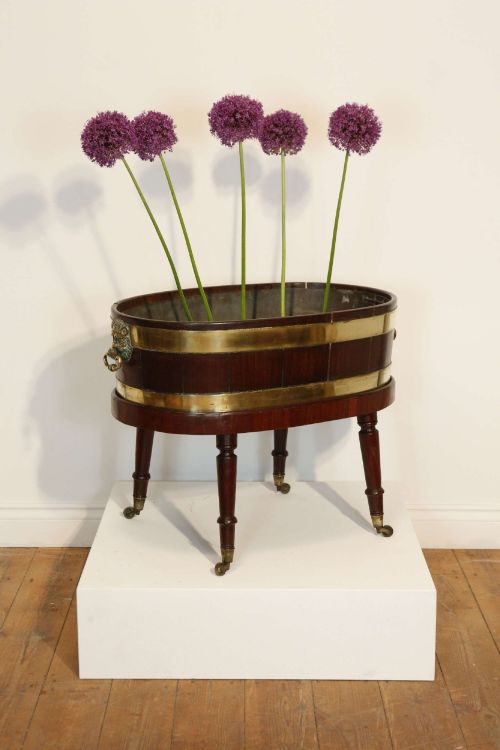
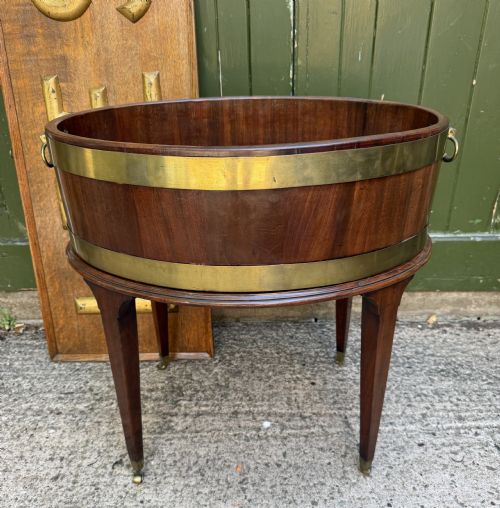

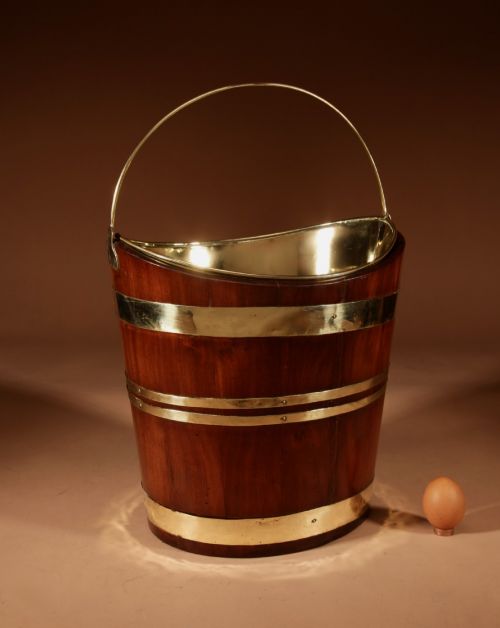




Brass Bound Planter
A brass bound planter brings substantial timber and polished metal together, offering a stately vessel for indoor greenery.
Brass Bound Planter
A brass bound planter draws heavily from historic forms originally constructed to chill wine or hold peat, adapting coopered vessels for botanical display. The selection on this page ranges from Georgian and Regency periods through to Edwardian and later twentieth-century interpretations, showing considerable longevity in domestic interiors.
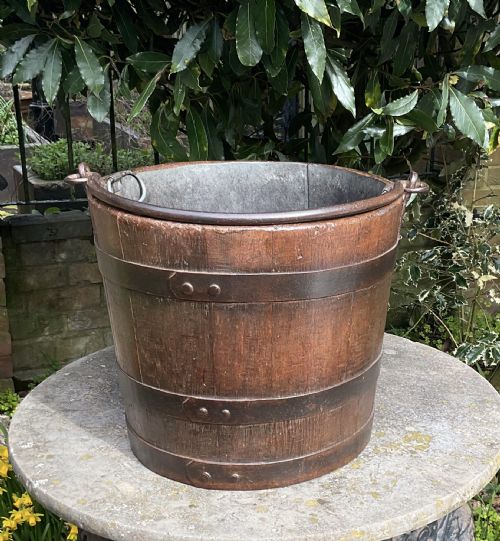
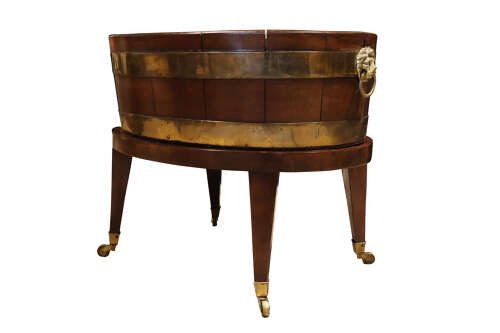
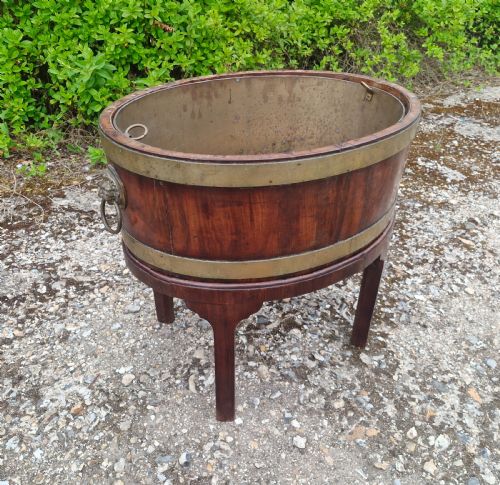
Buyers frequently encounter mahogany and oak constructions shaped as oval buckets, boat-shaped vessels, and round barrels. Many examples rest upon dedicated wooden stands, while others function as floor-standing or table-top jardinieres suited to large ferns and flowering plants.
Origins span English workshops alongside Dutch makers who specialised in turned teak, walnut, and mahogany stave construction. The overlap between wine coolers, cellarettes, and modern planter requirements means many pieces retain zinc, copper, or metal liners designed to manage soil and moisture safely.
Coopered construction and metalwork
The body of each piece relies upon traditional cooperage, where individual wooden staves of mahogany, oak, or teak are shaped and fitted tightly together to form curved walls. Metal bands of brass or copper are heated and driven onto the wooden staves, contracting securely as they cool to hold the vessel under constant tension.
Heavy brass handles, swing rings, and decorative escutcheons are frequently integrated into the design, fixed with traditional screws or pins. Internal metal liners in zinc or copper protect the timber core from damp earth and water during regular use.
Brass Bound Planter Retail Price Guide 2026
Typical asking prices for brass bound planter among the pieces listed under this phrase on Sellingantiques today, from the lower quarter to the upper quarter. They describe what is for sale here now, not the wider market.
Listings feature vessels spanning the Georgian, Victorian, and Edwardian eras, constructed primarily in mahogany and oak with heavy brass and copper banding.
Assessing material selection and construction
Quality rests upon the choice of timber and the precision of the cooperage, with dense, finely figured mahogany or quarter-sawn oak representing the superior end of the range. The thickness of the brass bands and the crispness of their profiling further distinguish finer examples from standard utility items.
The integrity of the stave joints and the survival of original matching stands, where applicable, determine the distinction between ordinary vessels and exceptional decorative works. Retaining original metal liners and unpolished patination indicates careful preservation over centuries.
Lister and Co
The Brass Bound Planter Glossary
- Coopered
- Constructed from curved wooden staves joined edge-to-edge and bound with metal hoops, much like a traditional barrel. This method provides immense structural strength for holding weight.
- Cellarette
- A lockable container used in the dining room during the eighteenth and nineteenth centuries to store bottles of wine before they were served. Many surviving examples later transitioned into planters.
- Jardiniere
- An ornamental pot or stand designed specifically to hold flowering plants or ferns indoors. The term appears frequently across Edwardian and later decorative listings.
- Schuitje
- A boat-shaped vessel or peat bucket originating from Dutch traditions, often characterised by tapered ends and prominent brass binding. These forms are prized for distinct aesthetic profiles.
- Escutcheon
- A decorative metal plate surrounding a keyhole or mounting a drop handle. On these pieces, they anchor heavy brass rings securely to the wooden staves.
Brass Bound Planter: Frequently Asked Questions
Can I plant directly inside the vessel?
Many examples feature original zinc, copper, or metal liners intended to protect the internal timber staves from moisture and soil. It remains sensible to use a secondary plastic pot inside the liner to ensure absolute safety against leaks.
Checking the interior condition helps determine whether a protective insert is present and intact.
How do I date an oak or mahogany planter?
Dating relies upon examining the timber grain, the style of the brass handles, and the construction methods used on the staves. Georgian and Regency pieces tend to feature fine mahogany with hand-beaten brass, whilst Edwardian and later twentieth-century examples often utilise oak with simpler turned stands.
Comparing the feet, handles, and overall proportions against known period furniture styles provides a reliable timeline.
Where should I place a large floor-standing jardiniere?
These vessels suit prominent positions in reception rooms, hallways, or beside fireplaces where their substantial timber presence can be fully appreciated. Placing them away from direct heat sources prevents the wooden staves from drying out and shrinking.
Ensuring adequate natural light for the greenery placed inside keeps both the plant and the wooden container in harmony.