

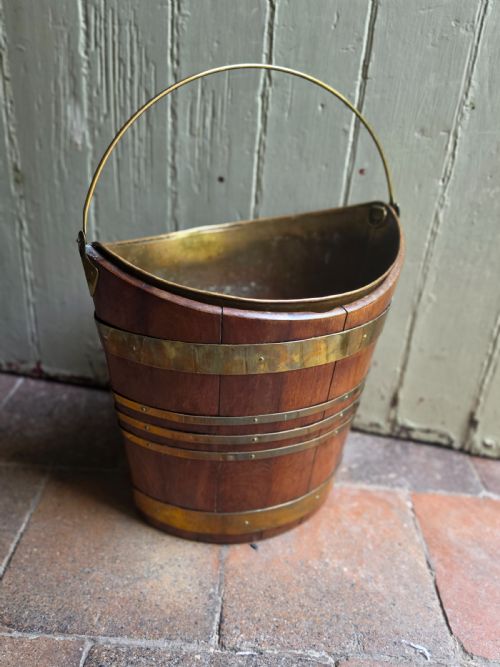
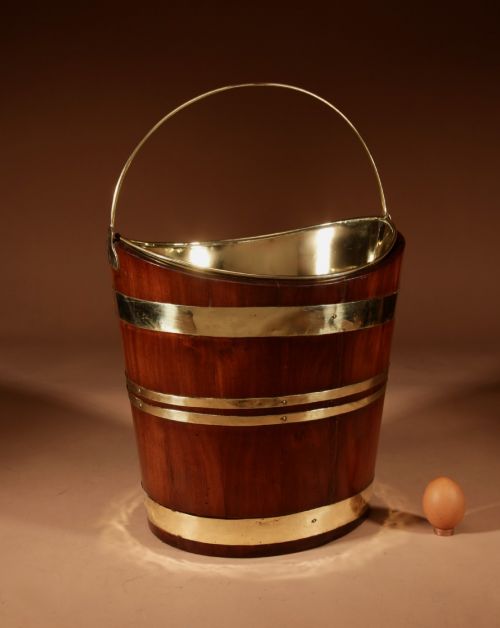
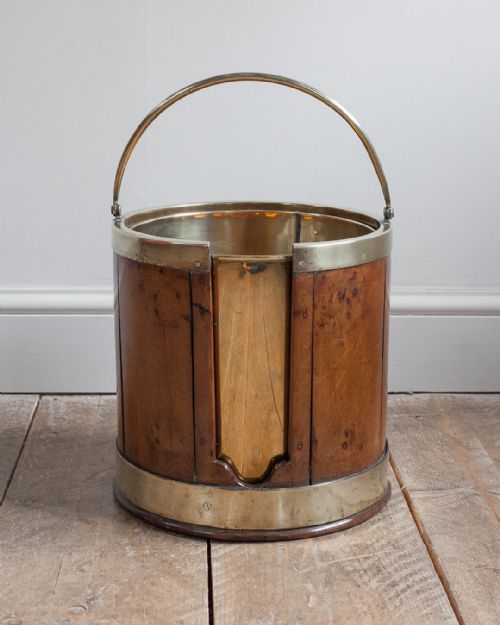
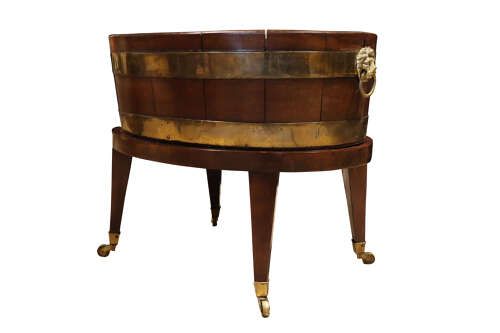

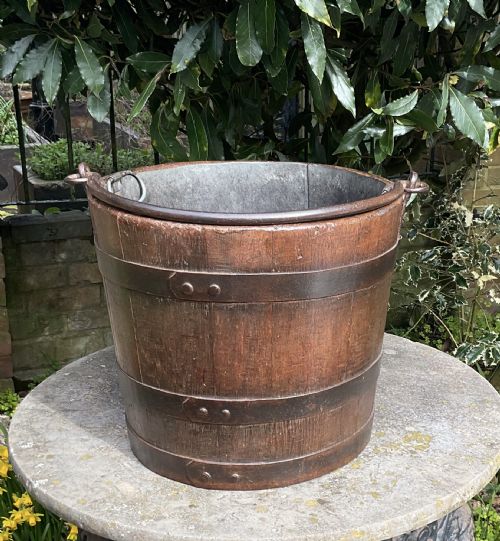


Brass Bound Wine Bucket
A brass bound wine bucket brings traditional craftsmanship to a room, offering a robust timber vessel designed to hold bottles and ice.
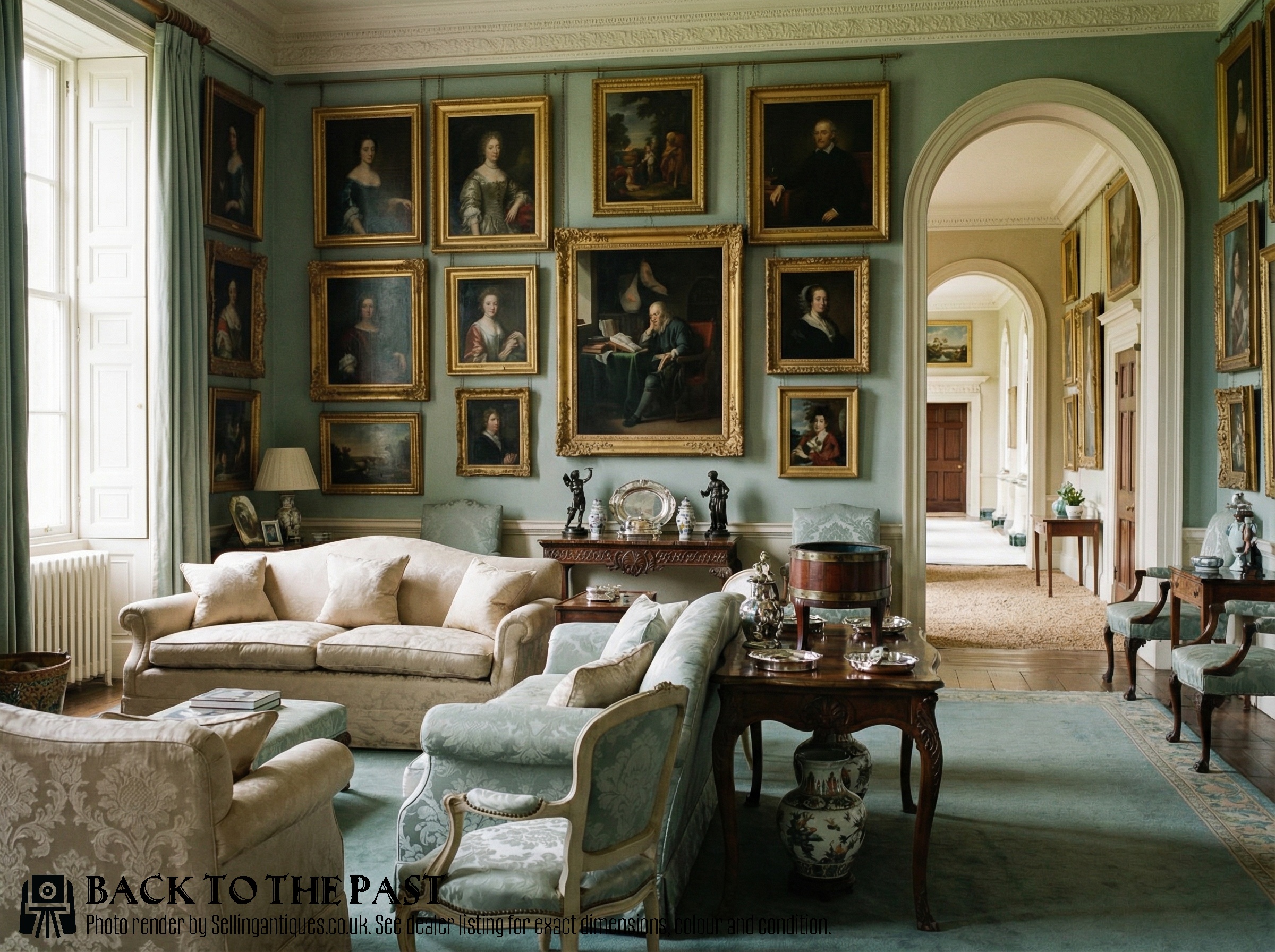
Identifying a brass bound wine bucket
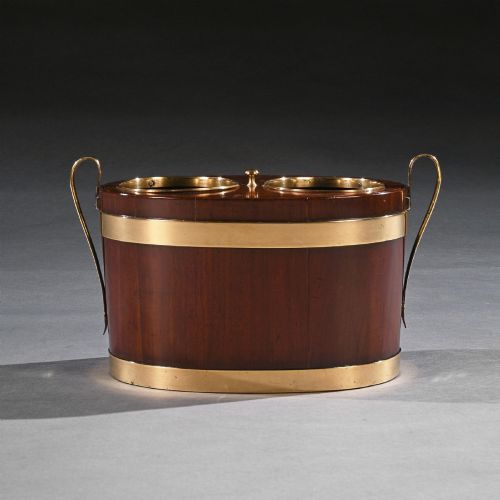
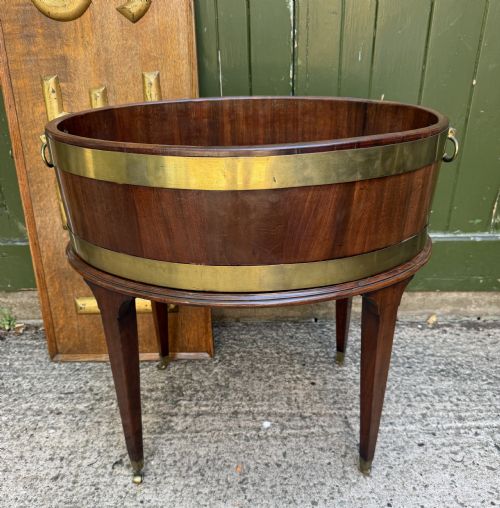
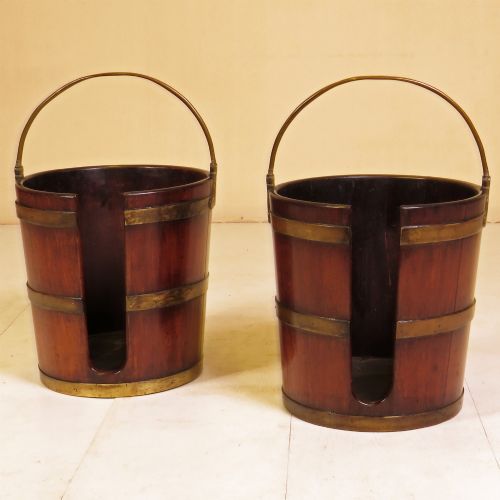
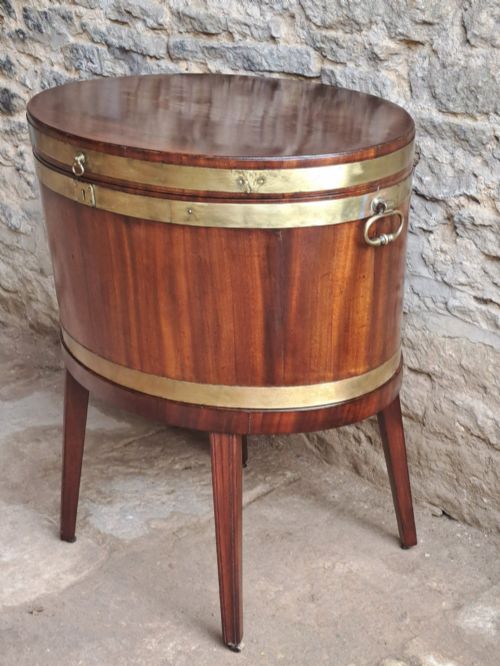
A brass bound wine bucket combines rich timber construction with functional metal bands, appearing in forms such as open coolers, cellarettes, and jardiniere stands. These pieces emerge from the eighteenth century through the early twentieth century, spanning Georgian, English Country, and Georgian Style designs.
Materials and construction
These vessels utilise dense hardwoods, predominantly mahogany and coopered oak, shaped into stave construction. Metal bands in brass and zinc encircle the timber bodies to secure the staves and provide structural reinforcement.
Makers combine traditional joinery with metalworking techniques to produce waterproof interiors using zinc linings alongside decorative exterior brass bindings.
Retail Price Guide 2026
Typical UK retail prices for brass bound wine bucket, calculated from the Sellingantiques database of over a million retail prices indexed since 2003. This retail price guide relies exclusively on Sellingantiques data; no external sources or auction records are used, so the figures do not describe the wider market.
Listings span from the 18th Century to 1930, uniting mahogany, oak, brass, and zinc across open coolers, cellarettes, and jardiniere stands.
Evaluating quality and distinction
Quality rests upon the selection of timber and the precision of the cooperage, where tightly fitted staves and uniform grain distinguish superior examples. The weight and finish of the brass bindings, alongside the original integrity of the zinc liners, separate standard items from finer pieces.
Period authenticity plays a central role, distinguishing eighteenth-century George III pieces from later twentieth-century revivals such as nineteen-thirty Georgian Style planters.
The Brass Bound Wine Bucket Glossary
- Coopered
- Built from vertical wooden staves fitted together and bound by metal hoops, traditionally used for casks and buckets. This technique ensures liquid containment.
- Cellarette
- A lockable container used to store bottles of wine in dining rooms before refrigeration. They often mirror the timber and metal bindings of wine buckets.
- Jardiniere
- An ornamental pot or stand for holding plants and flowers. Many wine buckets transition into this role.
- Stave
- One of the narrow vertical blocks of wood that fit together to form the circular or oval body of the bucket. The brass bands hold these pieces firmly in place.
Frequently Asked Questions
What is a brass bound wine bucket used for?
These vessels serve primarily as decorative containers for holding wine bottles alongside ice. Many owners also repurpose them as planters or jardiniere stands for interior greenery.
Their substantial timber construction and waterproof interiors make them practical additions to reception rooms and dining spaces.
How do I date a brass bound wine bucket?
Dating relies on examining the timber species, joinery methods, and the style of the brass hardware. Eighteenth-century pieces often display George III proportions and aged mahogany patina.
Later examples from the early twentieth century reflect Georgian revival trends or take the form of coopered oak planters.
Are these buckets waterproof?
Many examples feature original zinc linings designed to hold water and ice without damaging the outer wood. This metallic insert protects the mahogany or oak staves from moisture.
Buyers should inspect the interior to confirm whether the metal lining remains intact for functional use.
What woods were used to make them?
The listings show a strong preference for mahogany and oak as the primary structural timbers. These hardwoods provide the necessary density and durability for coopered vessels.
Brass and zinc are consistently paired with these woods for the exterior bands and interior linings.