



Oval Mahogany Wine Bucket
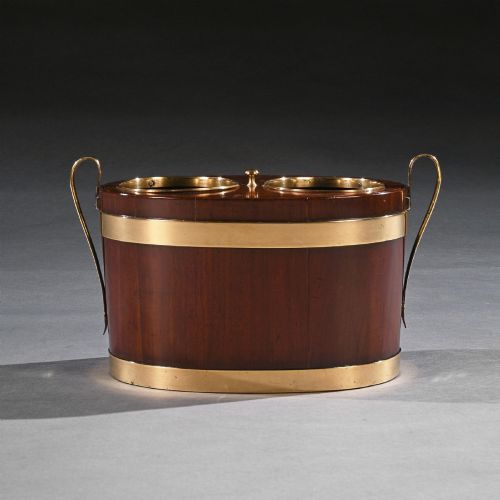
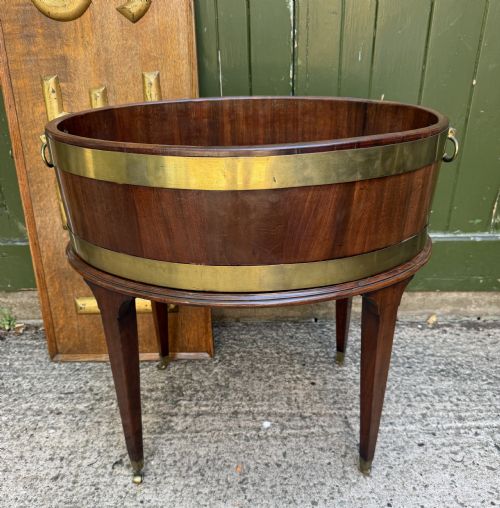
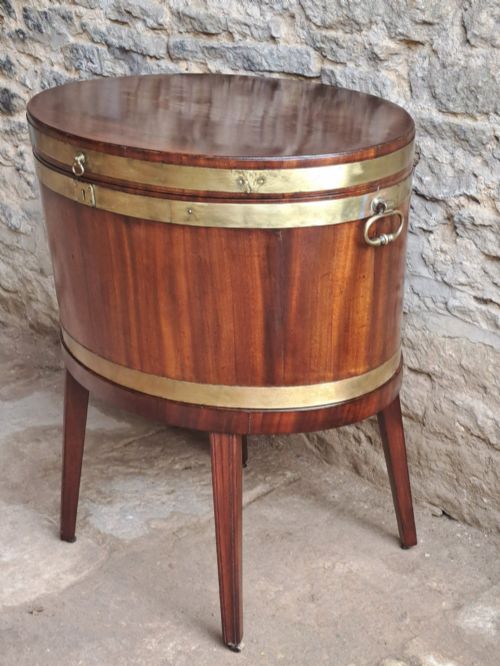
An oval mahogany wine bucket is a functional drinking vessel crafted for dining tables, bringing period character to any room.
Oval Mahogany Wine Bucket
An oval mahogany wine bucket is typically encountered in George III, Georgian, and 19th-century styles, originating primarily from the eighteenth and nineteenth centuries. These vessels served to chill wine during formal meals and frequently appear alongside brass banding and dedicated stands.
Makers designed these items as table wine coolers, cellarettes, or jardinières, utilising distinctive elliptical shapes. Many examples feature integrated liners made of zinc or metal to hold ice and bottles safely without damaging the timber.
Buyers seeking an oval mahogany wine bucket will encounter both open wine coolers and lidded cellarettes, occasionally decorated with boxwood inlay or walnut elements. The form bridges functional dining room utility and refined cabinet work.
Materials and construction methods
Craftsmen built these buckets using solid mahogany, frequently selecting timber with deep grain patterns and smooth patinas. Workshops reinforced the stave construction with substantial brass bands to secure the oval form against moisture and temperature changes.
Internal elements often incorporated zinc or metal liners to contain melting ice and liquid. Decorative details such as boxwood stringing and matching wooden stands completed the construction of finer examples.
Several of these grand mahogany wine buckets spent centuries moonlighting as heavy-duty plant pots after the dining fashion changed.
Distinctions in craftsmanship
The standard of timber selection and the precision of the brass banding largely determine the quality of an oval mahogany wine bucket. Superior pieces display finely fitted staves, crisp boxwood inlay, and well-preserved original stands rather than later replacements.
The integrity of the internal metal or zinc lining and the depth of the mahogany patina further separate standard specimens from exceptional ones. Workshops that paid careful attention to joinery and proportion produced pieces that retain structural stability over centuries.
Samual Norman
The Oval Mahogany Wine Bucket Glossary
- Cellarette
- A lockable container or freestanding bucket used for storing and cooling bottles of wine near the dining table. They frequently incorporate metal linings and stands.
- Jardinière
- An ornamental receptacle designed to hold plants or flowers, often serving as a secondary use for converted wine buckets.
- Brass banding
- Metal strips fitted tightly around the circumference of wooden buckets to hold the staves securely in place.
- Staves
- The vertical narrow strips of mahogany joined together to form the curved body of the bucket.
Oval Mahogany Wine Bucket: Frequently Asked Questions
What is an oval mahogany wine bucket?
An oval mahogany wine bucket is a Georgian or 19th-century vessel designed to hold and chill wine bottles at the dining table.
These pieces typically feature brass banding and may sit on dedicated wooden stands or function as open table coolers.
How were these buckets used originally?
Dining rooms utilised these vessels filled with ice and water to keep wine chilled during long meals.
Servants placed them either on the floor beside the dining table or upon low stands for easy access.
Can I use an antique wine bucket for plants?
Many of these pieces double effectively as jardinières for holding potted plants or floral arrangements.
Their original metal or zinc linings make them well-suited for containing soil and moisture.
How do I identify a George III wine bucket?
George III examples generally date from the 18th century and display characteristic mahogany grain, brass hoops, and occasionally boxwood inlay.
Matching stands and fine patination point toward this specific period of English cabinet making.