

Antique Brass Wine Cooler
An antique brass wine cooler brings heavy timber and bright metalwork together to hold bottles or plants with enduring functional grace.
Antique Brass Wine Cooler
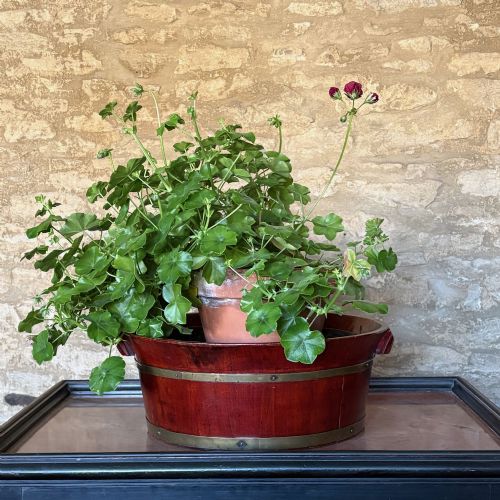
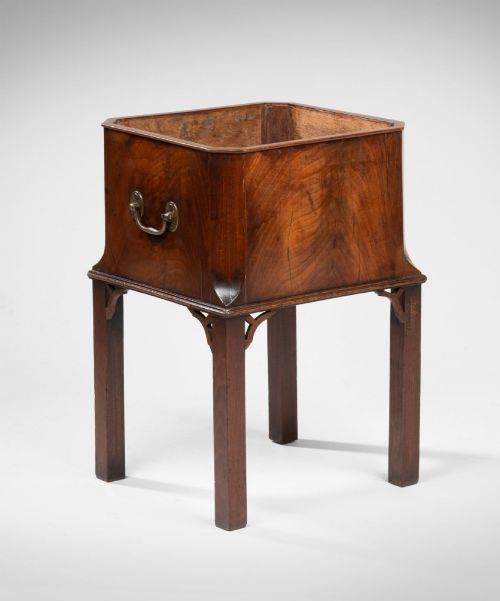
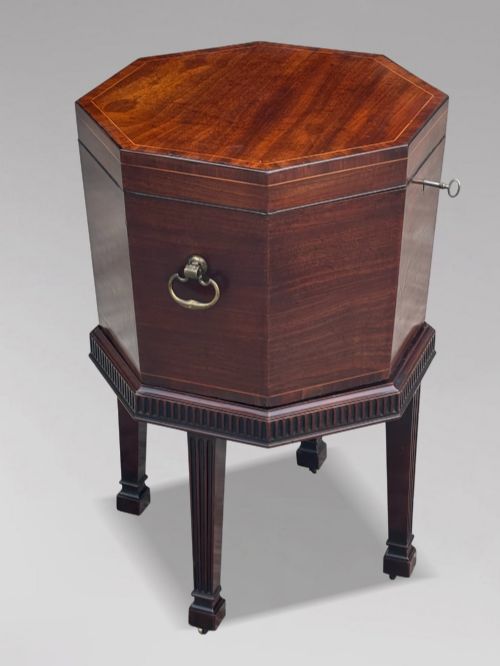
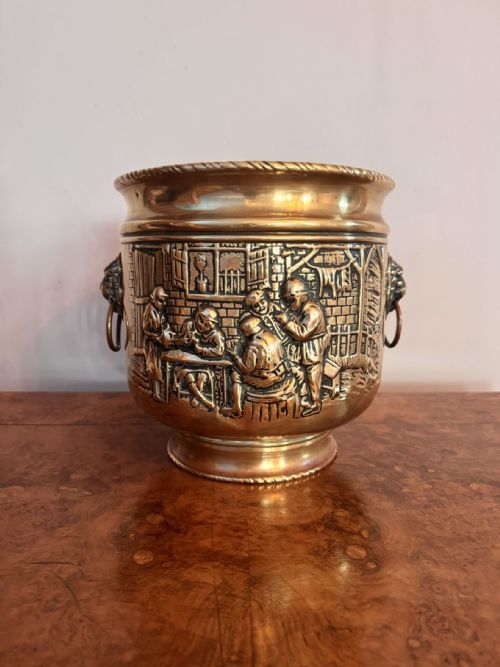
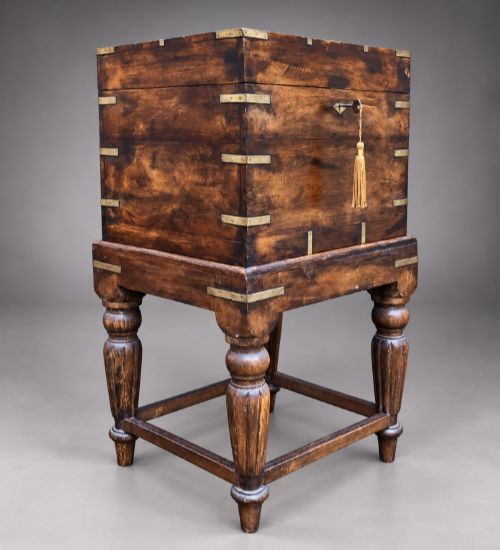
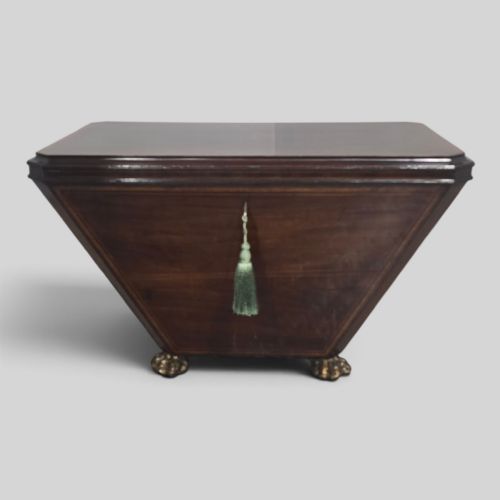
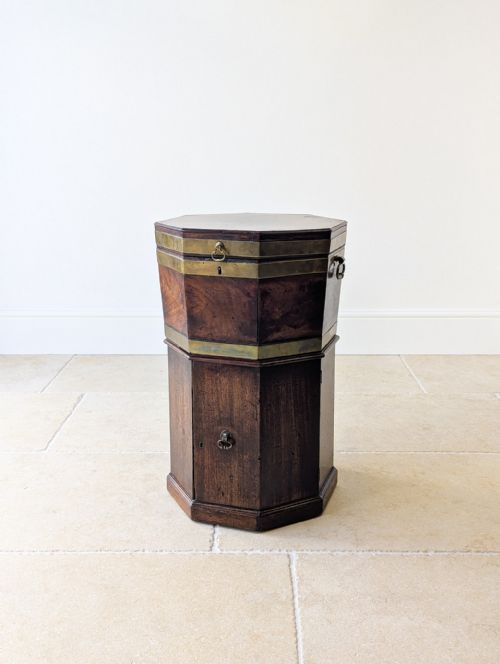
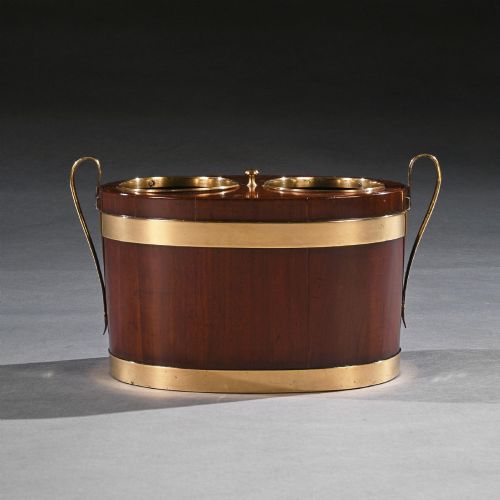
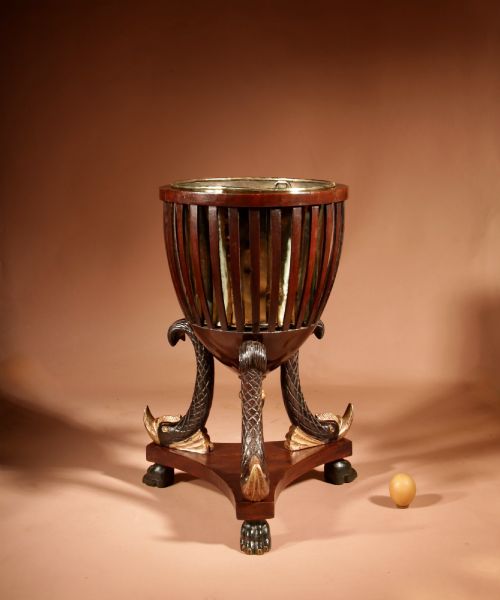
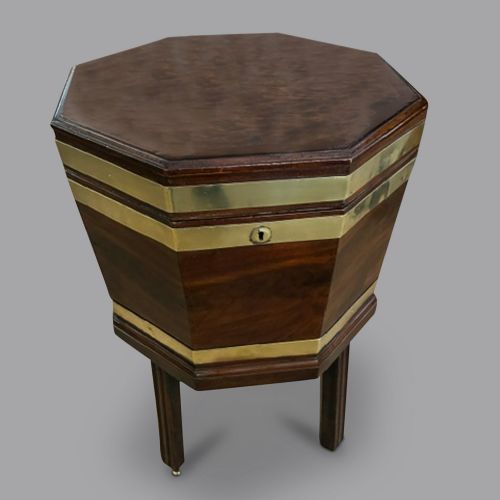
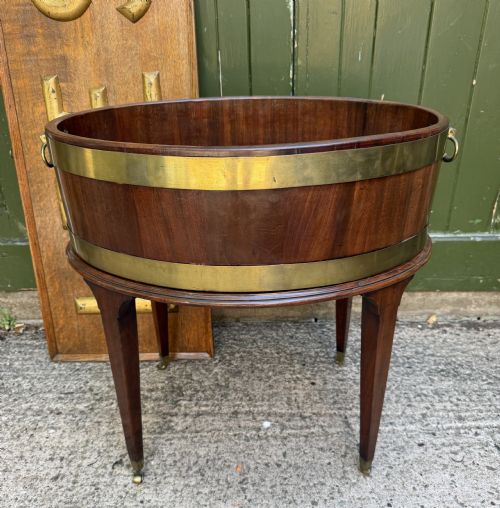
When searching for an antique brass wine cooler, expect to encounter coopered timber vessels, oval or octagonal buckets, and pedestal cellarettes originating primarily from the Georgian, Regency, and Victorian eras. These items served dining rooms by chilling bottles in ice or water, though many survivors now function as planters or jardinières.
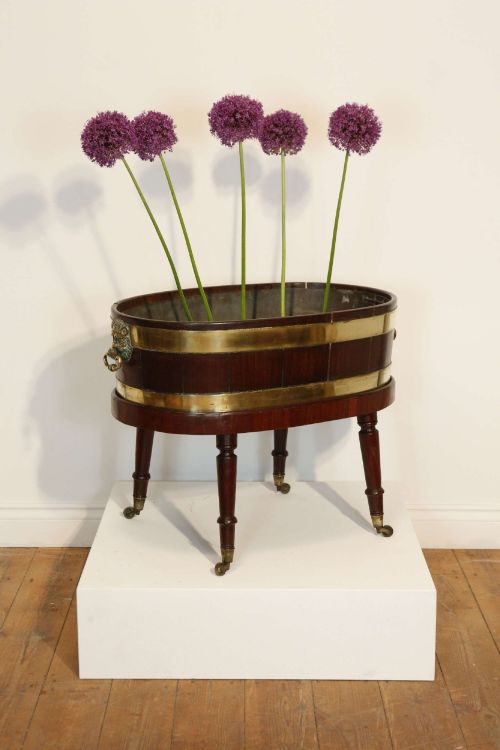
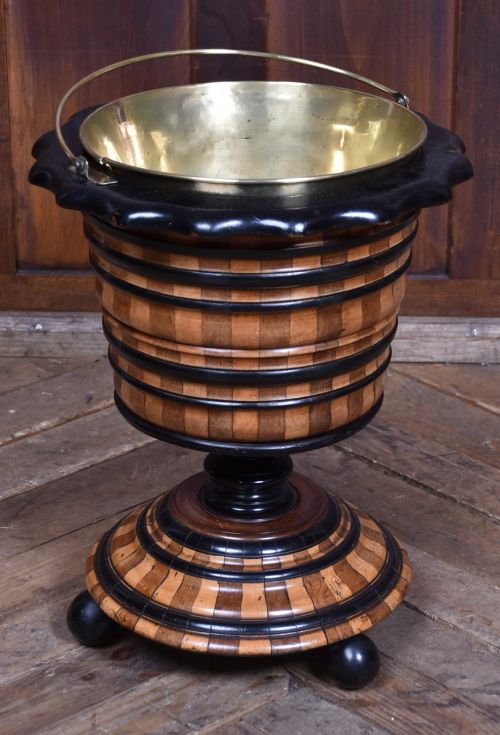
Mahogany remains the dominant wood, frequently bound with bright brass straps, alongside occasional examples in oak, satinwood, walnut, and padouk. Forms range from boat-shaped Dutch peat buckets to standing chests and campaign vessels.
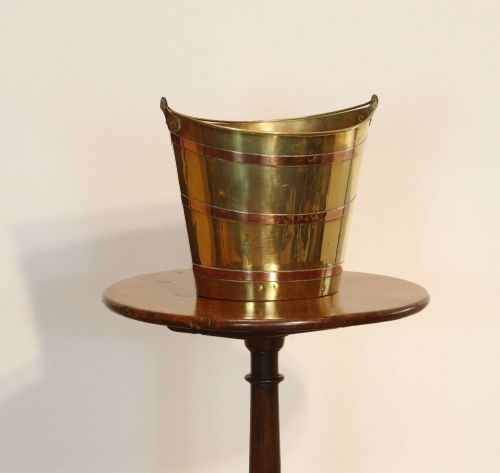
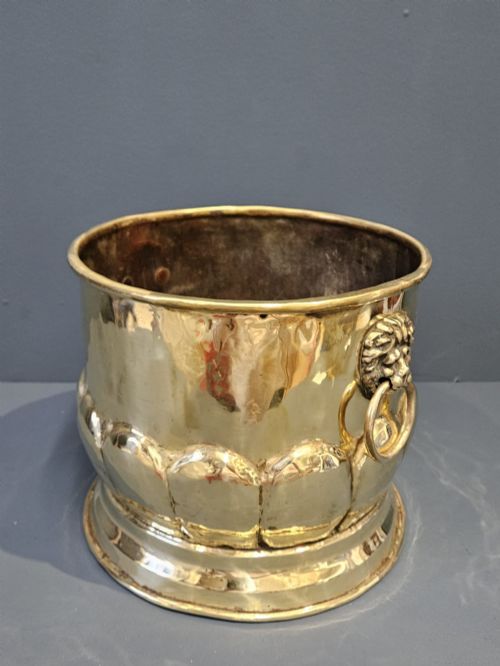
The material palette extends to solid brass and copper vessels, including embossed dinanderie pieces and Chinese polished planters. Many retain internal metal liners made of zinc or copper to contain moisture.
Materials and construction methods
Makers utilised traditional coopering techniques to assemble tight staves of mahogany, oak, or exotic timbers, shaping them into oval or faceted barrels held firmly by tensioned brass bands. These metal hoops were often secured with brass pins or dovetail joints.
Foundry work and hand-hammering defined the standalone metal pieces, utilising sheet brass and copper joined at seams and paired with cast carrying handles or lion-mask rings. Liners were soldered from sheet zinc or copper to protect the timber core from dampness.
Antique Brass Wine Cooler Retail Price Guide 2026
Typical asking prices for brass wine cooler among the pieces listed under this phrase on Sellingantiques today, from the lower quarter to the upper quarter. They describe what is for sale here now, not the wider market.
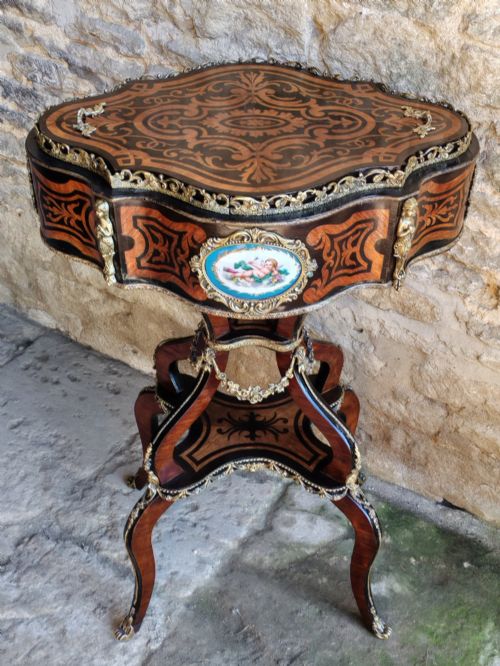
Object forms span table wine coolers, pedestal cellarettes, Dutch peat buckets, campaign vessels, and embossed brass jardinieres.
Distinctions in craftsmanship
Quality rests in the precision of the timber coopering, the weight and thickness of the brass banding, and the integrity of the original metal liner. Superior pieces display finely fitted staves, crisp hand-cut dovetails, and substantial cast brass fittings rather than stamped replacements.
Proportion and decorative restraint separate standard utility buckets from elite drawing-room furnishings. Subtle details like matched mahogany grain, original brass drop handles, and fitted interior dividers elevate a piece above straightforward utilitarian ware.
Edwards and Roberts
The Antique Brass Wine Cooler Glossary
- Cellarette
- A cabinet or locked chest designed for storing bottles of wine within a dining room. These often sit on low stands or feet and contain internal partitions.
- Coopered
- Constructed from curved wooden staves bound together by metal hoops, following the traditional method of barrel making. This technique provided the strength needed to hold liquids.
- Jardiniere
- An ornamental pot or stand intended for holding plants or flowers. Many period wine coolers were later adapted for this dual purpose.
- Teestoof
- A Dutch foot warmer or small stove that utilised hot coals in a metal liner beneath a pierced wooden frame. Surviving examples frequently cross over into the category of brass-lined buckets.
Antique Brass Wine Cooler: Frequently Asked Questions
How do I spot a Georgian wine cooler?
Georgian examples typically feature rich mahogany with precise coopering, secured by heavy brass bands and carrying rings. They often take octagonal or oval forms, sometimes raised on original bracket feet or short stands.
Earlier pieces from the eighteenth century frequently display exceptional cabinetmaking, incorporating Satinwood or Kingwood veneers alongside traditional brass furniture.
Did these pieces always have metal liners?
Most authentic wine coolers and cellarettes required metal linings made from zinc or copper to hold ice and water without rotting the surrounding timber staves. The presence of a period liner adds considerably to the authenticity of the piece.
Some items built primarily as plant holders or peat buckets utilised similar metal inserts to contain soil and moisture during daily use.
How do I care for wood and brass?
Keep wooden surfaces nourished with traditional beeswax, avoiding harsh chemical sprays that can strip the historic polish or loosen the timber staves. Maintain a stable indoor humidity to prevent the wood from shrinking and loosening the metal bands.
Polish the brass sparingly using a gentle, non-abrasive cream, taking care to protect the surrounding wood from accidental staining during cleaning.