


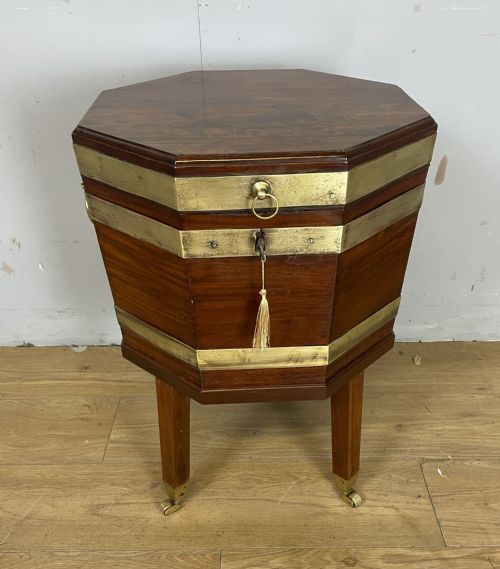


Antique Lead Lined Cooler
These antique lead lined cooler pieces bring period entertaining into focus, offering solid mahogany and inlaid timbers alongside traditional metal liners.
What an antique lead lined cooler is
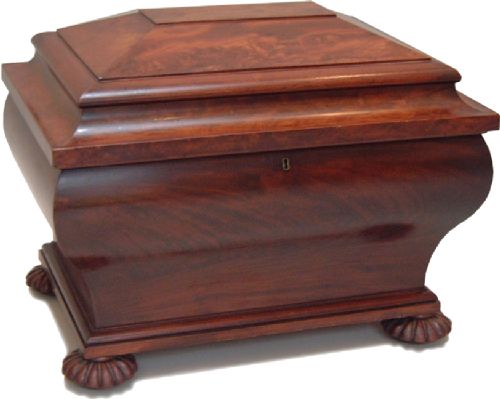
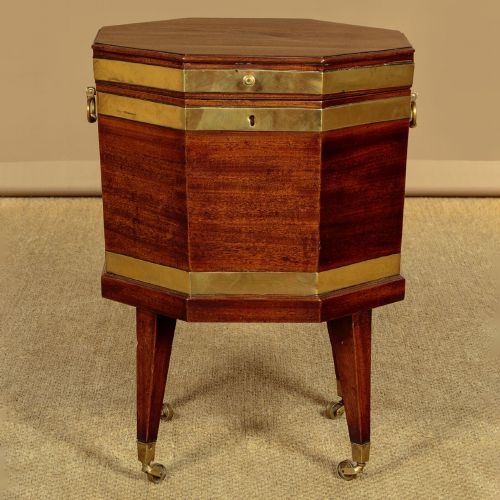
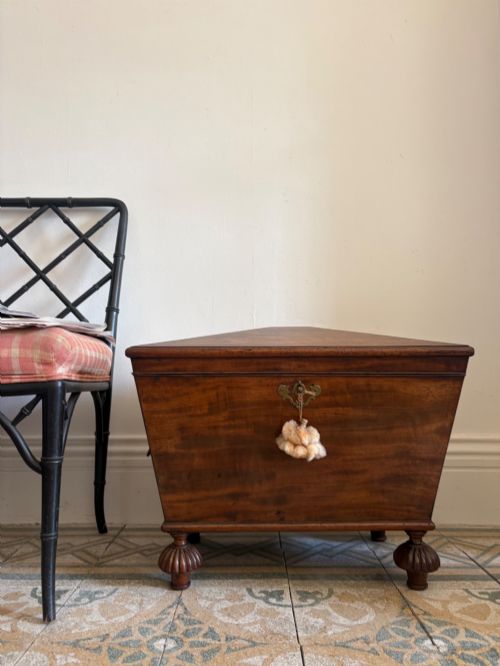
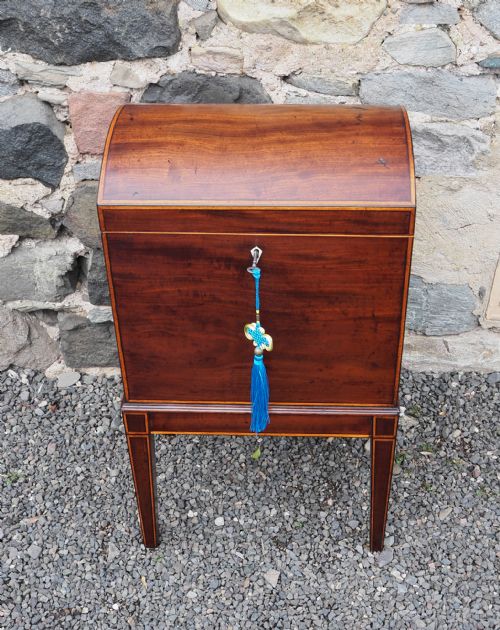
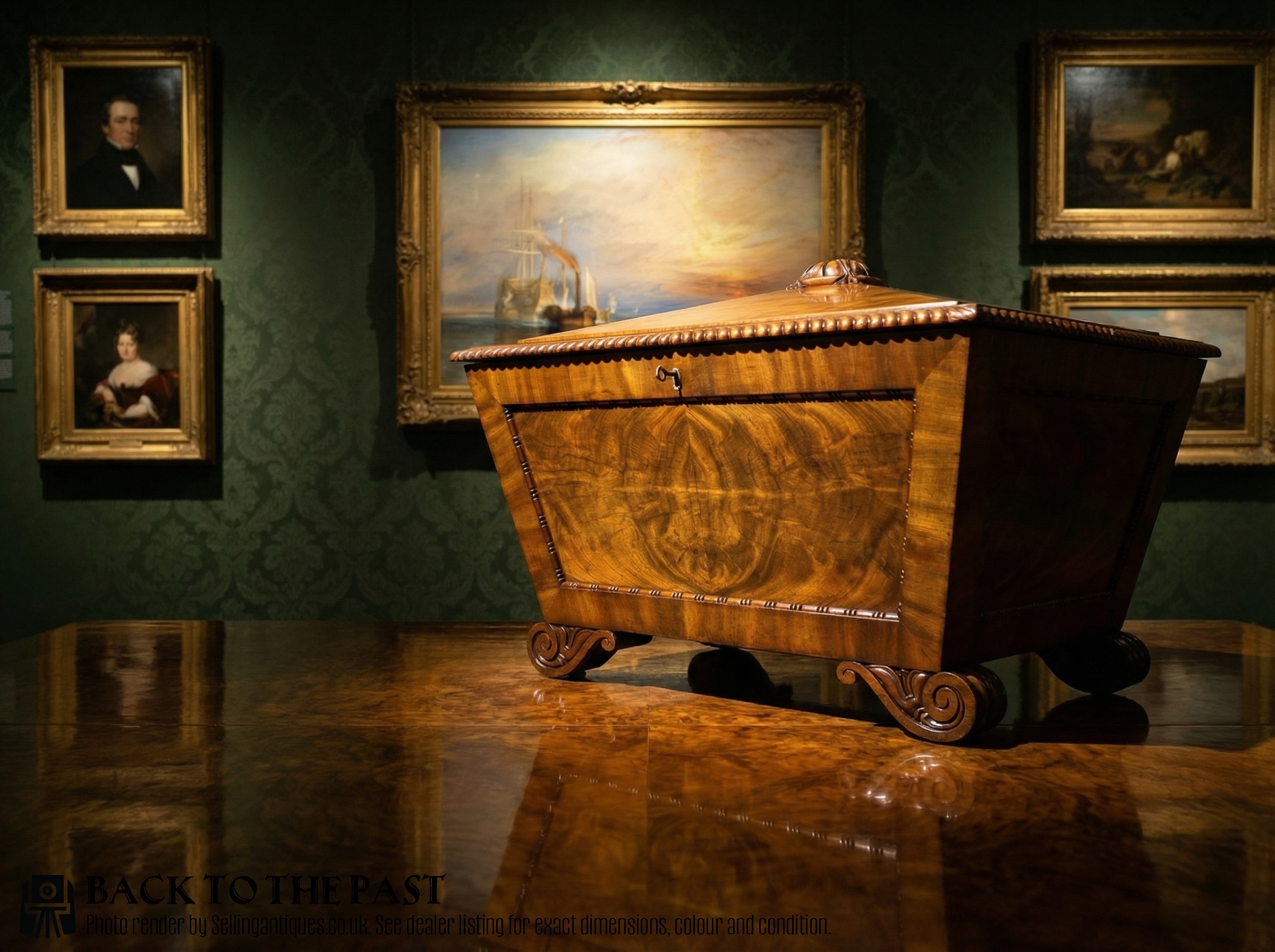
An antique lead lined cooler serves as a traditional vessel for chilling wine and beverages at the table, taking forms such as octagonal cellarettes, sarcophagus shapes, and marquetry inlaid planters. These pieces originate from the eighteenth and nineteenth centuries, spanning the Georgian, Regency, and William IV periods.
The items listed on this page include mahogany wine coolers alongside Dutch satinwood and rosewood examples. Buyers encounter brass bound constructions and substantial timber forms designed to hold ice and bottles safely during dining.
Materials and construction
The makers built these pieces using dense hardwoods including mahogany, satinwood, and rosewood, frequently incorporating decorative marquetry inlay. Brass banding often reinforces the timber bodies of octagonal and rectangular cellarettes.
Internal waterproofing relies on metal and zinc liners rather than lead alone, designed to withstand melting ice and liquid over extended use. Joinery techniques reflect the cabinet-making standards of the Georgian and Regency eras.
Retail Price Guide 2026
Typical UK retail prices for lead lined cooler, calculated from the Sellingantiques database of over a million retail prices indexed since 2003. This retail price guide relies exclusively on Sellingantiques data; no external sources or auction records are used, so the figures do not describe the wider market.
Georgian dining involved so much ice that cellarettes doubled as domestic monoliths, keeping the claret cold while guests debated the corn laws.
Judging quality in these coolers
Quality rests upon the selection of timber veneers, the precision of the brass binding, and the intricacy of any marquetry work. Finer examples display carefully matched grain patterns and robust timber frames that have survived centuries of damp environments.
Proportion and form dictate the visual success of the piece, ranging from restrained Georgian octagons to architectural Regency sarcophagus shapes. The integrity of the internal metal lining and the retention of original mounts separate standard utility pieces from high-status examples.
The Antique Lead Lined Cooler Glossary
- Cellarette
- A lockable container used for holding bottles of wine near the dining table. They frequently feature internal compartments and robust timber construction.
- Marquetry
- Decorative veneer work created by fitting together small pieces of different coloured wood and other materials to form intricate patterns. This technique appears on Dutch neoclassical planters.
- Sarcophagus
- A monumental coffin-shaped form adopted during the Regency period for large wine coolers. These pieces often sit on carved paw feet or plinth bases.
- Brass Bound
- Furniture secured with structural or decorative brass bands and straps. This method provided additional strength to heavy wooden vessels holding ice and liquid.
Frequently Asked Questions
How were antique wine coolers used?
These vessels stood beside the dining table filled with ice and water to chill wine bottles before serving. Servants transferred bottles from the cellarette as guests required them during long meals.
The metal or zinc lining prevented melting ice from damaging the surrounding mahogany or rosewood timber structure.
Can I use an antique cooler for plants?
Many examples, particularly those with marquetry inlay or planter descriptions, adapt well to holding potted plants or floral arrangements indoors. The protective metal liner makes them practical for containing soil moisture.
Care should be taken to protect the historic timber exterior from accidental water splashes and over-watering.
What is the difference between a cellarette and a wine cooler?
While the terms often overlap, cellarettes traditionally feature lockable lids to secure expensive vintages, whereas wine coolers may take open or sarcophagus forms. Both serve the primary function of keeping beverages cold during dining.
Georgian examples tend towards octagonal cellarettes, while Regency pieces often favour monumental sarcophagus shapes.
How do I identify a Regency wine cooler?
Regency pieces often display classical architectural motifs, bold proportions, and distinctive sarcophagus or urn silhouettes inspired by antiquity. They frequently utilise dense mahogany with carved details rather than complex marquetry inlay.
Hardware such as lion mask ring handles and brass paw feet frequently accompanies pieces from this nineteenth century period.