

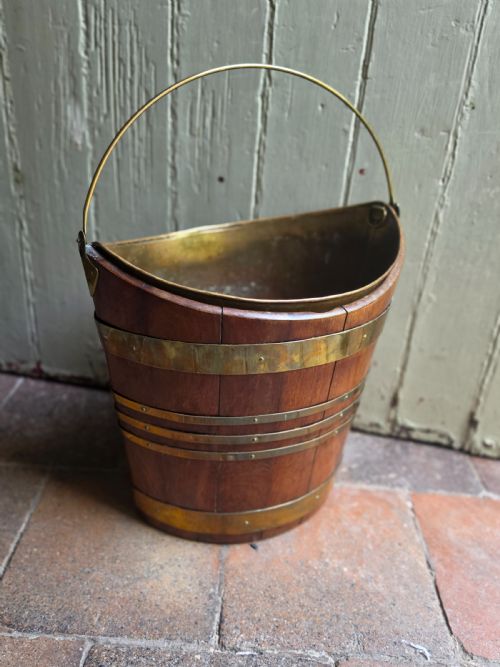
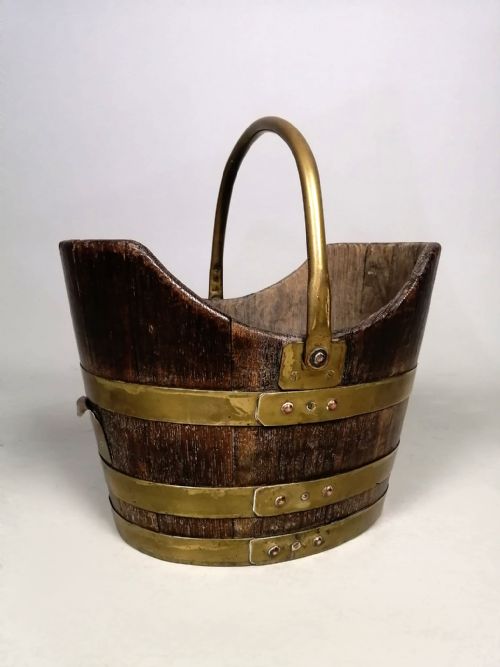


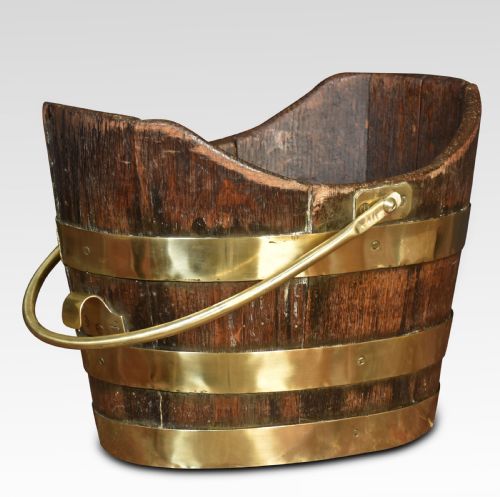


Georgian Peat Bucket
These georgian peat bucket items are timber vessels built to hold fuel by the hearth, drawing collectors who value period fireside accessories.
Georgian Peat Bucket
When you search for a georgian peat bucket, you encounter timber vessels designed primarily for fireside use, often crossing paths with plate buckets, coal buckets, planters and tea stoves. The pieces on this page span the Georgian period, the eighteenth and nineteenth centuries, and later revivals, reflecting diverse domestic storage needs.
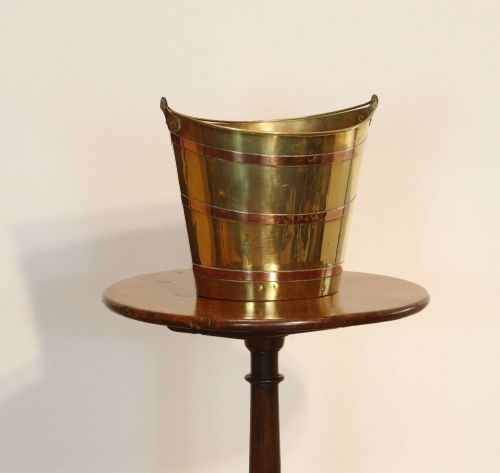
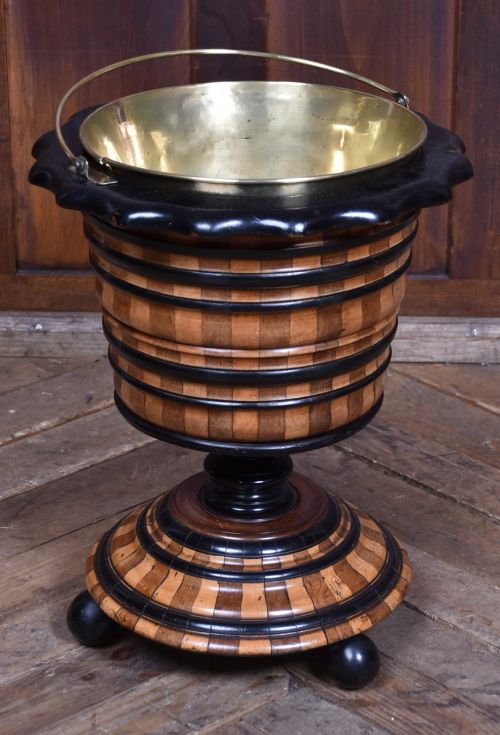
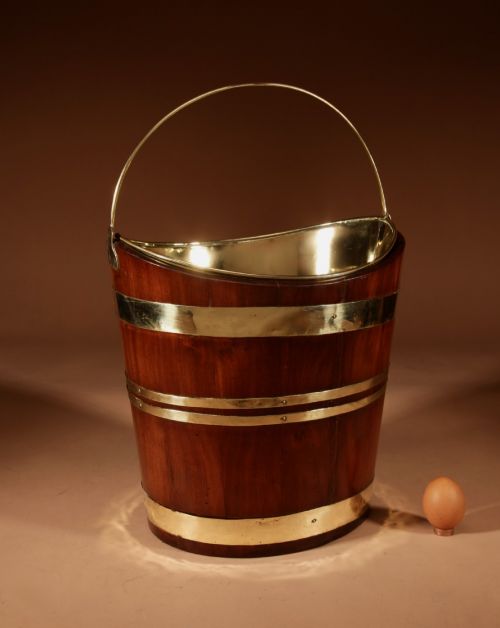
Most examples you meet are constructed from mahogany, oak, fruitwood or walnut, shaped through cooperage with metal bands. They appear as round, elliptical or boat-shaped forms, sometimes retaining original brass liners or spindle details intended for holding fuel near the fireplace.
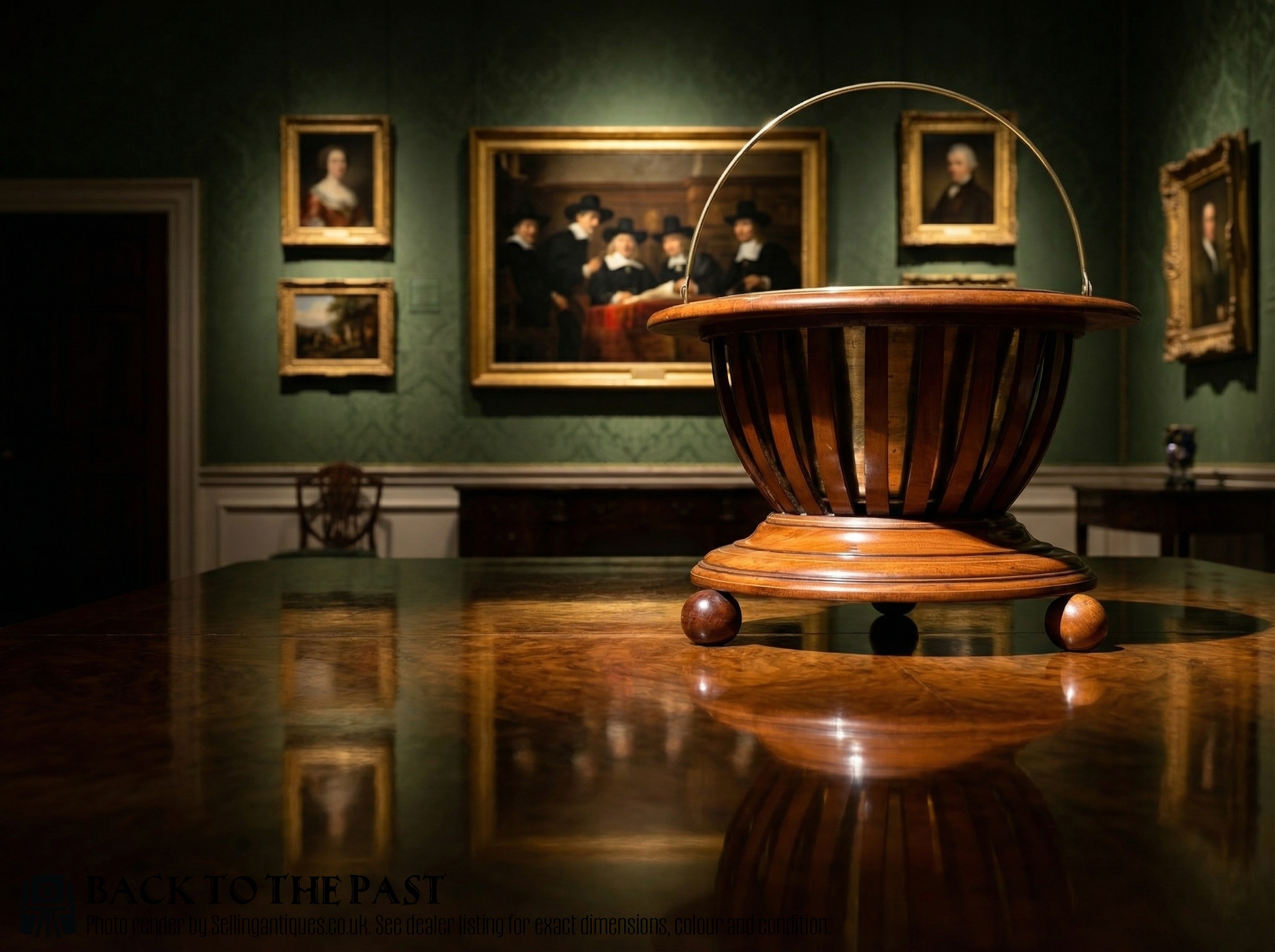
How they were made
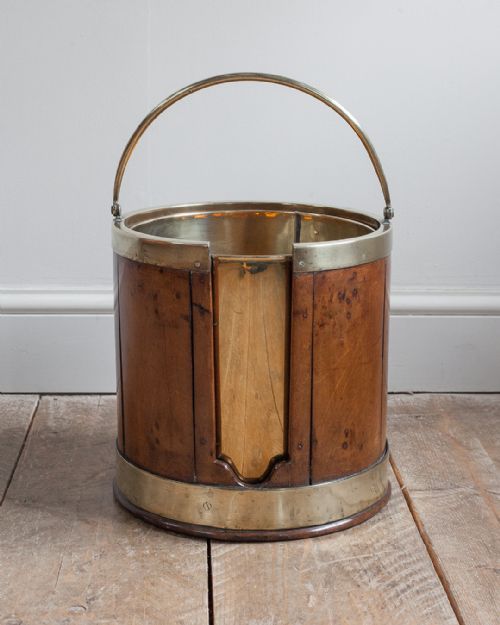
Maker-craftsmen built these vessels using traditional cooperage techniques, shaping staves of solid timber such as mahogany, oak or fruitwood to form deep cylindrical, oval or ribbed bodies. These wooden staves were secured with tightly fitted metal bands of brass, copper or iron, which provided structural strength and visual contrast against the dark wood.
Many examples incorporate applied brass swing handles, brass liners and inlaid decorative elements to elevate their finish for reception rooms. The choice of mixed hardwoods, ebonised wood or satinwood further defined the character of individual pieces produced across British and Dutch workshops.
Georgian Peat Bucket Retail Price Guide 2026
Typical asking prices for georgian peat bucket among the pieces listed under this phrase on Sellingantiques today, from the lower quarter to the upper quarter. They describe what is for sale here now, not the wider market.
Listings feature woods spanning mahogany, oak, fruitwood, walnut, satinwood and ebonised timber.
What varies in quality
The distinction between ordinary and superior examples rests on the crispness of the timber grain, the precision of the coopered staves and the integrity of the original metal banding. Pieces featuring well-figured mahogany, substantial brass mounts and untouched patination sit firmly at the upper end of the scale.
Proportion and form dictate the visual impact of each vessel, with ribbed bodies, elliptical shapes and complete internal brass liners commanding greater attention. Simpler utilitarian bins contrast with highly decorative inlaid versions intended for display alongside the hearth.
The Georgian Peat Bucket Glossary
- Coopered
- Constructed from curved wooden staves joined edge-to-edge and bound with metal hoops, much like a barrel. This method gave the vessels the structural strength required to hold heavy loads of peat or coal.
- Teestoof
- A Dutch warming vessel or stove often related in form to peat buckets and jardinières. These items frequently include metal liners originally used to contain heat or fuel.
- Plate bucket
- A straight-sided or slightly tapered timber vessel with vertical staves, designed specifically for carrying and storing dining plates. They share identical construction methods with peat buckets.
- Schuitje
- A boat-shaped vessel style seen in Dutch-influenced peat buckets and tea stoves. This distinct curved profile differentiates them from standard round cylindrical buckets.
- Jardinière
- An ornamental pot or stand intended for holding plants or flowers. Many peat buckets and tea stoves were later adapted for this domestic purpose.
Georgian Peat Bucket: Frequently Asked Questions
What were georgian peat buckets used for?
These vessels served as practical containers to hold and transport peat or coal for domestic fireplaces.
Over time, many found alternative uses as plate buckets, umbrella stands or decorative planters beside the hearth.
How do I identify a georgian peat bucket?
Look for coopered timber construction using mahogany, oak or fruitwood, bound with brass, copper or iron hoops.
Genuine period pieces often feature swing handles, tapering bodies and occasional internal metal liners suited to fireside use.
Are these buckets waterproof?
Most timber buckets feature wood staves joined by metal bands rather than sealed seams designed to hold standing water indefinitely.
Those retaining their original fitted brass liners offer better containment for damp uses like plant pots.
Where were these buckets made?
Production centred primarily in British and Dutch workshops throughout the eighteenth and nineteenth centuries.
Design influences crossed the North Sea, resulting in styles ranging from plain George III bins to decorative Dutch tea stoves.
How do I care for antique timber buckets?
Keep the wood nourished with appropriate wax and avoid placing them in direct sunlight or beside active heat sources.
Gentle dusting preserves the patination on both the timber staves and the metal bands.