




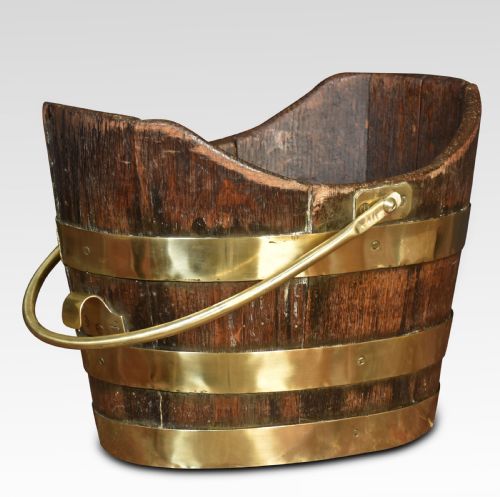


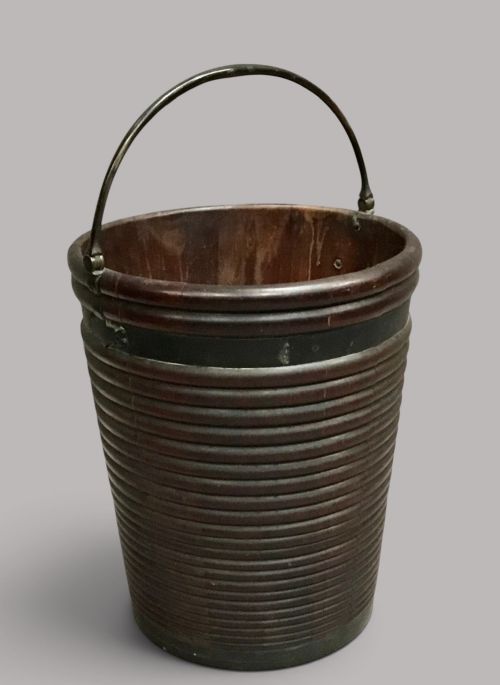
Brass Bound Coal Bucket
These brass bound coal bucket examples offer solid timber construction and metal reinforcement, built for practical fireside service across Georgian and Victorian interiors.
Brass Bound Coal Bucket
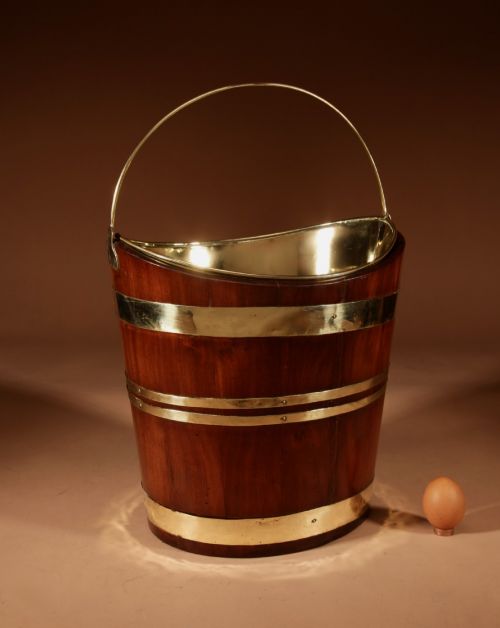
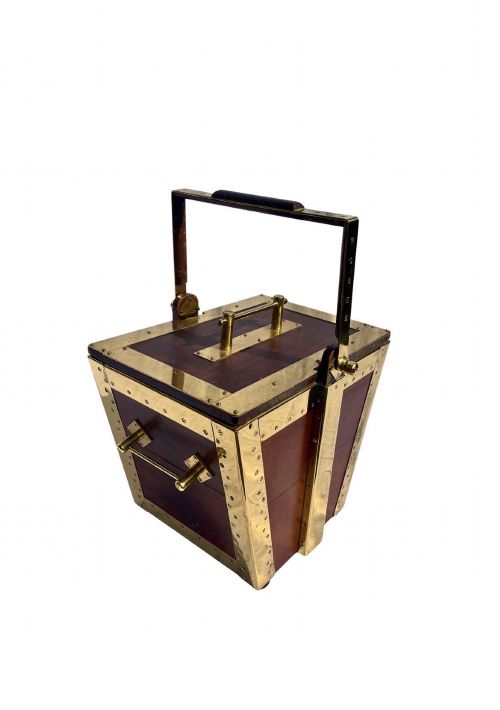
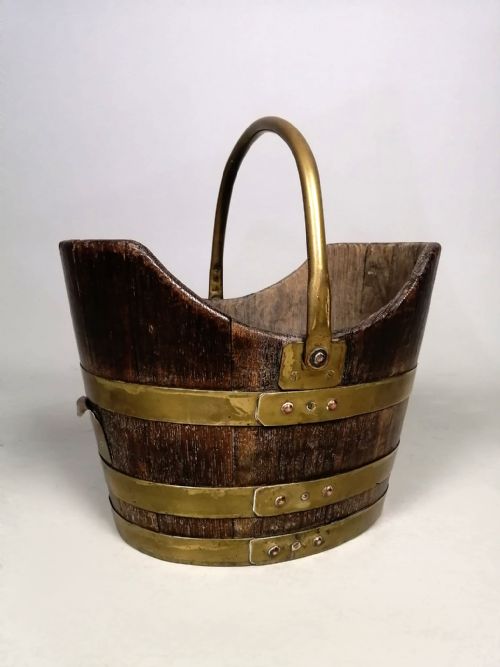
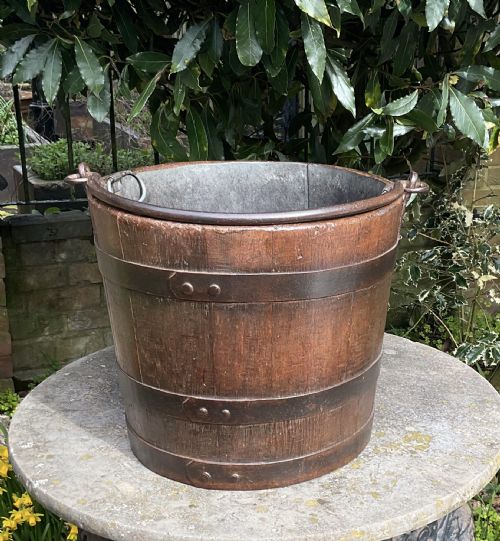
When you search for a brass bound coal bucket, you encounter robust domestic vessels intended to hold fuel beside the hearth. The pieces on this page span Georgian, Victorian, and early twentieth-century periods, often taking the form of coopered barrels or boat-shaped vessels.
Makers constructed these containers primarily from dense hardwoods like mahogany and oak, securing the stave bodies with heavy brass bands. They serve equally as fireside storage, coal bins, or peat buckets depending on their original domestic context.
How they were made
Traditional coopers formed the bodies of these vessels from vertical wooden staves fitted tightly together and shaped to curve outward. Heavy brass bands and straps were heated and fitted around the timber to lock the structure firmly in place as the metal cooled.
Makers incorporated metal liners, handles, and occasionally armorial crests or swing handles of iron and brass. The combination of dense mahogany or oak with polished brass banding created a durable utilitarian object designed to withstand heavy daily use.
Brass Bound Coal Bucket Retail Price Guide 2026
Typical asking prices for brass bound coal bucket among the pieces listed under this phrase on Sellingantiques today, from the lower quarter to the upper quarter. They describe what is for sale here now, not the wider market.
Materials recorded across the inventory include mahogany, oak, walnut, iron, zinc, leather, and solid brass.
What varies in quality
The standard of timber selection and the precision of the cooperage dictate the division between ordinary utility items and exceptional pieces. Superior examples display carefully matched mahogany or figured oak staves with tight joints that endure the stresses of holding heavy fuel.
The weight and thickness of the brass banding, alongside the finesse of hand-beaten or riveted construction, mark the distinction in grade. Original liners and untouched patination further elevate the standing of a piece.
The Brass Bound Coal Bucket Glossary
- Coopered
- A method of construction where curved wooden staves are joined side by side to form a cylindrical or tapered vessel. This technique relies on tight fitting joints and exterior tension bands.
- Peat bucket
- A deep container specifically proportioned for storing peat fuel rather than denser coal. These pieces often feature boat-shaped or elliptical profiles.
- Jardinière
- An ornamental pot or stand designed to hold plants or flowers. Some deep wooden vessels were adapted or reused for this purpose.
- Armorial crest
- A heraldic design engraved or applied to metal elements, indicating the ownership or lineage of the household.
Brass Bound Coal Bucket: Frequently Asked Questions
What is a brass bound coal bucket?
A brass bound coal bucket is a sturdy wooden container reinforced with metal bands, designed to hold coal or peat beside a fireplace.
These vessels date predominantly from the Georgian and Victorian eras, combining practical fireside utility with decorative cabinet timber.
How do I date a brass bound coal bucket?
Dating relies on observing the timber species, the style of the brass bands, and the overall construction methods used by the maker.
Georgian examples often feature rich mahogany with fine dovetails or coopered staves, whereas later Victorian and Edwardian pieces show heavier oak or alternative proportions.
Were these buckets used only for coal?
While many served as coal bins or log baskets, some shallower or boat-shaped versions were made specifically for peat fuel.
Over time, owners have repurposed these durable containers as planters, umbrella stands, or general fireside storage.
How do I care for wooden coal buckets?
Maintain the timber by keeping it away from direct, intense heat sources that can dry out the staves and cause shrinking.
Clean the brass banding gently with appropriate metal polish while protecting the surrounding wood finish from residue.