

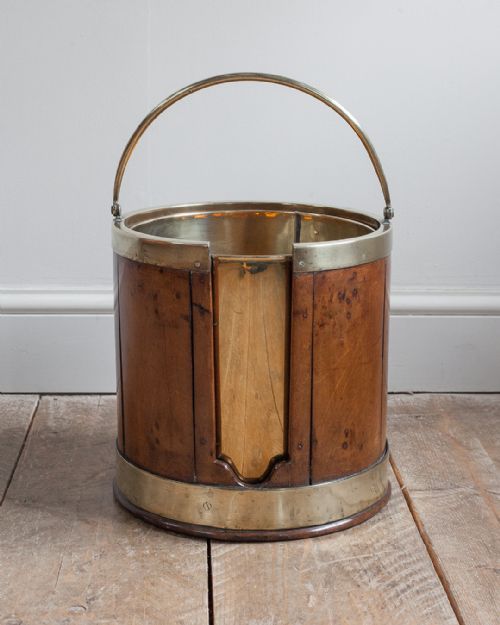
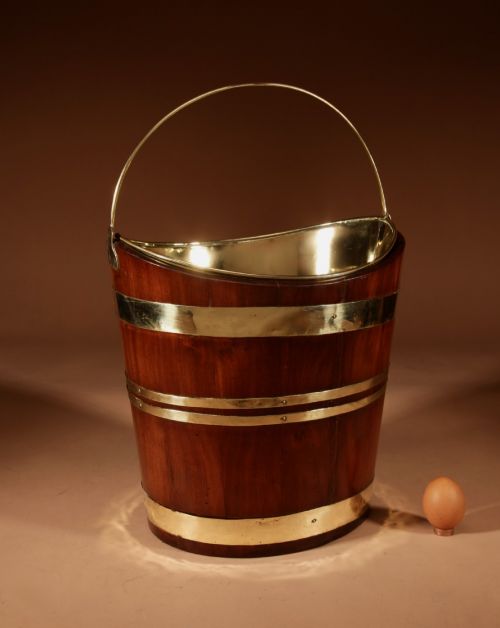
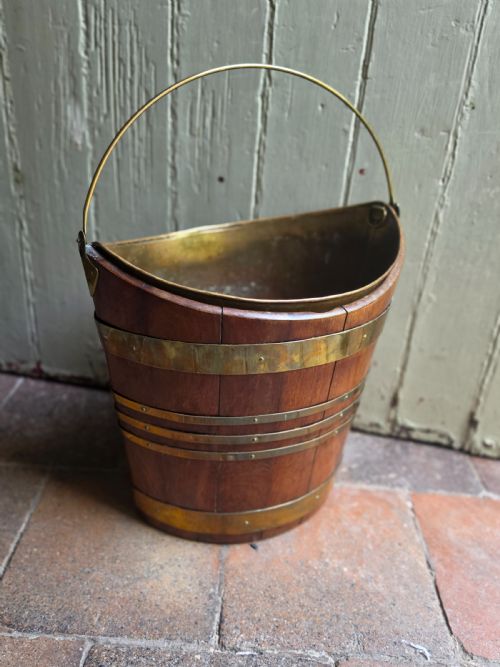


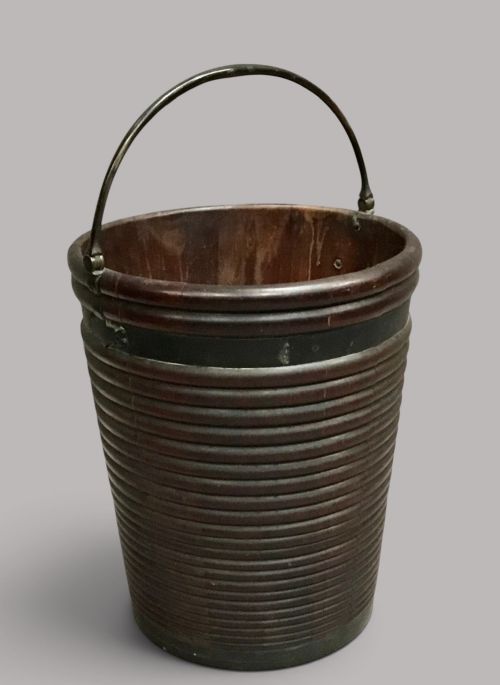

Georgian Mahogany Peat Bucket
A georgian mahogany peat bucket brings tactile warmth and refined utility to a hearth.
Georgian Mahogany Peat Bucket
A georgian mahogany peat bucket is a traditional fireside container designed to hold fuel or serve secondary uses like plate storage and planters.
The selections span 18th century Georgian originals to later 19th century revival pieces, often sharing the characteristic coopered construction.
Forms range from boat-shaped schuitje designs and elliptical bodies to ribbed cylinders and inlaid tea stove variations.
How they were made
Craftsmen built these vessels using solid timbers such as mahogany, walnut, fruitwood, and satinwood, frequently employing traditional coopered stave construction.
Durability and decoration came from fitted brass bands, iron accents, and occasional inlay work that secured the wooden staves together.
Georgian Mahogany Peat Bucket Retail Price Guide 2026
Typical asking prices for georgian mahogany peat bucket among the pieces listed under this phrase on Sellingantiques today, from the lower quarter to the upper quarter. They describe what is for sale here now, not the wider market.
Listings feature mahogany, walnut, fruitwood, and satinwood combined with brass and iron across 18th and 19th-century periods.
What varies in quality
Distinction lies in the crispness of the cooperage, the weight and fit of the brass binding, and the richness of the timber grain.
Original untouched surfaces and subtle decorative details like ribbed forms or inlaid marquetry elevate particular examples above standard utility pieces.
The Georgian Mahogany Peat Bucket Glossary
- Coopered
- Constructed from curved wooden staves bound together with metal hoops, much like a traditional barrel.
- Schuitje
- A boat-shaped vessel form originating in Dutch designs, often utilised for peat buckets or tea stoves.
- Jardiniere
- An ornamental pot or stand designed to hold growing plants or flowers near the hearth.
- Plate bucket
- A deep cylindrical container historically utilised for carrying or storing dining plates.
Georgian Mahogany Peat Bucket: Frequently Asked Questions
What was a peat bucket used for?
These vessels originally held dried peat turf or coal near the fireplace for convenient refuelling of the hearth.
Over time, many of these containers were adapted to serve as planters, wine coolers, or general storage bins.
How do I identify a Georgian piece?
Examination of the timber grain, hand-cut joinery, and patination helps determine the age and period of the construction.
Early pieces often display traditional coopered staves paired with heavy brass carrying handles and hand-forged iron elements.
Can I use these as planters?
Many examples function well as indoor jardinières or plant holders within a traditional or modern interior scheme.
Protective liners are typically recommended to prevent moisture from damaging the historic wood interior.
What woods were commonly used?
Mahogany is the predominant timber seen across these items, often complemented by secondary woods like walnut, fruitwood, and satinwood.
Metal components such as brass and iron provide structural reinforcement and decorative contrast to the dark timber.