


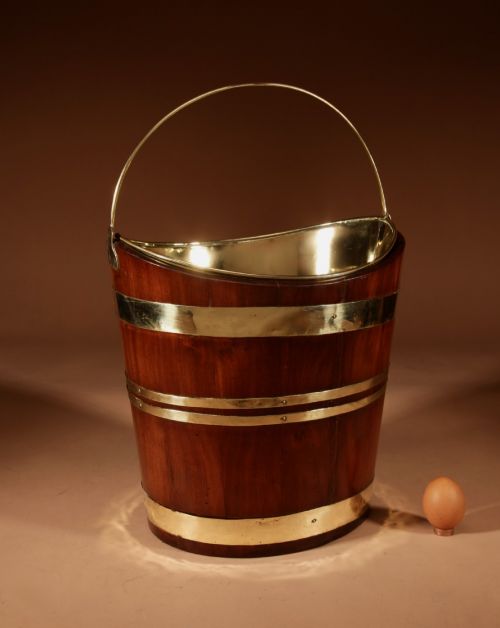
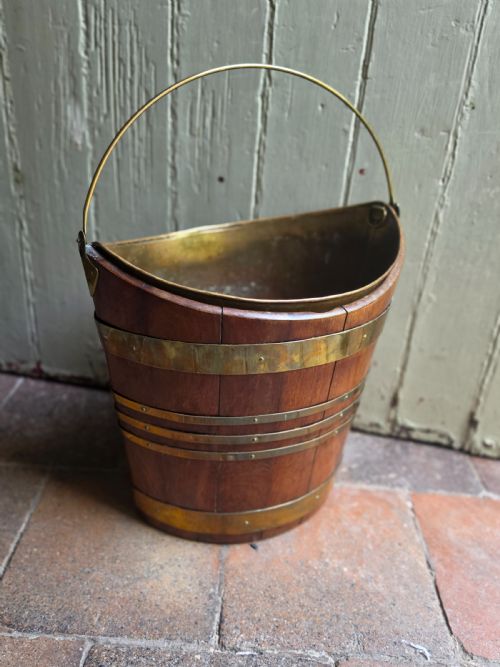
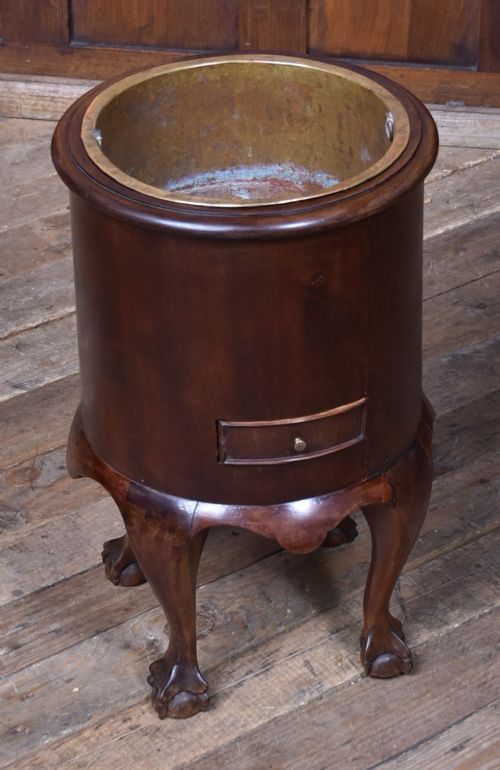
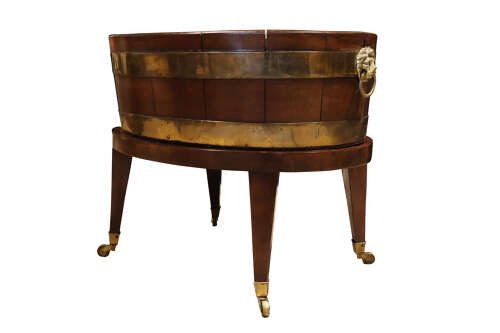


Georgian Mahogany Bucket
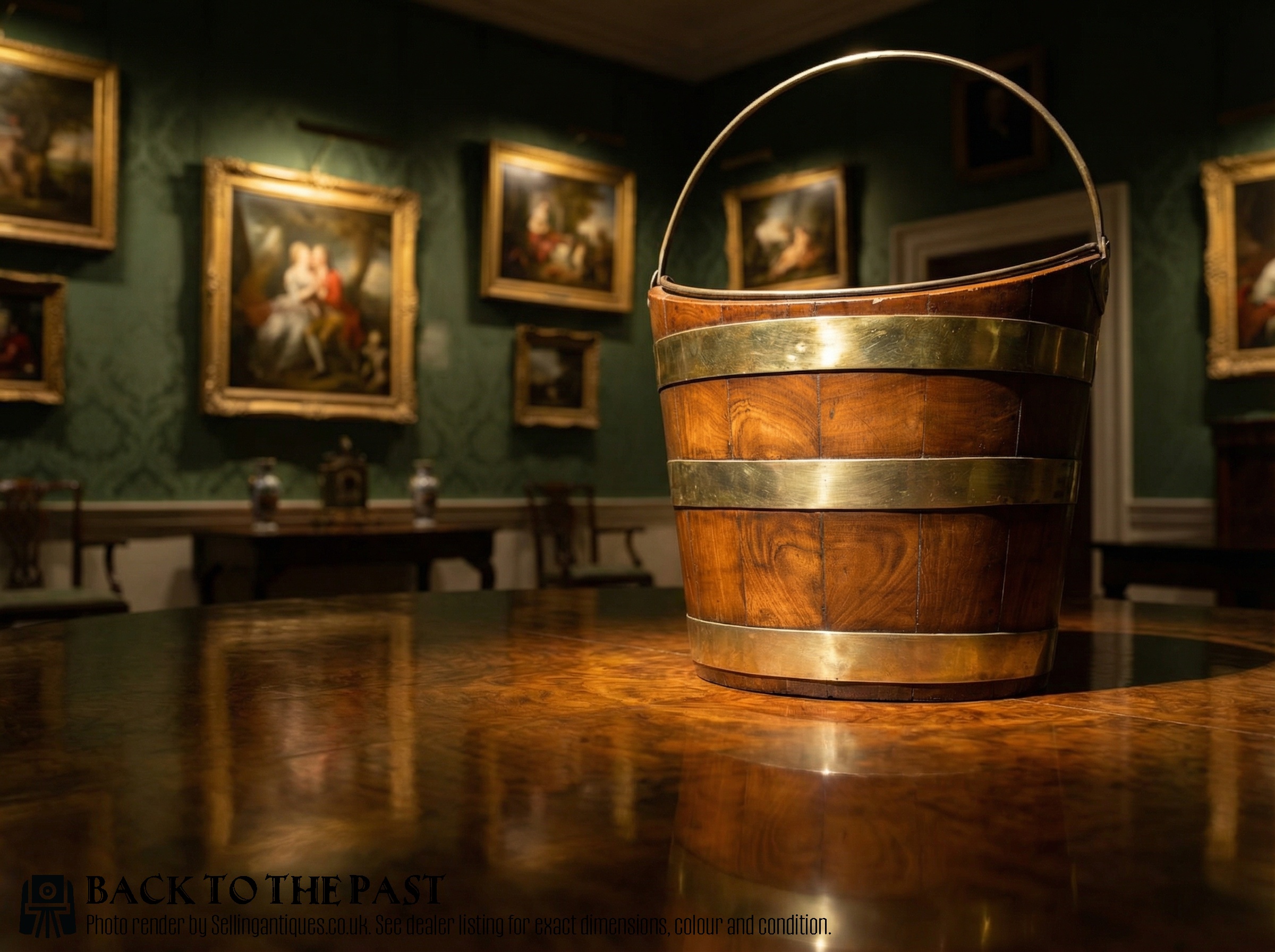
Georgian mahogany buckets are functional vessels transformed into handsome household furnishings, combining rich timber with bright metal bands.
Georgian Mahogany Bucket
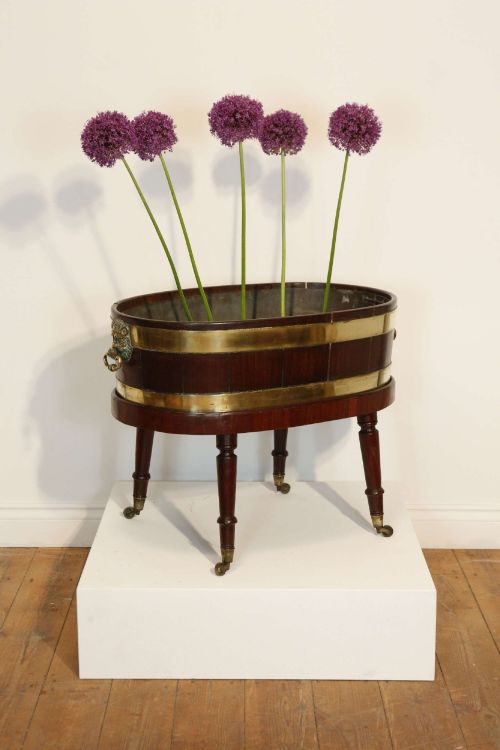
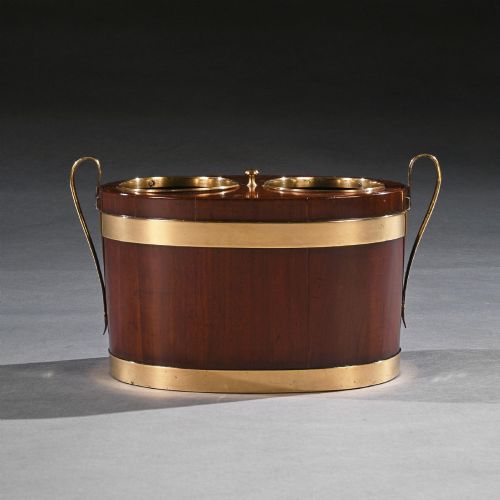
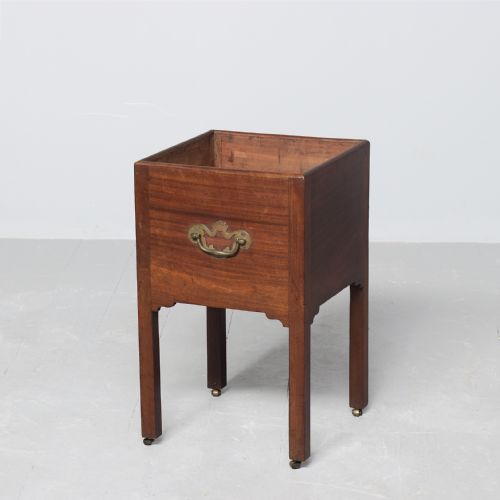
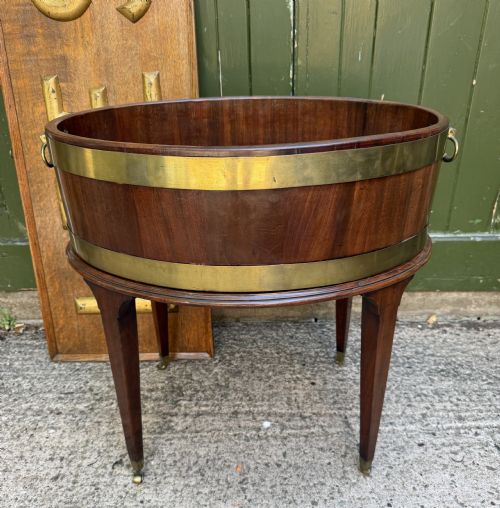
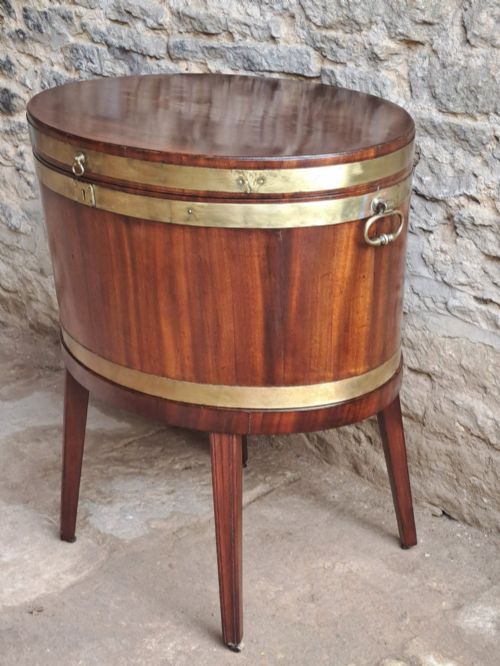
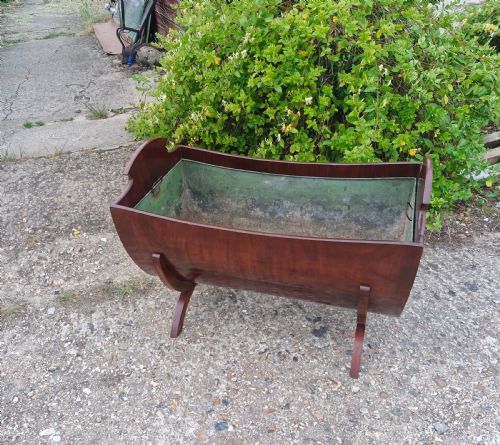
A georgian mahogany bucket encompasses a variety of timber containers produced across the eighteenth and nineteenth centuries, including plate buckets, log bins, and jardinieres. These pieces serve practical household functions while displaying the rich figuring of native and imported hardwoods.
Visitors to this selection most frequently encounter eighteenth-century George III examples alongside later nineteenth-century interpretations, such as Dutch coopered planters and Regency designs. The range includes cylindrical forms fitted with heavy brass banding and sturdy carrying handles.
The assortment spans diverse domestic uses, from holding coal and peat by the fireside to containing ice or serving dinnerware at the dining table. Each variation reflects the specific functional demands of period domestic life.
Materials and construction
Maker construction relies heavily on solid mahogany shaped through traditional cooperage techniques, forming watertight or sturdy cylindrical walls from individual staves. Artisans secure these wooden staves using hand-forged or cast brass bands that encircle the body for structural reinforcement.
Metal components such as swing handles, drop handles, and liners provide functional utility while contrasting sharply against the dark grain of the timber. Skilled craftsmen finish the wood to highlight natural figuring through polishing rather than heavy pigments.
Georgian Mahogany Bucket Retail Price Guide 2026
Typical asking prices for georgian mahogany bucket among the pieces listed under this phrase on Sellingantiques today, from the lower quarter to the upper quarter. They describe what is for sale here now, not the wider market.
Listings feature mahogany and brass materials across Georgian, Regency, and nineteenth-century Dutch styles.
Assessing quality and character
Quality rests upon the crispness of the timber's figuring and the weight of the brass fittings, where thicker metal bands and substantial drop handles indicate higher ambition. Finer examples display tight, seamless coopered staves that maintain structural integrity without excessive modern intervention.
The distinction between ordinary and superior pieces often lies in the original purpose and refinement of the form, such as specialised plate buckets featuring internal dividers versus simpler utilitarian log bins. The presence of authentic period patination provides a visual depth that lesser or heavily restored items lack.
The Georgian Mahogany Bucket Glossary
- Coopered
- Constructed from curved wooden staves joined together edge-to-edge, similar to barrel-making. This method provides the cylindrical strength necessary for holding weighty contents.
- Plate bucket
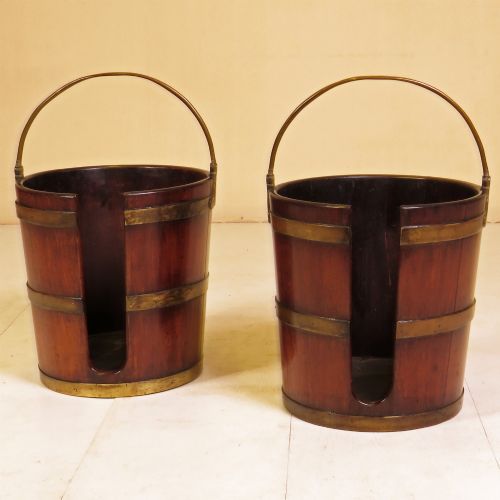
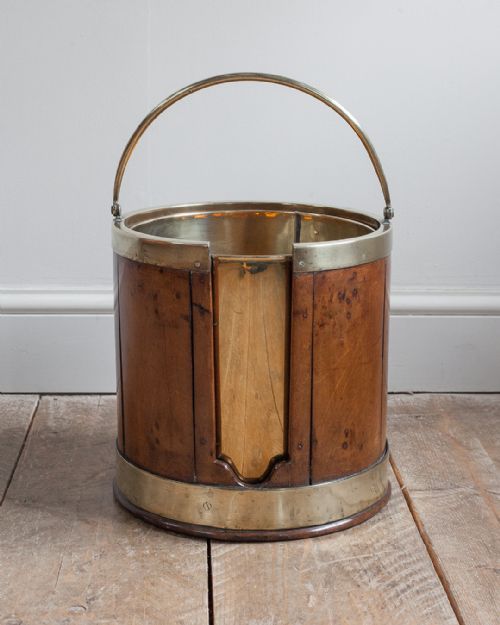
- A specialised cylindrical container fitted with internal divisions or slots designed for transporting dining plates. These items assisted servants during formal eighteenth-century meals.
- Log bin
- A sturdy floor-standing container utilised for storing firewood near a hearth. They often feature robust brass handles for repositioning.
- Jardiniere
- An ornamental receptacle designed to hold potted plants or floral displays. In mahogany, these pieces frequently incorporate protective metal liners.
- Peat bucket
- A deep timber vessel traditionally employed to hold dried peat sods for hearth fires. They share the characteristic brass banding of contemporary wine and coal coolers.
Georgian Mahogany Bucket: Frequently Asked Questions
What were georgian mahogany buckets used for?
These vessels fulfilled multiple utilitarian roles in grand households, ranging from chilling wine and holding coal to storing peat and transporting clean dinner plates. Their specific internal fittings often dictated whether they served the dining room or the fireside.
Over time, many of these sturdy containers transitioned from purely functional domestic equipment to decorative interior furnishings appreciated for their craftsmanship and timber quality.
How do you distinguish between plate and log buckets?
Plate buckets typically feature internal wooden dividers or fitted slots designed to keep ceramic or metal dinner plates separated and safe during transit. Log and peat buckets leave the interior completely open and deep to accommodate heavy fuel.
Additionally, plate buckets often include upright arched handles rather than the heavy drop ring handles commonly found on fireside bins.
Are brass bands original to the pieces?
Original brass bands generally show appropriate signs of age, including mellow patination, minor surface marks, and traditional fastening methods such as small pins or screws. Replacement bands often appear overly bright and lack the integrated wear of the surrounding wood.
Examining how the timber swells or shrinks around the metal provides a reliable indicator of long-term association between the two materials.
How should I care for mahogany and brass?
Mahogany requires stable indoor humidity away from direct heat sources to prevent the timber staves from shrinking or splitting over time. Regular dusting and occasional application of appropriate wax help maintain the natural surface sheen.
Brass components can be left with their natural aged tone or gently polished, depending on personal preference for bright metalwork against dark wood.