

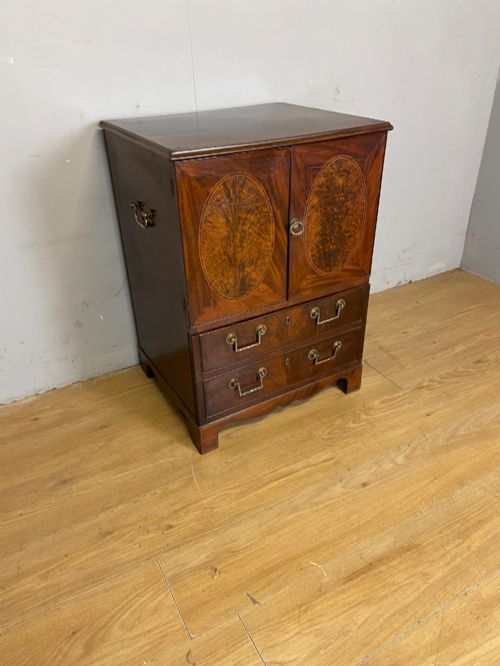


Late Georgian Sideboard Cabinet
A late georgian sideboard cabinet anchors a dining room with rich timber and quiet authority, offering generous storage for silver and linen.
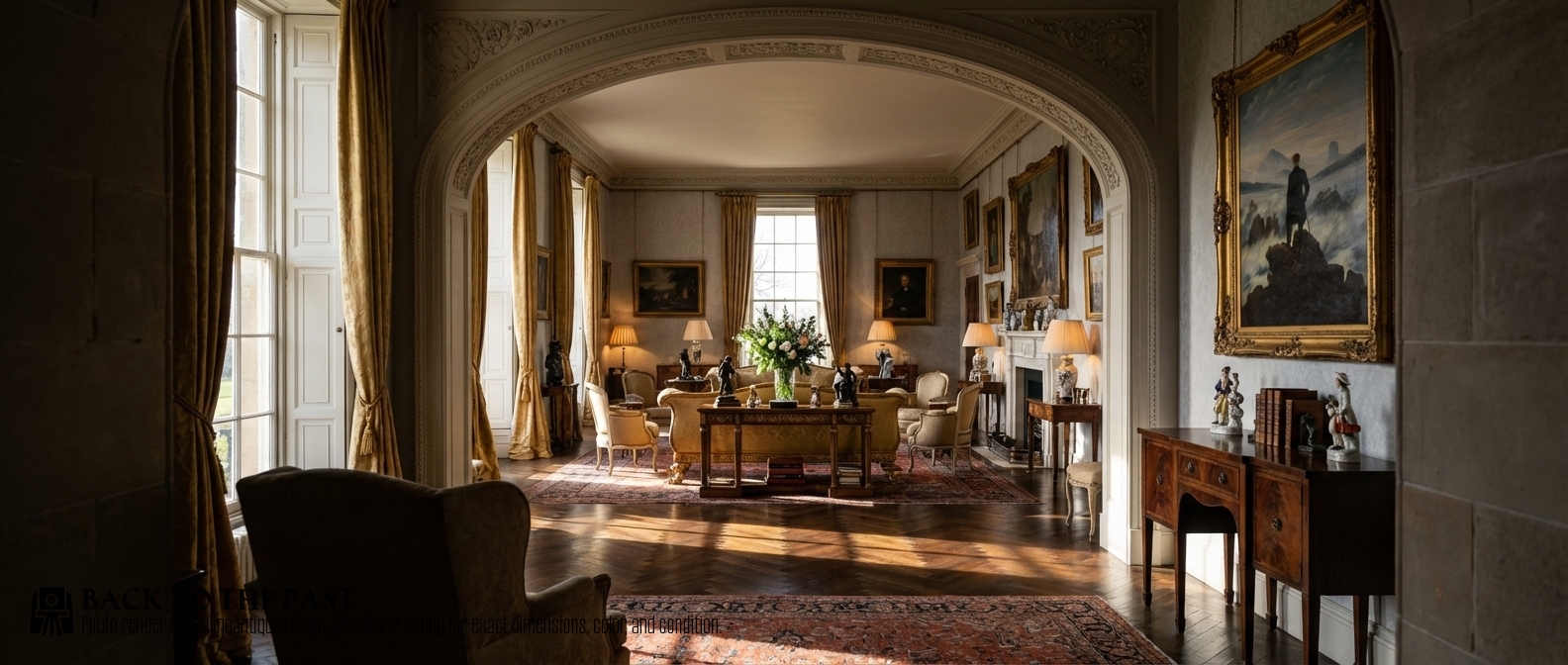
Late Georgian Sideboard Cabinet
A late georgian sideboard cabinet brings together the practical demands of the dining room and the refined cabinet-making of the turn of the nineteenth century. These pieces serve primarily to store tableware, linen, and bottles, presenting a polished timber surface for serving food or displaying silver.
The versions most commonly met on this page span the late eighteenth and early nineteenth centuries, covering George III, Regency, and Sheraton styles. They appear in forms ranging from pedestal sideboards and bowfronts to two-door cupboards and breakfront cabinets.
Makers of the period utilised native and imported hardwoods, shaping them into straight, bowfront, or serpentine outlines. Alongside traditional sideboards, the selection includes related forms such as oak dressers and satinwood chiffoniers.
How they were made
Makers built these pieces primarily using solid mahogany and oak, often selecting figured flame mahogany veneers for the main fascias. Panels and internal carcases frequently incorporated secondary timbers such as oak, while drawer linings relied on sturdy softwood or hardwood construction.
Decoration relied heavily on contrasting timbers and fine details rather than heavy carving. Craftsmen applied satinwood and boxwood inlay, stringing, and line inlay to define panels and borders, occasionally combining this with hand-painted enamel elements on later revival pieces.
Listings span the Georgian and 19th Century periods, incorporating styles from George III to Sheraton Revival.
What varies in quality
The selection of timber sets the baseline for quality, distinguishing simple utility pieces from grander drawing room or dining room examples. Cabinet-makers who chose richly figured flame mahogany and matched the grain across drawer fronts achieved a much higher visual harmony.
Detailing in the construction and enrichment marks the division between standard workshop production and superior cabinet-work. Precision in the boxwood and satinwood inlay, along with the retention of original brass hardware, elevates the standing of an individual piece.
The Late Georgian Sideboard Cabinet Glossary
- Bowfront
- A curved cabinet front where the central section sweeps outward in a convex arc. This shape gained popularity during the late eighteenth century to soften the rigidity of dining room furniture.
- Serpentine front
- A cabinet front featuring a central convex curve flanked by two concave curves. It requires considerable skill from the woodworker to shape the timber and drawers accurately.
- Breakfront
- A piece of furniture where the central section projects forward from the flanking wings. This architectural arrangement creates depth and shadow across the front of a sideboard or cabinet.
- Flame mahogany
- A veneer cut from the branch junction of the mahogany tree, displaying a distinctive undulating flame pattern. Cabinet-makers prized this timber for its dramatic visual movement on primary drawer fronts and doors.
Late Georgian Sideboard Cabinet: Frequently Asked Questions
What is a late georgian sideboard cabinet?
A late georgian sideboard cabinet is a storage and serving piece produced around the turn of the nineteenth century. It combines cupboard space and drawers within a timber carcase designed for the dining room.
These pieces reflect the neoclassical tastes of the period, often featuring straight, bowfront, or serpentine outlines decorated with fine stringing and inlay.
How were these sideboards used originally?
In a period dining room, these pieces served as a station for carving meat, pouring wine, and holding silver service between courses. Cupboards and drawers kept linens, cutlery, and bottles close at hand.
Their top surfaces provided a stage for displaying silver trays, urns, and ceramic tureens during grand meals.
How do I distinguish between periods?
Earlier pieces from the late eighteenth century often display strict neoclassical proportions and restrained line inlay associated with George III designs. Pieces approaching the nineteenth century introduce bolder forms and richer satinwood details.
Revival pieces from later eras imitate these characteristics but typically employ different secondary timbers and modern construction cues upon closer inspection.
Can I use one in a modern home?
These cabinets adapt readily to contemporary interiors, serving as sideboards in modern dining spaces or media consoles in living areas. Their deep drawers and cupboards offer practical concealment for modern clutter.
Placing them away from direct heat sources and strong sunlight helps preserve the historic timber and polished finish.