


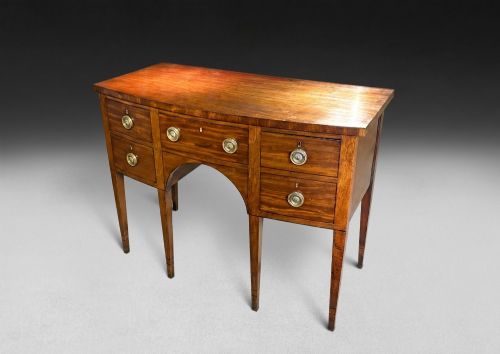
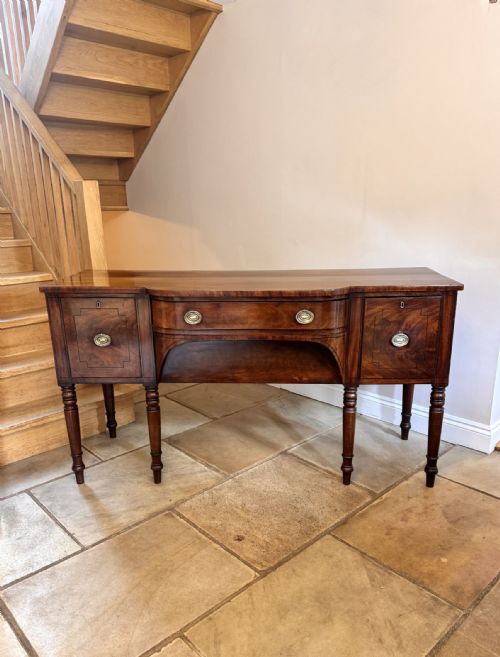
George III Server Table
A george iii server table brings eighteenth-century proportion and fine timber into a dining room or hall with quiet authority.
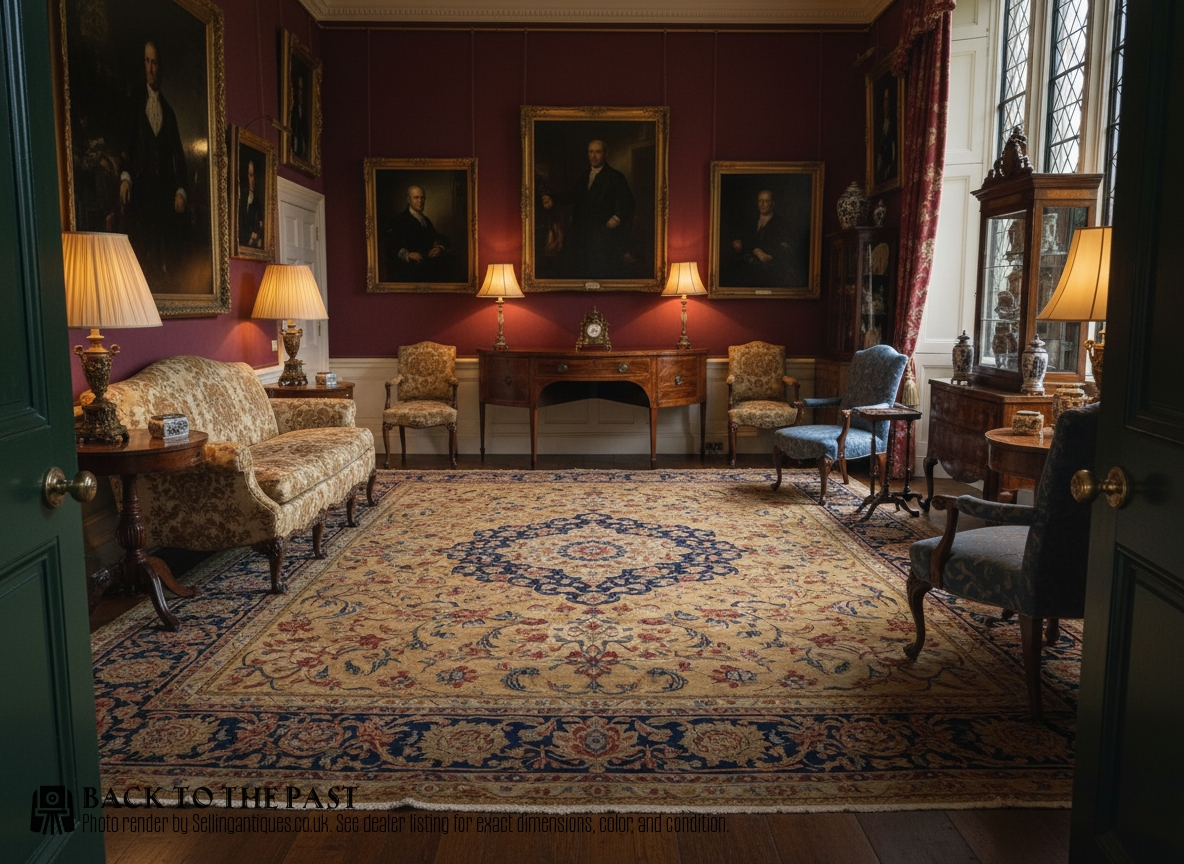
George III Server Table
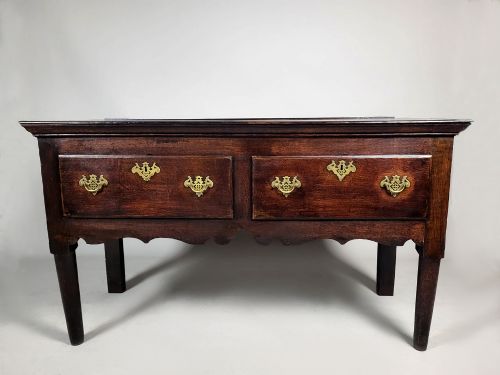
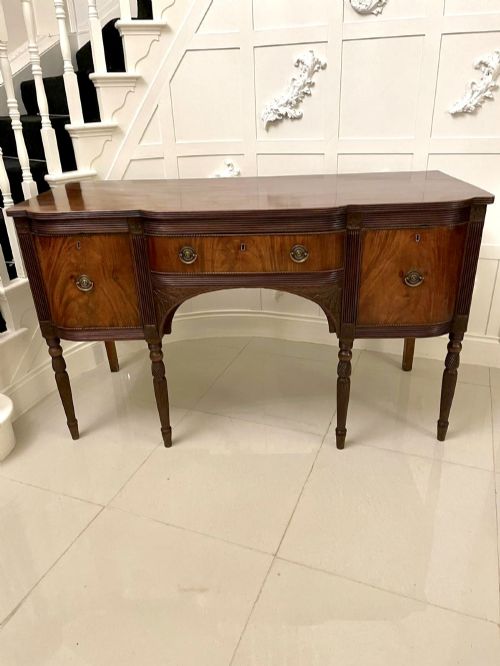
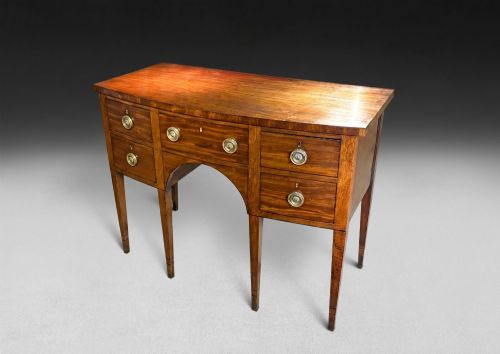
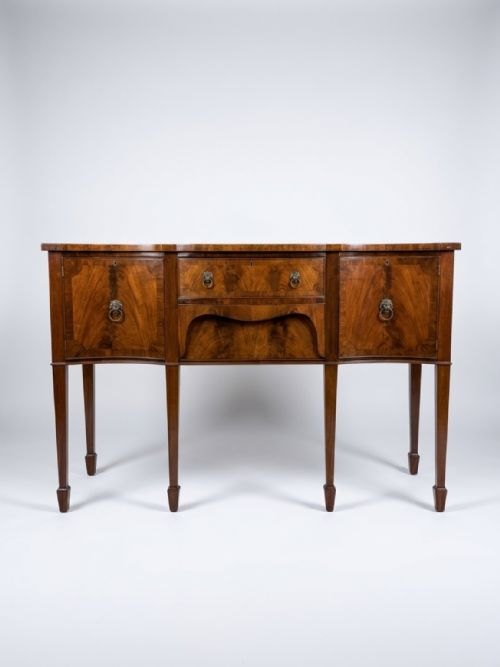
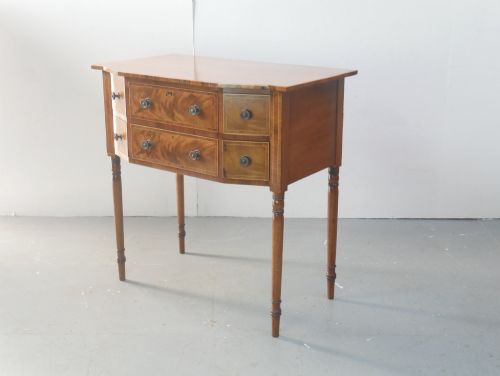
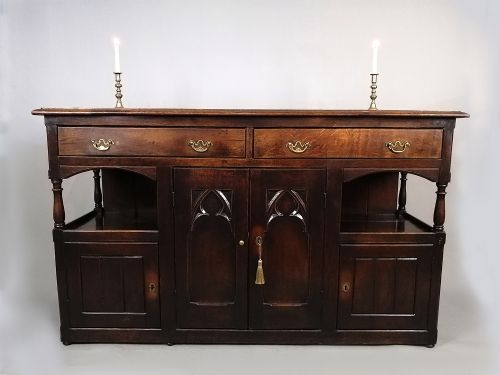
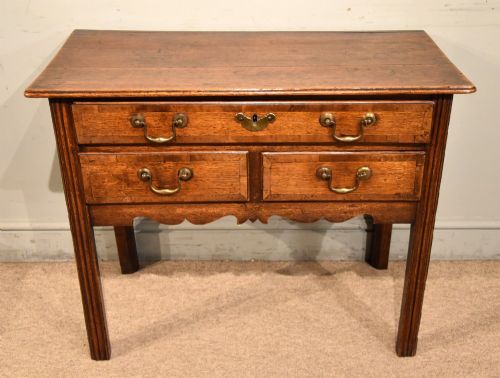
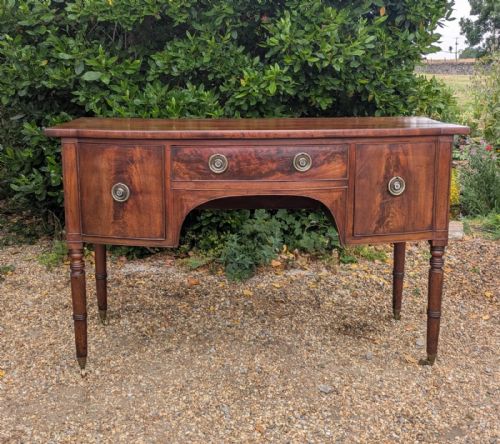
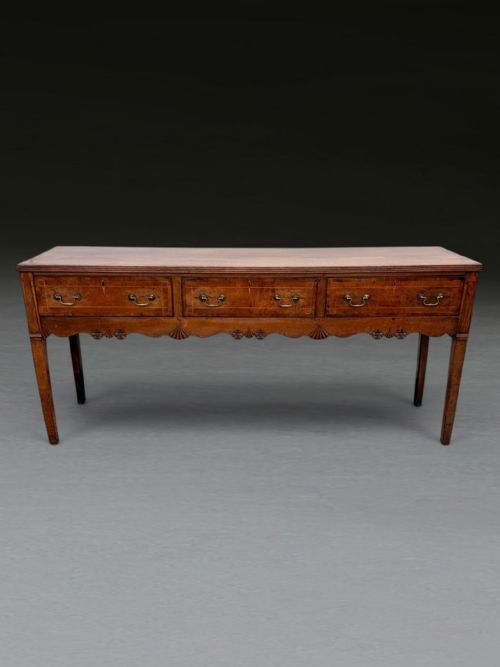
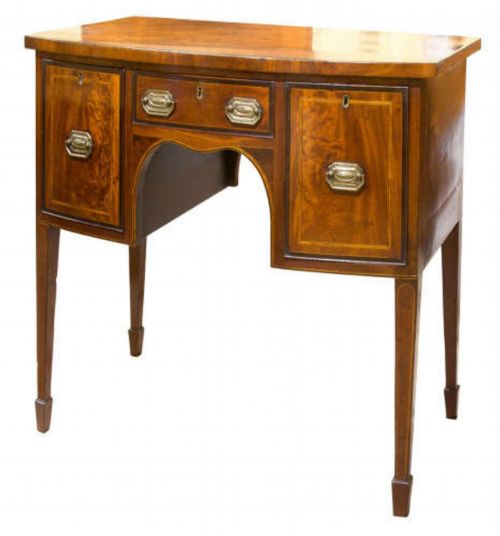
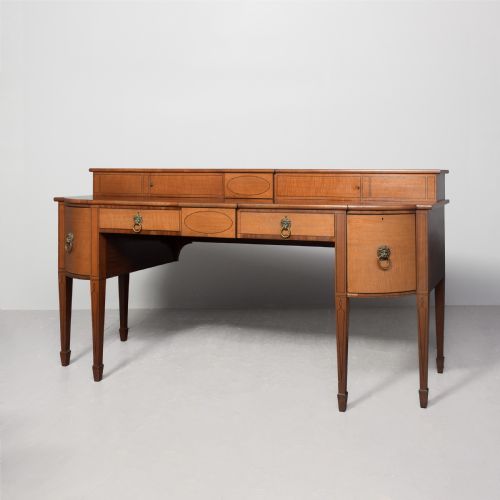
A george iii server table encompasses serving tables, sideboards, console tables, and dresser bases originating from the Georgian era and the eighteenth century. These pieces served dining rooms for the preparation and presentation of food and silver.
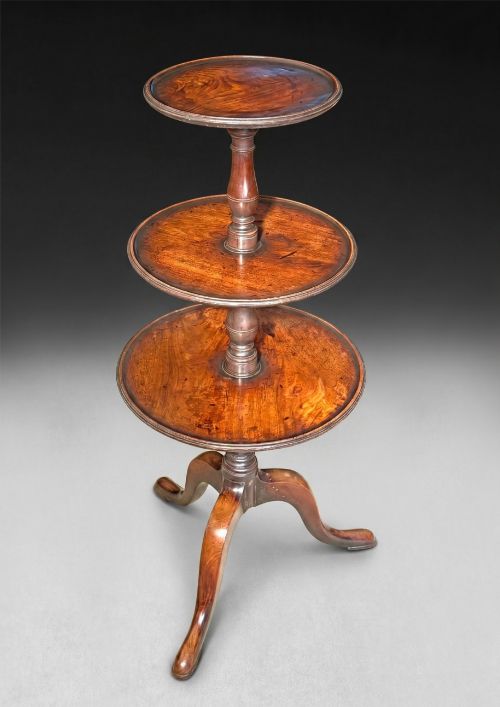
The selection here leans heavily toward mahogany sideboards and serving tables shaped with serpentine or bow fronts, alongside oak dresser bases and tiered dumbwaiters. Makers worked within styles ranging from plain local designs to elaborate Chippendale and Sheraton interpretations.
Buyers encounter examples spanning the mid-eighteenth century to the early nineteenth century, constructed with regional variations such as Scottish stage-backs or provincial oak potboards.
Materials and Construction
Timber selection dictated the visual weight of each piece, with solid mahogany and figured mahogany veneer dominating formal dining furniture, while sturdy oak served for provincial dressers and lowboys. Cabinetmakers added decorative contrast using satinwood, boxwood inlay, and purpleheart banding.
Joinery techniques involved precise dovetailing for drawers and framing for serpentine or bow-front carcasses that required steaming and shaping solid timber. Brass hardware, including original brasses and drop handles, completed the structural assembly.
Judging Quality
Quality rests in the handling of timber and the ambition of the outline, separating standard utilitarian pieces from exceptional architectural furniture. Figured grain and complex serpentine or breakfront profiles demand superior carpentry.
Refinement shows in the crispness of inlay work, boxwood stringing, and the retention of original brass fittings rather than later replacements.
The George III Server Table Glossary
- Serpentine
- A front profile curved in a continuous wave, swelling outward at the centre and receding at the ends. This shape requires advanced woodworking skill to construct.
- Bow front
- A convex, outwardly curved front line popular on late eighteenth-century sideboards. It softens the rigidity of rectangular dining room furniture.
- Potboard
- An open slatted lower shelf found on regional dresser bases. It provided storage for heavy pots and kitchen earthenware.
- Dumbwaiter
- A tiered revolving stand with graduated circular or rectangular trays. It held dishes and wine bottles beside the dining table.
- Stringing
- Thin inlaid lines of contrasting timber such as boxwood used to outline drawer fronts and tabletops. It defines geometric panels on mahogany surfaces.
George III Server Table: Frequently Asked Questions
What is a george iii server table used for?
These tables and sideboards served dining rooms for holding dishes, serving food, and displaying silver during large meals.
Today they function as side tables in dining rooms, hallways, or living spaces where surface area and period character are required.
How do I identify a genuine piece?
Look for period timber characteristics like figured mahogany, oak secondary woods, and traditional hand-cut joinery in the drawer construction.
Examine the style details, such as George III Sheraton or Chippendale proportions, which distinguish eighteenth-century work from later revivals.
How do I care for mahogany surfaces?
Keep timber furniture away from direct sunlight and sudden temperature changes to prevent veneer lifting and wood splitting.
Dust with a soft cloth and apply traditional beeswax sparingly to maintain the natural sheen of the polished wood.
What is the difference between a sideboard and a serving table?
Serving tables are generally open-framed console or side tables designed primarily to hold dishes during a meal without built-in storage drawers.
Sideboards incorporate enclosed drawer and cupboard space within the carcass for storing cutlery, linen, and dining accessories.