

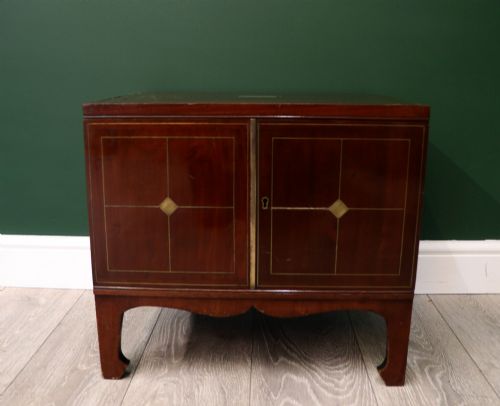


Line Inlaid Mahogany Cabinet
These line inlaid mahogany cabinet pieces combine rich timbers with delicate linear stringing, offering practical storage and elegant display.
Line Inlaid Mahogany Cabinet
A line inlaid mahogany cabinet brings together warm reddish-brown timber and contrasting linear stringing, appearing across styles from the eighteenth century to the twentieth. You will frequently encounter Edwardian display pieces and bijouterie tables, alongside earlier George III sideboards and Regency commodes.
Forms range from tall display cabinets and music chests to low bijouterie tables and wine coolers, all united by linear woodworking details. The underlying timber provides a dark, polished background that throws pale inlay into sharp visual contrast.
Materials and construction methods
Workshops built these carcases primarily in solid mahogany and mahogany veneers, selecting timber with varied grain patterns for cabinet fronts and tabletops. Cabinetmakers routed narrow channels into the primary wood to receive contrasting stringing materials such as boxwood, satinwood, and ebony.
Brass hardware, including campaign mounts, handles, and hinges, frequently complements the timber construction, while glass panels define display variants. Interior surfaces occasionally feature velvet linings, particularly within bijouterie tables and collector cabinets designed to showcase small objects.
Listings feature mahogany, satinwood, boxwood inlay, and brass across Edwardian, Regency, and eighteenth-century periods.
Distinctions in craftsmanship and design
Superior examples demonstrate meticulous precision in the cutting and fitting of fine stringing, ensuring lines remain straight and tight without gaps. The choice of mahogany veneer figures heavily, with top-tier pieces utilising richly grained timber that catches the light effectively.
The sophistication of the overarching style, spanning Sheraton Revival proportions to French Louis XV Revival curves, dictates the complexity of the finished piece. Balanced proportions and crisp integration of brass work separate standard utility items from distinguished decorative examples.
The Line Inlaid Mahogany Cabinet Glossary
- Line inlay
- A narrow strip of contrasting wood fitted flush into the surface of a carcase to create a linear border. This technique highlights the geometric contours of doors and drawers.
- Satinwood
- A pale, lustrous exotic timber used extensively for contrasting inlay work and banded borders against dark mahogany. It adds brightness to cabinet facades.
- Bijouterie cabinet
- A glazed display table or cabinet specifically designed for viewing small precious items, medals, or trinkets from above and through glass sides. These typically feature velvet-lined interiors.
- Campaign style
- Portable furniture constructed with recessed brass hardware and reinforced corners for ease of transport during military travel. Pieces display utilitarian robustness paired with polished timber surfaces.
- Commode
- A low decorative chest of drawers or cabinet originating in French furniture traditions. Regency and eighteenth-century British interpretations often incorporate curved fronts and fine stringing.
Line Inlaid Mahogany Cabinet: Frequently Asked Questions
What is a line inlaid mahogany cabinet?
A line inlaid mahogany cabinet is a storage or display piece constructed from mahogany timber and decorated with narrow contrasting wood stringing. These pieces span multiple centuries and forms, including display cabinets, commodes, and sideboards.
Craftsmen used boxwood, satinwood, or ebony to create fine borders that accentuate the architectural lines of the furniture. The combination of dark wood and pale inlay remains a defining characteristic across these items.
How do I date a mahogany cabinet?
Dating relies on examining the overall style, construction methods, and specific hardware choices associated with periods like the George III era, Regency, or Edwardian Sheraton Revival. Cabinet proportions and the complexity of the inlay offer strong chronological clues.
Earlier eighteenth-century pieces often feature heavier timber frames and hand-cut dovetails, whereas Edwardian revivals exhibit lighter proportions and machine-sawn components. Comparing the specific object type to known stylistic trends helps narrow down the decade of manufacture.
Where should I place a bijouterie cabinet?
A bijouterie cabinet suits reception rooms, studies, or hallways where natural light can illuminate its glass top and display contents. Because these pieces often feature velvet-lined compartments, keeping them away from direct sunlight protects both the interior fabric and the antique timber.
Positioning the table or cabinet away from intense heat sources prevents the mahogany from drying out and preserves the delicate boxwood or satinwood inlay. Adequate floor space allows viewers to inspect items stored inside from above.
How do I maintain mahogany furniture?
Maintaining mahogany furniture involves regular dusting with a soft, dry cloth and avoiding silicone-based polishes that build up residue over time. Applying traditional beeswax periodically feeds the timber and maintains a soft sheen without harming the finish.
Keep the humidity in the room stable to prevent the wood from expanding or contracting, which can stress glued joints and inlay work. Gentle care ensures both the structural integrity of the carcase and the crispness of the linear stringing survive intact.