



Carved Column Side Cabinet
A carved column side cabinet brings architectural order to a room, offering sturdy timber construction and classical detail that anchors an interior.
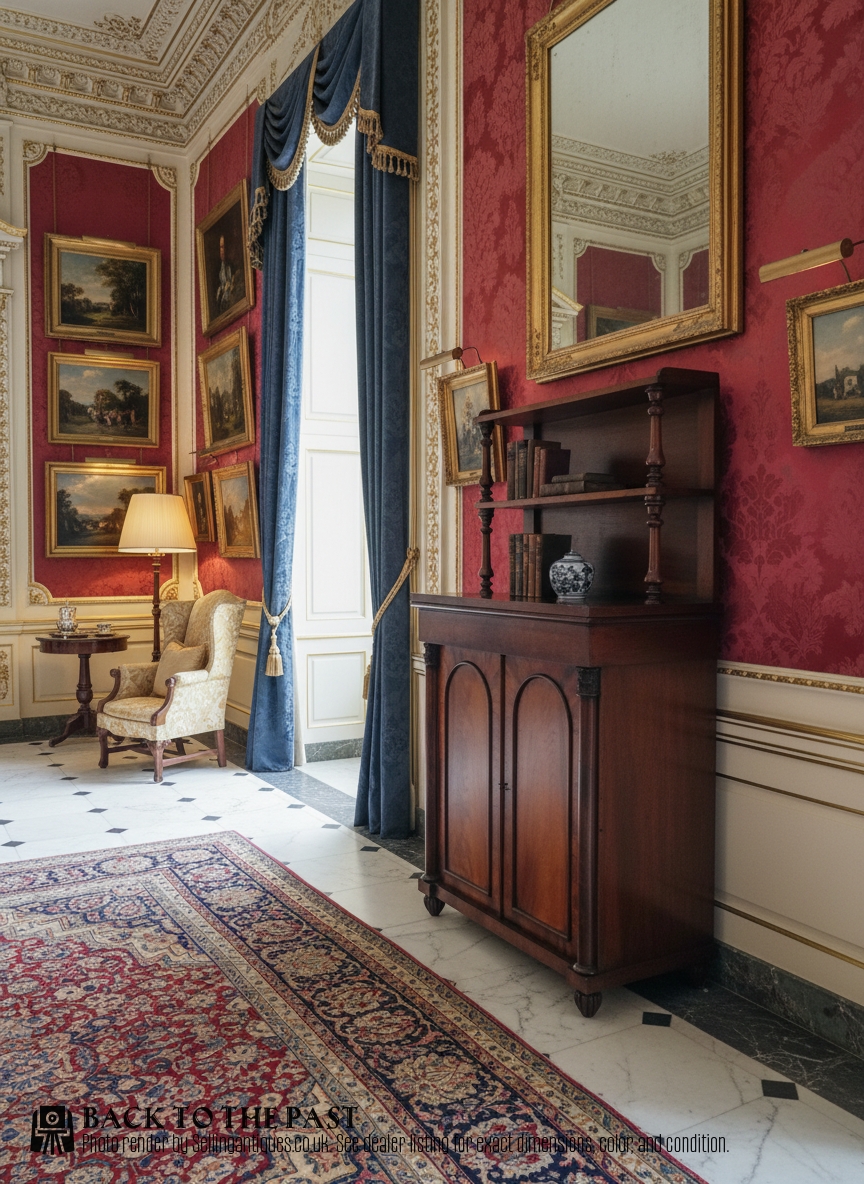
Carved Column Side Cabinet
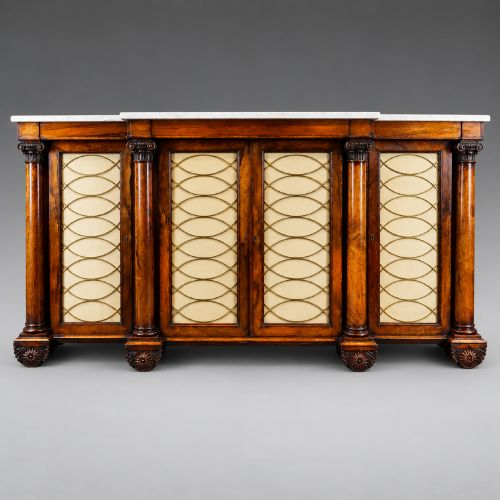
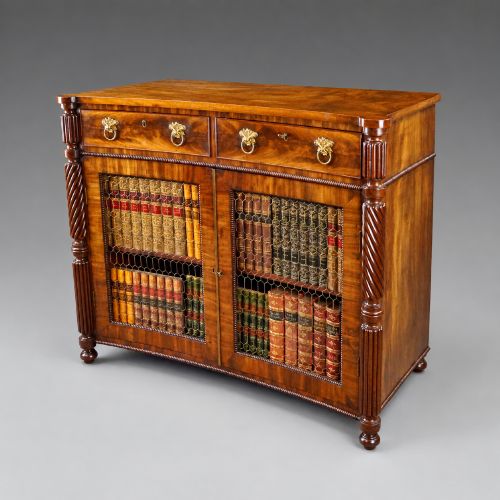
When you search for a carved column side cabinet, you encounter sturdy timber furniture fashioned with distinct architectural supports. These pieces emerge from the nineteenth century, including Victorian and Regency periods, alongside specific years like eighteen-fifty and eighteen-seventy. Such cabinets serve practical storage roles while displaying the structural columns characteristic of their style.
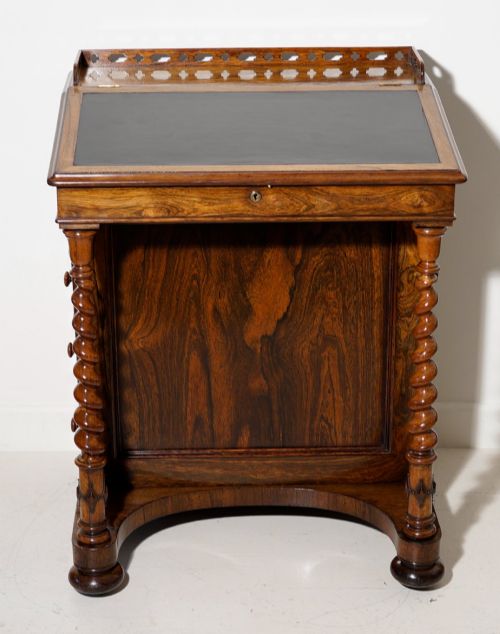
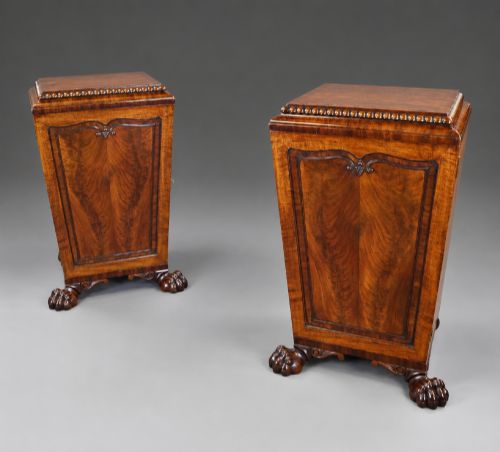
The selections on this page range from modest bedside cupboards to taller display pieces and chiffoniers. Timbers such as mahogany, oak, and pine predominate, often enhanced by flame mahogany veneer, brass details, and marble tops. Makers utilised these materials to build side cabinets, pedestals, and bookcases that suited period domestic interiors.
How they were made
Cabinet makers constructed these pieces primarily from solid hardwoods like mahogany and oak, supplemented by pine and cedar for internal or secondary structures. Workshops applied flame mahogany veneer to primary surfaces to create striking grain patterns, while incorporating brass fixtures for structural and decorative reinforcement.
The construction relied on traditional joinery methods to support heavy marble tops and integrated architectural columns. Carved ebony and painted black finishes appear on specific Victorian examples, demonstrating varied surface treatments applied to the timber carcasses.
Carved Column Side Cabinet Retail Price Guide 2026
Typical asking prices for carved column side cabinet among the pieces listed under this phrase on Sellingantiques today, from the lower quarter to the upper quarter. They describe what is for sale here now, not the wider market.
Certain Victorian pedestals combined amboyna wood with carved ebony, proving that even a lampstand could wear evening dress.
What varies in quality
Quality rests upon the selection of timber and the precision of the architectural carving on the columns. Cabinets featuring figured grains like flame mahogany or exotic woods such as gonçalo-alvez demonstrate superior material choice compared to standard softwood versions.
The execution of the joinery and the integration of decorative elements dictate the overall standard of a piece. Finer examples exhibit crisp detailing in the carved columns and balanced proportions across the doors, drawers, and plinths.
The Carved Column Side Cabinet Glossary
- Flame mahogany veneer
- A thin slice of mahogany timber cut from the fork of the tree to create a distinctive flickering flame pattern. Craftsmen applied this to the exterior surfaces of high-status cabinets for visual impact.
- Gonçalo-alvez
- A dense tropical hardwood prized for its rich contrasting dark brown and orange-brown figuring. This timber appears on select Regency period pieces.
- Chiffonier
- A compact sideboard or low cabinet equipped with drawers and enclosed shelving below. This form became popular during the nineteenth century for principal reception rooms.
- Pedestal
- A tall, freestanding column or support base used to elevate decorative objects or lamps. Victorian examples often feature carved ebony details.
- William IV
- A transitional design period spanning the early nineteenth century between Regency and Victorian eras. Furniture from this time typically displays heavy, robust proportions and classical architectural motifs.
Carved Column Side Cabinet: Frequently Asked Questions
What is a carved column side cabinet?
A carved column side cabinet is a nineteenth-century storage piece defined by structural pillars and classical proportions. These cabinets utilise timbers such as mahogany and oak to provide enclosed shelving for domestic use.
They function as practical furniture items that double as architectural statements within a room. Their design reflects specific periods including Regency and Victorian eras.
How do I identify a Regency cabinet?
Regency cabinets typically display restrained classical lines, Greco-Roman architectural influences, and dark tropical hardwoods. Makers often utilised mahogany and gonçalo-alvez during this period.
Look for balanced proportions and understated brass mounts rather than heavy Victorian ornamentation. These pieces date from the early nineteenth century.
Where were side cabinets placed?
Period side cabinets were situated in dining rooms, libraries, and principal parlours to store tableware, books, or documents. Their flat top surfaces also allowed them to function as serving tables or display areas.
Smaller variants served as bedside cupboards or lampstands in private chambers. Their compact footprints suited the room layouts of nineteenth-century homes.
What is flame mahogany?
Flame mahogany is a highly figured wood veneer obtained from the junction where branches meet the main tree trunk. Cabinet makers laid these distinct veneers across drawer fronts and cabinet doors to create symmetrical patterns.
This material signals a higher grade of nineteenth-century furniture construction. It requires careful handling and maintenance to preserve the delicate grain structure.