

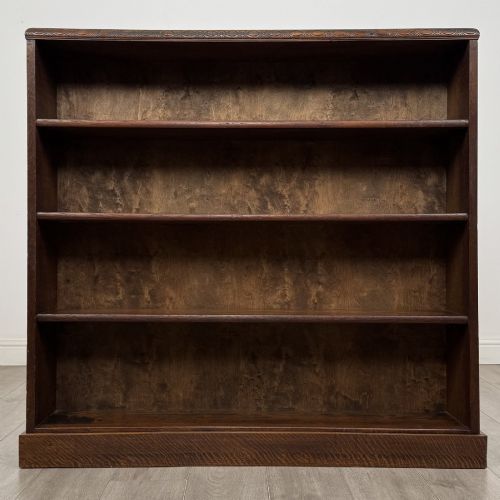
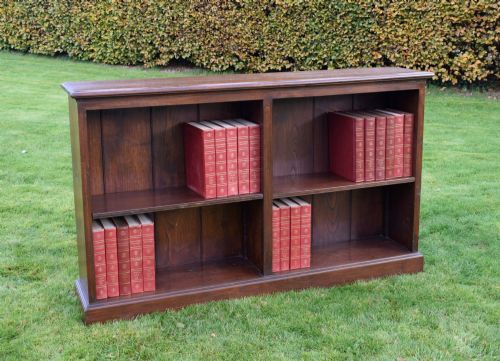

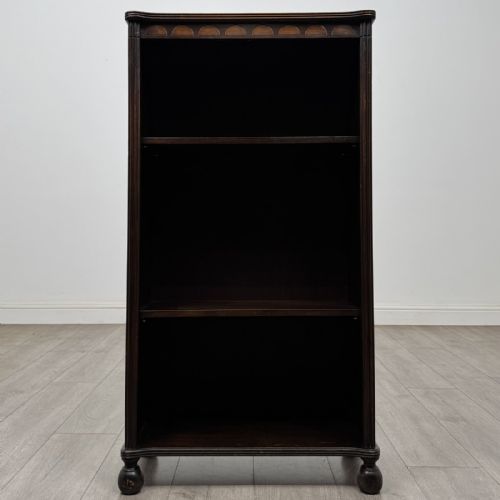
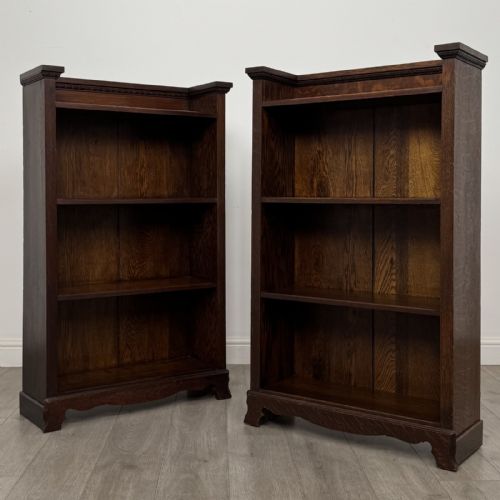

Edwardian Low Bookcase
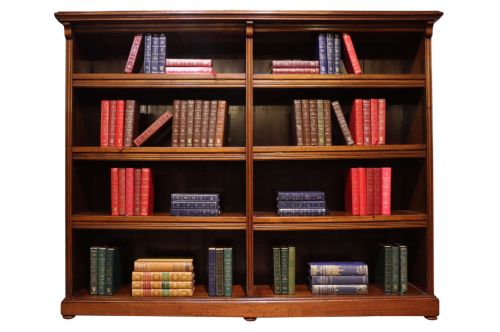
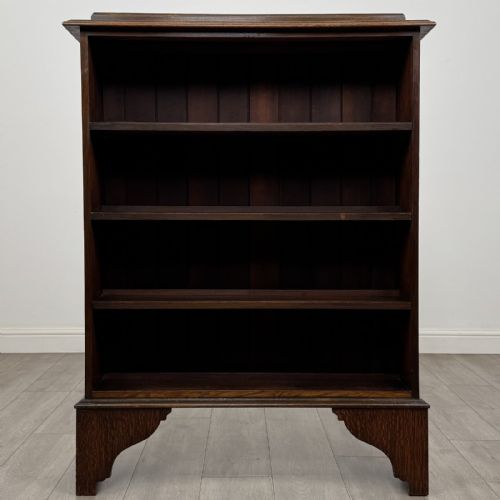
An Edwardian low bookcase brings accessible open shelving and compact proportions to domestic interiors, combining practical storage with period joinery.
Edwardian Low Bookcase
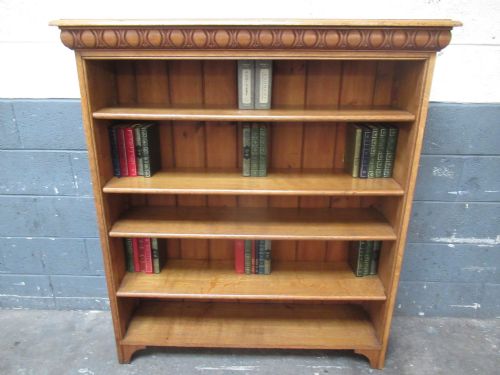
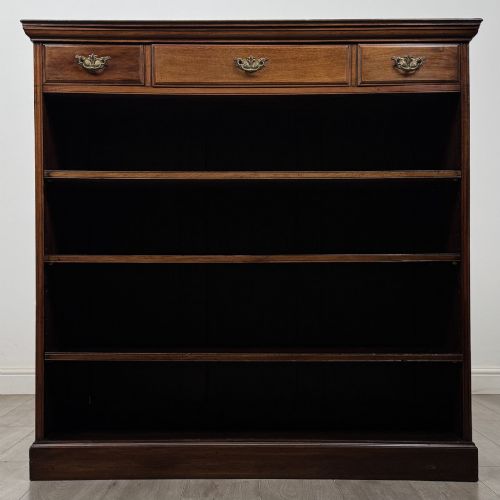
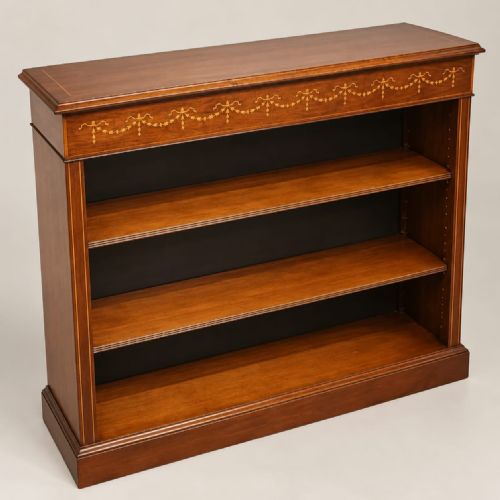
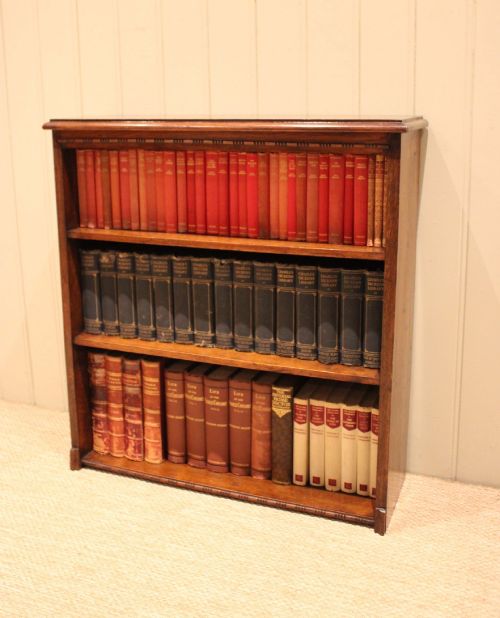
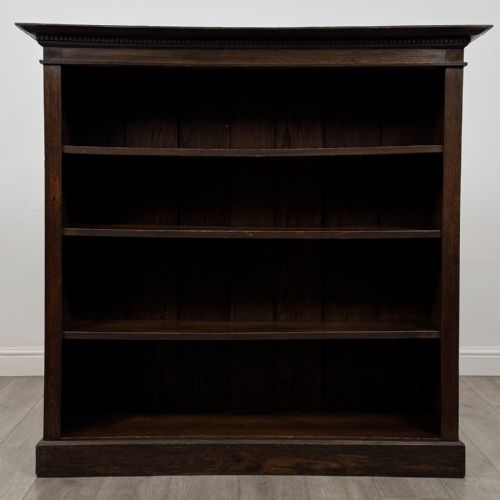
An edwardian low bookcase typically presents a horizontal silhouette designed to sit comfortably beneath picture rails or windows. These pieces span variations from open adjustable shelving to glazed double cabinets and cupboard bases.
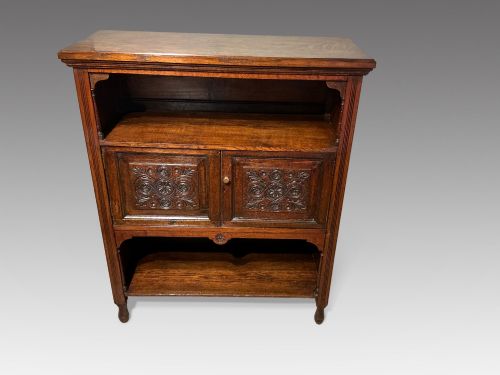
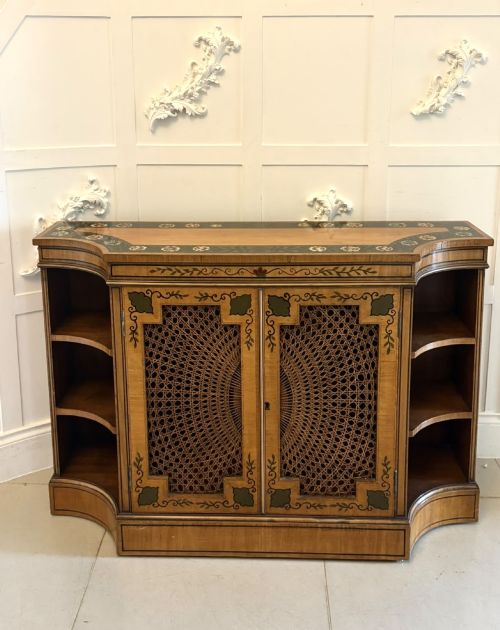
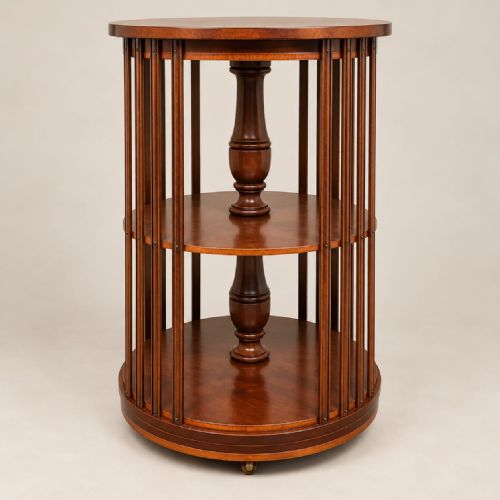
While the majority originate from the Edwardian period and early twentieth century, the selection also includes late Victorian, nineteenth-century, and William IV examples. Makers utilised formats such as revolving bookcases, concave side cabinets, and dwarf oak cabinets alongside standard open configurations.
Materials and Construction
Cabinet makers built these pieces primarily using oak and mahogany, often incorporating walnut, satinwood, pine, and brass hardware. Timber selection dictated the character, ranging from golden oak and dark oak to mellow mahogany and figured walnut.
Construction methods involved pegged joints, adjustable shelf mechanisms, and delicate inlay work. Glazed doors utilised leaded glass, while specialist forms featured revolving mechanisms or integrated magazine racks.
Edwardian Low Bookcase Retail Price Guide 2026
Typical asking prices for edwardian low bookcase among the pieces listed under this phrase on Sellingantiques today, from the lower quarter to the upper quarter. They describe what is for sale here now, not the wider market.
Some dwarf oak cabinets managed to be both miniature architecture and a polite place to hide your housekeeping ledgers.
Craftsmanship and Proportion
Quality rests in the selection of timber grain and the precision of the joinery, particularly in the execution of inlaid satinwood banding or carved details. Finer pieces demonstrate careful attention to proportion, especially in long low formats or stepped configurations.
Hardware choice and internal fittings, such as finely finished adjustable shelf racks, distinguish standard workshop output from more ambitious cabinet work.
Waring and Gillow
The Edwardian Low Bookcase Glossary
- Open bookcase
- A piece of furniture consisting of a frame with horizontal shelves and no front doors. This format allows immediate access to book collections.
- Adjustable shelves
- Shelving supported by movable brackets or track systems that permit height variation. This system accommodates volumes of differing sizes.
- Satinwood banding
- A decorative technique applying thin strips of pale satinwood veneer into contrasting primary timbers such as mahogany. It creates a subtle border around panels or shelves.
- Glazed cabinet
- A storage unit featuring glass-panelled doors that protect contents from dust while maintaining visibility. They frequently appear on larger configurations or cupboard bases.
Edwardian Low Bookcase: Frequently Asked Questions
What defines an edwardian low bookcase?
An edwardian low bookcase is characterised by a restricted height that keeps the top surface within easy reach. These pieces usually feature open shelving or lower cupboard doors beneath horizontal surfaces.
They emerged to suit domestic spaces that required surface display area alongside functional book storage without dominating a room.
How do I adjust the shelves?
Many period examples utilise wooden ratchets, brass studs, or slotted side uprights to hold shelves at different heights. You simply lift the shelf clear of its supports and reposition the pegs or brackets into alternative slots.
Older timber mechanisms can occasionally stick due to seasonal humidity changes, so gentle handling is advised.
Are these pieces suitable for heavy books?
Solid oak and mahogany construction provides substantial weight capacity for standard volumes. However, longer shelves spanning wide apertures can bow over decades if loaded excessively.
Period adjustable systems handle moderate libraries comfortably, though very heavy folios are best placed on shorter or lower shelves.
How do I distinguish Edwardian from Victorian examples?
Edwardian pieces generally exhibit lighter framing, brighter timber tones such as golden oak or mellow walnut, and restrained inlay work. Victorian equivalents often rely on heavier proportions, darker finishes, and more robust carved ornamentation.
Earlier nineteenth-century iterations frequently display deeper timbers and distinct revival styling.