

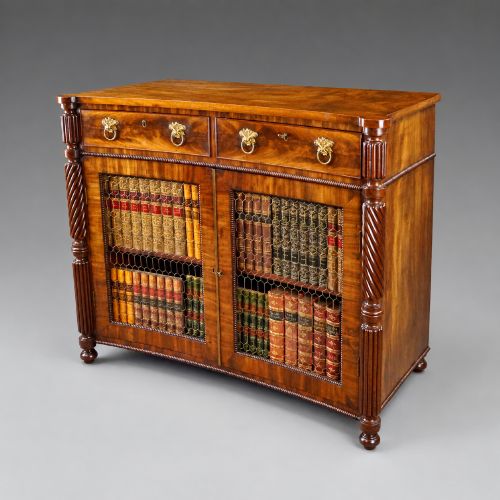
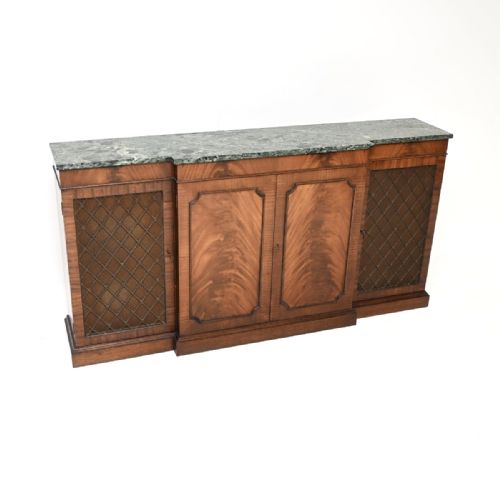
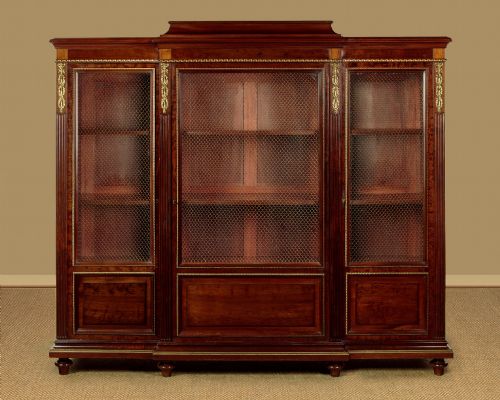
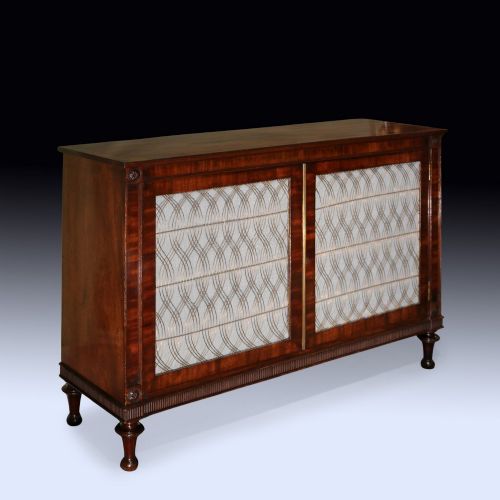
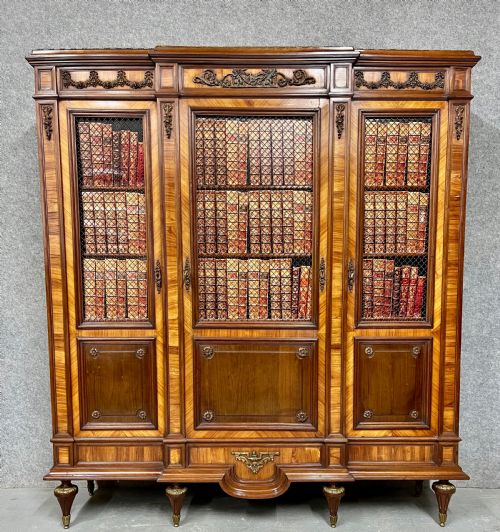


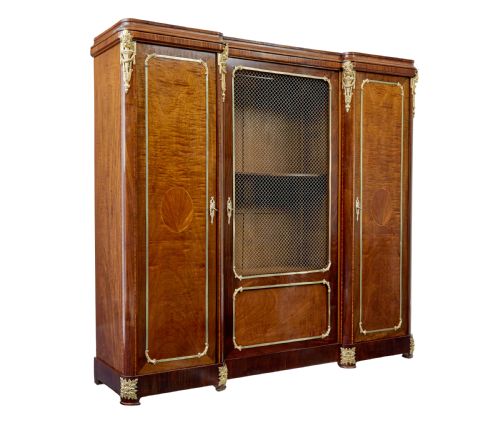


Mahogany Wire Door Cabinet
These mahogany wire door cabinet pieces offer classic timber storage and display, prized for their distinctive mesh fronts.
Mahogany Wire Door Cabinet
A mahogany wire door cabinet brings together timber storage and visible display through mesh panels. When you search for a mahogany wire door cabinet, you are looking at items spanning George III, Regency, William IV, Edwardian, and later twentieth-century periods.
The pieces on this page appear in various forms including side cabinets, bookcases, sideboards, and combination cabinet bookcases. You are most likely to encounter Regency period examples alongside nineteenth-century and French-influenced variations.
These items function primarily to house books, china, or linen while protecting the contents behind wire mesh, brass grilles, or glass panels. Originating from country houses and urban drawing rooms, they serve as practical and decorative furniture.
How they were made
Cabinet makers constructed these pieces using solid mahogany and veneers, often incorporating secondary timbers and framing them with brass mounts, ormolu, and fine wire mesh. Surface decoration relies on the natural grain of the wood rather than excessive carving.
Structural elements include fitted marble tops on certain sideboard variations, as well as fabric or silk linings placed behind the wire mesh doors. Brass grilles and glass panes provide alternative door treatments across different styles.
Mahogany Wire Door Cabinet Retail Price Guide 2026
Typical asking prices for mahogany wire door cabinet among the pieces listed under this phrase on Sellingantiques today, from the lower quarter to the upper quarter. They describe what is for sale here now, not the wider market.
Materials recorded across these cabinets include mahogany, brass, fabric, marble, wire mesh, glass, ormolu, and silk.
What varies in quality
Quality in these cabinets rests upon the choice of timber and the precision of the brass or wirework. Finer examples show careful selection of mahogany grain matched across doors and panels, paired with crisply rendered mounts.
Proportion and architectural detailing distinguish standard utility pieces from exhibition quality works. The integration of breakfront designs, marble surfaces, and integrated columns marks the upper tier of the range.
The Mahogany Wire Door Cabinet Glossary
- Breakfront
- A cabinet design where the central section projects forward from the flanking outer sections. This configuration adds architectural depth to bookcases and sideboards.
- Chiffonier
- A low cabinet featuring shelves or enclosed storage, popular during the Regency period. It typically combines drawer space with cupboard doors below.
- Ormolu
- Gilded bronze mounts applied to furniture for decorative accent. This technique appears on French-influenced and Empire pieces.
- Grille
- A decorative lattice of brass or wire fitted into cabinet doors to allow ventilation and visibility. It replaces solid timber panels.
- Kingwood
- An exotic timber used for contrasting veneers and inlay work on finer case pieces. It complements the darker tones of mahogany.
Mahogany Wire Door Cabinet: Frequently Asked Questions
What is a mahogany wire door cabinet used for?
These cabinets serve to store and display books, ceramics, and valued objects within domestic rooms. The mesh or wire doors provide ventilation while keeping contents secure.
Historically, they populated libraries, dining rooms, and drawing rooms of large houses. Today, they function similarly in modern interiors for storage and collection display.
How do I identify a Regency period cabinet?
Regency pieces often feature classical architectural motifs, brass inlay, and strict symmetrical lines. Makers utilised rich mahogany veneers and restrained classical ornamentation.
Look for architectural elements such as turned columns, brass grilles, and bracket feet. The proportions tend to remain balanced and refined without heavy Victorian carving.
What materials are used besides mahogany?
Makers incorporated brass for grilles, mounts, and hardware, alongside marble for top surfaces on specific sideboard forms. Fabric and silk linings frequently back the wire mesh doors.
Secondary timbers support the main mahogany structures, while occasional pieces integrate walnut or kingwood for decorative contrast and border banding.
How do I care for antique mahogany furniture?
Maintain stable humidity and temperature levels in the room to prevent timber movement and veneer lifting. Avoid placing these pieces in direct sunlight to protect the wood colour.
Clean surfaces with a soft, dry cloth and apply occasional appropriate wax polish to nourish the timber. Avoid silicone-based sprays which can damage the polish.