
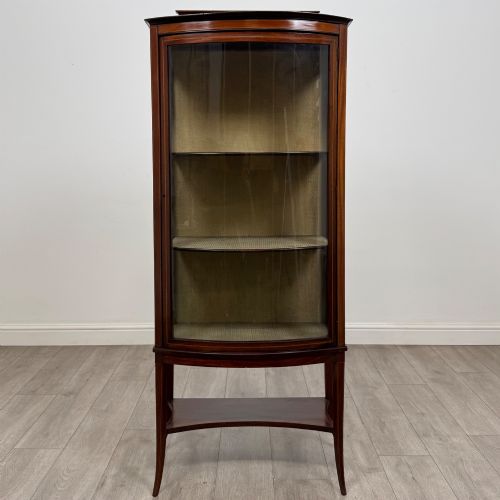
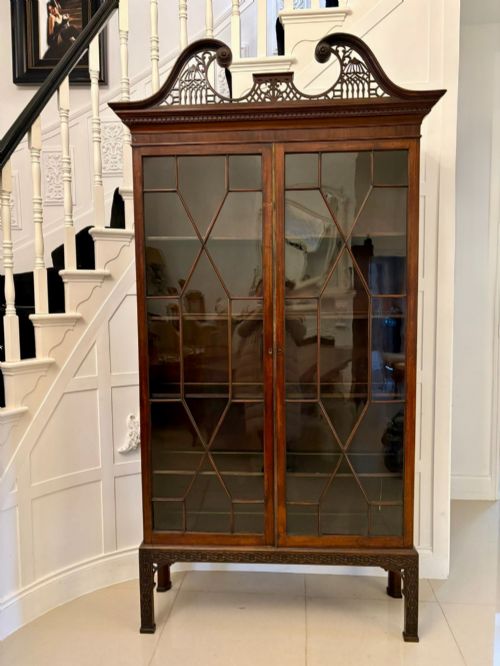
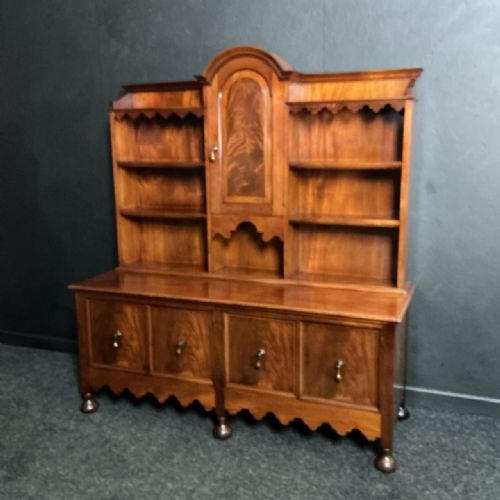
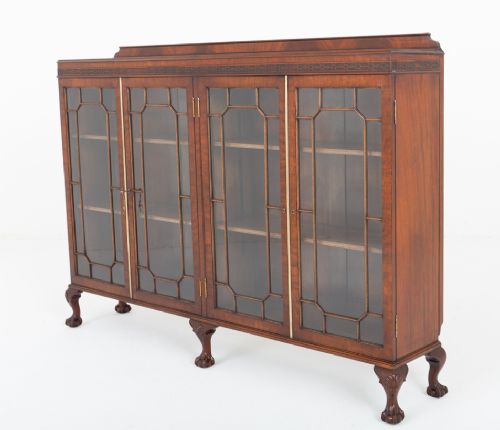


Vintage Mahogany China Cabinet
A vintage mahogany china cabinet holds your porcelain behind glass while anchoring the room with rich timber grain.
Vintage Mahogany China Cabinet
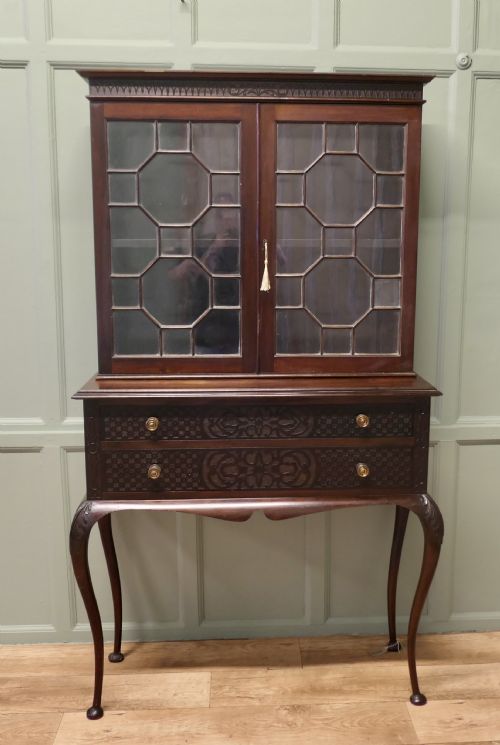
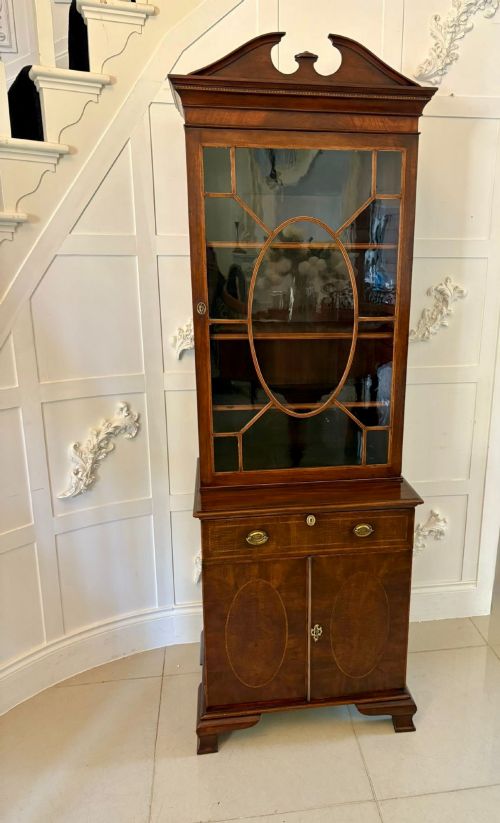
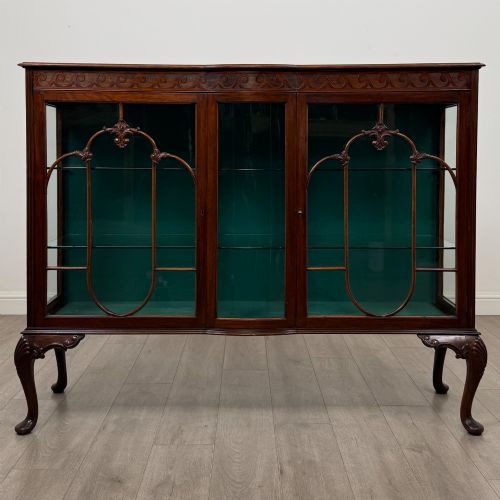
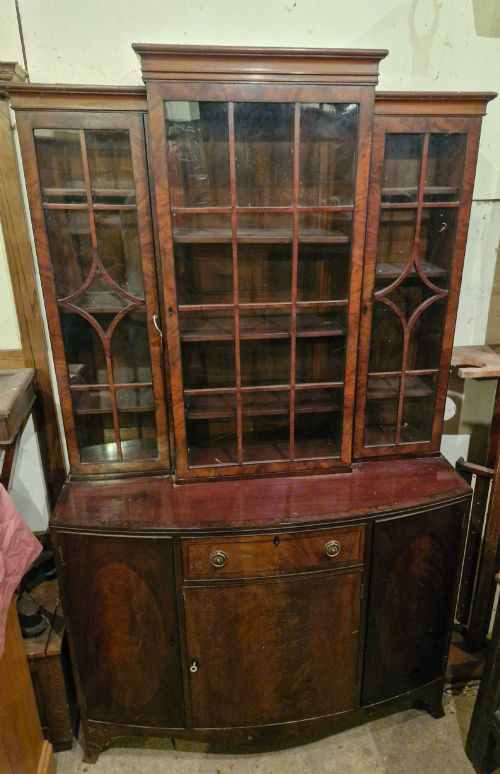
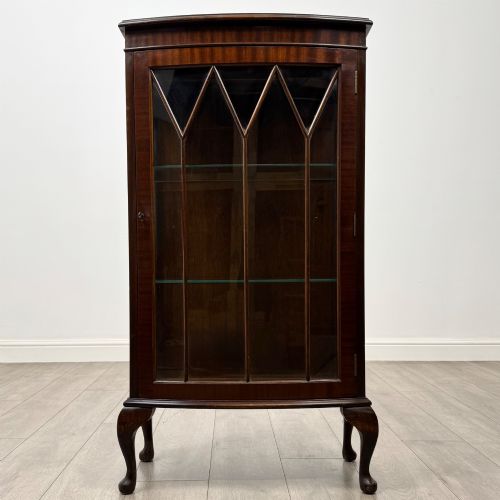
A vintage mahogany china cabinet brings together timber framing and glazed doors to exhibit ceramics and glassware. When you search for a vintage mahogany china cabinet, you encounter forms ranging from tall bookcases and corner cupboards to dedicated display cabinets and dressers.
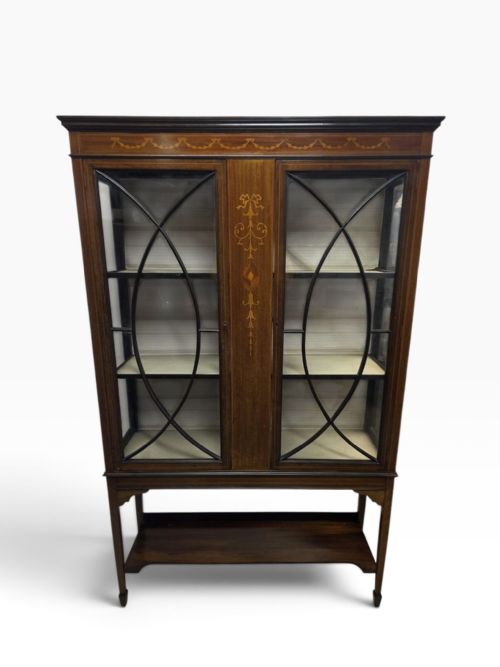
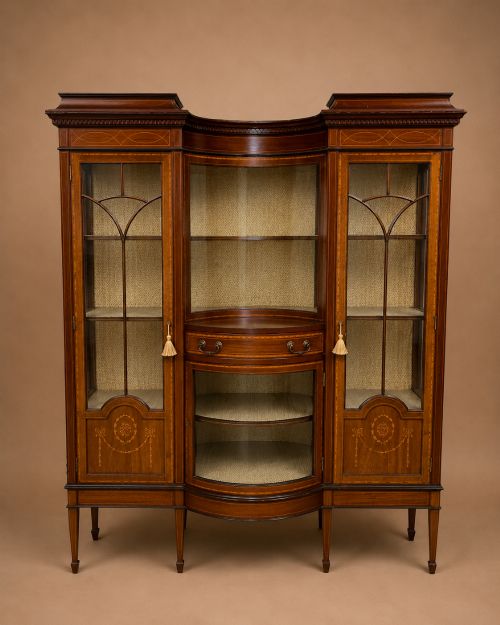
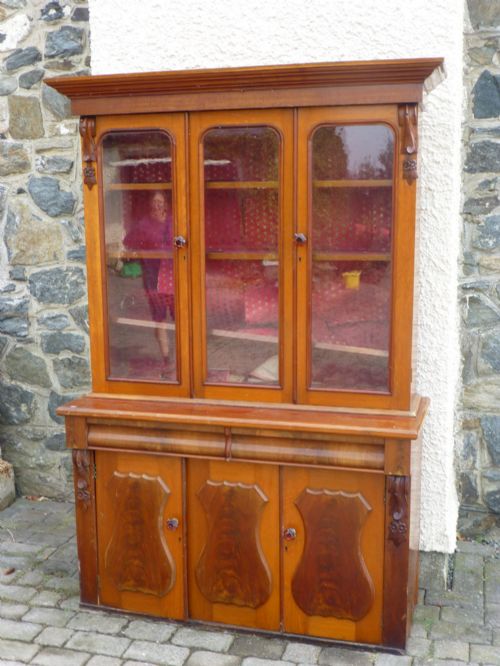
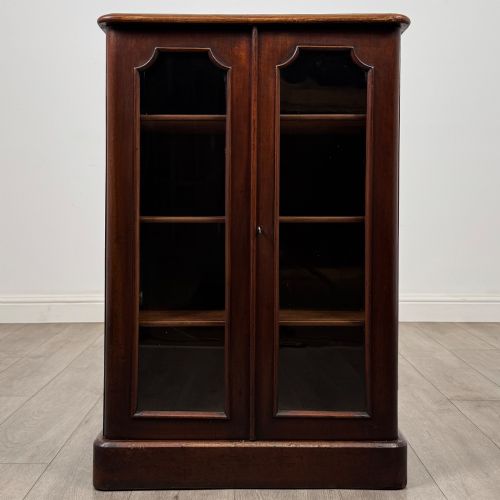
The pieces on this page span the Victorian and Edwardian eras, alongside Georgian and later 20th-century revivals. Cabinets from these periods typically feature glass viewing areas above enclosed storage, resting on bracket feet or plinth bases.
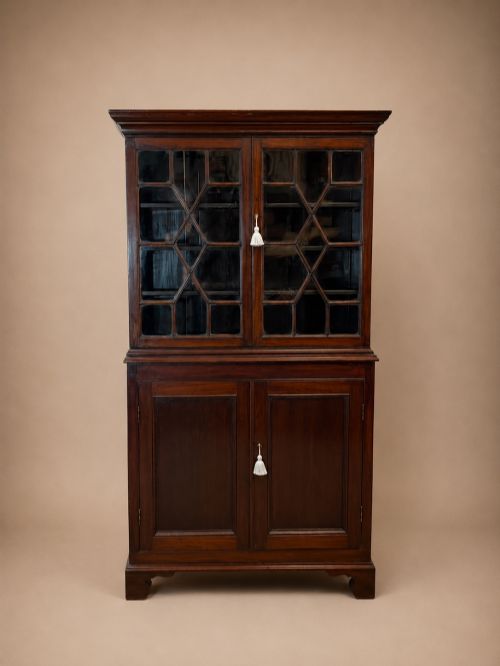
Makers drew on established idioms like Chippendale, Sheraton, and Queen Anne. This mix of styles means you find both rectilinear Edwardian glazed units and heavily carved mid-Victorian bookcases.
Materials and construction
Makers built these cabinets using solid mahogany and figured veneers, frequently selecting flame mahogany for drawer fronts and central panels. Satinwood inlay and contrasting stringing provide linear borders on Edwardian pieces, while brass hardware secures doors and internal shelving.
Glazing takes the form of individual leaded or wooden-framed panes, arranged in geometric astragals or gothic arches. Interior spaces sometimes incorporate mirrored backs and fabric-lined shelves to reflect light through displayed objects.
Glazed display cabinets and bookcases appear alongside corner cupboards and freestanding vitrines.
Judging cabinet quality
Quality rests in the crispness of carved detail, the symmetry of timber grain selection, and the weight of the brass fittings. Superior examples display precise joinery in the glazing bars and careful book-matching of veneers across large doors.
Maker attribution elevates certain pieces, particularly those bearing stamps or paper labels from established cabinet-makers. The integration of subtle marquetry, bevelled mirror glass, and secondary timbers like oak reveals the standard of workshop execution.
Maple & Co.·Wylie and Lochhead·James Winter & Sons
The Vintage Mahogany China Cabinet Glossary
- Astragal
- Moulding strips that divide glass panes within a door frame. These intersecting wooden bars create geometric or gothic patterns across the display front.
- Flame mahogany
- A veneer figure cut from the branch junction of the tree. It yields a distinctive flickering flame pattern used on prominent door panels.
- Marquetry
- Decorative patterns formed by fitting together small pieces of coloured wood veneer. Floral motifs and scrolls appear frequently on Edwardian cabinet doors.
- Vitrine
- A glass-sided display cabinet designed for porcelain and curiosities. These freestanding pieces prioritise visibility from multiple angles.
- Serpentine
- A curved front line that sweeps outward at the centre and inward at the sides. This fluid shape softens the heavy silhouette of timber bookcases.
Vintage Mahogany China Cabinet: Frequently Asked Questions
How do I style a china cabinet?
Balance heavier ceramic pieces on lower shelves while placing delicate glassware near the top where light reaches them. Leave empty space around objects to maintain visual breathing room behind the glass.
Incorporate books or small bronzes alongside china to break up uniform rows of plates. Pay attention to interior fabric or mirrored panels when choosing the colour palette of your display.
Where should I place my cabinet?
Position your cabinet away from direct sunlight to protect timber finishes and internal fabric linings from fading. Dining rooms and living spaces provide traditional settings where glassware remains close to hand.
Ensure floorboards are level so heavy glazed doors hang true within their frames. Corner units make efficient use of difficult angles in smaller reception rooms.
How do I clean mahogany wood?
Dust surfaces regularly with a soft, dry cloth following the direction of the grain. Avoid silicone-based polishes that build up a hazy film over the polished surface.
Nourish dry timber periodically with traditional beeswax applied sparingly and buffed to a soft sheen. Keep moisture away from joints and veneer edges during cleaning.
How do I date an Edwardian cabinet?
Look for lighter satinwood stringing, floral marquetry, and slender proportions characteristic of the decades around nineteen hundred. Edwardian workshops frequently revived Sheraton and Chippendale forms with a lighter touch than their Victorian predecessors.
Examine drawer linings and internal carcass timbers for machine-sawn marks which indicate industrial production methods of the early twentieth century. Original brass locks and bevelled mirror glass offer further clues to the period of manufacture.