
Edwardian Carved Mahogany Cabinet
An edwardian carved mahogany cabinet brings architectural warmth and disciplined display to a room, offering finely figured timber shaped with period restraint.
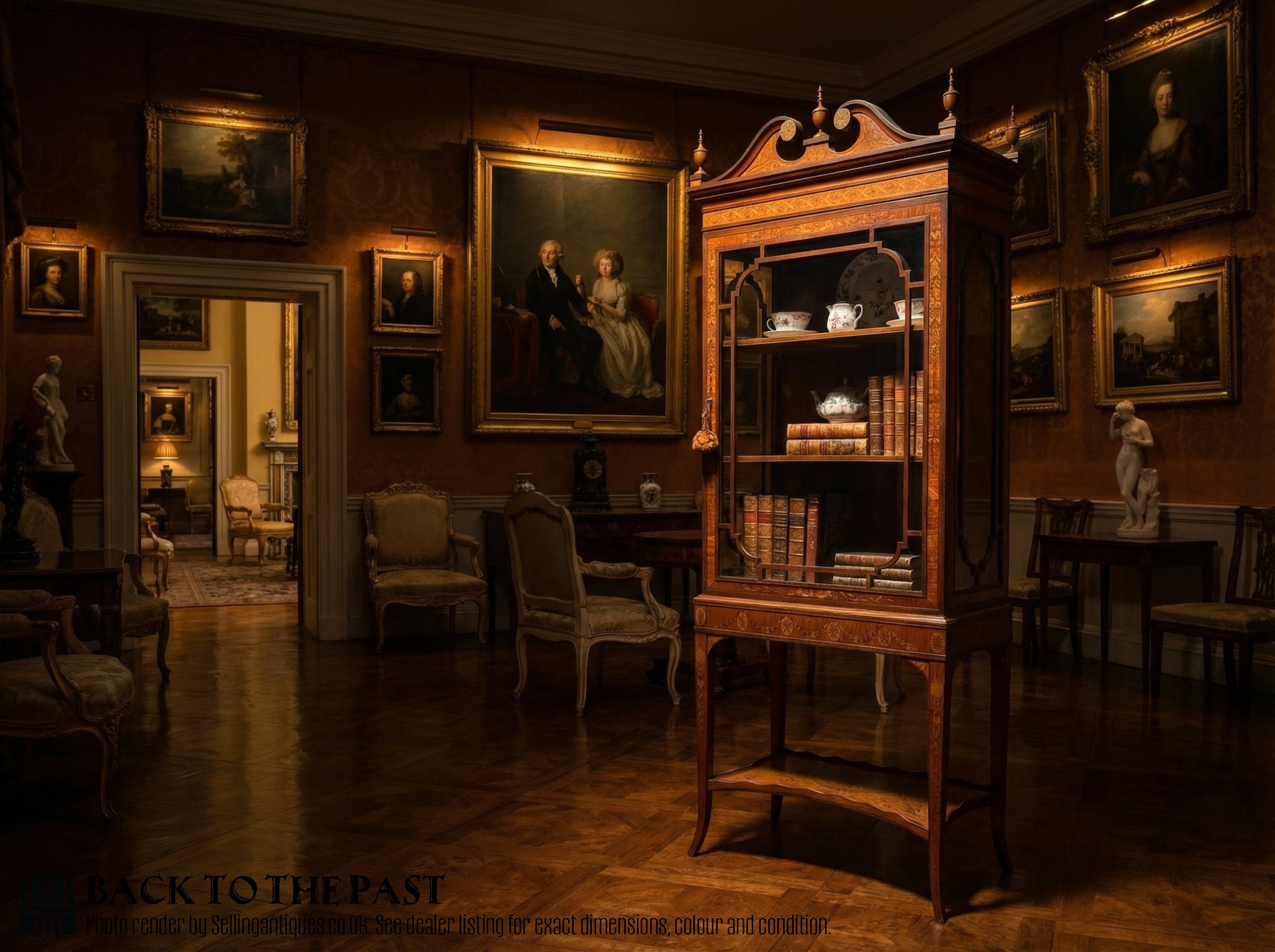
Edwardian Carved Mahogany Cabinet
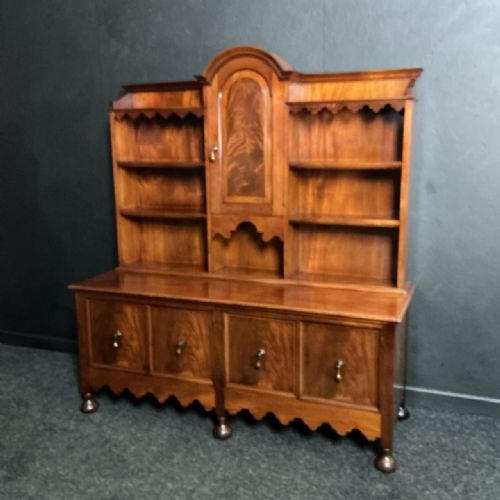
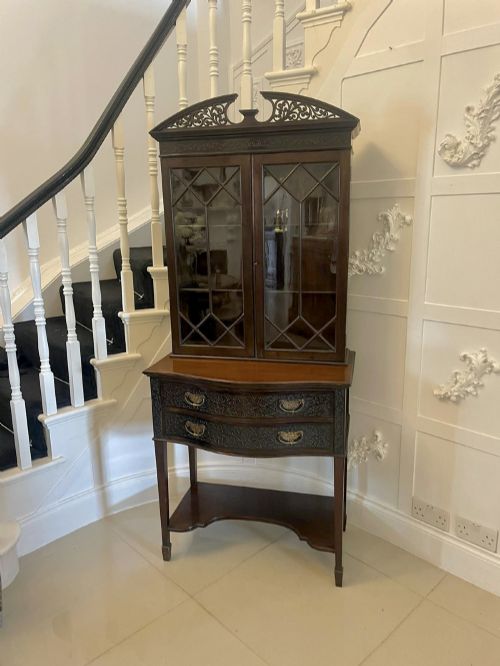
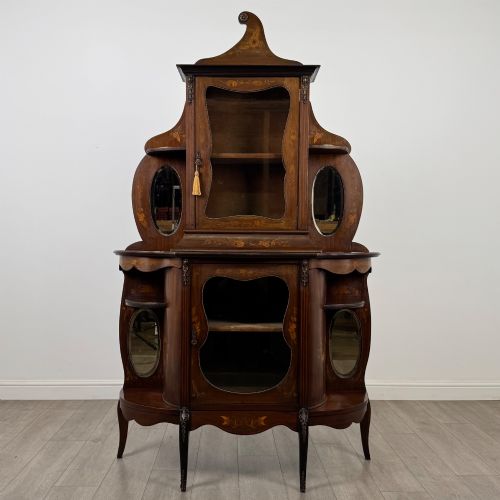
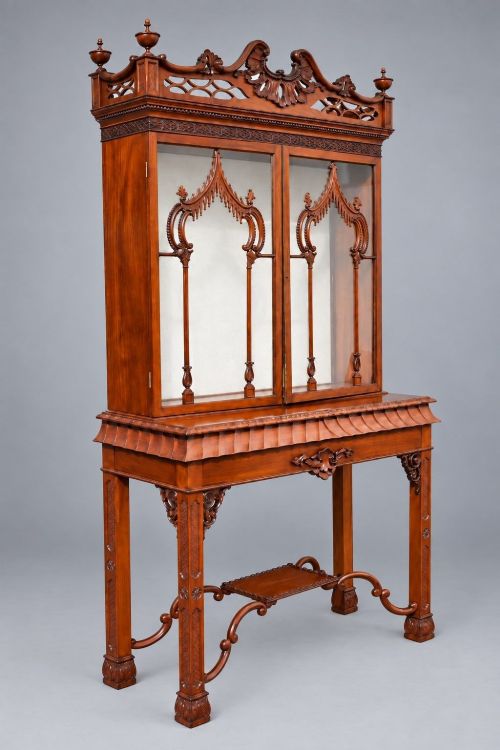
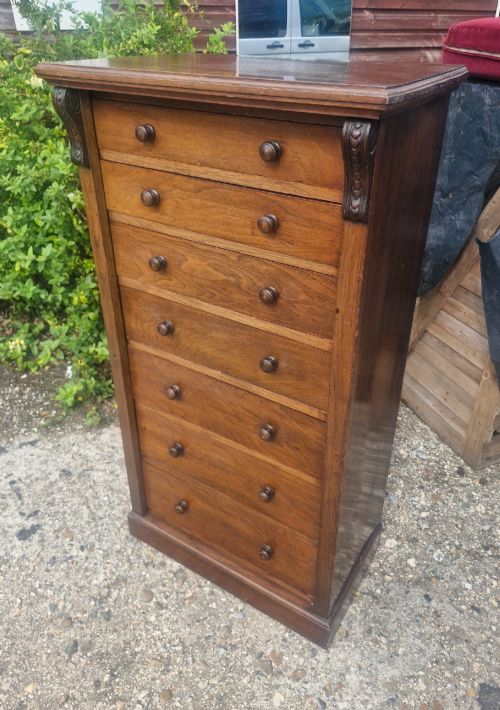
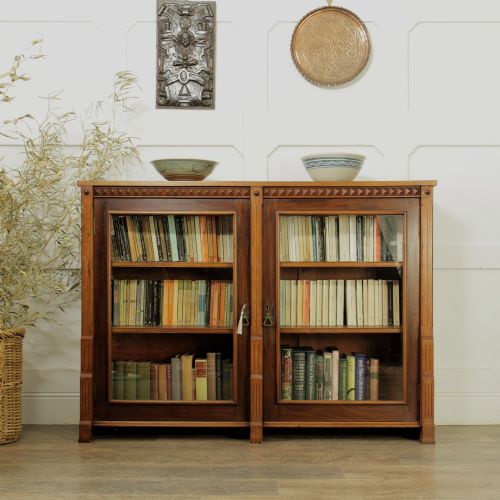
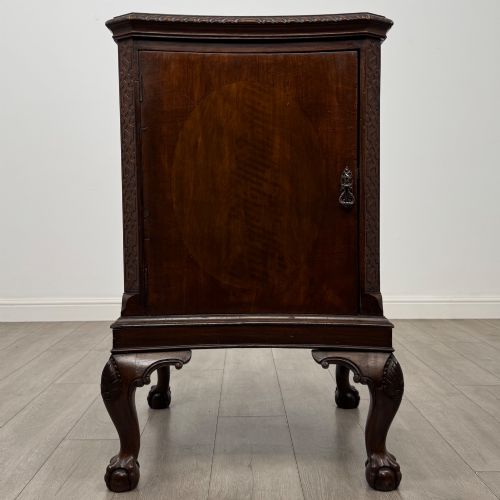
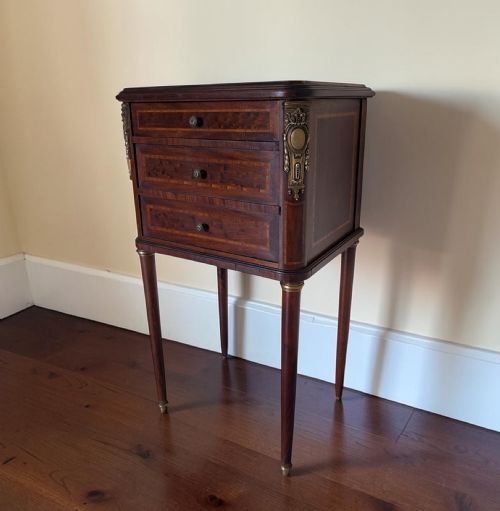
An edwardian carved mahogany cabinet combines the architectural presence of late nineteenth-century furniture with the lighter proportions typical of the early twentieth century. Buyers encounter forms ranging from tall glazed display units and serpentine side cabinets to compact bedside cupboards and specialised china storage.
While the dominant period output aligns with Edwardian manufacture and the surrounding decades of the late Victorian era, related pieces draw upon Georgian revivals and Arts and Crafts principles. The typical example on this page relies on solid mahogany or flame veneers, shaped panel doors, and disciplined floral or classical carving.
Materials and Technique
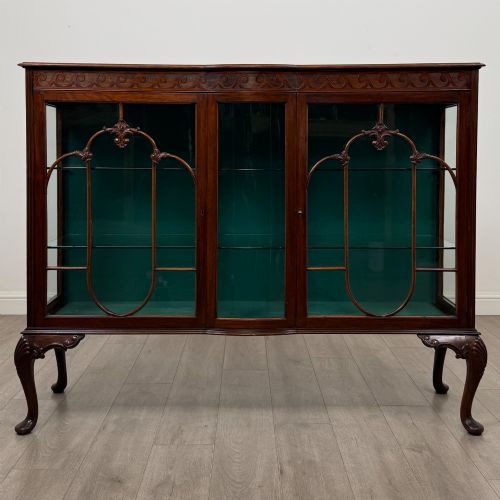
Cabinetmakers constructed these pieces primarily from solid mahogany and carefully selected mahogany veneers, frequently enhanced by satinwood stringing, exotic hardwoods, or brass hardware. Structural glass panels and mirror-back inserts provided interior light and depth, while occasional fabric linings added texture to display interiors.
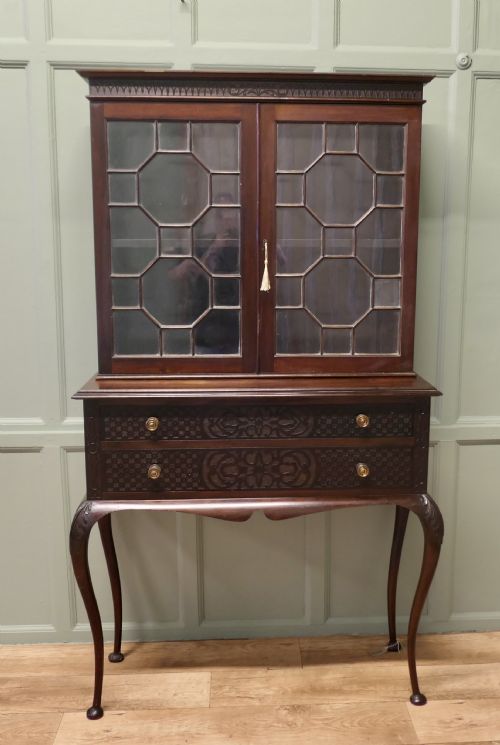
Joinery techniques combined traditional frame-and-panel construction with detailed hand-carving along cornices, friezes, and cabriole legs. Carvers utilised gouges and chisels directly into the dense timber, achieving crisp floral motifs, gadroon edging, and ball-and-claw feet without synthetic adhesives.
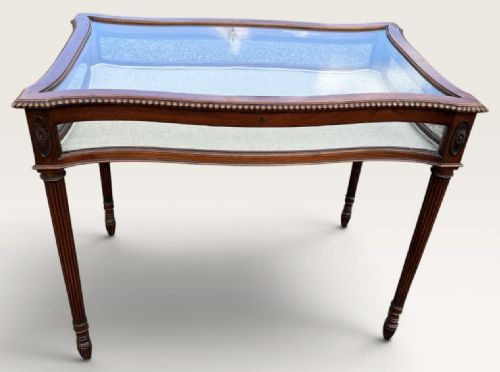
The archive records forms ranging from tall breakfront bookcases and serpentine sideboards to compact bedside cupboards and specialised glass-topped bijouterie tables.
Gradations of Quality
The distinction between standard utility pieces and superior examples rests upon the depth of the timber selection and the sharpness of the hand-carving. Superior cabinets exhibit richly figured flame mahogany veneers matched symmetrically across doors and drawers, rather than flat, plain-sawn boards.
Construction fidelity further separates grades, visible in the weight of the brass mountings, the clarity of the glazed panels, and the integration of secondary timbers such as oak within internal shelving. Cabinets bearing maker signatures reflect workshop prestige through meticulous interior finishing and robust structural joinery.
Denby & Spinks·Maple & Co.·M. D. Miller & Sons·Edwards & Roberts
The Edwardian Carved Mahogany Cabinet Glossary
- Bijouterie table
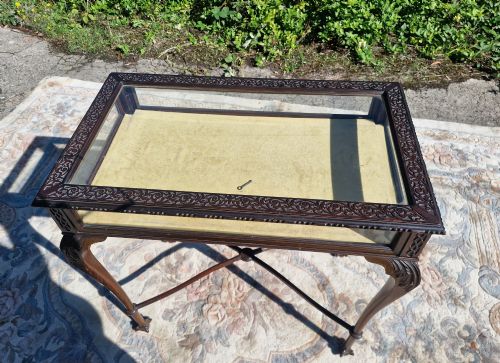
- A glass-topped display table designed for showcasing small collectables, jewellery, or curiosities. These pieces often feature hinged lids and velvet-lined interiors.
- Chiffonier
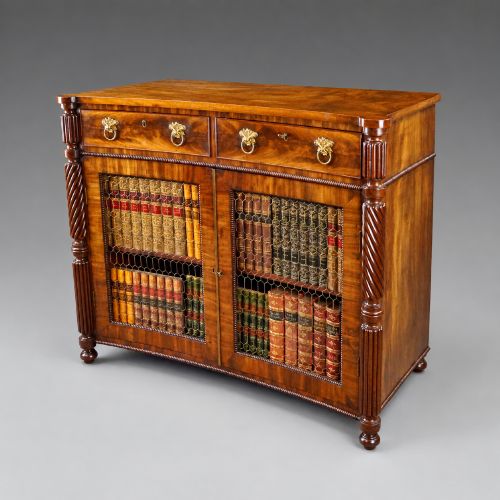
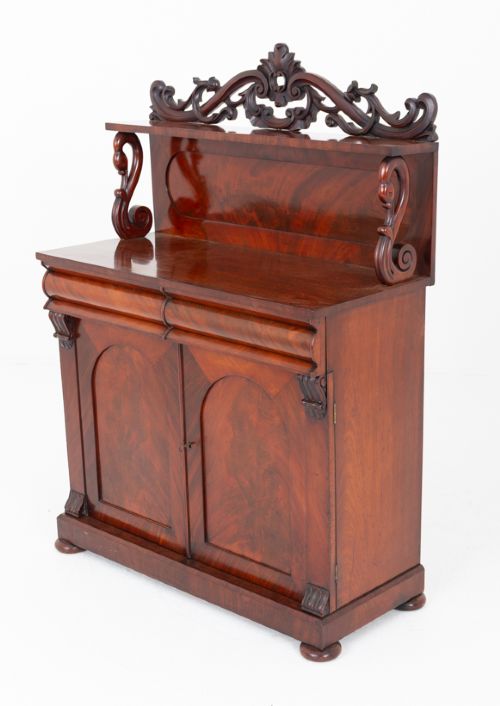
- A low sideboard or cabinet equipped with enclosed lower cupboards and frequently surmounted by a small shelf or mirror-back. The form evolved during the nineteenth century for dining room storage.
- Astral glazing
- Cabinet door glass divided into slender wooden bars or fretwork forming geometric patterns. This technique originates in earlier Georgian design but reappears in revival display pieces.
- Breakfront
- A piece of furniture where the central section projects forward from the flanking wings. This architectural arrangement creates shadow lines and visual depth on large sideboards and bookcases.
- Serpentine
- A horizontally undulating front edge that curves outward in the centre and inward toward the sides. Crafting this shape requires precise timber bending or curved sawing.
Edwardian Carved Mahogany Cabinet: Frequently Asked Questions
How do I distinguish Edwardian from Victorian cabinets?
Edwardian cabinets generally exhibit lighter proportions, restrained carving, and brighter mahogany tones influenced by neoclassical revivals. Victorian predecessors tend to be heavier, employing darker finishes, denser carvings, and more substantial mirror-backs.
Examination of interior secondary woods and hardware styles further clarifies the manufacturing decade when exterior stylistic markers overlap between the late nineteenth and early twentieth centuries.
Were these cabinets used in dining rooms?
Many of these pieces served primarily in dining rooms and drawing rooms to store china, silver, table linen, and bottled spirits. Sideboards, breakfronts, and chiffoniers provided functional surface areas for serving food alongside enclosed storage.
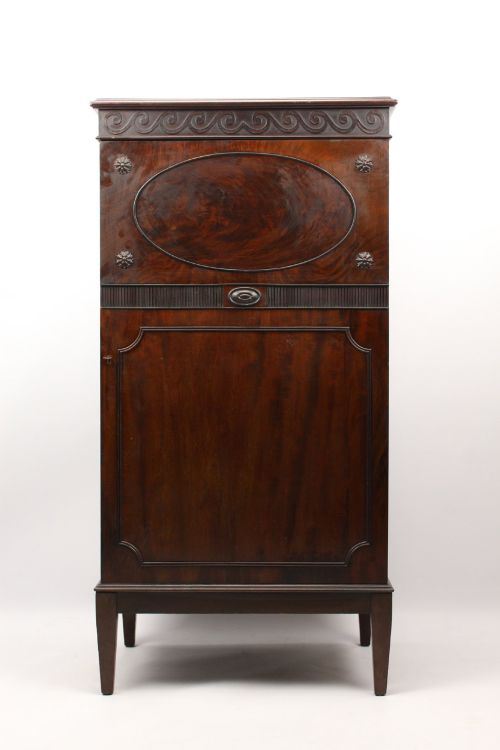
Smaller variations such as bedside cupboards, music cabinets, and pedestal units fulfilled specialised domestic storage roles in bedrooms and studies.
How should I care for mahogany surfaces?
Maintain mahogany timber by applying traditional beeswax sparingly and buffing with a soft, clean cloth to preserve the natural lustre of the grain. Avoid chemical sprays and silicone polishes, which build up over time and attract dust.
Keep cabinets away from direct sunlight and strong heat sources to prevent the timber from drying, warping, or splitting along vulnerable veneer seams.
What is the difference between a display cabinet and a bookcase?
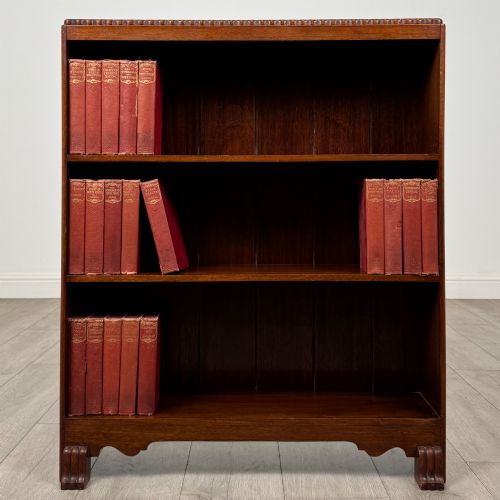
Display cabinets feature transparent glass doors designed to showcase decorative ceramics, glassware, or collectables, often supported by mirrored interiors and fabric-lined shelves. Bookcases are constructed with open or glazed shelving intended primarily for holding bound volumes.
While some transitional pieces combine both functions through adjustable wooden shelves behind glass, dedicated display units prioritise visual exhibition over library storage.
How do revival styles affect these pieces?
Revival styles indicate that late nineteenth or early twentieth-century makers consciously copied or reinterpreted earlier furniture aesthetics, particularly Chippendale, Queen Anne, and Adam designs. These pieces combine antique design vocabulary with contemporary Edwardian or Victorian construction methods.
Recognising these revivals helps date a piece accurately, confirming whether a cabinet represents eighteenth-century origin or a later revival interpretation.