
Mirrored Display Cabinet
A mirrored display cabinet brings depth and reflected light into a room, holding collections of ceramics, glassware and silver behind glass.
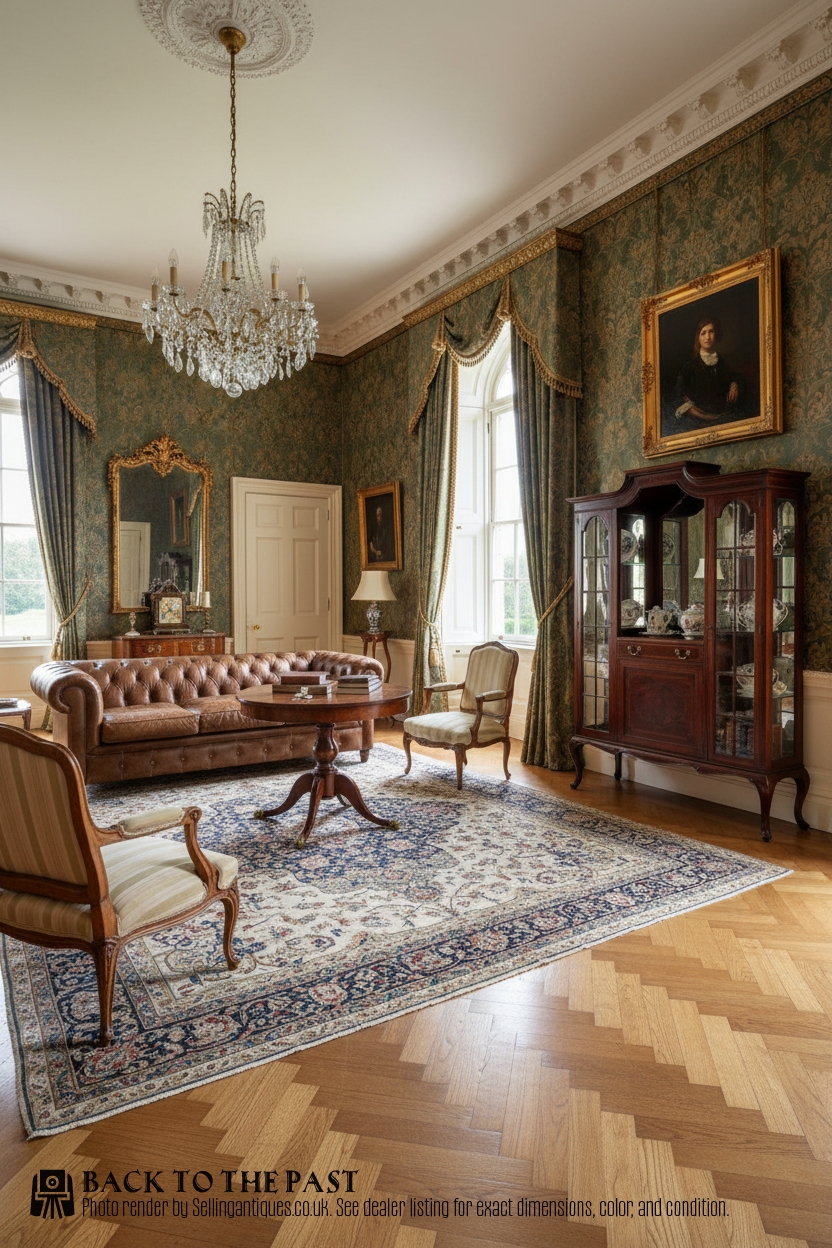
Mirrored Display Cabinet
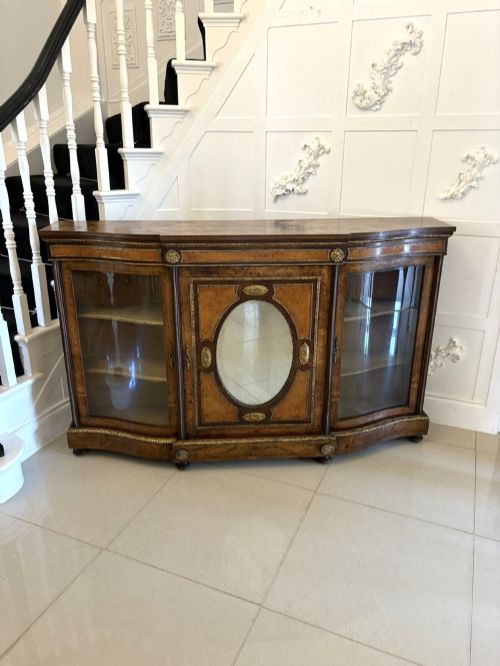
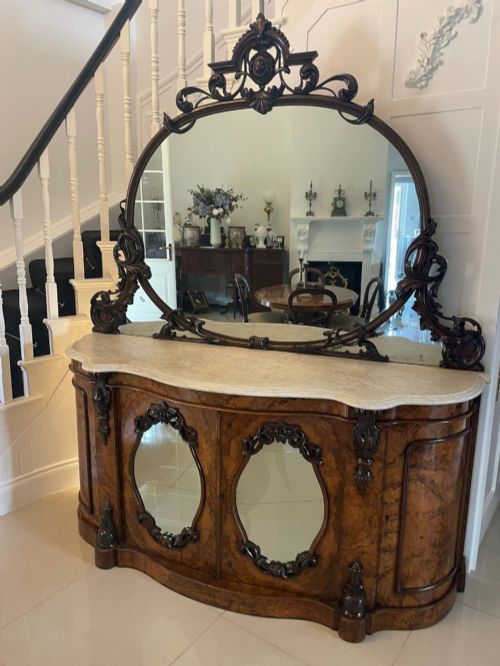
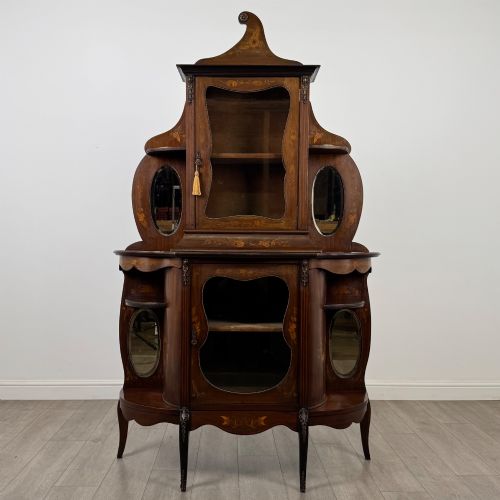
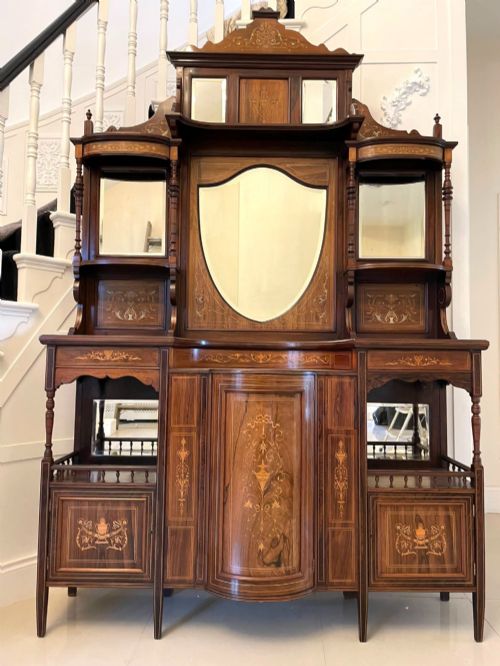
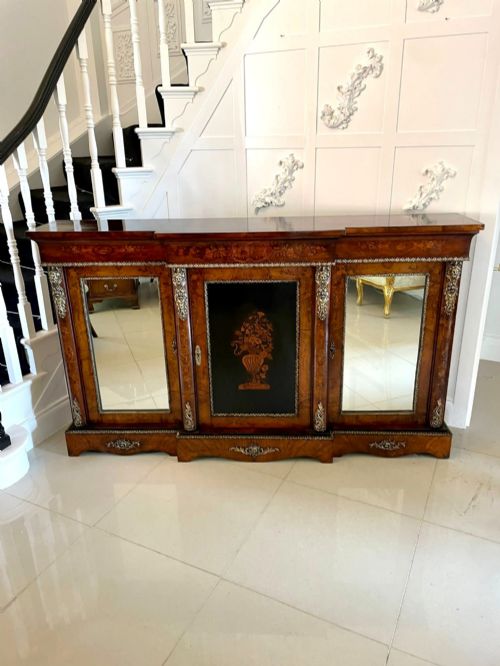
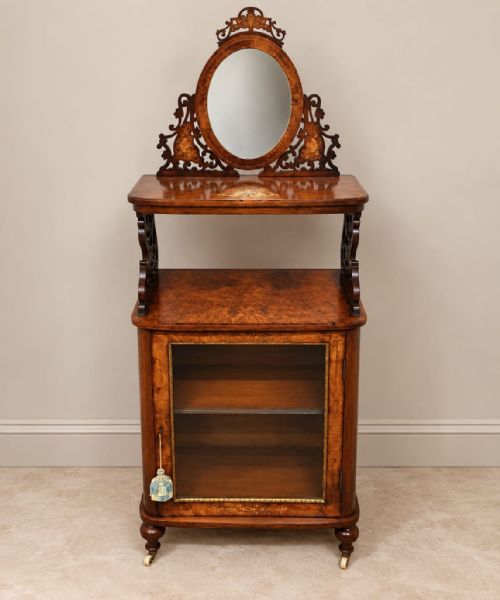
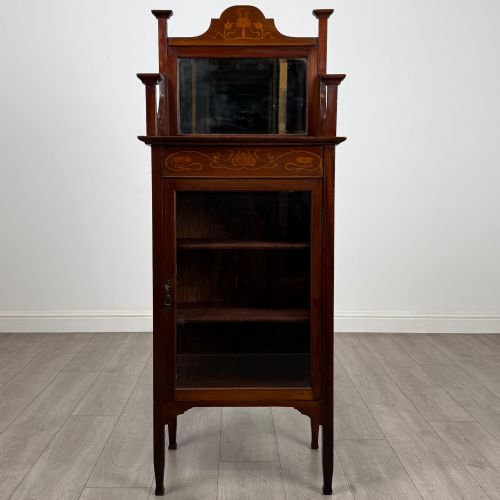
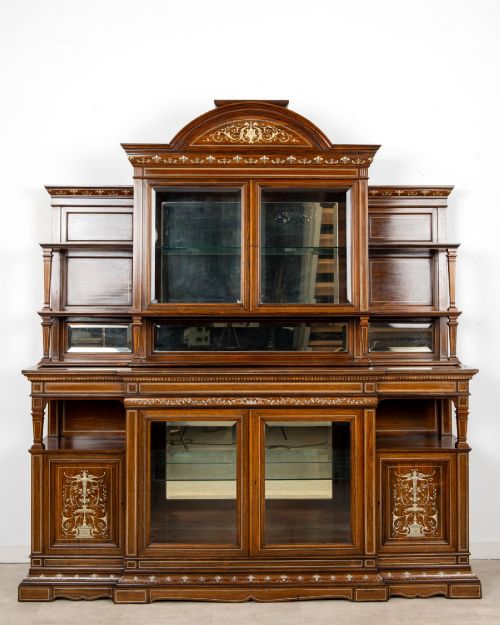
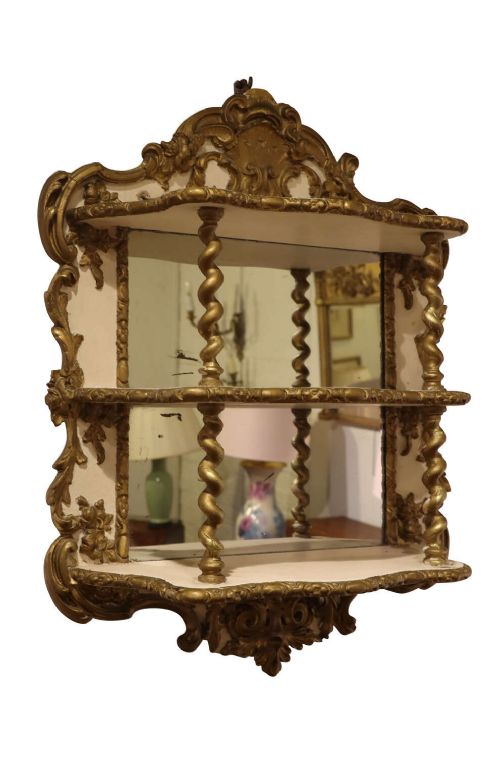
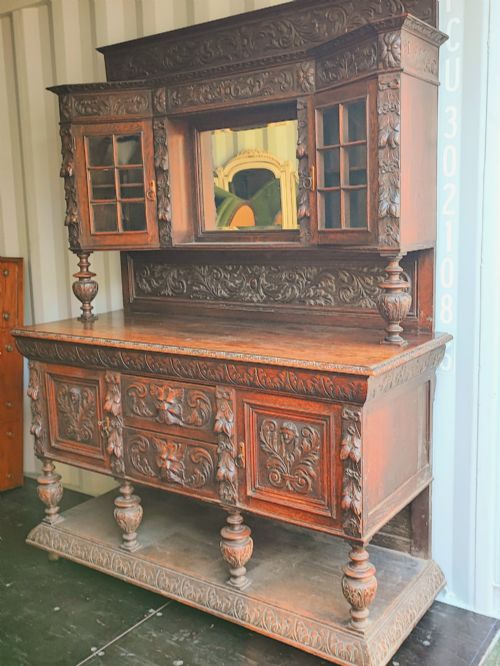
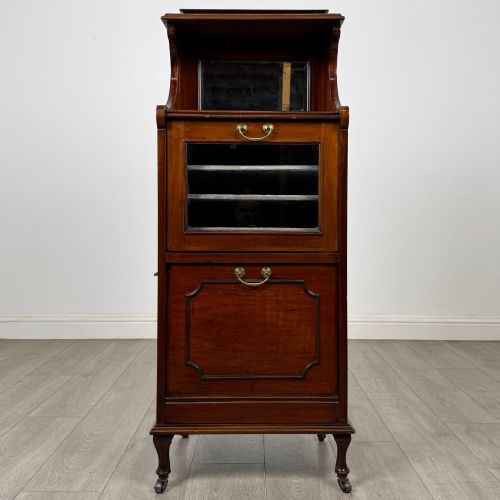
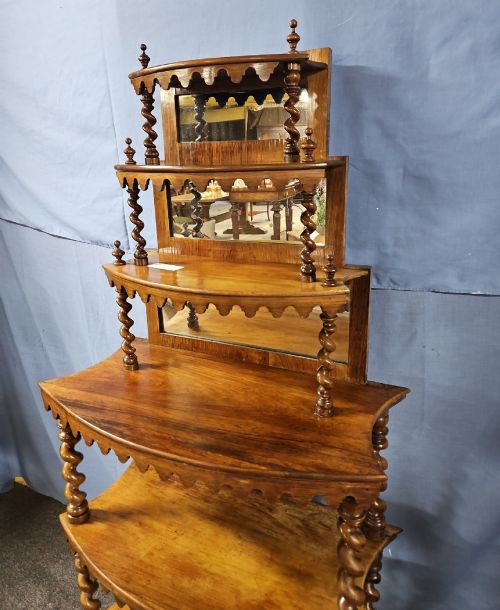
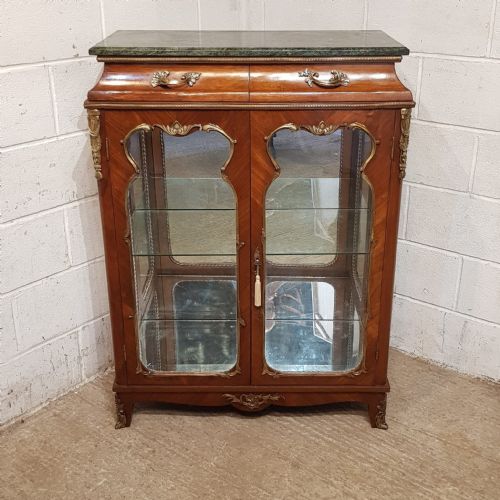
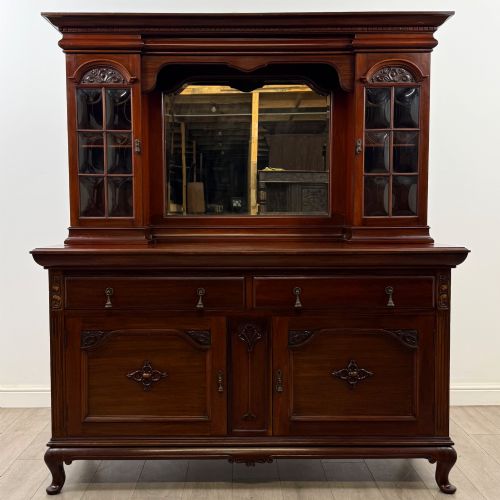
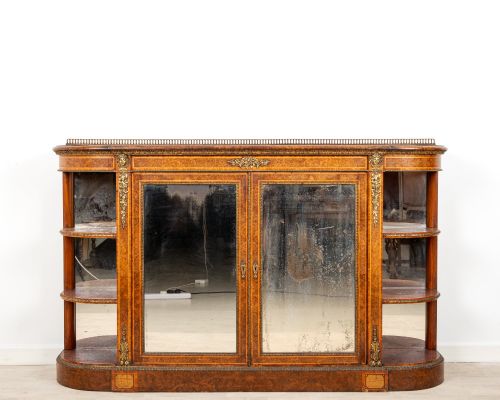
A mirrored display cabinet is an architectural piece of furniture designed to showcase treasured objects while enhancing the sense of space through internal or back mirrors. When searching this phrase, a buyer encounters forms ranging from compact Edwardian corner cabinets and tabletop cases to grand Victorian credenzas and mirror-backed sideboards.
The selection on this page leans heavily towards nineteenth-century and early twentieth-century examples, reflecting the Victorian and Edwardian preference for combining storage with display. Mahogany, burr walnut and rosewood dominate the timbers, often elevated by brass mounts, marquetry inlay and ormolu detailing.
How they were made
Cabinet makers utilised dense hardwoods such as mahogany, rosewood and burr walnut as foundational structures, frequently applying intricate marquetry or brass stringing to the surfaces. Timber frames were joined using traditional methods to support heavy glass panels and internal shelving.
Internal mirrors were silvered by hand in the earlier periods, set against the backboards to bounce light through glazed doors and open display shelves. Ormolu mounts, gilt metal decorations and brass hardware were cast and chased before being fixed to the cabinet facades.
Mirrored Display Cabinet Retail Price Guide 2026
Typical asking prices for mirrored display cabinet among the pieces listed under this phrase on Sellingantiques today, from the lower quarter to the upper quarter. They describe what is for sale here now, not the wider market.
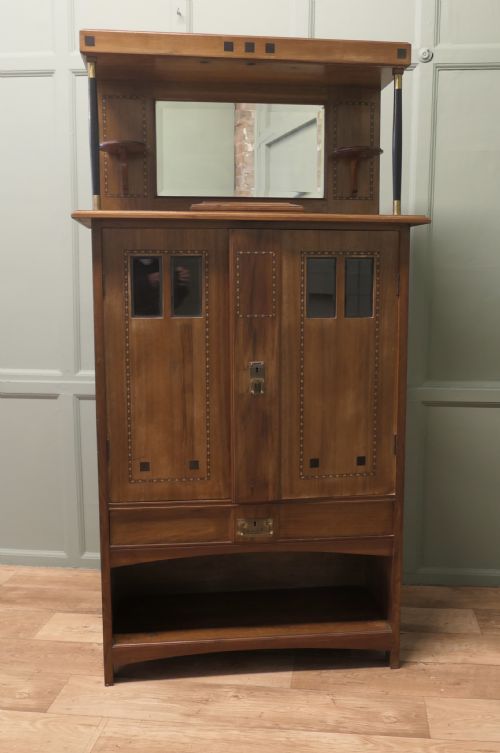
The listings span the nineteenth and twentieth centuries, incorporating Victorian, Edwardian and Arts and Crafts design movements.
What varies in quality
The standard of craftsmanship shows clearly in the selection of wood veneers, particularly the grain matching on burr walnut panels and the precision of inlaid motifs. Superior pieces exhibit finer carving on wooden frames, heavier cast ormolu mounts and tighter joinery around glazed doors.
Makers known for exceptional production utilised better-selected secondary timbers inside drawers and cabinets, whereas standard commercial pieces relied on simpler construction. The clarity of the original mirror glass and the weight of the brass hardware also indicate the tier of the original workshop.
Collinson & Lock·Gillows·François Linke·Edwards & Roberts
The Mirrored Display Cabinet Glossary
- Credenza
- A sideboard or display cabinet originating in the nineteenth century, often featuring mirrored doors and ormolu mounts. These pieces were designed for principal rooms to display decorative porcelain and silver.
- Ormolu
- Gilt bronze ornamentation applied to furniture cabinets during the nineteenth century. This decorative technique adds metallic contrast to dark woods like mahogany and burr walnut.
- Marquetry
- Decorative patterns formed by fitting together contrasting veneers of wood or other materials onto a cabinet surface. It requires precise hand-cutting to create floral or geometric designs.
- Chiffonier
- A low cabinet equipped with shelves or cupboards, frequently incorporating a mirror back. These pieces evolved from sideboards during the Victorian era.
- Vitrine
- A glass-fronted display cabinet used specifically for showcasing fine porcelain, glassware and curiosities. The term implies a lighter framework dominated by transparent panels.
Mirrored Display Cabinet: Frequently Asked Questions
Where should I place a mirrored display cabinet?
Position the cabinet perpendicular to a window so that natural light strikes the glass and the internal mirror reflects the brighter parts of the room. This placement maximises the optical illusion of depth created by the mirror.
Keep the piece away from direct sunlight to prevent the timber veneers from fading and to protect any delicate items stored inside from thermal changes.
How do I clean the interior mirror safely?
Use a soft, lint-free cloth lightly dampened with distilled water or a mild vinegar solution, spraying the cloth rather than the glass directly. This prevents moisture from seeping behind the silvered backing or damaging the surrounding wood.
Avoid commercial ammonia-based glass cleaners, as they can degrade old mirror silvering and strip the French polish from adjacent timber frames.
Can adjustable shelves hold heavy china?
Many Edwardian and Victorian cabinets feature original glass or timber shelving supported by adjustable metal brackets. Heavier ceramic collections should be distributed evenly across these supports.
Check the thickness of the glass or wood before loading heavy items, as antique display shelves were often designed for light decorative porcelain rather than dense dinner services.
How do I distinguish Victorian from Edwardian cabinets?
Victorian cabinets generally employ darker timbers like rosewood and burr walnut, often featuring heavier carved ornamentation, ormolu mounts and rich marquetry. The proportions tend to be robust and formal.
Edwardian pieces frequently utilise lighter mahogany or satinwood with refined inlay work, reflecting a shift towards airier drawing-room aesthetics and simpler structural lines.