
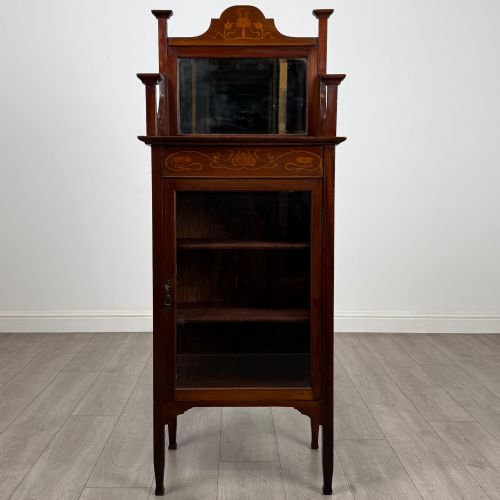
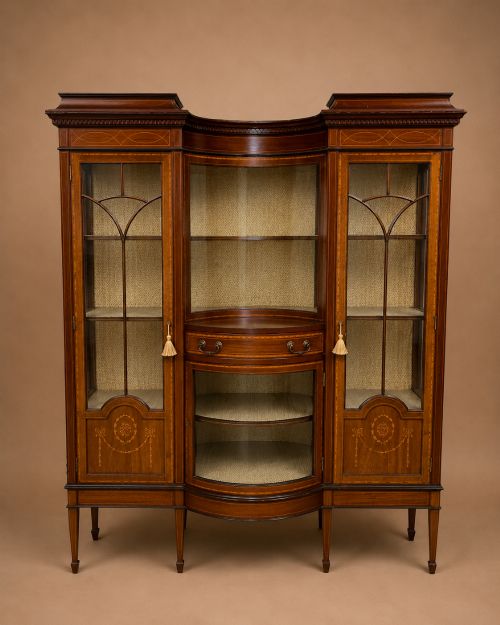
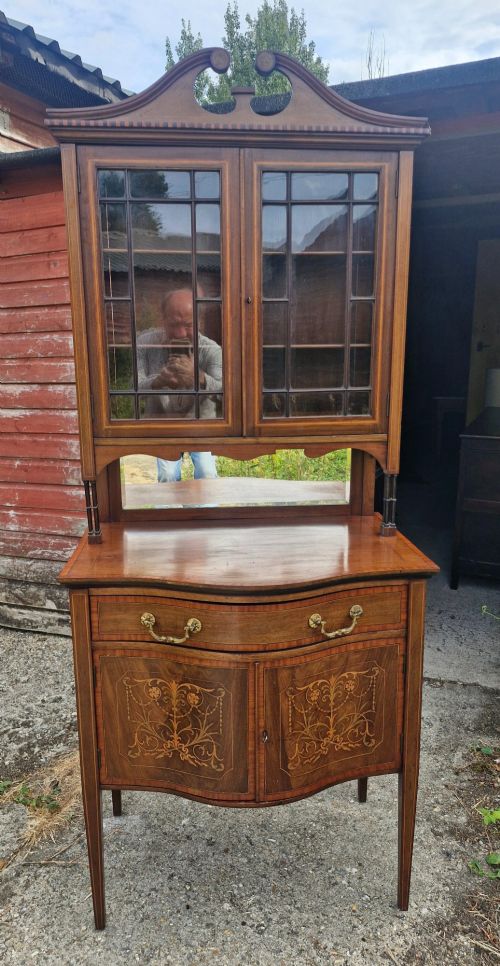
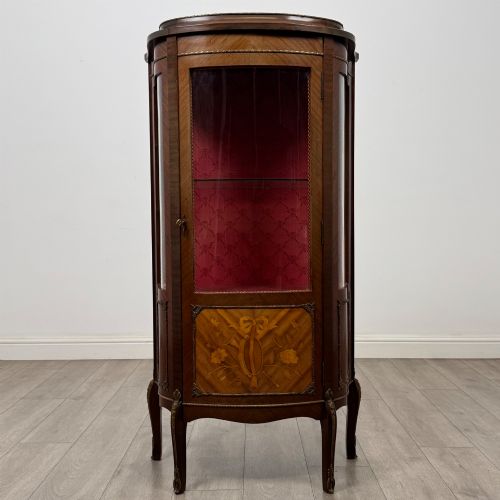



Mahogany Parlour Cabinet
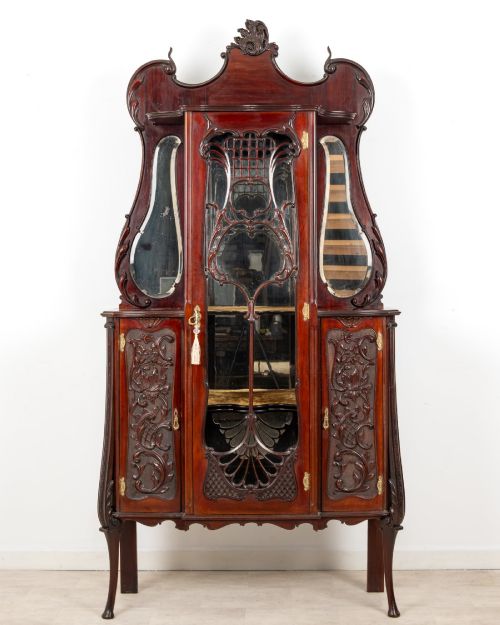
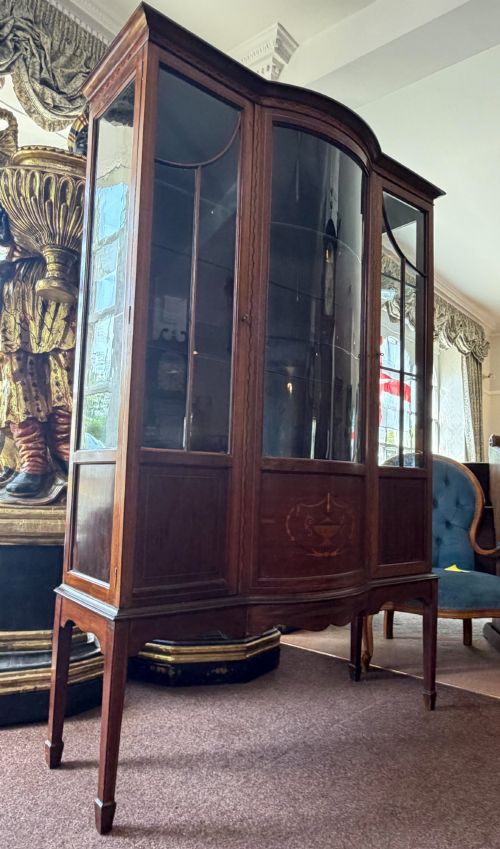
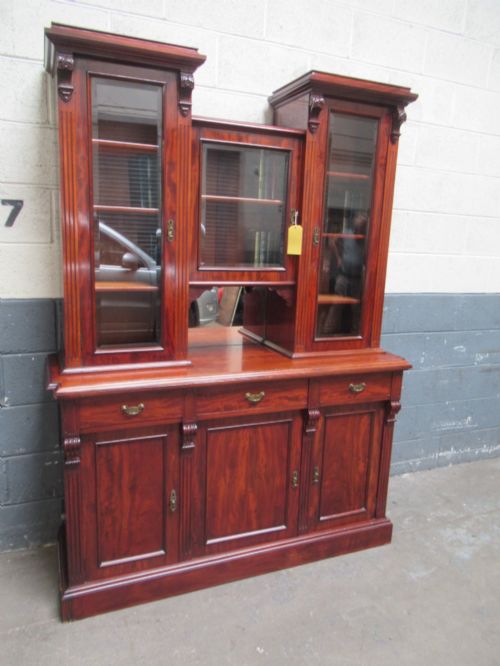
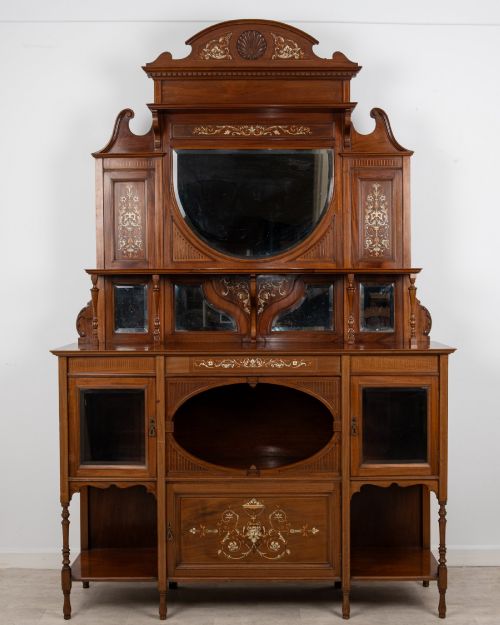
These mahogany parlour cabinet examples combine rich timber and thoughtful joinery to anchor a reception room with functional display space.
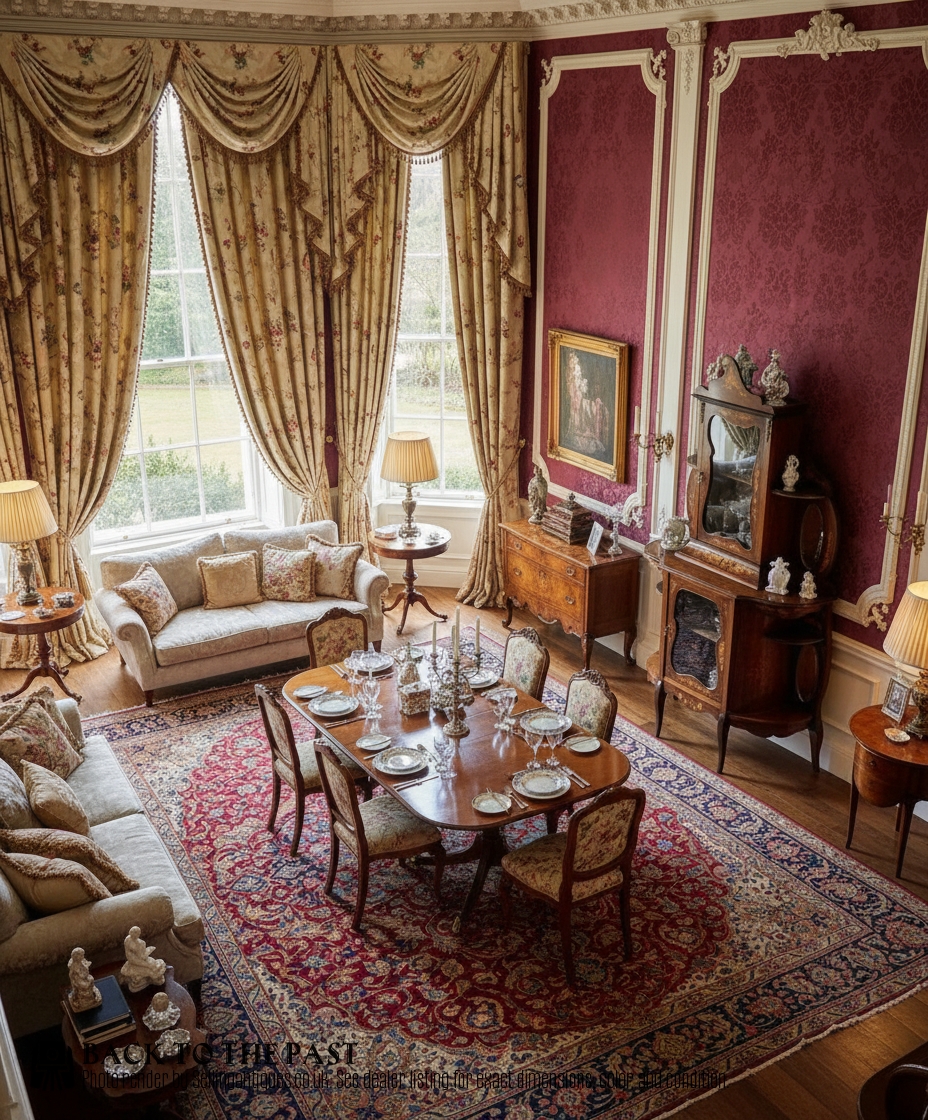
Defining the mahogany parlour cabinet
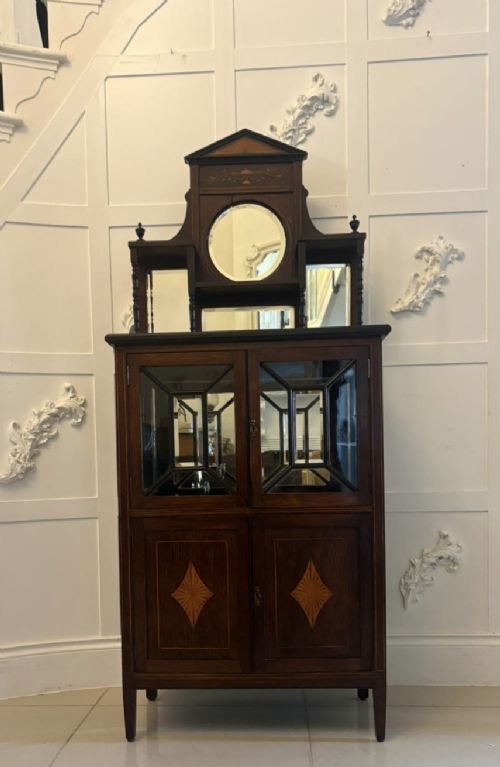
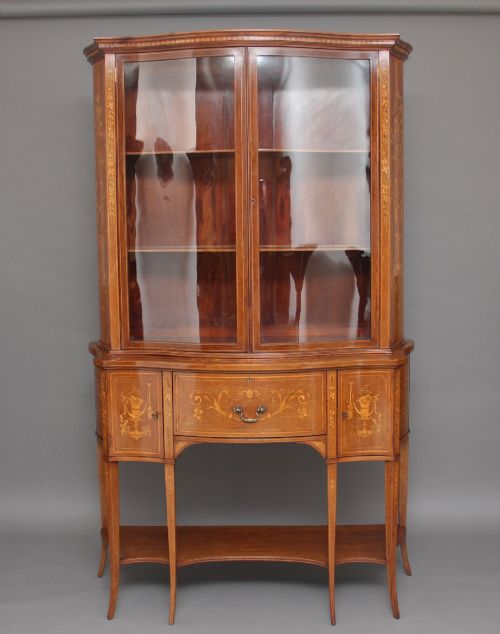
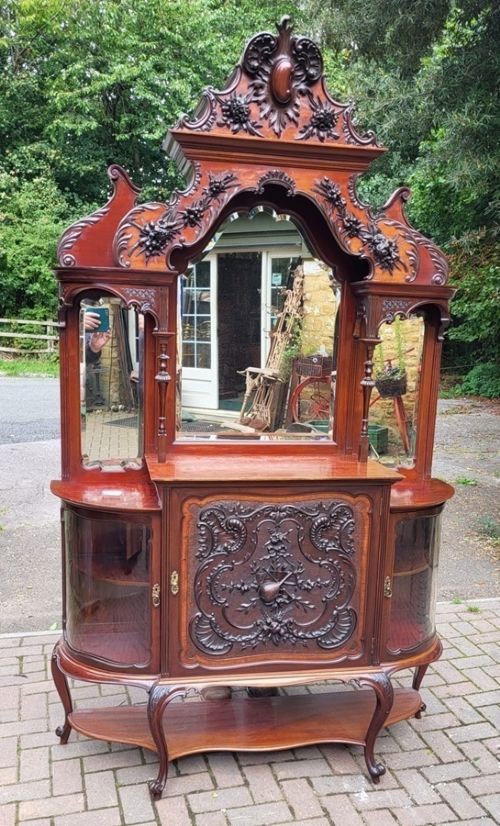
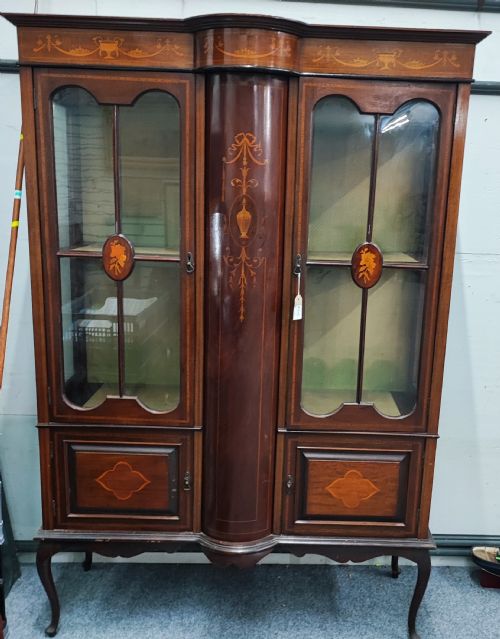
A mahogany parlour cabinet serves as a principal reception room piece designed for storage and display, appearing across the Victorian and Edwardian eras. These forms range from mirror back sideboards and side cabinets to tall display cabinets and dedicated parlour cabinets.
The material identity rests on solid and veneered mahogany, frequently enhanced by decorative stringing and marquetry. Surviving examples encompass Victorian interpretations alongside Sheraton Revival and Chippendale Revival aesthetics.
Makers such as Shapland and Petter contributed distinct side cabinet forms during the Edwardian period. Buyers encounter these variations across both nineteenth century productions and later revival periods.
Materials and construction
Construction relies on primary mahogany timbers augmented by contrasting satinwood inlay for decorative panels and borders. Marquetry inlay introduces intricate floral or geometric motifs across the cabinet doors and friezes.
Functional elements integrate glazed doors for display, brass hardware for handles and escutcheons, and fitted mirror glass within the backboards of sideboard formats. Carved detailing appears particularly within revival pieces referencing earlier Chippendale idioms.
Retail Price Guide 2026
Typical UK retail prices for mahogany parlour cabinet, calculated from the Sellingantiques database of over a million retail prices indexed since 2003. This retail price guide relies exclusively on Sellingantiques data; no external sources or auction records are used, so the figures do not describe the wider market.
Materials documented across the pieces include mahogany, glass, brass, satinwood inlay, mirror plates, and marquetry.
Judging quality and craftsmanship
Quality reveals itself in the precision of the satinwood and marquetry inlay work, where crisp botanical or geometric lines distinguish superior workshops from standard commercial output. The selection of mahogany grain figures across primary surfaces further separates high tier examples from plain utility pieces.
Structural integrity depends upon the execution of carved elements, particularly in revival pieces where depth and sharpness of hand carving define the maker's competence. Integrated hardware such as brass mounts and fitted mirror glass also indicates the original tier of production.
Shapland and Petter
The Mahogany Parlour Cabinet Glossary
- Marquetry inlay
- Decorative patterns formed by fitting contrasting wood veneers into a prepared ground. This technique creates pictorial or geometric designs across cabinet doors.
- Satinwood inlay
- The use of pale, lustrous satinwood as stringing or contrasting banding within mahogany surfaces. It provides sharp visual borders to panels and drawers.
- Mirror back sideboard
- A sideboard featuring an integrated wooden framework supporting a mirror plate above the main surface. This form reflects light and displays objects placed on the ledge.
- Chippendale Revival
- A late nineteenth and early twentieth century style reinterpreting mid eighteenth century cabinet designs. These pieces often feature characteristic carved ornament.
- Sheraton Revival
- A design movement drawing inspiration from late eighteenth century neoclassical furniture forms. Pieces typically exhibit refined proportions and delicate inlay.
Frequently Asked Questions
What is a mahogany parlour cabinet?
A mahogany parlour cabinet is a reception room storage and display piece produced primarily during the Victorian and Edwardian periods. These pieces utilise rich timber alongside glass, brass, and inlay.
They function as sideboards, display cabinets, and side cabinets designed to showcase domestic refinement. The form accommodates both utilitarian storage and the display of decorative objects.
How do I date a mahogany cabinet?
Dating relies on stylistic markers such as Victorian proportions, Edwardian revival details, and specific inlay materials like satinwood. The presence of mirror backs and marquetry points toward later nineteenth and early twentieth century manufacturing.
Construction techniques and recorded periods help place individual pieces within the timeline. Comparing decorative idioms like Chippendale Revival or Art Nouveau provides further chronological context.
What styles are common in these cabinets?
Common styles include Victorian productions alongside revival movements such as Sheraton Revival and Chippendale Revival. Each style reinterprets earlier cabinetmaking traditions through contemporary Victorian and Edwardian workshop practices.
Art Nouveau examples also appear, incorporating organic decorative motifs into the traditional mahogany carcase. These stylistic variations reflect shifting domestic tastes across the decades.
How do I care for mahogany furniture?
Care involves maintaining stable indoor humidity and temperature to protect timber and veneer surfaces. Gentle dusting with a dry cloth preserves the polished mahogany and inlay.
Avoiding direct sunlight prevents the fading of mahogany and satinwood elements. Regular maintenance ensures the brass hardware and glass components remain secure within the structure.