
Vintage Kerosene Table Lamp
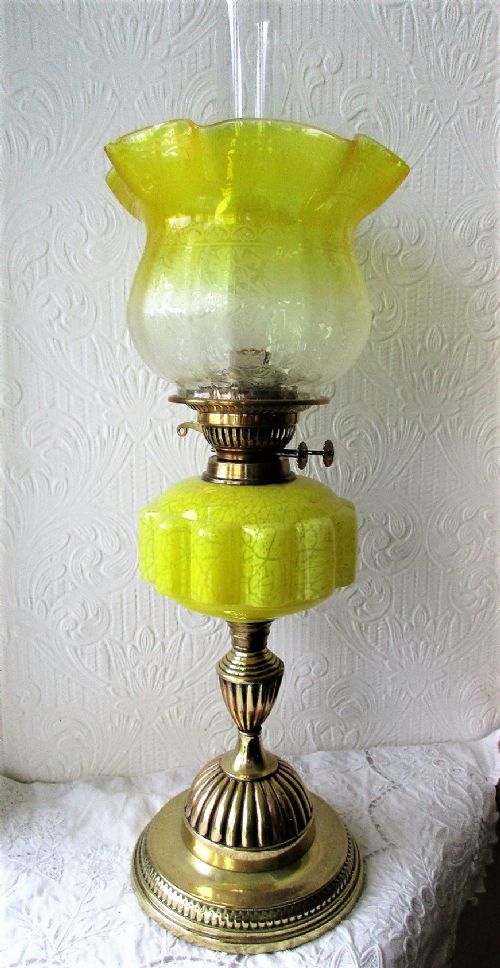
These vintage kerosene table lamp pieces bring period warmth and steady light, combining metal and glass to anchor a room.
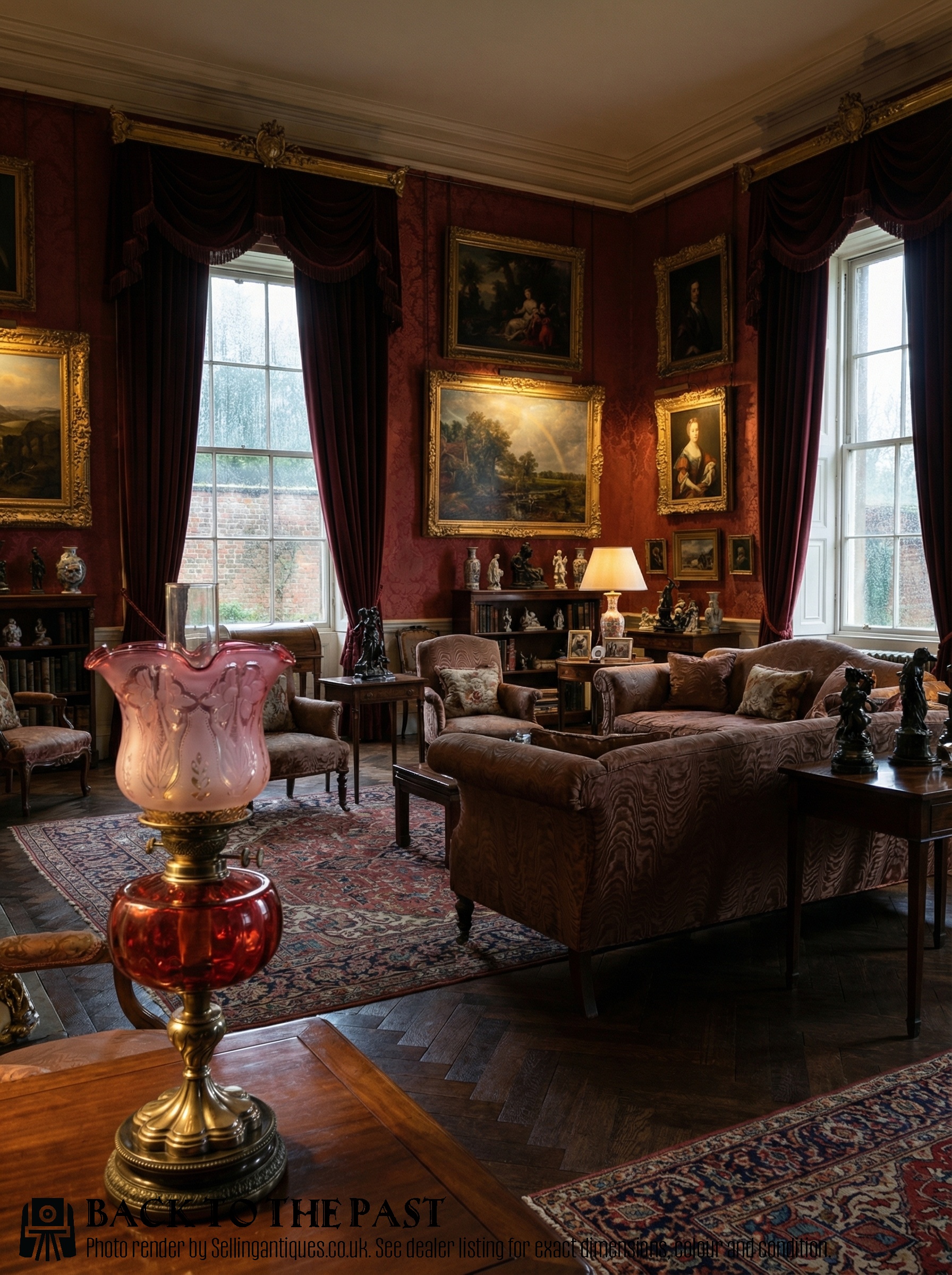
Vintage Kerosene Table Lamp
A vintage kerosene table lamp is a functional domestic lighting piece designed to burn oil via a wick, usually featuring a metal or ceramic base paired with a glass shade. They emerge from the nineteenth and early twentieth centuries, spanning periods from the eighteen-sixties through the Edwardian era.
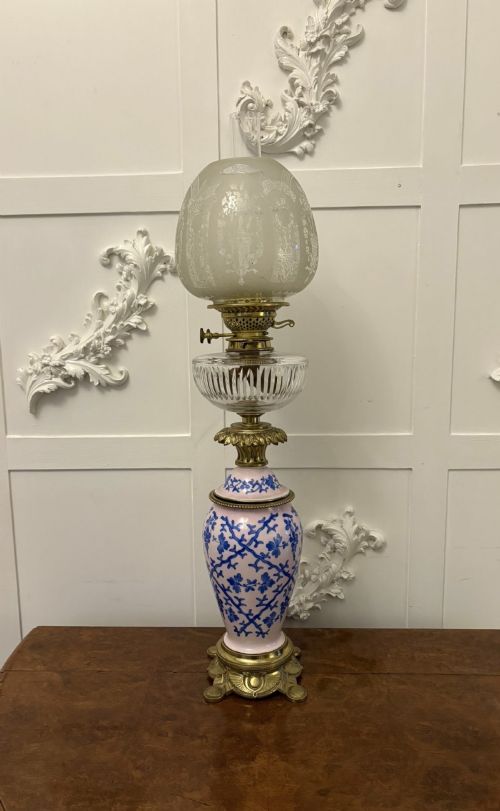
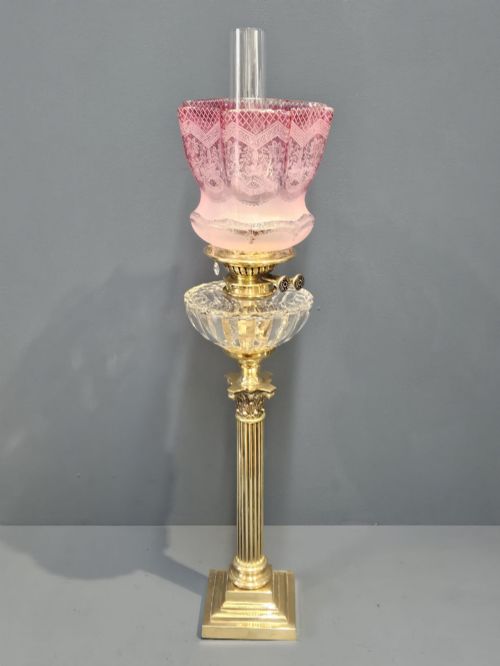
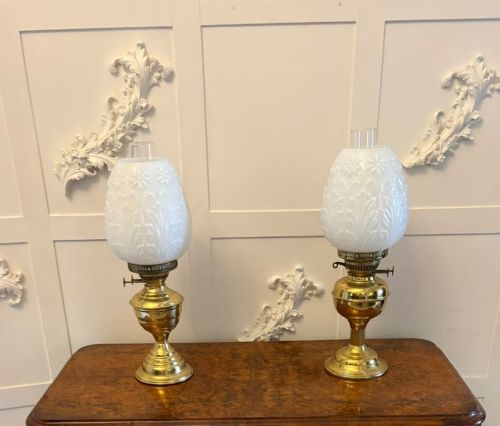
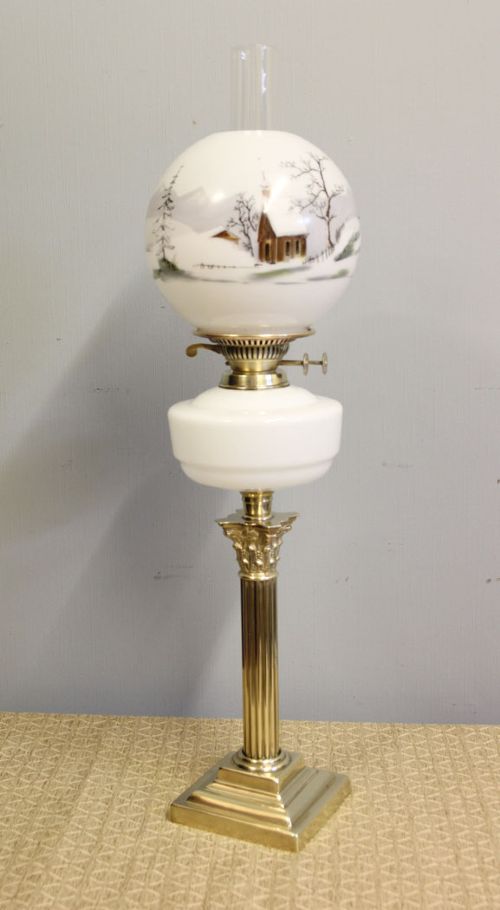
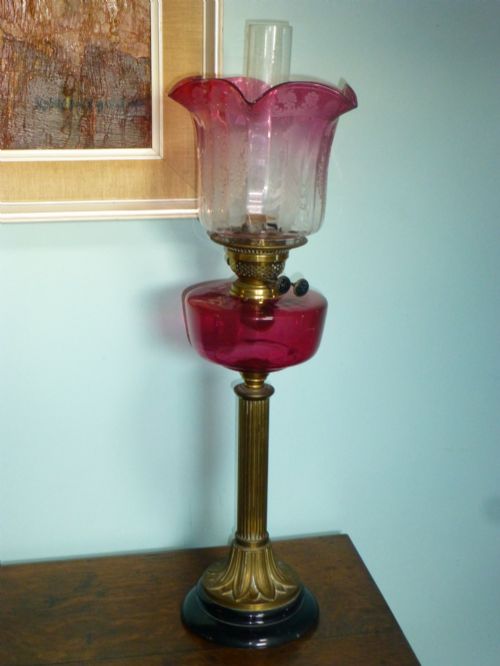
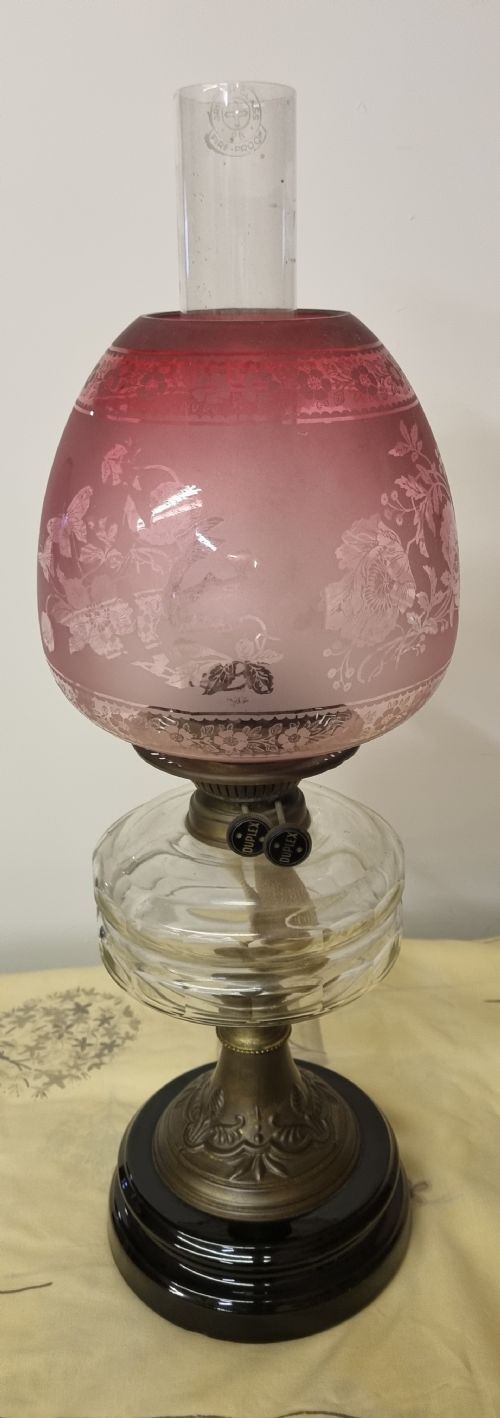
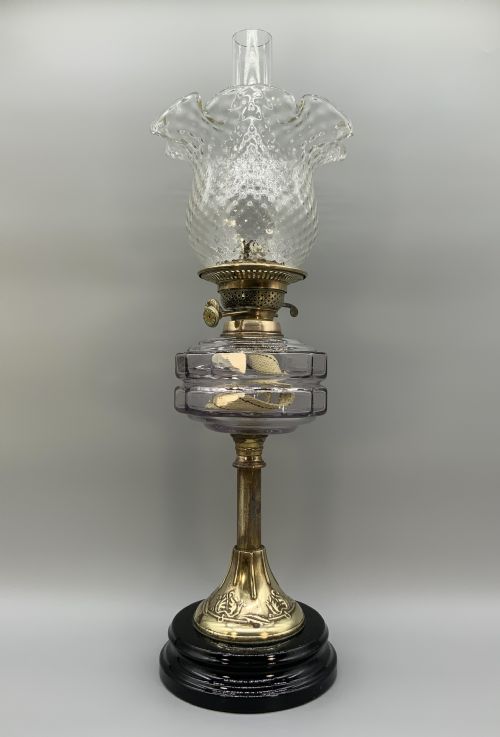
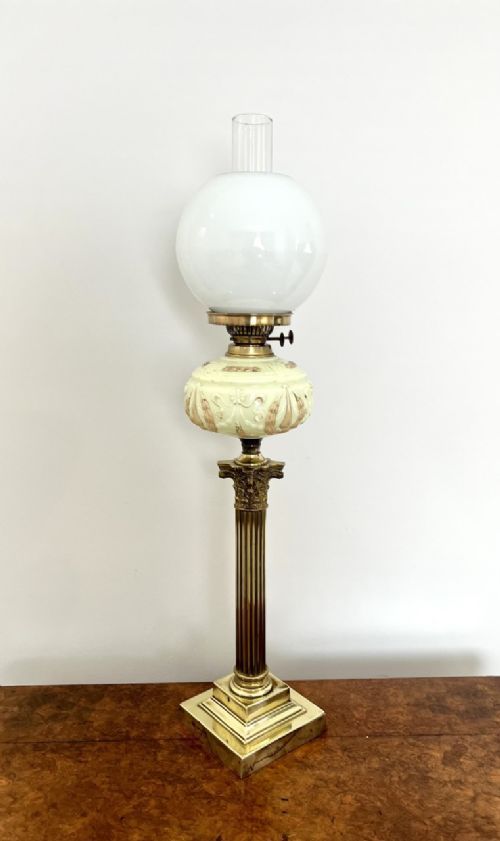
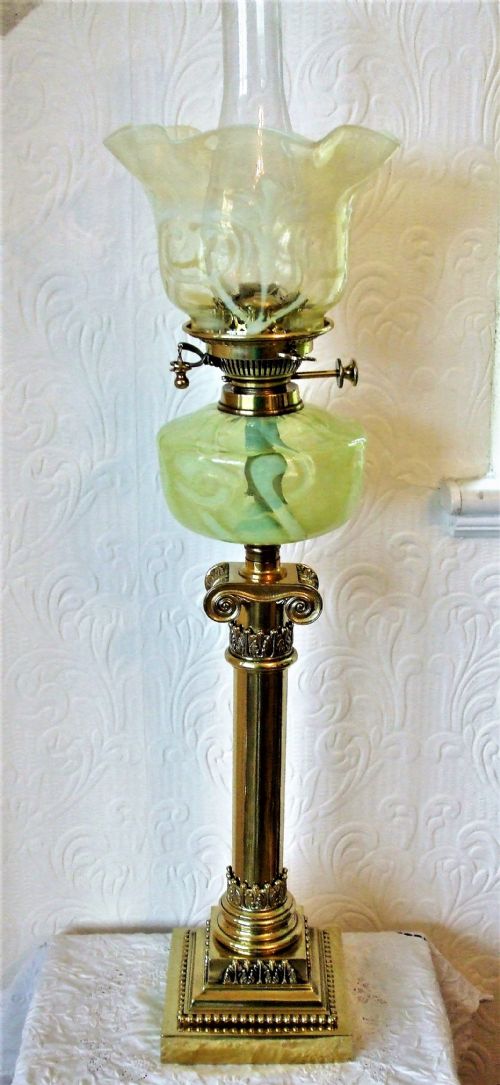
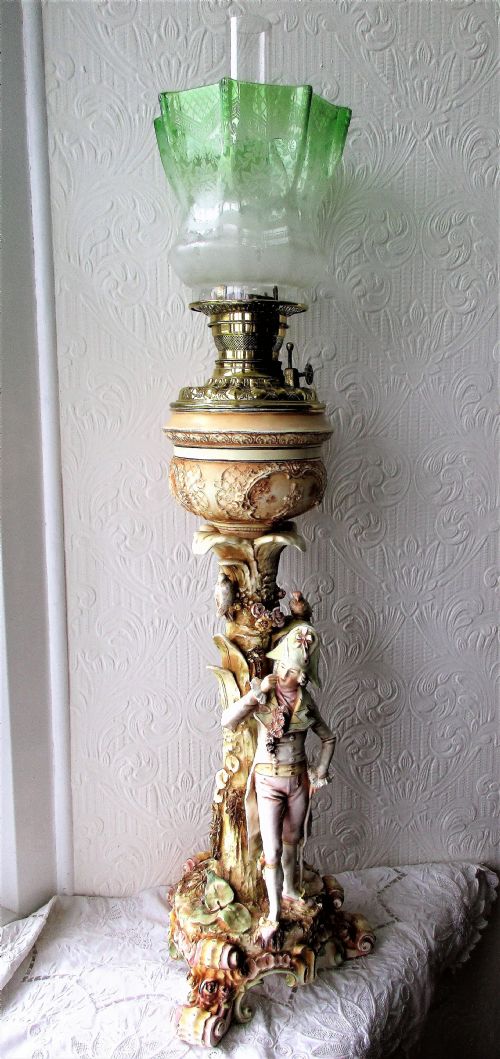
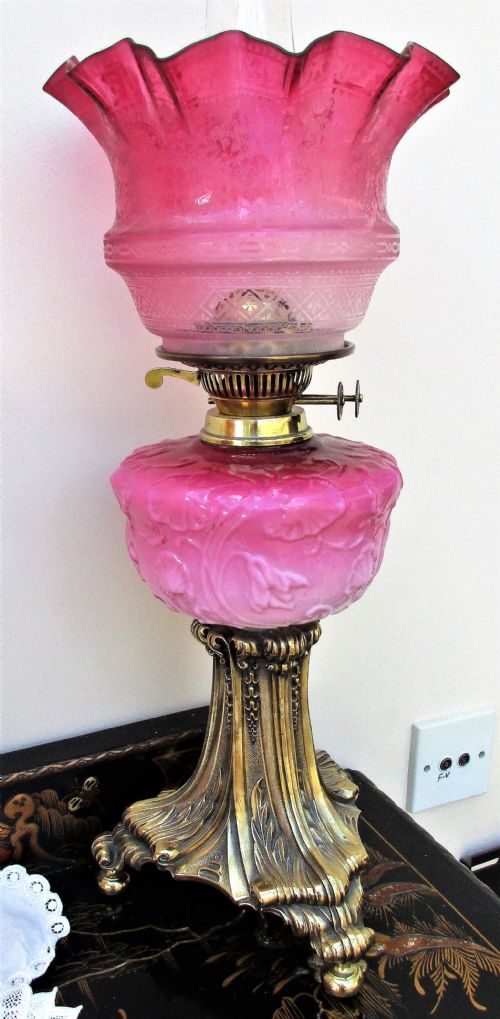
You are most likely to encounter Victorian and Edwardian examples on this page, often built with brass columns or ceramic fonts. These frequently appear with cranberry glass, opaline glass, or etched tulip shades.
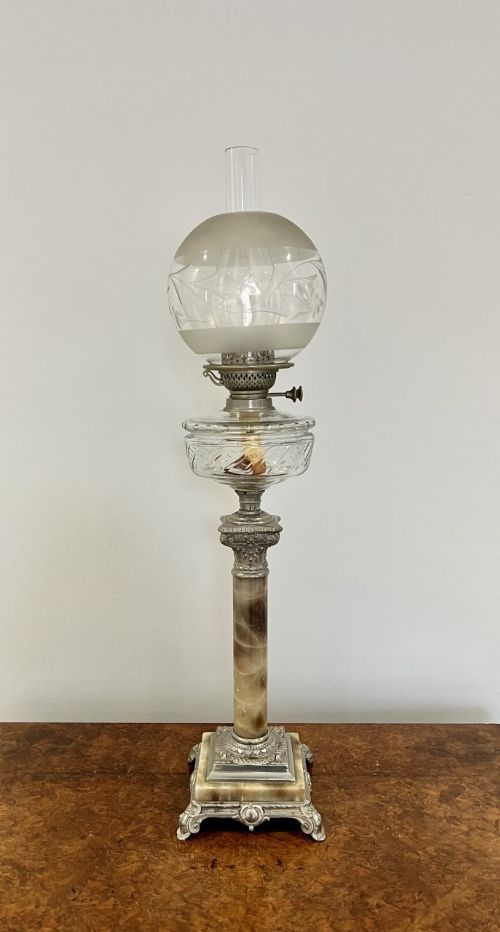
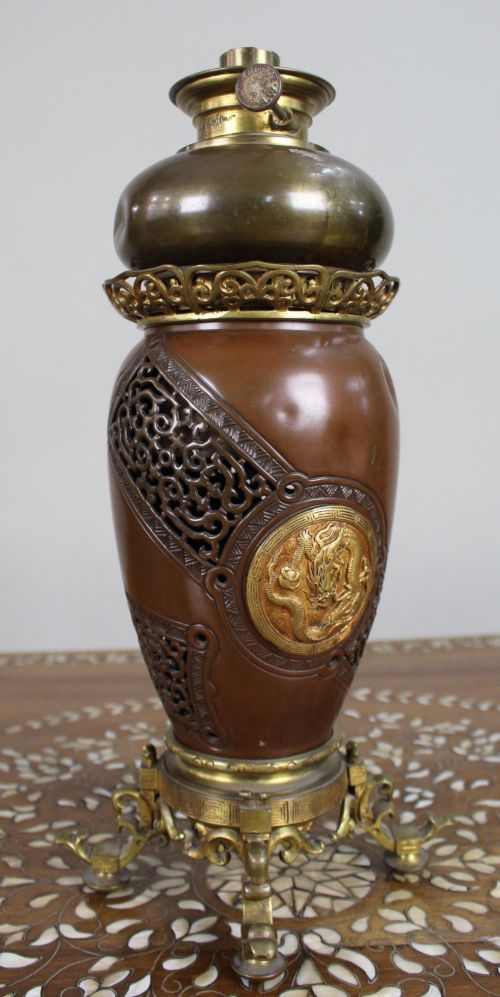
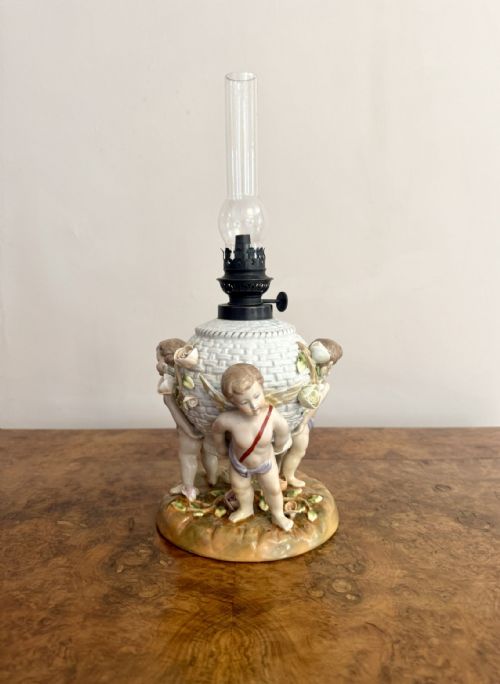
The selection includes specific regional forms such as English Corinthian and Ionic column lamps, alongside Japanese bronze pieces from the Meiji period and French Rococo Revival designs.
How they were made
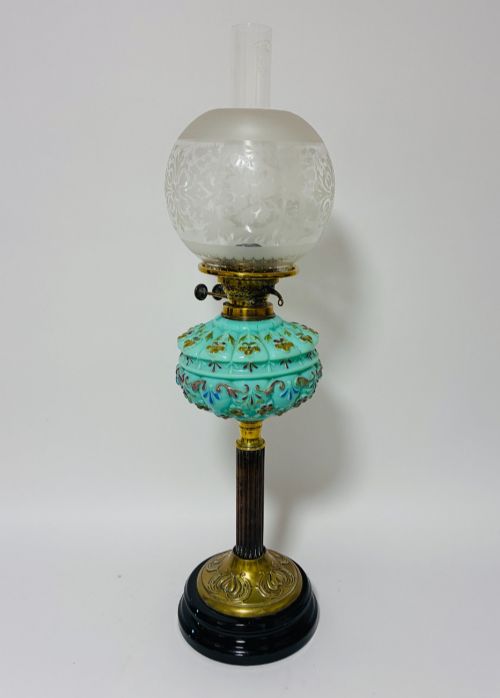
Makers combined cast brass columns, turned copper, and fired ceramic or porcelain for the bodies, mounting them on heavy bases of black glass or metal for stability. Fonts were blown or moulded in clear, pink, blue, or cranberry glass, sometimes decorated with hand-painted botanical or winter scenes and gilt highlights.
Shades required specialised glassmaking techniques, resulting in hand-blown opaline, etched tulip, and heavy cranberry glass forms. Burner mechanisms, such as the duplex double burner and systems by Wild and Wessel or Hinks, utilised precision metalwork to regulate the flame.
Periods represented stretch from eighteen-sixty through the Victorian and Edwardian eras into the early twentieth century.
What varies in quality
Quality rests in the weight of the brass casting, the crispness of architectural details on Corinthian capitals, and the depth of colour in cranberry or opaline glass shades. Pieces signed by recognised makers like Hinks or Sitzendorf demonstrate superior execution in both ceramic modelling and metal engineering.
The distinction between standard domestic lighting and top-tier examples lies in the complexity of the burner, such as twin-burning duplex systems, and whether the original matching font and shade survive together.
Hinks of Birmingham·Wild and Wessel·Sitzendorf
The Vintage Kerosene Table Lamp Glossary
- Duplex burner
- A double-wick burner system designed to produce a significantly brighter flame than single-wick models. These mechanisms often bear maker stamps on the brass thumbwheels.
- Corinthian column
- An architectural column style featuring ornate, leaf-carved capitals utilised frequently on Victorian brass lamp standards. This classical form added formal weight to domestic interiors.
- Opaline glass
- A semi-translucent white glass used extensively for lamp shades to diffuse light softly. It transmits a warm glow when the burner is lit.
- Meiji period
- The era in Japanese history spanning from eighteen sixty-eight to nineteen twelve, represented here by bronze work of high metallurgical skill. Pieces from this time often display intricate surface patination.
Vintage Kerosene Table Lamp: Frequently Asked Questions
How do I operate a vintage kerosene table lamp?
Operation requires filling the glass or metal font with clean lamp oil, allowing the cotton wick to saturate thoroughly before lighting. Adjust the thumbwheel to control the flame height and prevent smoke.
Keep the wick trimmed flat and clean the glass chimney regularly to maintain a clear, steady burn without soot accumulation.
Were these lamps used as primary lighting?
In the nineteenth and early twentieth centuries, these pieces served as the primary source of portable domestic illumination for parlours, bedrooms, and reading tables before widespread electrification.
Households relied on their steady flame for evening tasks, moving them between rooms as needed since they predated fixed electric wall and ceiling fixtures.
How do I clean the glass shade safely?
Wash the glass shades in lukewarm water with a mild detergent, supporting heavy cranberry or opaline sections carefully to avoid accidental chipping against hard sinks.
Avoid submerging painted or gilt sections in water for extended periods, and dry the glass completely with a soft cloth before replacing it on the brass collar.
How do I distinguish Victorian from Edwardian lamps?
Victorian examples tend to feature heavy brass Corinthian columns, rich cranberry glass fonts, and ornate figural porcelain bases. They often display more exuberant decoration and darker patination.
Edwardian lamps generally lean towards sleeker lines, onyx inserts, simpler brass turnings, and lighter opaline or etched glass shades reflecting the transition of the new century.