
Antique Glass Oil Burner
An antique glass oil burner brings the rich warmth of Victorian and Edwardian lighting into a modern room.
Antique Glass Oil Burner
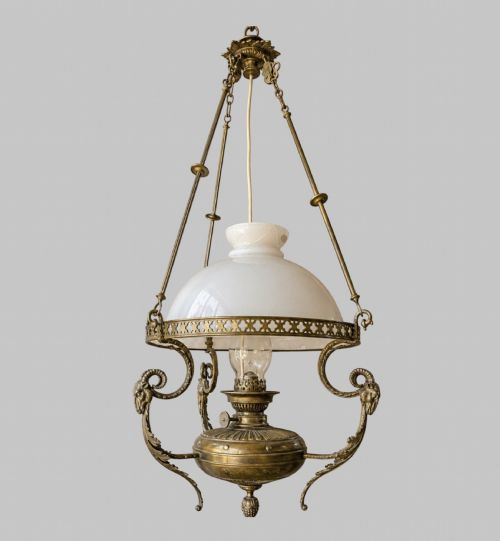
An antique glass oil burner takes the form of a table lamp, ceiling light or pillar standing tall on a heavy base. These pieces span the Victorian, Edwardian and Art Nouveau eras, reaching back through the nineteenth century.
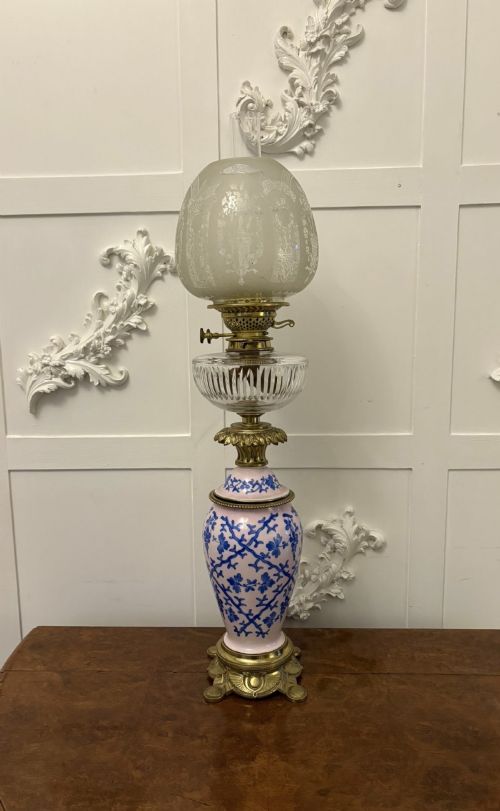
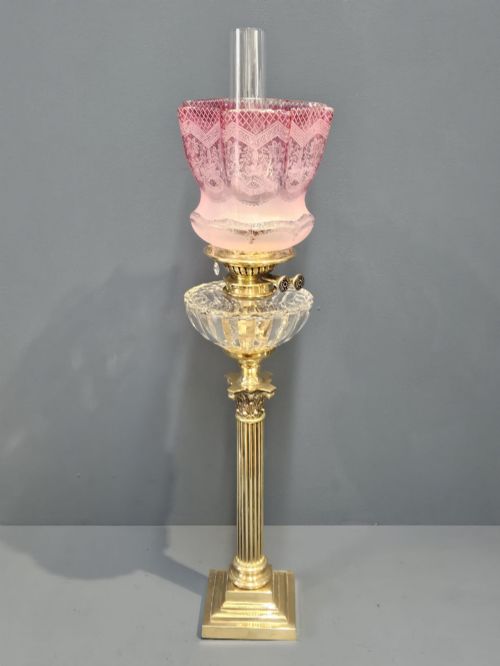
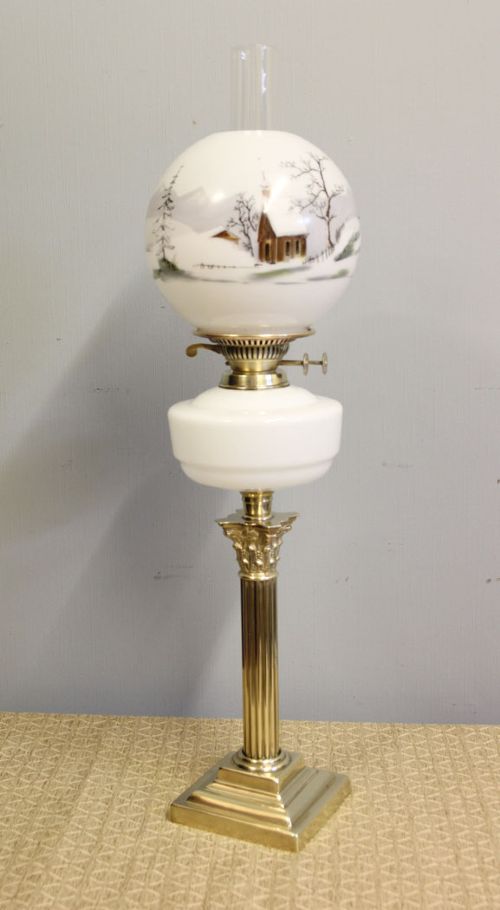
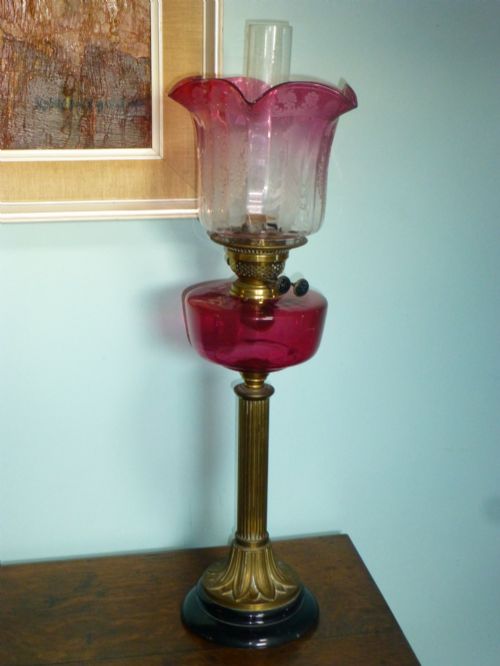
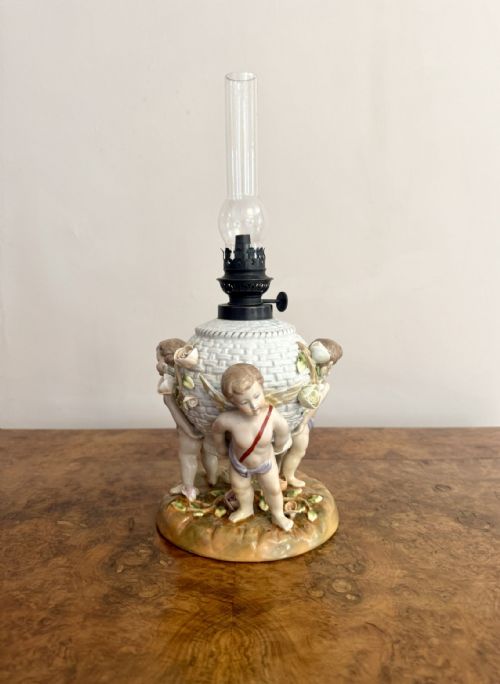
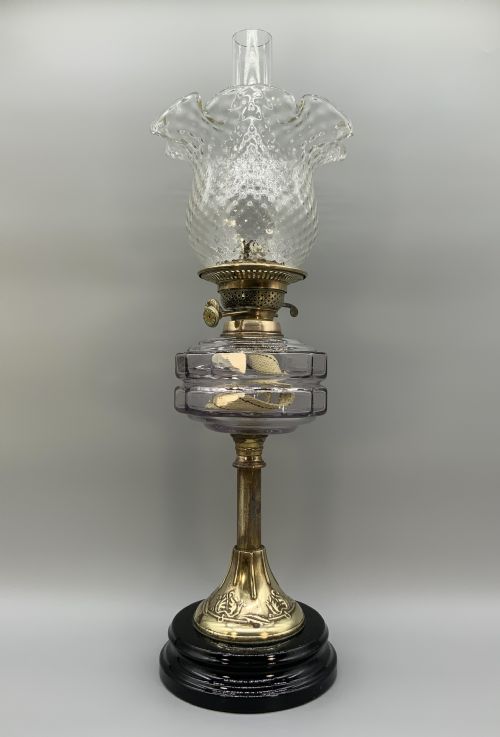
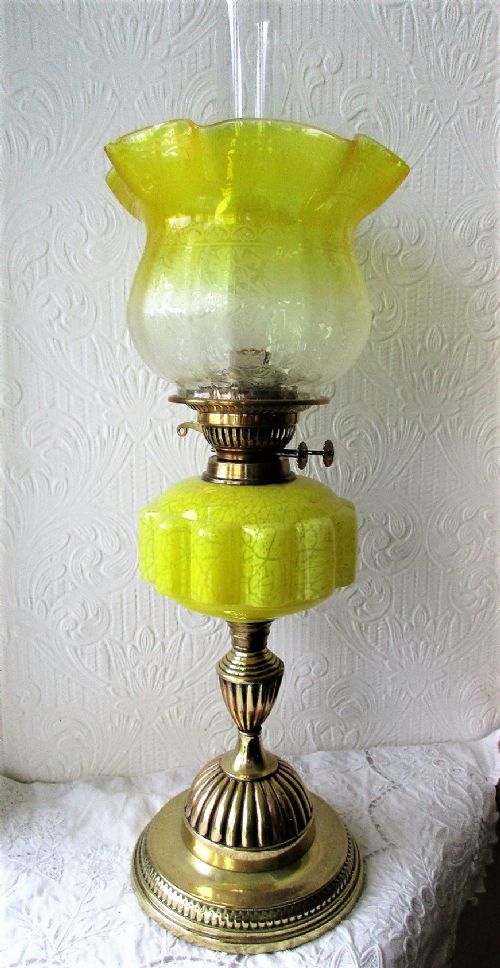
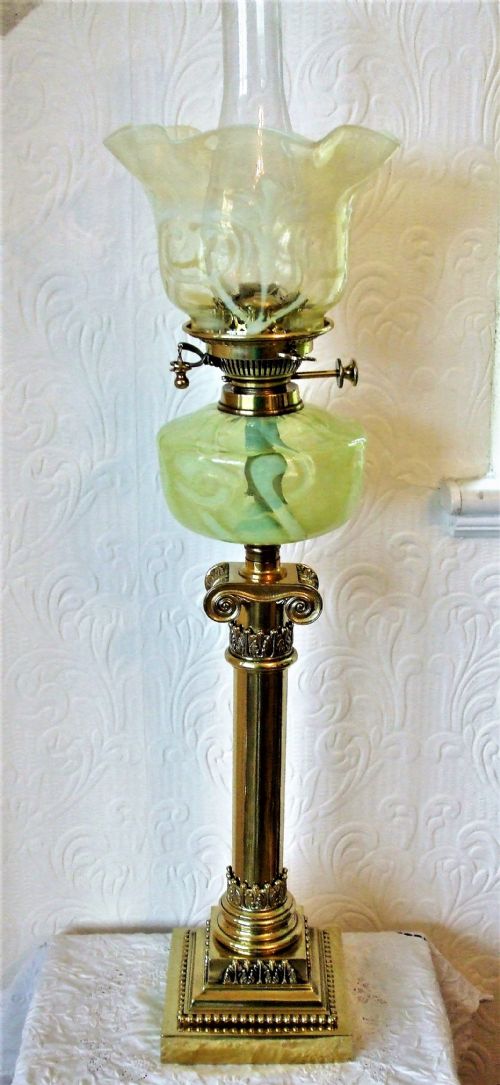
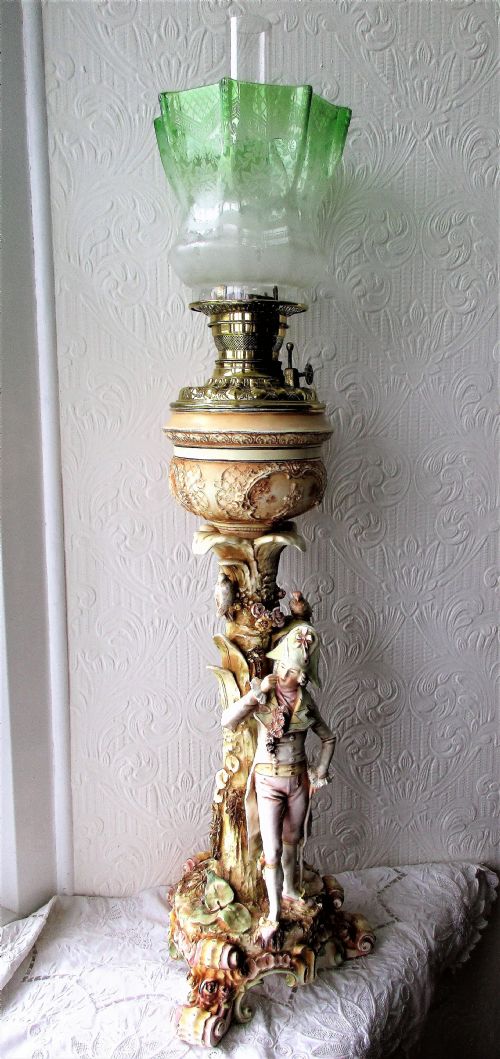
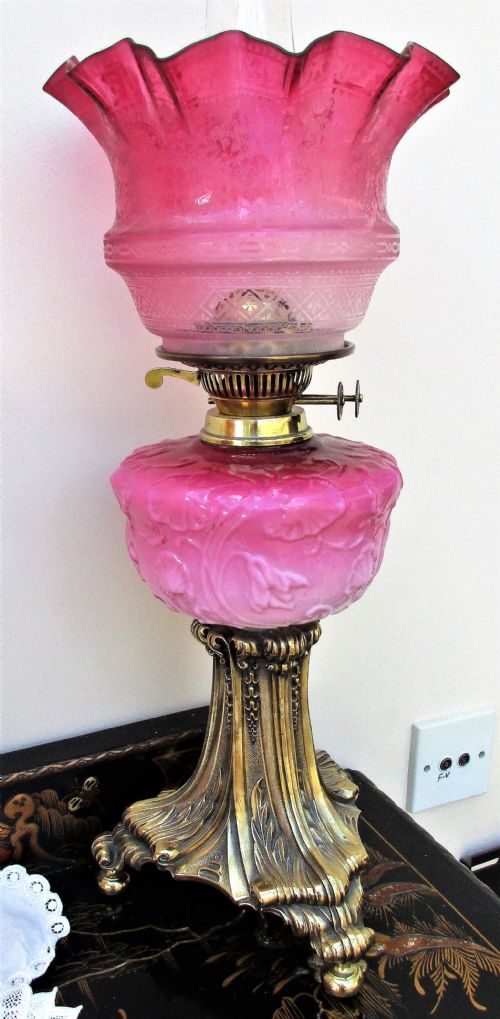
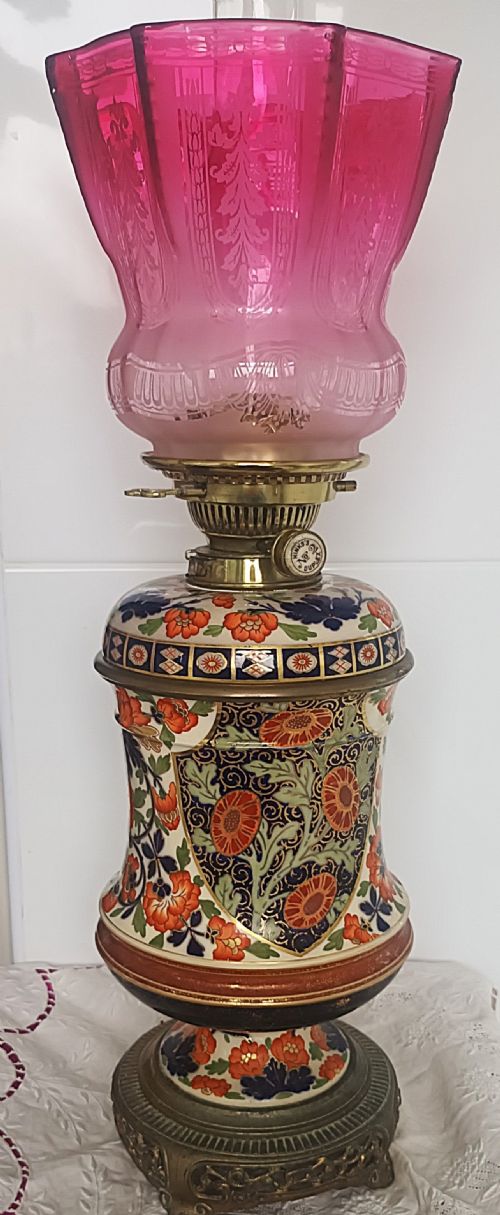
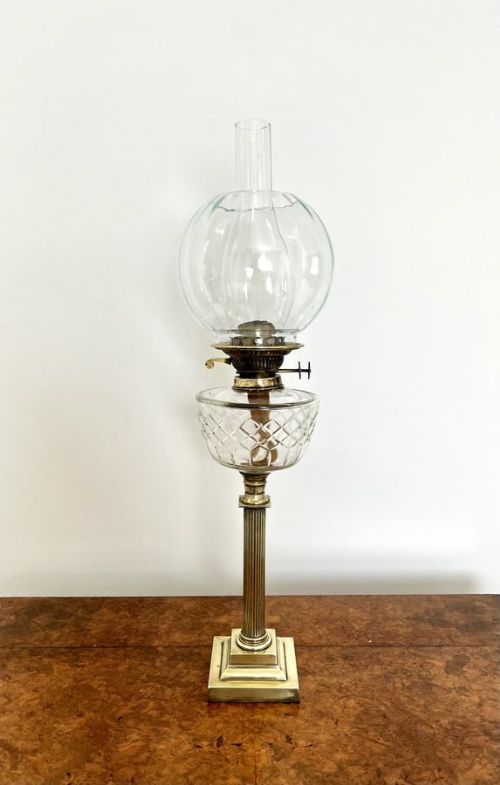
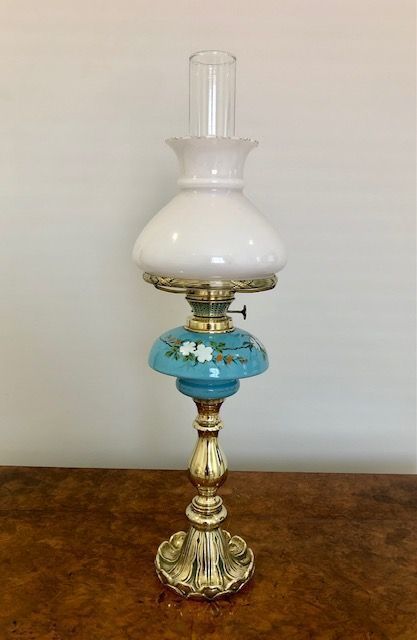
The most common version met here pairs a gleaming brass column with a vibrant cranberry or opaline glass font and matching shade. Other examples combine porcelain figures or Corinthian columns with clear and cut glass reservoirs.
Materials and technique
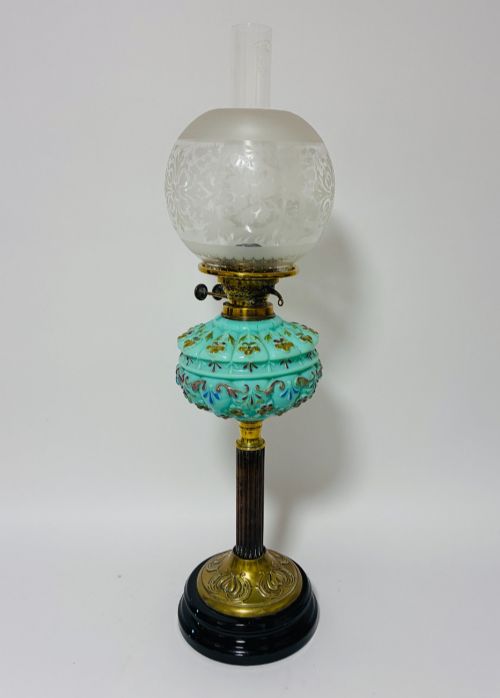
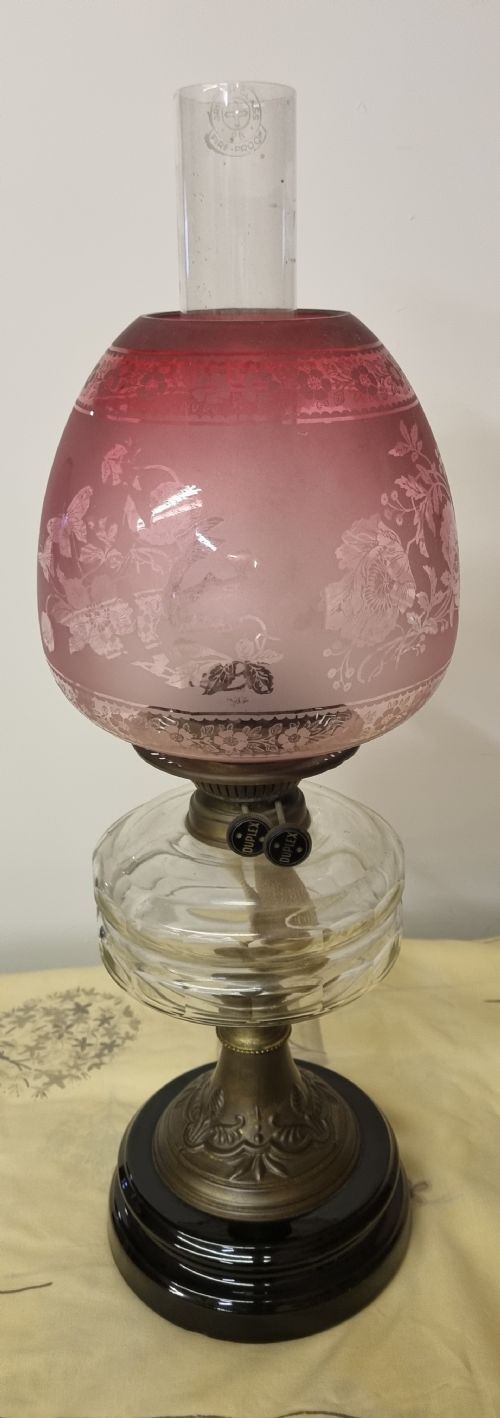
Makers fused heavy brass and copper with delicate hand-blown glass, creating substantial lighting fixtures designed to anchor a room. Fonts utilise cranberry glass, satin glass, opaline glass and crystal, often shaped with etched patterns or gilt decoration.
Metal columns rest upon ceramic or brass bases, whilst specialised burners by makers such as Hinks regulate the flame. Glass shades are hand-blown or etched, diffusing the illumination softly across the room.
One extraordinary nineteenth-century piece combines the solemn dignity of a church pulpit with the domestic duty of a paraffin heater.
Judging quality
Superior examples display crisp casting to the brass Corinthian columns and heavy, unclouded glass fonts in deep cranberry or rich crystal. Poorer pieces rely on thin metal pressings and plain, undecorated glass without depth or hand-finishing.
The finest specimens integrate complex double-burner mechanisms, such as duplex systems, with undamaged hand-blown shades. Harmony between the ceramic base, metal stem and coloured glass reservoir dictates the overall standing of the piece.
Hinks·Taylor Tunnicliff·Sitzendorf
The Antique Glass Oil Burner Glossary
- Duplex burner
- A double-wick mechanism designed to produce a brighter flame than standard single-wick models.
- Corinthian column
- A classical architectural column style frequently utilised for the tall stems of Victorian table lamps.
- Opaline glass
- An opaque, milky glass popular for shades and fonts during the nineteenth century.
- Peg lamp
- A small oil lamp fitted with a tapered lower base designed to sit directly inside a candlestick or wall bracket.
Antique Glass Oil Burner: Frequently Asked Questions
How do I operate an antique oil lamp?
Most antique oil burners utilise standard paraffin or lamp oil drawn up through cotton wicks. You lift the glass chimney and shade to access the burner mechanism for lighting and trimming.
Ensure the wick is trimmed flat and allowed to absorb the oil fully before lighting to prevent smoke and uneven burning.
Can I convert these lamps to electricity?
Many collectors choose to run electrical wiring down through the central brass column without altering the exterior brass or glass components. This allows the lamp to serve safely as a table lamp whilst retaining its original burners and collars.
Professional rewiring preserves the integrity of the antique piece while making it suitable for daily interior use.
How do I clean delicate glass shades?
Wash cranberry and opaline glass shades gently in warm, soapy water using a soft cloth. Avoid harsh scrubbing on gilt decorations or etched patterns that can wear away over time.
Dry the glass thoroughly before placing it back onto the brass gallery to prevent water spots and tarnishing.
What is the difference between Victorian and Edwardian models?
Victorian oil lamps often feature robust brass Corinthian columns, heavy coloured glass fonts and ornate etched tulip shades. Edwardian designs tend towards lighter brass structures paired with opaline glass or simpler blown shades.
Art Nouveau examples from the early twentieth century introduce flowing botanical motifs and hand-blown glass forms.