
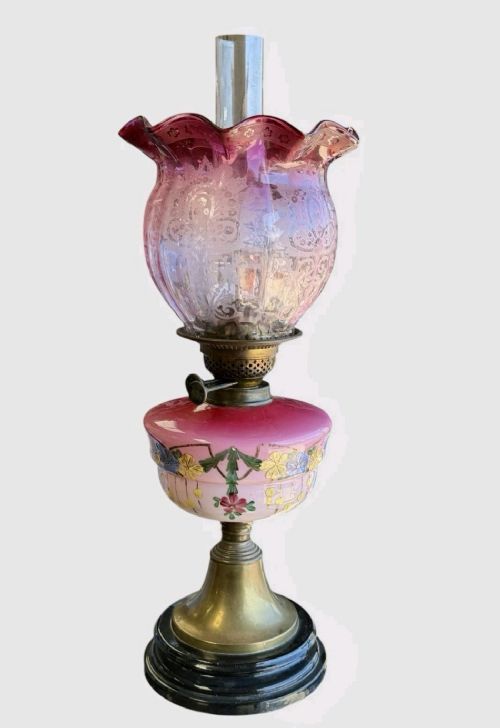


Ruffled Glass Oil Lamp
A ruffled glass oil lamp brings a warm, decorative glow and rich Victorian character to any room.
Ruffled Glass Oil Lamp
A ruffled glass oil lamp is a functional domestic lighting piece from the Victorian and Edwardian eras, combining a sturdy base with a distinctive fluted glass component. Most examples encountered here date from the nineteenth century into the early twentieth century, spanning periods such as 1860, 1880, 1890, and 1900.
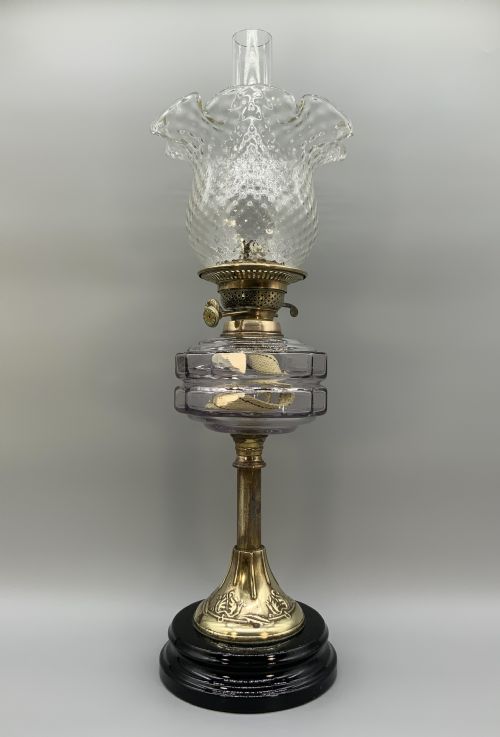
The form typically comprises a heavy metal or ceramic column supporting a glass font, often paired with matching hand-painted or frilled shades. These lighting pieces range from tall double-burner duplex models to slender table lamps designed for parlour and drawing room use.
How they were made
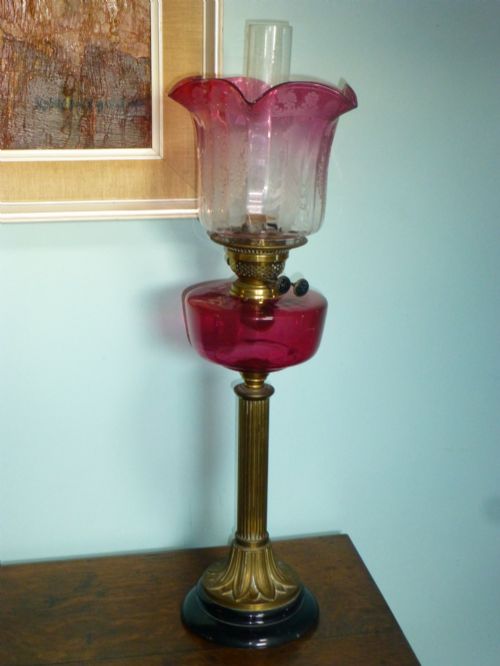
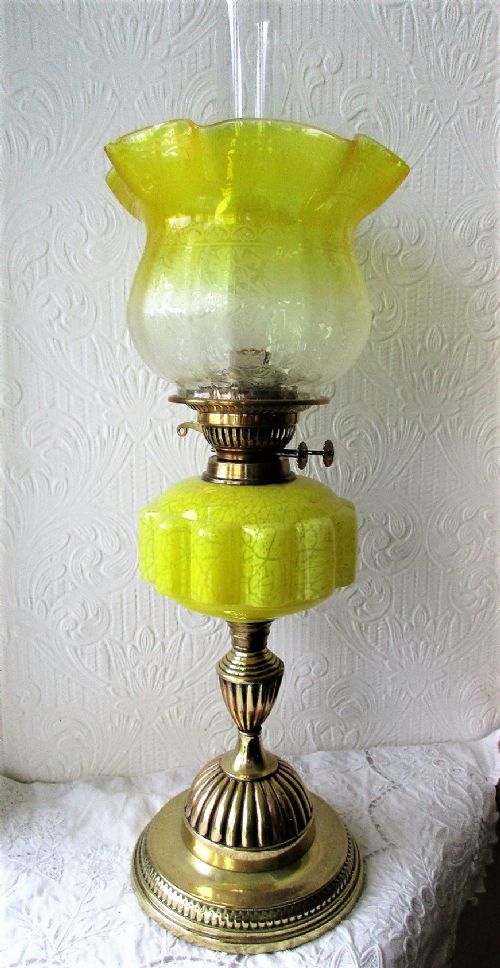
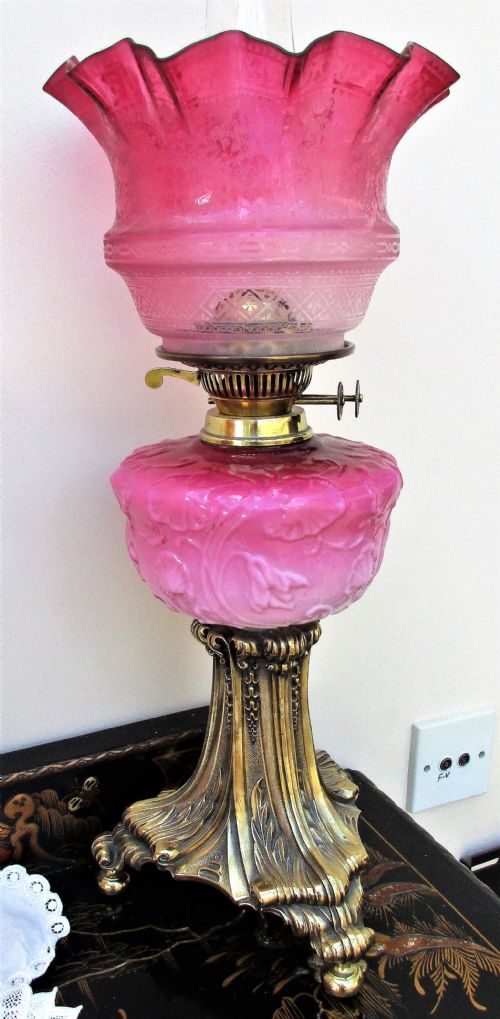
Makers constructed these lamps using durable metals such as brass alongside hand-blown and cut glass fonts or shades. Cranberry glass, pink glass, and green glass feature prominently, often enhanced by hand-painted botanical or decorative enamel motifs.
Structural stability required weighted bases made from slate or heavy brass, frequently cast in classical architectural styles like the Corinthian column. The distinctive ruffled rims on the glass shades were shaped by hand while the material remained pliable during the blowing process.
The listings feature pieces primarily from the Victorian and Edwardian periods, utilising brass, slate, and coloured glass such as cranberry and green.
What varies in quality
Quality in a ruffled glass oil lamp rests upon the depth of colour in the glass and the crispness of the hand-painted details. Rich cranberry hues and intricate floral enamelling elevate the visual presence of the piece.
Substantial weight in the brass or slate base and the presence of twin-burner mechanisms, such as duplex systems, indicate higher manufacturing ambition. The symmetry and depth of the frilled glass edges also distinguish finer examples from standard production.
The Ruffled Glass Oil Lamp Glossary
- Duplex burner
- A heavy-duty twin-burner mechanism designed to hold two parallel wicks for a brighter illumination. These burners often appear on taller nineteenth-century models.
- Cranberry glass
- A rich red-pink transparent glass created by adding gold chloride to the molten batch. It is a defining material of Victorian decorative lighting.
- Corinthian column
- A classical architectural column style featuring ornate acanthus leaves on the capital, frequently utilised for the metal stems of Victorian lamps.
Ruffled Glass Oil Lamp: Frequently Asked Questions
How do I clean the glass shade?
Wash the glass gently in lukewarm soapy water using a soft cloth, taking care around hand-painted or enamelled areas. Avoid soaking painted sections to protect the historical surface.
Allow the piece to air dry completely before placing it back onto the lamp collar.
Can I still burn oil in them?
While the physical mechanisms often remain intact, most owners choose to wire these lamps for electricity or simply display them as decorative objects. Using them with modern oil requires careful inspection of the burner and wick condition.
Consult a professional restorer if you intend to restore the functional lighting capability.
What is a duplex burner?
A duplex burner uses two flat wicks placed side by side to produce a significantly brighter flame than single-wick designs. This mechanical upgrade was popular on larger nineteenth-century parlour lamps.
Operating the twin wicks requires a shared thumbwheel to adjust the flame height evenly.
How do I date an oil lamp?
Dating relies on stylistic clues such as the brass casting details, burner patents, and glass colours typical of specific decades like the 1860s or 1900s. Victorian pieces often display heavier brass work and rich cranberry glass, while Edwardian examples can feature lighter Art Nouveau curves.
Comparing the manufacturing techniques and material combinations helps narrow down the period.