


Cranberry Glass Paraffin Lamp
A cranberry glass paraffin lamp brings a rich ruby glow and steady illumination to a room, combining tactile nineteenth-century materials with functional warmth.
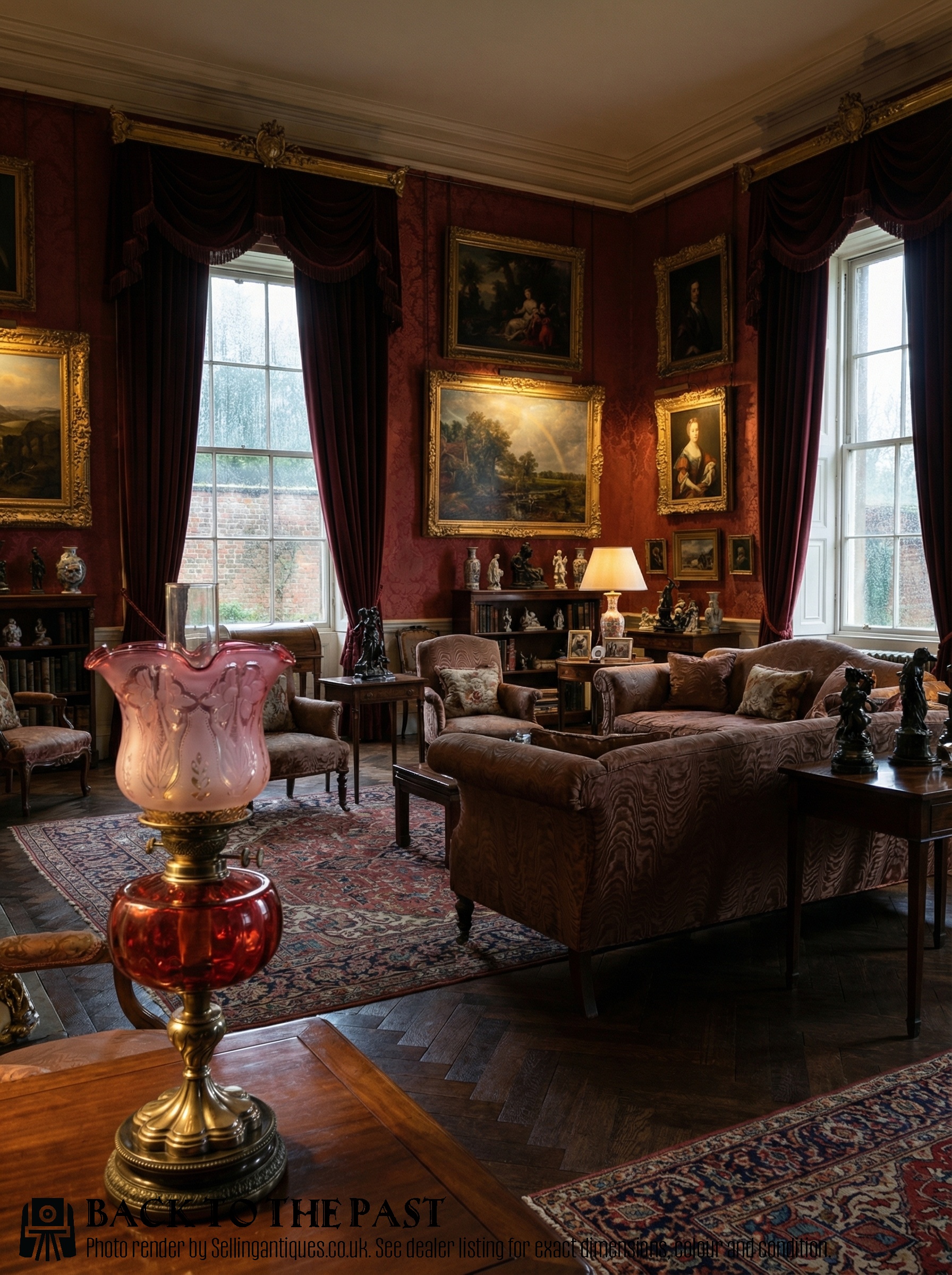
Cranberry Glass Paraffin Lamp
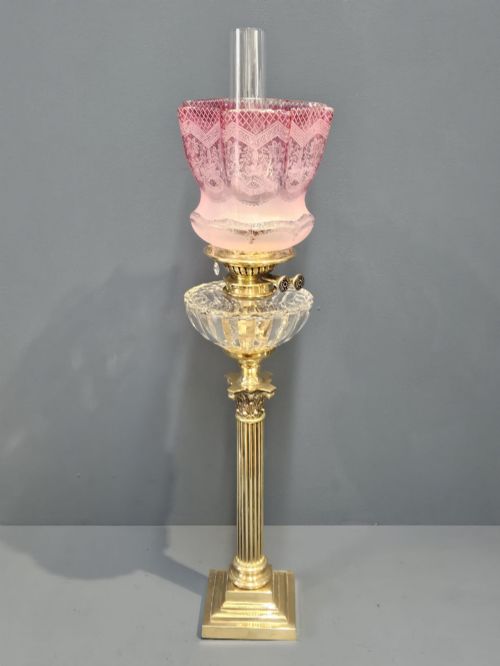
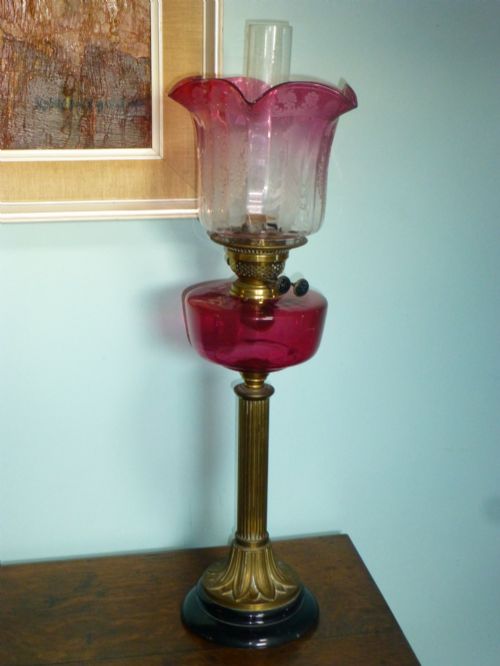
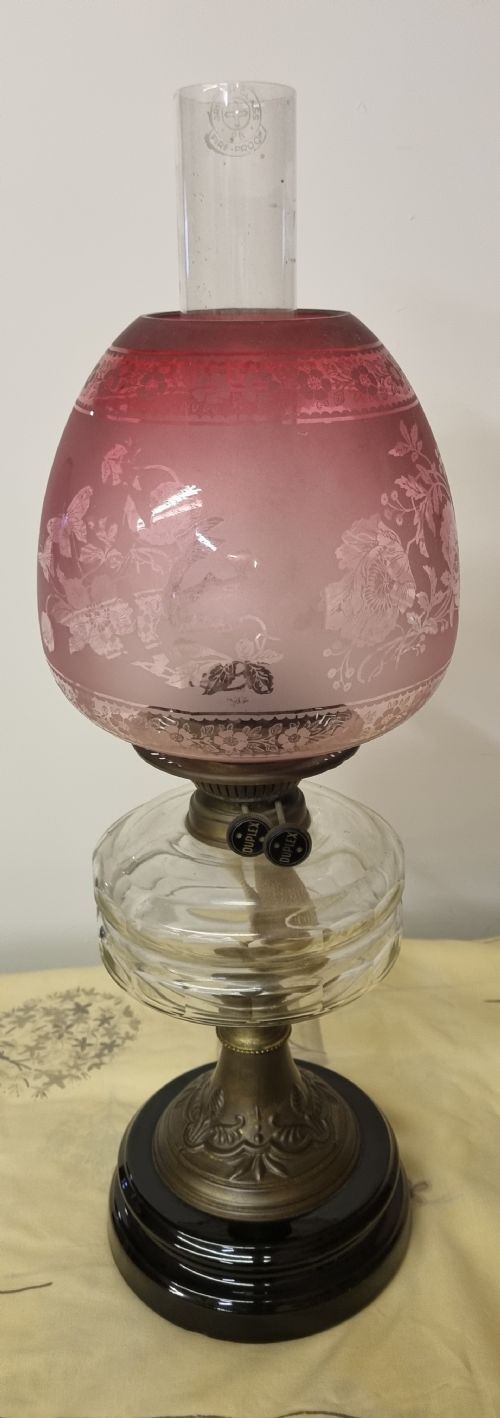
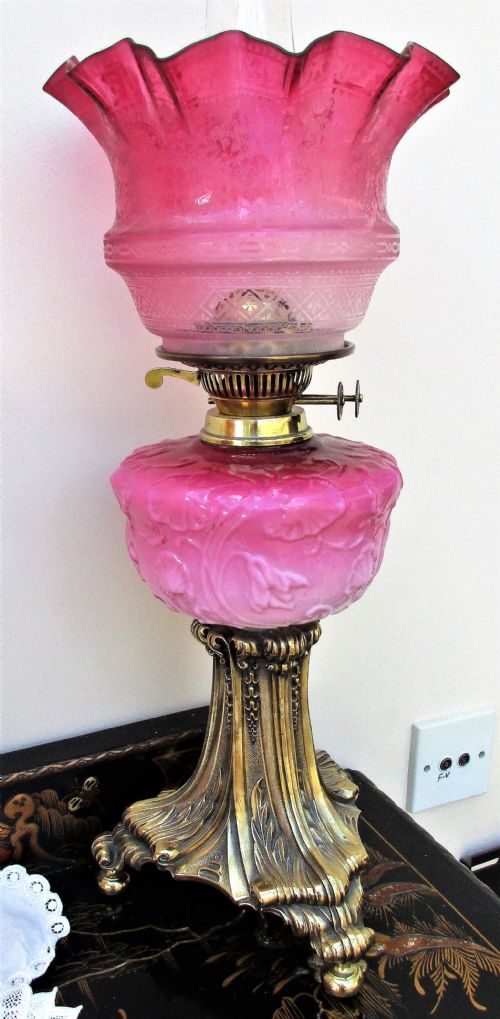
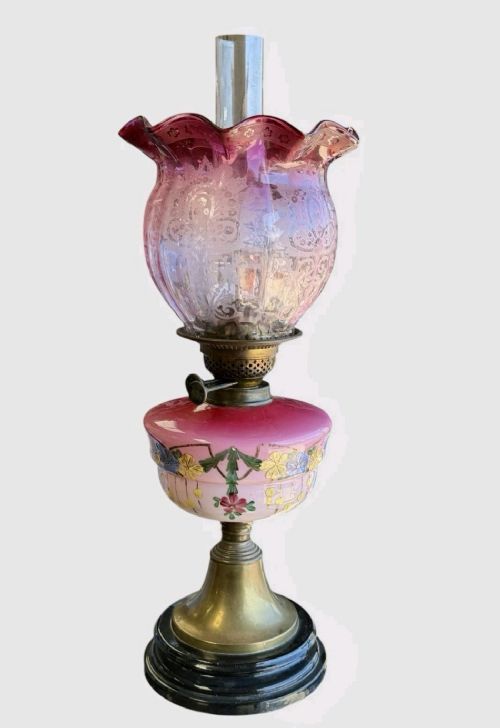
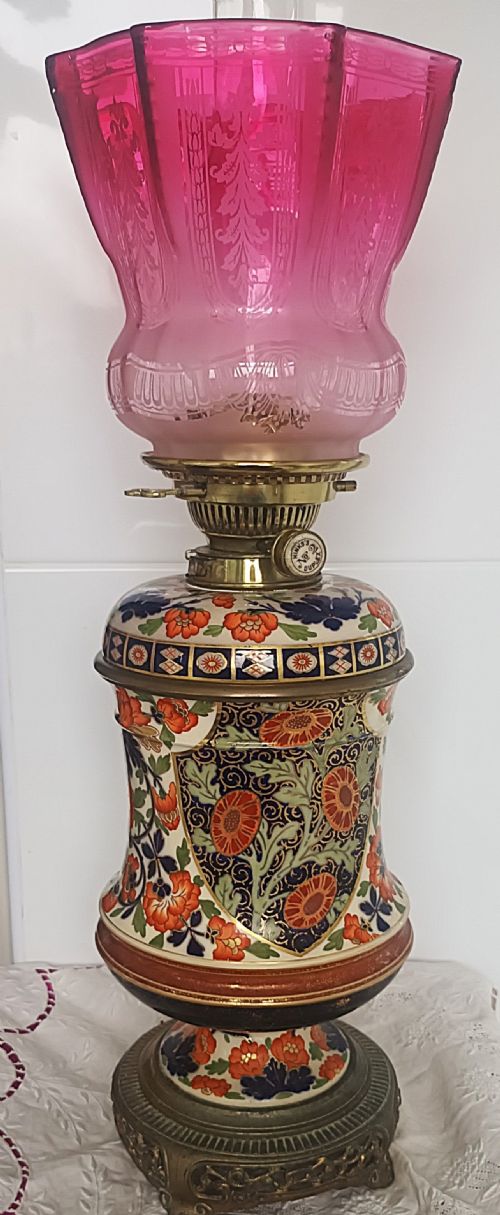
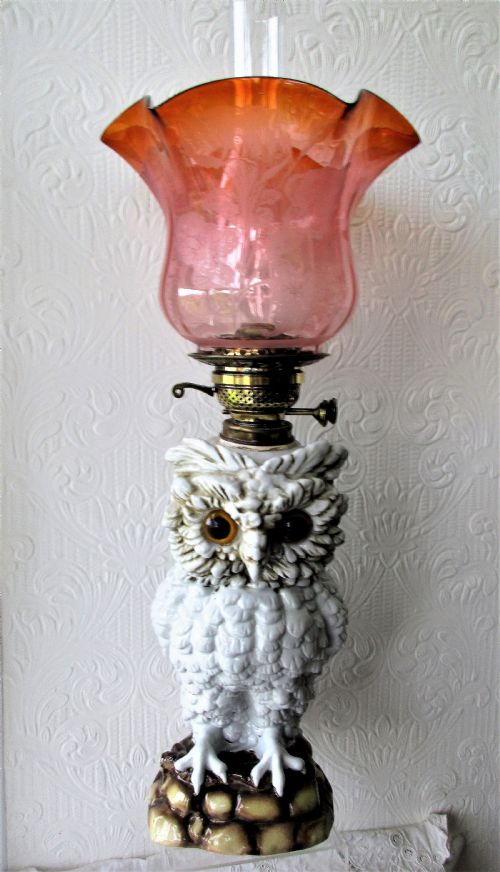
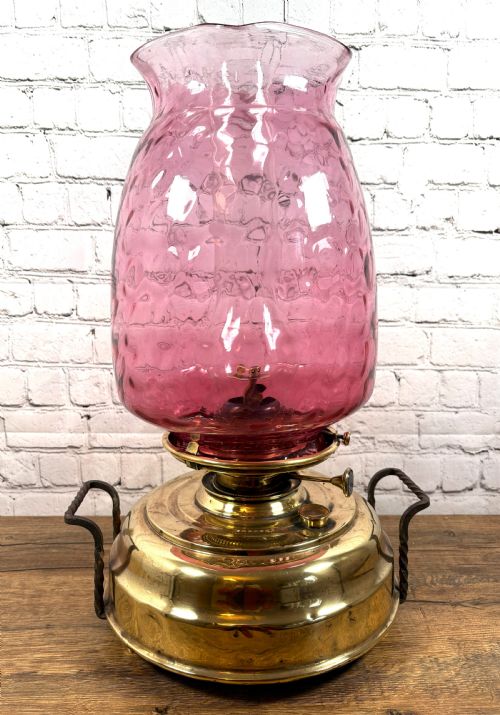
A cranberry glass paraffin lamp combines a vibrant ruby-tinted shade or font with structural mounts of brass, ceramic or clear glass. These domestic lighting pieces emerge primarily from the nineteenth century, spanning Victorian and Edwardian periods.
The form frequently appears as a tall column or table lamp featuring botanical motifs, hand-painted fonts or classical Corinthian brass supports. Variants range from simple moulded glass vessels to elaborate duplex double burners designed for brighter interior illumination.
How they were made
Makers achieved the distinctive deep red hue of cranberry glass by adding gold chloride to the molten glass batch during production. Artisans then shaped the vessels through blowing and moulded the components before pairing them with heavy brass columns and ceramic or porcelain bases.
Metal components involved cast brass burners, collars and weighted stands to provide stability for the tall glass chimneys and shades. Many models incorporated specialised mechanisms from firms such as Hinks to regulate the paraffin flame efficiently.
The listings show pieces spanning the Victorian and Edwardian eras, combining brass, ceramic, clear glass and cranberry glass.
What varies in quality
Quality rests upon the depth and uniformity of the cranberry glass colour, the crispness of brass casting in columns and capitals, and the presence of hand-painted detailing on the font or shade. Superior examples maintain matched original components and retain their heavy weighted brass bases without replacement parts.
The sophistication of the burner mechanism and the presence of makers' names on the metalwork distinguish finer production. Elaborate configurations, such as duplex burners with double wicks and matching ruby glass peg lamps, occupy the upper tier of these domestic items.
Hinks·Taylor Tunnicliff·Sitzendorf
The Cranberry Glass Paraffin Lamp Glossary
- Cranberry glass
- A type of transparent glass coloured with gold oxide, producing shades from pale pink to deep ruby. It gained popularity during the Victorian period for decorative tableware and lighting.
- Duplex burner
- An oil lamp burner fitted with two parallel wicks that produce a wider, brighter flame than single-wick designs. This mechanism required a broader wick channel and specific double-width chimneys.
- Corinthian column
- A classical architectural column style featuring ornate carved acanthus leaves at the capital. Lamp makers frequently utilised this design for brass table lamp stems.
- Font
- The oil-holding reservoir of a lamp, positioned beneath the burner and above the main support stand. In these pieces, the font is frequently executed in cranberry or clear glass.
- Peg lamp
- A small oil lamp designed with a tapered lower peg intended to drop directly into a candlestick socket or wall sconce rather than resting on its own base.
Cranberry Glass Paraffin Lamp: Frequently Asked Questions
How do I operate a paraffin lamp safely?
Fill the glass font with standard paraffin fuel, allowing the cotton wick to absorb the liquid thoroughly before lighting. Trim the wick flat to ensure an even flame and prevent smoking during use.
Keep the glass chimney clean and positioned securely in the gallery to protect the flame from draughts. Extinguish the lamp by turning the thumbwheel down until the flame dies, then let the burner cool before refilling.
Can these lamps be converted to electricity?
Many period oil lamps undergo conversion to electricity for modern convenience, running wiring through the central column and burner assembly. This alteration preserves the decorative aesthetic while providing safe domestic lighting.
Reversible conversions leave the original interior components intact, whereas permanent alterations involve drilling through metal or ceramic parts. Collectors generally prefer pieces that retain their original oil-burning capability where possible.
How do I clean cranberry glass safely?
Wash the glass components in warm water using mild washing-up liquid and a soft cloth to remove dust and soot. Avoid abrasive scourers or harsh chemical cleaners that might damage hand-painted enamel details on the surface.
Dry the glass thoroughly with a lint-free cloth before reassembling the lamp. Handle delicate shades and chimneys with care, as nineteenth-century blown glass is thin in places.
How do I date a Victorian oil lamp?
Examine the style of the metal mounts, burner patents and glass manufacturing techniques to establish an approximate date. Mid-nineteenth-century examples often feature heavy brass columns and simple burners, while later Victorian and Edwardian pieces show more elaborate mechanisms and lighter brass spinning.
Maker stamps on the brass thumbwheels or ceramic bases provide definitive clues to the manufacturing period. The presence of registration marks or specific burner names helps narrow the production window.