
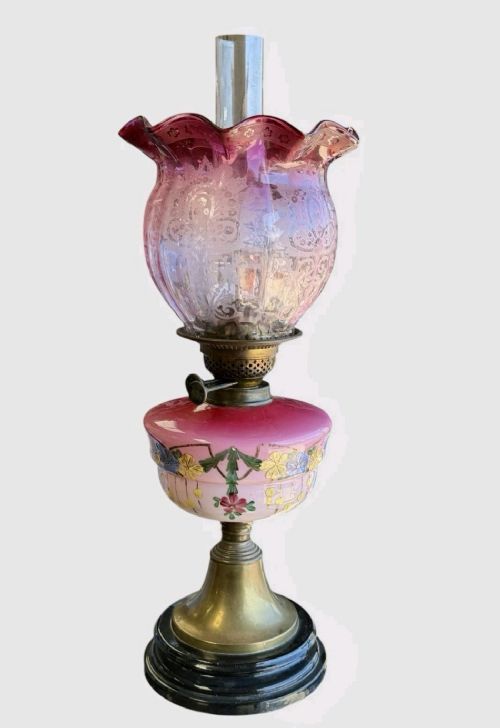
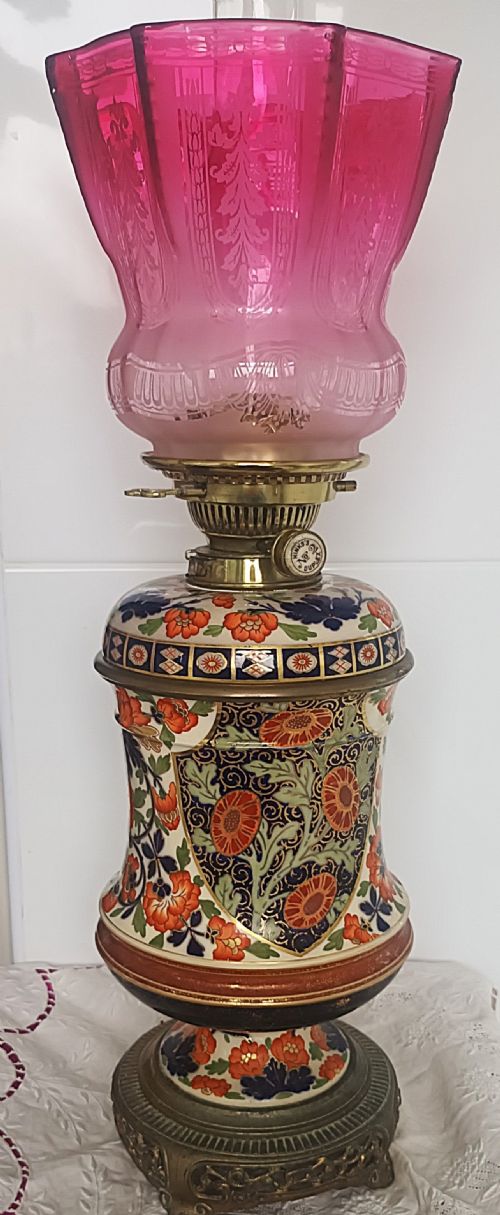
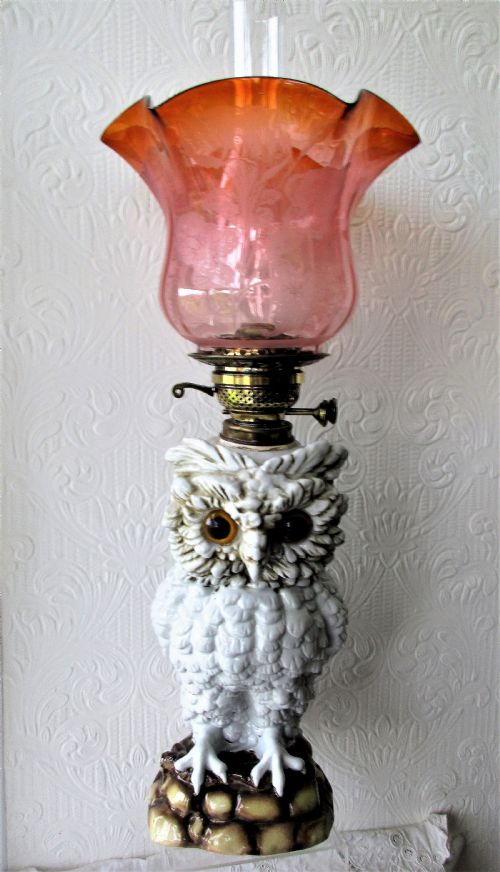


Etched Cranberry Glass Shade
An etched cranberry glass shade brings a warm, rich glow to period lighting, transforming a room with its distinctive deep pink hue.
Etched Cranberry Glass Shade
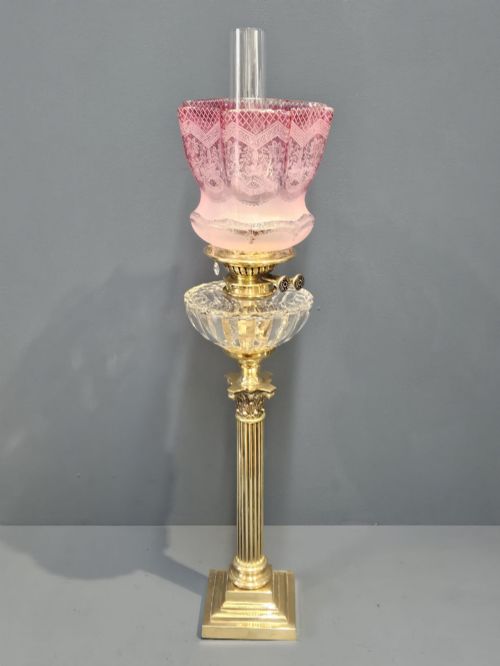
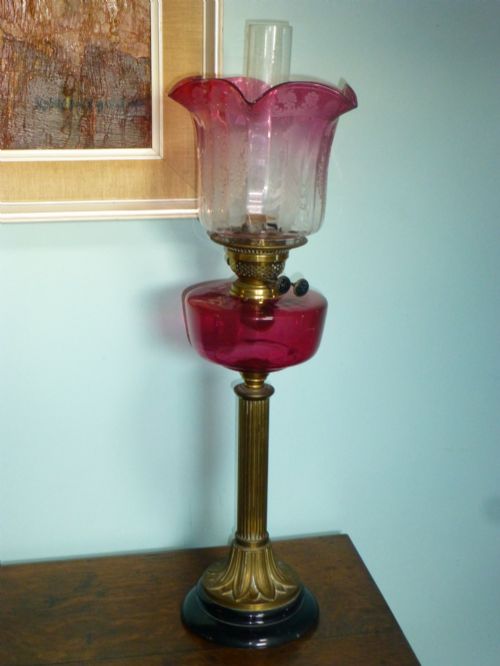
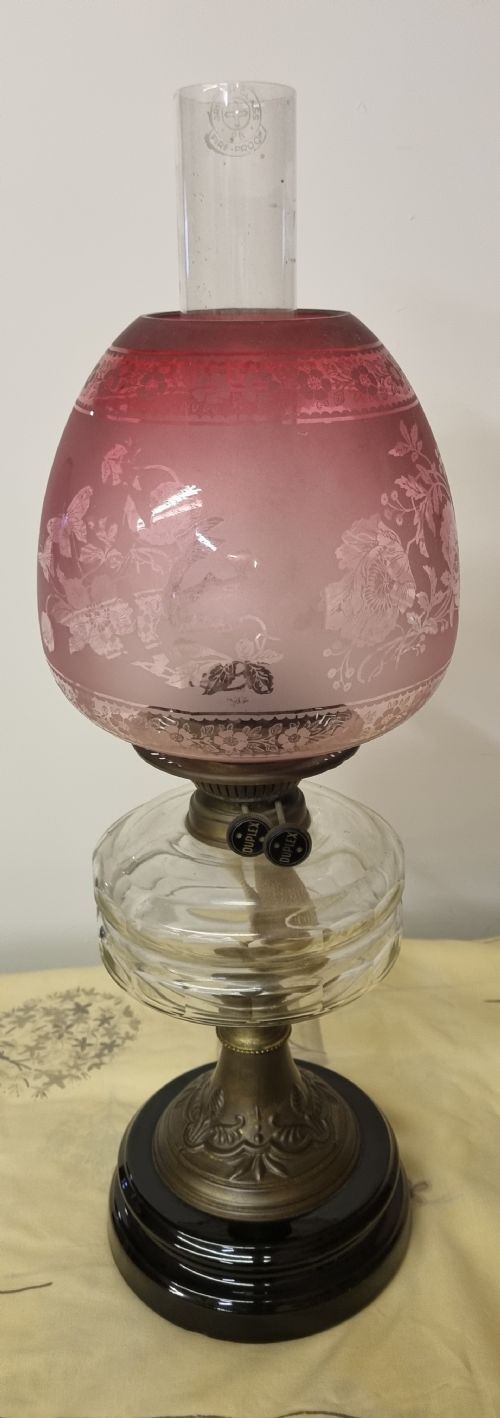
An etched cranberry glass shade is a decorative lighting component primarily found on oil lamps and pendant lights dating from the Victorian and Edwardian periods. These shades are most commonly encountered on brass oil lamps featuring columns or ceramic bases from the nineteenth century. Buyers seek them to complete authentic period lighting setups or to add a splash of deep pink colour to a traditional interior.
The selections on this page span the nineteenth century into the early twentieth century, taking forms such as frilled oil lamp shades and matching pairs with ruby etched glass. Many examples appear paired with brass or porcelain bodies, reflecting the domestic lighting styles of Victorian and Edwardian homes. Finding an original shade allows collectors to restore antique lamps to their complete functional state.
How they were made
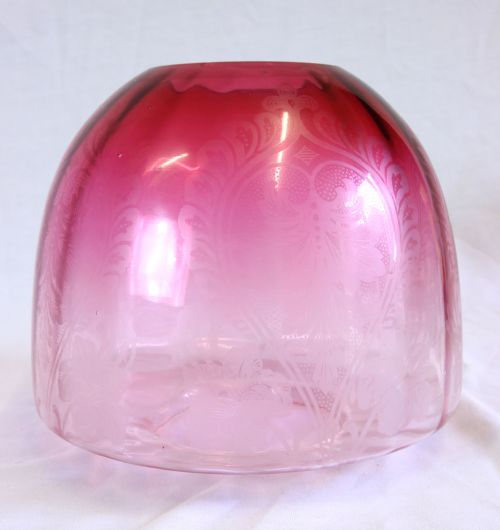
The distinctive colour of cranberry glass relies on the addition of gold chloride to the molten glass batch during production, creating shades that range from pale pink to deep ruby. Craftsmen then shaped the hot glass using moulds or free-blowing techniques suited to the bulbous or flared forms required for lamp shades.
Etching was subsequently applied to the cooled surface using acid or mechanical engraving to cut through an outer layer or leave frosted botanical and hunting motifs against the clear or tinted background. This combination of coloured glass chemistry and surface engraving produced the decorative contrasts visible on nineteenth-century lighting.
Some Victorian shade designers included hunting themes, letting owls and hounds peer out from the pink glow of an evening parlour.
What varies in quality
The depth and consistency of the cranberry colour set the visual baseline for quality, alongside the crispness and complexity of the etched motifs. Pieces displaying finely detailed engraving, such as botanical or hunting scenes, indicate a higher level of artisan skill than simple geometric patterns.
The physical weight of the glass and the smoothness of the rim, whether frilled or plain, further distinguish standard production items from superior examples. Matching pairs and shades retaining their original mounting seating demonstrate greater desirability among collectors.
Hinks·Taylor Tunnicliff·Sitzendorf
The Etched Cranberry Glass Shade Glossary
- Cranberry glass
- A transparent red or pink glass coloured by the addition of gold. It was widely utilised in Victorian decorative tableware and lighting.
- Etched glass
- Glass that has been treated with acid or abrasives to create textured designs on the surface. This technique produces opaque white or frosted patterns against the translucent body.
- Duplex burner
- A type of double-wick oil lamp burner popular in the nineteenth century. It provided a brighter illumination than single-wick variants.
- Corinthian column
- A classical architectural column style frequently adapted for the brass stems of Victorian table lamps. It supports the font and shade above.
- Peg lamp
- A small oil lamp featuring a tapered lower fitting designed to drop directly into a candlestick or receiver rather than standing on a base.
Etched Cranberry Glass Shade: Frequently Asked Questions
What period do these shades come from?
The pieces listed originate predominantly from the Victorian and Edwardian eras, spanning the nineteenth and early twentieth centuries.
They reflect the peak of decorative oil lamp production before electric lighting became universal in domestic spaces.
How do I fit a shade to my lamp?
Shades are typically held in place by a brass gallery with thumb screws that grip the fitter rim at the base of the glass.
It is essential to match the fitter diameter of the shade to the specific gallery size on your oil or table lamp.
Are these shades safe to use with modern bulbs?
Many people adapt antique lamps for modern electrical use by inserting low-heat LED bulbs that fit within the vintage collar.
Care should be taken to ensure the heat from traditional burners or higher wattage bulbs does not stress the antique glass.
How should I clean my glass shade?
Wash the glass gently in lukewarm water using mild dish soap and a soft cloth to remove dust and historical grime.
Avoid harsh abrasives or soaking metal fittings attached to the glass to preserve the original finish.