
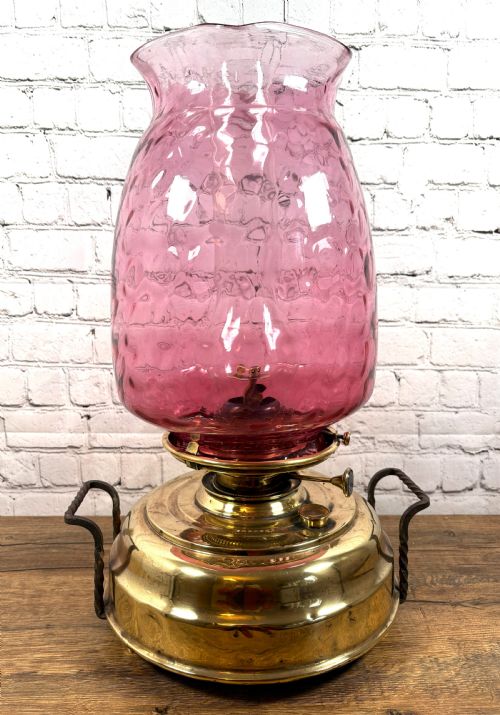


Pink Glass Paraffin Lamp
A pink glass paraffin lamp brings a warm, rosy glow to a room, combining practical Victorian lighting with decorative colour.
What they are
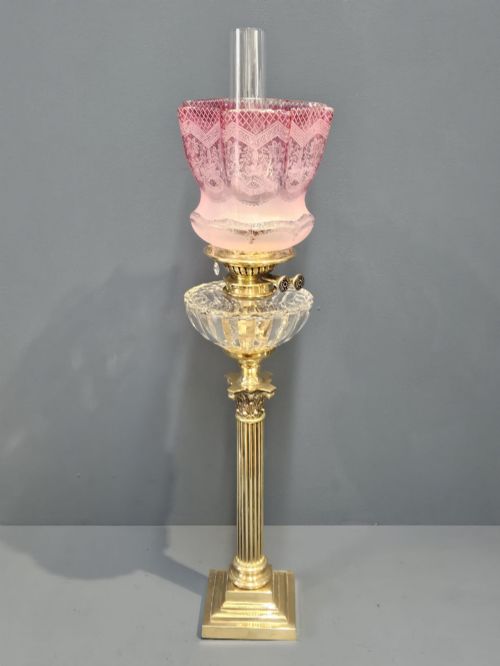
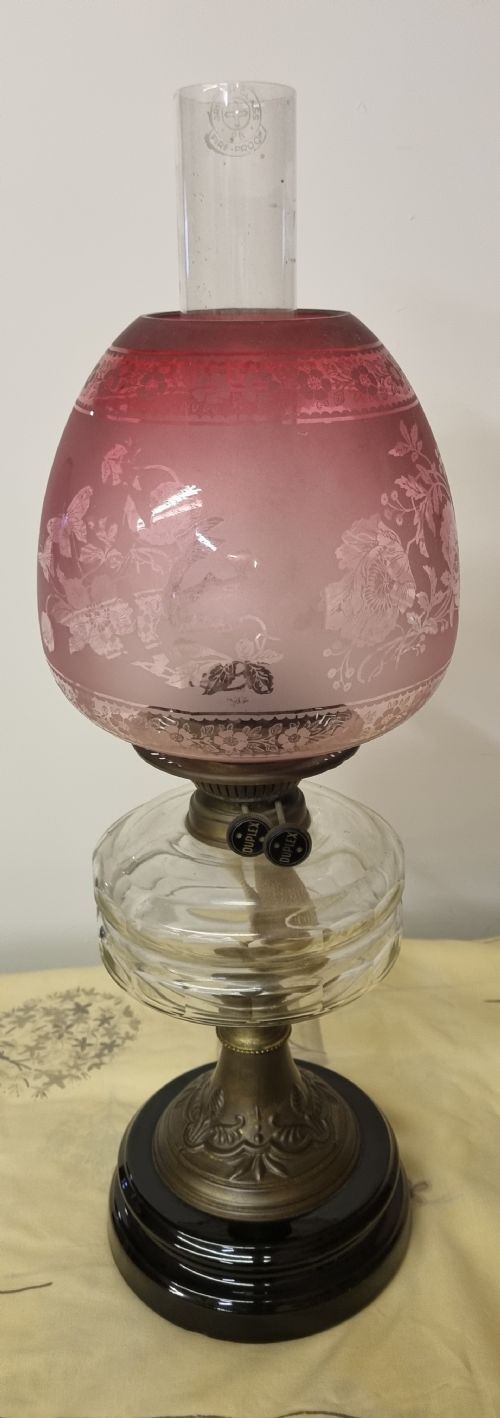
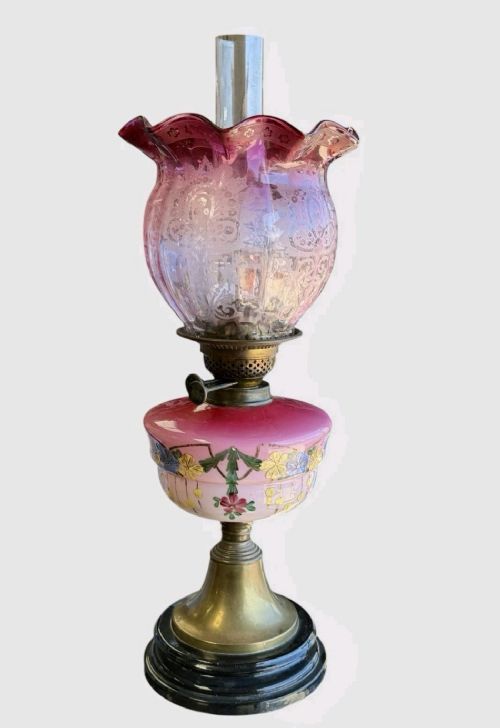
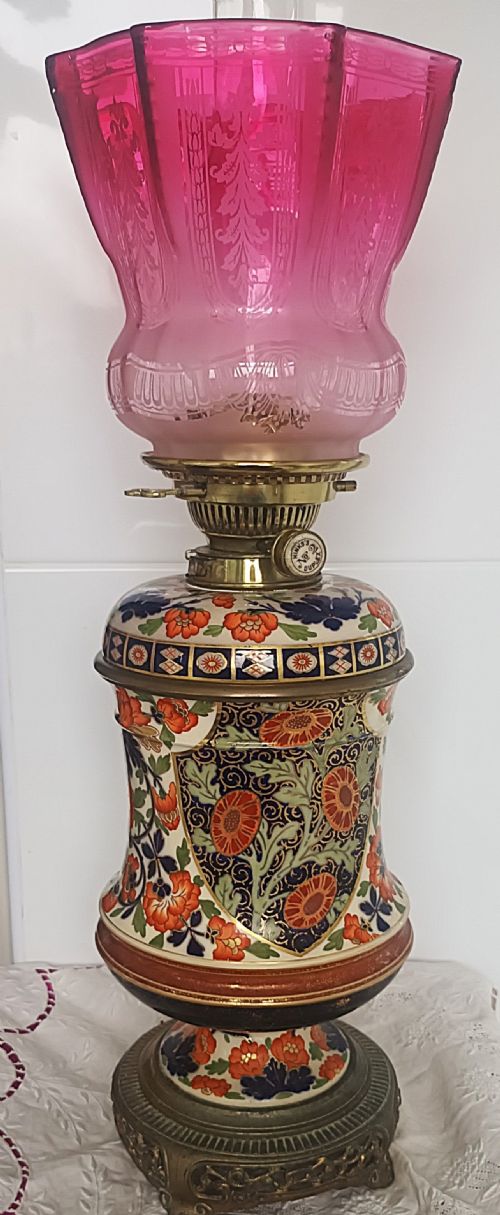
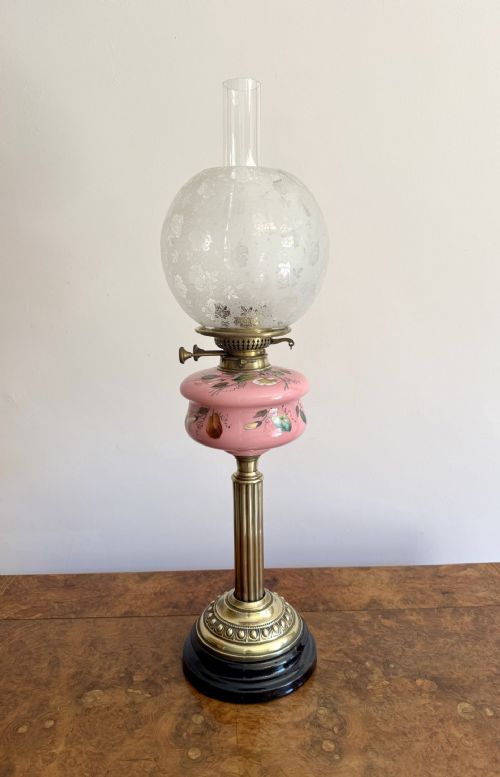
A pink glass paraffin lamp is an oil lamp designed for domestic illumination during the Victorian era. These pieces frequently combine tinted glass fonts with contrasting ceramic bases, brass fittings, and glass shades.
The versions most commonly met on this page date from the nineteenth century, specifically between the years 1860 and 1900. They appear as standard table models alongside adjustable telescopic variants.
How they were made
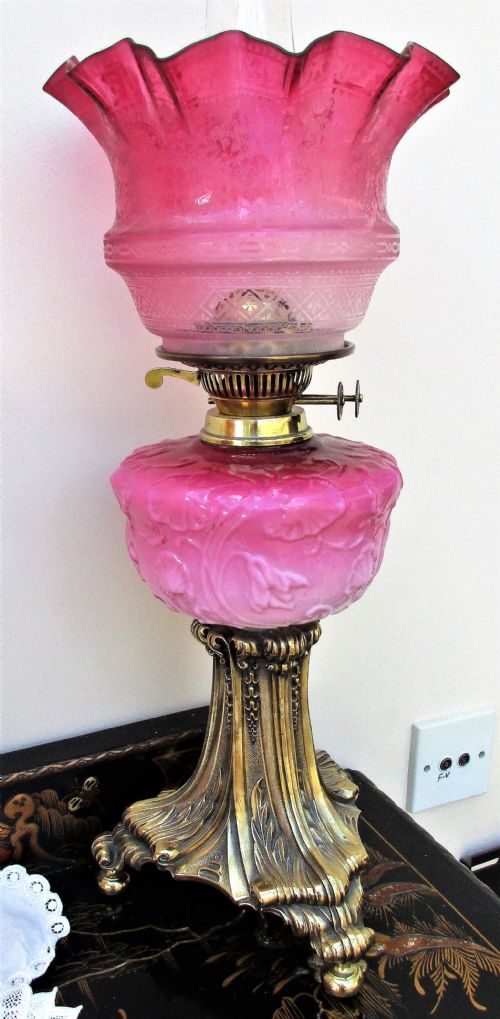
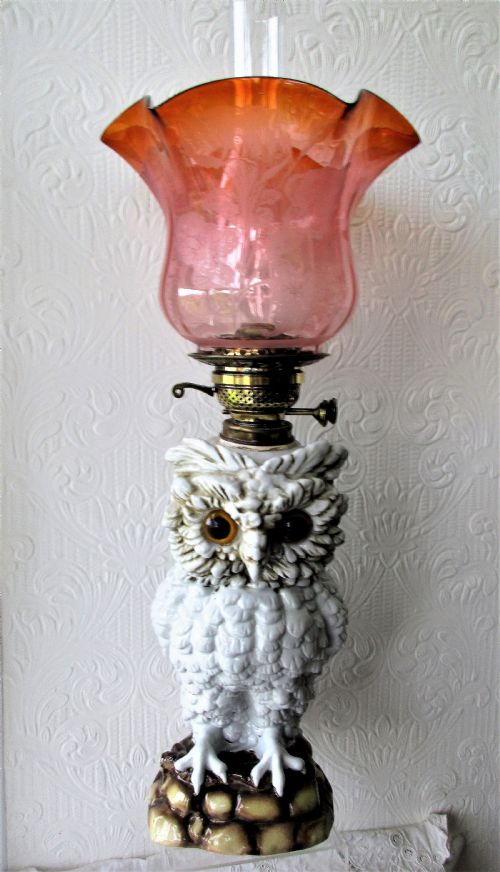
Makers utilised moulded glass and cranberry glass to create colourful translucent reservoirs and shades, often pairing them with fired porcelain figure supports such as Sitzendorf animal forms. Metal components like brass provided sturdy structural columns and burner mechanisms.
Craftsmen joined glass bodies to ceramic or metal bases using plaster or threaded collars, integrating adjustable telescopic mechanisms in more complex designs to alter the height of the light.
Retail Price Guide 2026
Typical UK retail prices for pink glass paraffin lamp, calculated from the Sellingantiques database of over a million retail prices indexed since 2003. This retail price guide relies exclusively on Sellingantiques data; no external sources or auction records are used, so the figures do not describe the wider market.
An inquisitive porcelain owl keeps watch from the base of one Victorian lamp, illuminating the room through amber eyes.
What varies in quality
The distinction between standard domestic lighting and superior examples lies in the complexity of the materials and the artistry of the manufacturing process. Elaborate combinations of moulded cranberry glass, hand-painted porcelain figures like owls, and telescopic brass structures denote higher levels of original craftsmanship.
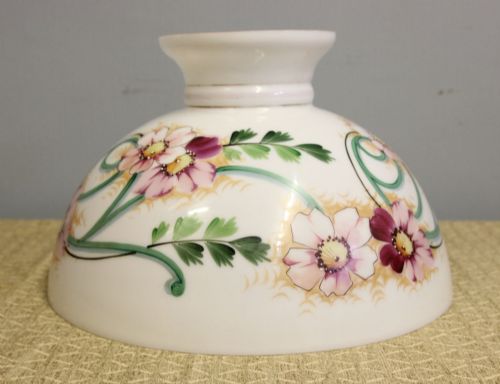
Simpler configurations rely on plain milk glass or basic oil lamp forms without figural porcelain bases. The presence of specialised glass shades further elevates the visual weight and finish of the piece.
Sitzendorf
The Pink Glass Paraffin Lamp Glossary
- Paraffin lamp
- A domestic lighting device that burns liquid hydrocarbon fuel drawn up through a wick. These objects served as primary household illumination before widespread electrical supply.
- Cranberry glass
- A rich pink or red transparent glass created by adding gold chloride to the molten mixture. It forms the vibrant shades and fonts seen on nineteenth-century examples.
- Milk glass
- An opaque or translucent white or tinted glass used for decorative homeware and lamp bodies. It provides a smooth, solid surface that diffuses light softly.
- Telescopic oil lamp
- A standing lamp featuring an adjustable column that allows the height of the burner to be raised or lowered. This mechanical sophistication marks superior nineteenth-century production.
- Font
- The oil reservoir portion of a lamp, usually positioned above the base and beneath the burner. In these pieces, the font is made from pink or cranberry glass.
Frequently Asked Questions
How do I operate a pink glass paraffin lamp?
Fill the glass reservoir with paraffin oil and allow the cotton wick to soak thoroughly before lighting. Adjust the wick height using the brass thumbwheel to control the flame and prevent smoke.
Keep the glass shade centered and clean to ensure proper airflow and a steady, bright glow.
Where should I place an oil lamp in my home?
Position the lamp on a stable, level surface away from drafts, foot traffic, and flammable materials. A sideboard or mantelpiece provides a secure spot where the coloured glass catches ambient light.
Ensure it sits out of reach of children and pets due to the fragile nature of the glass and porcelain components.
How do I identify a Victorian oil lamp?
Look for characteristic nineteenth-century construction methods, such as heavy brass burners, moulded cranberry or milk glass fonts, and period ceramic bases. Many examples feature dates or maker marks associated with the 1860 to 1900 timeframe.
Stylistic details like owl porcelain figures or telescopic brass columns point directly to Victorian manufacturing traditions.