


Adjustable Brass Oil Lamp
An adjustable brass oil lamp brings the warm, functional ingenuity of the nineteenth century straight into a modern room.
Adjustable Brass Oil Lamp
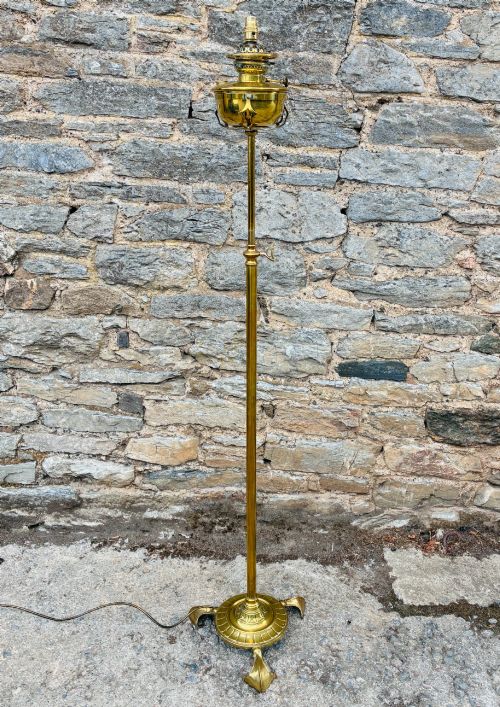
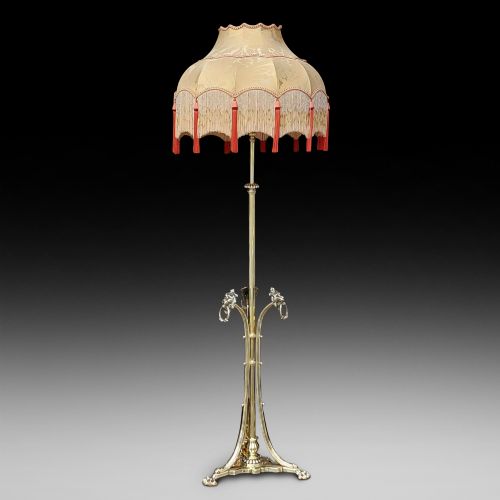
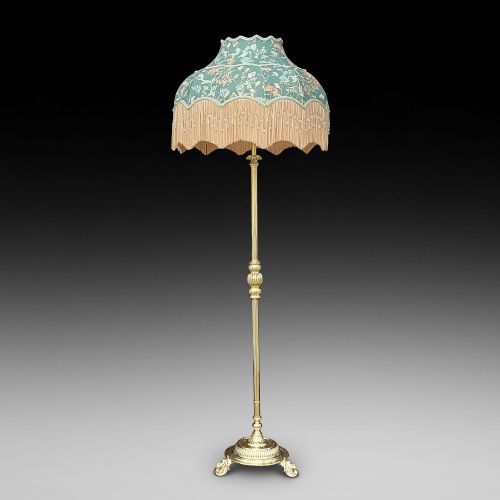
An adjustable brass oil lamp offers a tall, extendable standard designed to illuminate a room from various heights. You encounter floor lamps, standard lamps, and desk lamps originating chiefly from the Victorian era and the turn of the twentieth century.
The material record shows solid brass alongside wrought iron, copper, marble, ceramic, and carved woods like padouk and teak. Many examples arrive paired with glass, fabric, or silk shades, whilst others show historical conversion to electric light.
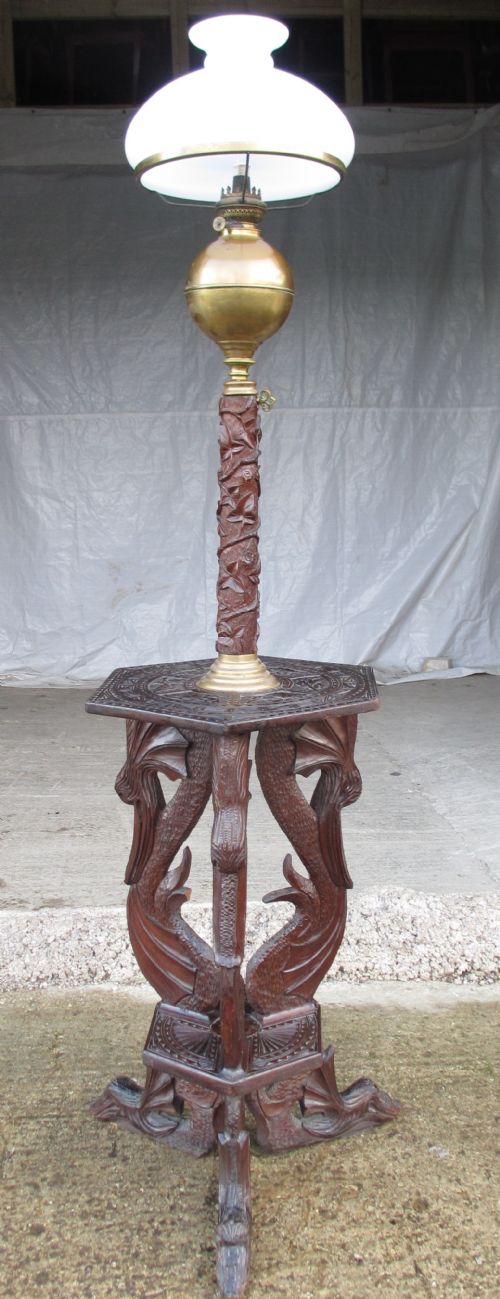
Forms range from straightforward telescopic stems to elaborate Arts and Crafts and Anglo-Burmese designs. These objects served utilitarian lighting needs before electricity, yet survive today as striking architectural furniture.
How they were made
Makers utilised heavy brass casting and tubing to create rigid standards capable of supporting extending telescopic mechanisms. Copper, wrought iron, and ceramics were frequently integrated into the construction to provide stability and contrasting texture.
Surface treatments and joinery combined mechanical ingenuity with decorative arts traditions. Metal components were turned, polished, or left with patinated finishes, whilst specialised burner mechanisms were engineered to regulate fuel securely.
The documented periods span the nineteenth century, including Victorian manufacture, 1860, 1890, and the early twentieth century up to 1920.
What varies in quality
The weight and gauge of the brass structure dictate the sturdiness of the standard and the smooth operation of the telescopic rise. Substantial cast bases and precise engineering in the adjustment mechanism distinguish superior examples from lighter pieces.
Design complexity and the integrity of secondary materials establish further distinction across the range. Pieces incorporating carved hardwoods, specialised burners, or intact period shades demonstrate greater original ambition from the maker.
W A S Benson·Wild and Wessel·Messenger
The Adjustable Brass Oil Lamp Glossary
- Telescopic
- Describing a standard designed to slide upward and downward to alter the overall height of the light source. This mechanical feature allowed users to direct illumination across a room or downward onto a desk.
- Standard lamp
- A tall freestanding floor lamp designed to hold a light source above head height. These fixtures formed a prominent element of nineteenth-century domestic interior furnishing.
- Wild and Wessel
- A notable maker of nineteenth-century duplex burners and lighting systems. Their components signify German engineering precision within period lamps.
- Anglo-Burmese
- A design style combining British Victorian furniture forms with traditional Burmese woodcarving techniques. These pieces often incorporate exotic timbers alongside brass mounts.
Adjustable Brass Oil Lamp: Frequently Asked Questions
How do I adjust the height?
Many of these lamps utilise an internal sliding rod or a telescopic screw mechanism housed within the main brass column. Gently releasing the collar allows the stem to extend upward before securing it at your chosen level.
Heavier standards require a firm grip on the upper shaft to ensure the weighted base remains stable during the adjustment process.
Were these converted to electricity?
A large proportion of surviving examples have been adapted to house modern electrical wiring rather than burning oil. This conversion typically runs through the central brass core to preserve the exterior appearance of the standard.
Original oil reservoirs and burners are frequently retained at the top, allowing the piece to function safely as a standard lamp today.
How do I date an adjustable brass lamp?
Dating relies heavily on the stylistic details of the brass casting, the design of the burner assembly, and the presence of aesthetic movement or Arts and Crafts motifs. Victorian examples generally display heavier proportions and ornate detailing.
Later pieces from the turn of the century often favour simpler, cleaner lines associated with the Arts and Crafts movement or early twentieth-century production.
Where should I place a floor-standing lamp?
These tall standards suit corners of reception rooms or beside heavy seating where their height can cast light downward over a considerable area. Their substantial brass and iron construction demands a stable floor surface.
Ensuring adequate clearance around the extending stem allows the lamp to serve as both a reading light and a focal decorative object.