
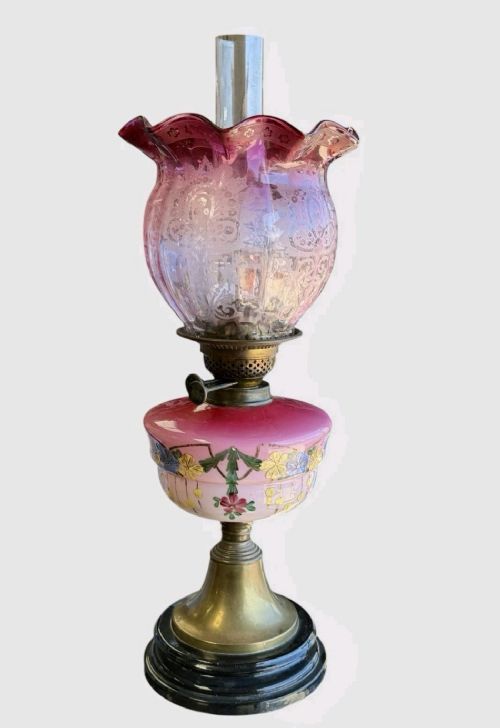


Ruffled Shade Oil Lamp
A ruffled shade oil lamp brings brilliant Victorian colour and layered brass or ceramic structure into a room.
Ruffled Shade Oil Lamp
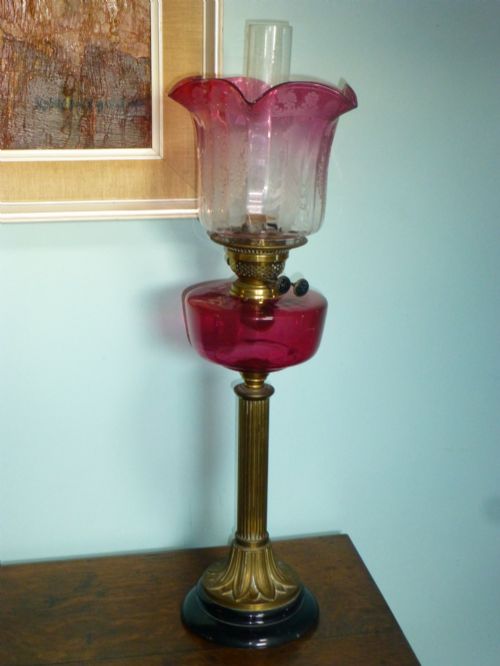
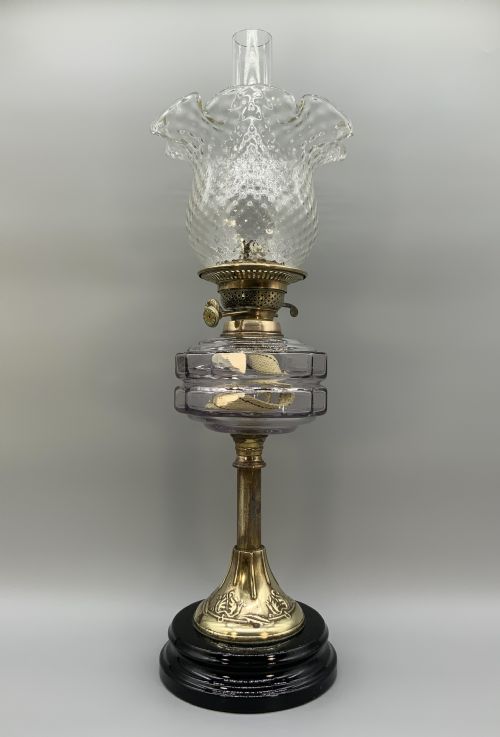
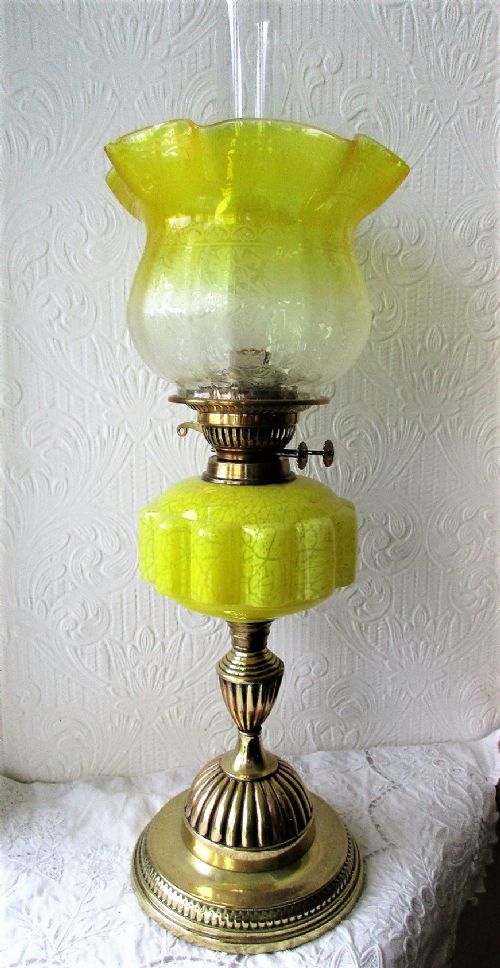
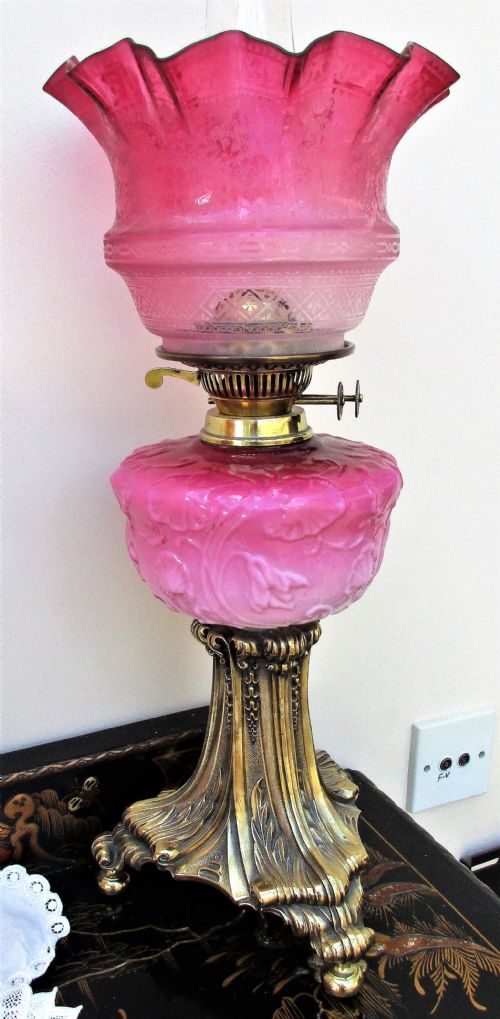
A ruffled shade oil lamp combines a decorative base with a distinctive flared glass globe that frames the flame. These pieces belong to the nineteenth century, Victorian, Edwardian, and early twentieth century eras.
The selection ranges from tall brass column designs to smaller table models with hand-painted fonts and coloured glass bodies. Individual replacement shades also appear as distinct items.
Makers and manufacturers produced these lamps during periods spanning from eighteen sixty through to nineteen thirty, drawing on Victorian and Art Nouveau styles.
How they were made
Brass and glass form the core of these constructions, often paired with ceramic components, slate, and silver plating. Metal elements include cast columns and twin burners.
Glass techniques involve hand-blown production, cutting, enamel decoration, and hand-painting across pink, yellow, green, and cranberry shades. Frilled edges on the globes require skilled manipulation of hot glass while shaping.
Ruffled Shade Oil Lamp Retail Price Guide 2026
Typical asking prices for ruffled shade oil lamp among the pieces listed under this phrase on Sellingantiques today, from the lower quarter to the upper quarter. They describe what is for sale here now, not the wider market.
Some ruffled shades capture light so vividly they resemble inverted morning glory blooms sitting atop brass columns.
What varies in quality
Weight and substance separate standard examples from finer models, particularly in the casting of brass columns and the thickness of the glass fonts. Tall duplex burners and heavier Corinthian column bases indicate a higher tier of production.
The intricacy of hand-painting on the glass and the depth of colour in cranberry or yellow glass create clear distinctions across the range. Complete matched sets where shade, font, and base share a cohesive decorative scheme hold greater visual integration.
The Ruffled Shade Oil Lamp Glossary
- Duplex burner
- A twin-wick mechanism designed to produce a brighter flame than single-wick variants. This setup requires two parallel wicks and a wider gallery.
- Font
- The reservoir that holds the paraffin or oil beneath the burner. It is frequently made of coloured or cut glass.
- Frilled shade
- A glass lamp globe with a rippled or ruffled edge created during blowing. This shape diffuses light while adding ornamental texture.
Ruffled Shade Oil Lamp: Frequently Asked Questions
How do I date a ruffled shade oil lamp?
Dating relies on material combinations, burner types, and stylistic indicators such as Art Nouveau curves or Victorian brass casting. Earlier nineteenth-century examples often feature heavy metal columns and hand-painted cranberry glass.
Later pieces from the Edwardian period or nineteen ten bring simpler painted bowls and modified glass hues. Comparing the burner mechanism and collar markings provides further chronological context.
Can these lamps still burn oil safely?
Many collectors wire these lamps for electricity to use them safely as modern table lighting without altering the antique components. Retaining the original burner parts is common, though operational use requires careful inspection of the fuel reservoir and wick condition.
Professional rewiring preserves the brass and ceramic body while allowing everyday domestic use. Replacing missing chimneys or burners with period-correct hardware maintains structural integrity.
What is cranberry glass?
Cranberry glass is a pinkish-red transparent material created by adding gold chloride to the molten glass batch. It appears frequently in Victorian fonts and ruffled shades.
Its rich tone varies from pale pink to deep ruby depending on the concentration of gold and the reheating process. This technique defines many of the most distinctive nineteenth-century lighting pieces.
How do I clean a glass shade?
Cleaning requires warm water and mild soap, avoiding harsh abrasives that can damage hand-painted details or enamel work. Glass shades should be removed from the brass collar before washing.
Careful handling prevents chipping the delicate ruffled edges of frilled globes. Thorough drying ensures no moisture remains in textured or cut patterns.