


Art Nouveau Oil Lamp
An art nouveau oil lamp brings fluid botanical lines and sculptural warmth to a room, uniting period utility with organic design.
Art Nouveau Oil Lamp
When you search for an art nouveau oil lamp, you enter a domain where late nineteenth and early twentieth century lighting meets flowing, naturalistic design. These pieces span standard lamps, tall table burners, and compact peg lamps intended for pianos or small tables.
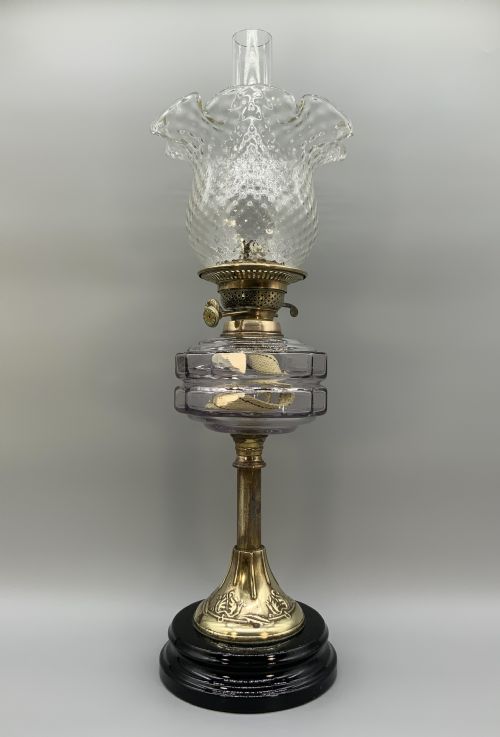
The version you most frequently encounter on this page is the solid brass table or standard lamp, often paired with hand-blown glass, opaline bowls, or hand-painted ceramic reservoirs. Many examples bridge the late Victorian era and the Edwardian period, carrying the distinct floral and whipped-line motifs of the movement.
Beyond standard domestic table pieces, the evidence shows rarer forms including telescopic floor stands, cast iron bases, and specialised cigar lighters designed for desk use. Some pieces preserve their original burner mechanisms, while others arrive thoughtfully converted to electricity for modern living.
Materials and construction
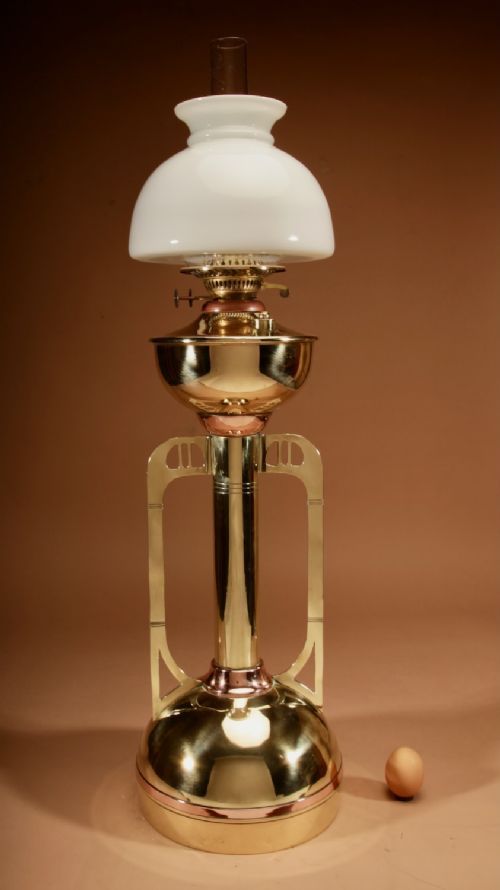
Makers built these lamps primarily using cast and spun brass, copper, and cast iron, shaping metal standards and heavy bases to support fuel reservoirs safely. Brass and copper components frequently display riveted construction, patinated surfaces, and chased botanical detailing characteristic of Secessionist and continental workshops.
The fuel containers and shades combine hand-blown glass, opaline glass, faience, and glazed ceramic bowls, sometimes decorated with hand-painted floral scenes or enamel work. Fabric and rattan elements also appear on associated shades, while marble frequently provides a dense, stable foundation for heavier standard lamps.
Listings feature brass, copper, glass, ceramic, and cast iron across Victorian, Edwardian, and 1900 periods.
The markers of distinction
Quality in these lamps rests upon the crispness of the metalwork, the weight and stability of the base, and the artistry of the glass or ceramic bowl. Heavy, solid brass castings and well-defined floral reliefs distinguish superior workshop production from simpler commercial output.
The integration of materials also defines the tier of a piece, seen in the harmony between hand-blown coloured glass and patinated copper mounts. Original signed burners and intact enamel or hand-painted details elevate an example far above standard utility lighting.
Gustave Serrurier Bovy·Jan Eisenlöffel·WMF·Messengers·Harrods·Wright and Butler
The Art Nouveau Oil Lamp Glossary
- Duplex
- A twin-wick burner mechanism designed to produce a significantly brighter flame than single-wick alternatives. This type appears frequently on substantial Victorian and brass reservoirs.
- Peg lamp
- A small oil lamp featuring a protruding metal peg beneath the font, designed to drop directly into a candlestick, piano sconce, or wall bracket.
- Faience
- Tin-glazed earthenware used for colourful, decorative lamp bodies and reservoirs. It allows for intricate, hand-painted floral motifs typical of continental production.
- Opaline glass
- Opaque or semi-translucent glass, often tinted in shades of green, yellow, or white. It diffuses the internal light softly and serves as a popular material for lamp bowls.
- Secessionist
- A Central European stylistic offshoot of the wider movement, favouring geometric structure combined with organic motifs. Pieces from this circle often employ hammered copper and brass.
- Telescopic
- A standard lamp construction featuring an adjustable vertical shaft. This mechanism allowed users to alter the height of the light source depending on the room arrangement.
Art Nouveau Oil Lamp: Frequently Asked Questions
What is a duplex oil lamp?
A duplex lamp uses two parallel wicks rather than one, allowing the burner to draw more fuel and cast a significantly brighter light.
Makers often paired this heavy-duty mechanism with large solid brass reservoirs and substantial standard frames to illuminate principal Victorian rooms.
Can I still burn oil in these lamps?
While many retain their original burners and fonts, numerous examples have been converted to electricity over the decades for everyday convenience.
If you intend to burn paraffin, ensure a professional checks the integrity of the font and the condition of the wick mechanism before use.
What distinguishes Secessionist lighting?
Secessionist pieces lean towards a restrained geometry combined with organic plant forms, often utilising hammered copper or brass with visible riveted construction.
This aesthetic originated in continental Europe as part of the broader turn-of-the-century shift away from heavy historic revival styles.