


Converted Brass Oil Lamp
A converted brass oil lamp brings nineteenth-century weight and warm metallurgy into modern rooms as electricity.
Converted Brass Oil Lamp
A converted brass oil lamp is a nineteenth-century paraffin or kerosene burner adapted for domestic electric lighting. When you search for a converted brass oil lamp, you find heavy metal reservoirs and columns that once burned fuel, now rewired for modern bulbs.
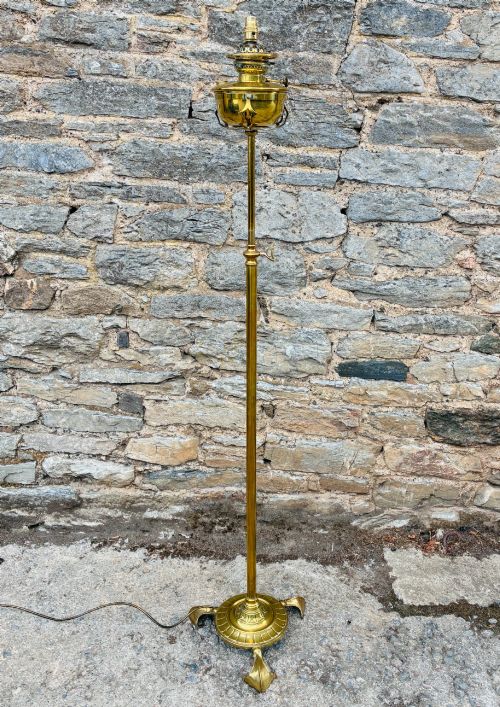
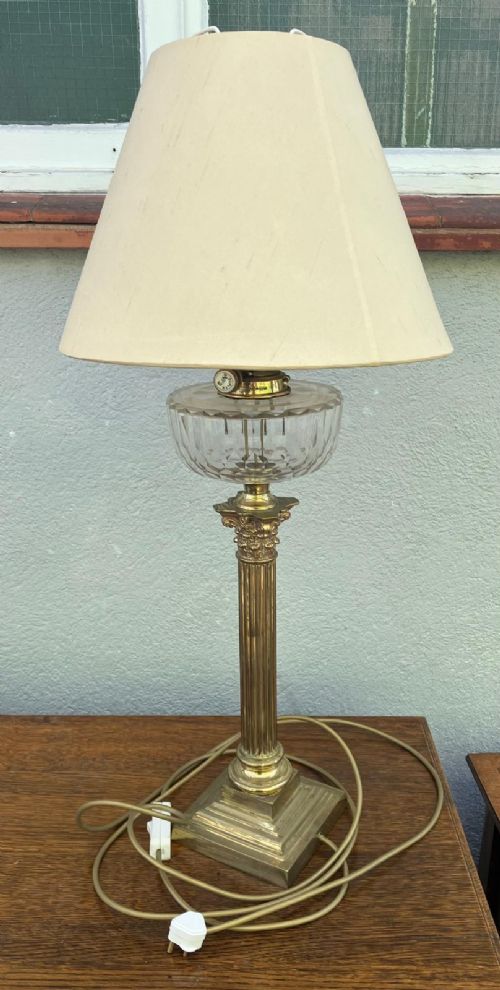
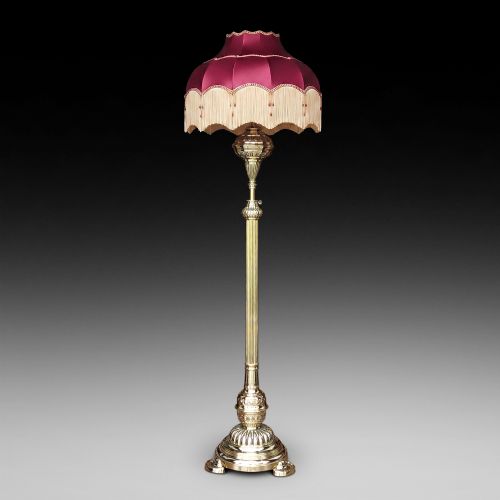
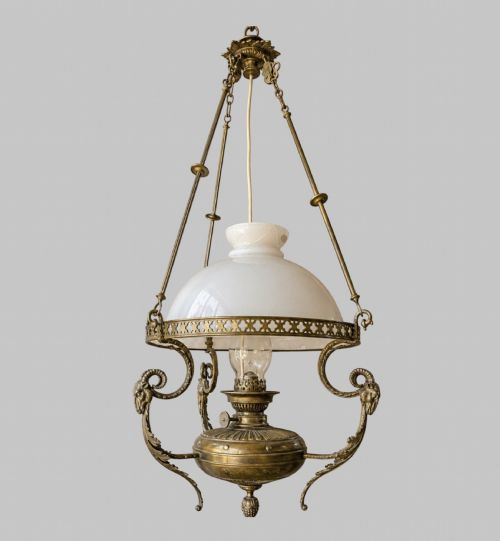
The Victorian period dominates the selection, alongside Edwardian examples and French nineteenth-century pieces. You meet table lamps, extending standard lamps, and wall sconces featuring classical columns, telescopic shafts, and decorative metalwork.
Many retain their original burners, galleries, or weighted bases while concealing modern flex within the hollow stems. The most frequent variants combine heavy cast brass bases with glass fonts or fabric shades.
Judging quality
Quality rests on the integrity of the casting, the weight of the metal, and the harmony of the components. A superior standard lamp uses heavy-gauge brass with crisp, deep chasing on the capital and base, whereas lesser examples rely on thin stamped sheet metal that flexes under pressure.
The marriage between the original nineteenth-century body and the electrical adaptation determines overall success. Master adaptations preserve the original burner mechanism and collar without drilling haphazard holes through structural brass work.
Material variety also elevates a piece; the inclusion of heavy lead crystal glass, fine porcelain reserves, or intact manufacturer-signed hardware distinguishes standard production from workshop excellence.
Listings feature brass, copper, and wrought iron structures paired with cranberry, opaline, and cut glass components across the nineteenth century.
Hinks of Birmingham·Osler
The Converted Brass Oil Lamp Glossary
- Corinthian column
- A classical architectural column form with an ornate capital of acanthus leaves, frequently used for tall nineteenth-century table and standard lamps. This form mimics ancient stone architecture in cast brass.
- Telescopic lamp
- A standard lamp featuring a sliding inner shaft that allows the overall height to be adjusted. This mechanism was essential for altering the throw of light in Victorian parlours.
- Opaline glass
- An opaque, milky glass type used for lamp fonts and shades, often coloured in soft blues or greens. It diffuses light gently without harsh glare.
- Duplex burner
- A double-wick burner mechanism common on high-end Victorian oil lamps. It provided significantly brighter illumination than single-wick variants.
- Repoussé
- A metalworking technique where the design is hammered into relief from the reverse side. It creates rich surface texture on brass lamp bases.
Converted Brass Oil Lamp: Frequently Asked Questions
How do I wire a converted oil lamp?
Rewiring involves threading modern flex up through the central fuel tube or hollow column to connect with an appropriate lampholder at the top. The weighted base usually unscrews to allow safe passage for the cable without damaging historic metalwork.
Because nineteenth-century wiring channels vary greatly in diameter, working with a specialist conservator ensures the internal components remain secure and electrically safe for modern domestic use.
Can I adjust the height on telescopic lamps?
Many Victorian standard lamps use a thumb screw or collar clutch on a telescopic shaft to raise and lower the light source. This mechanical feature allowed nineteenth-century occupants to direct illumination precisely where required for reading or needlework.
When adjusting an antique standard lamp, support the upper section with one hand while loosening the mechanism to prevent sudden drops that might stress internal wiring or ancient brass threads.
What shades suit these antique lamps?
Fabric shades, opaline glass coolie shades, and globe shades all appear historically appropriate depending on the specific period and form of the lamp. Table lamps often balance well with pleated fabric or patterned art nouveau shades, while floor standards carry larger fabric or brass-galleried designs.
Matching the shade diameter to the heft of the brass base ensures visual stability and prevents the lamp from appearing top-heavy in a modern interior setting.
How do I date a brass oil lamp?
Dating relies on stylistic clues like classical revival columns, aesthetic movement incising, or distinct art nouveau whiplash motifs found across the metalwork and ceramic inserts. Stamped manufacturer names and patent burner marks also provide reliable production windows.
Heavier cast brass construction and simpler neoclassical forms generally point toward the mid-nineteenth century, while lighter spun brass and asymmetrical floral patterns signal the later decades toward nineteen hundred.