


Brass Oil Floor Lamp
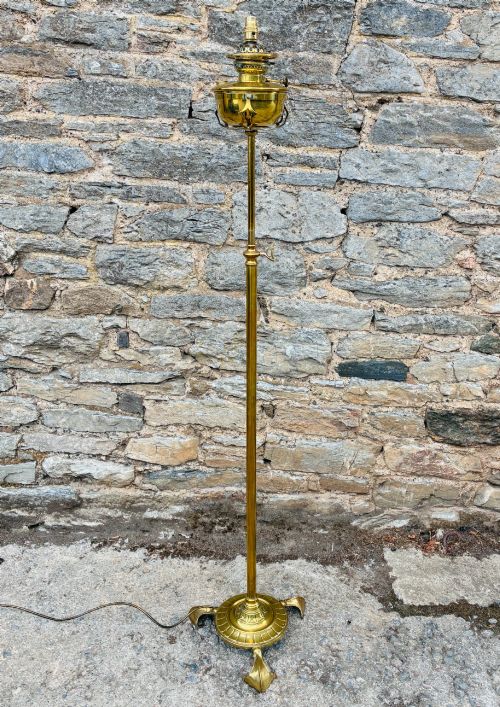
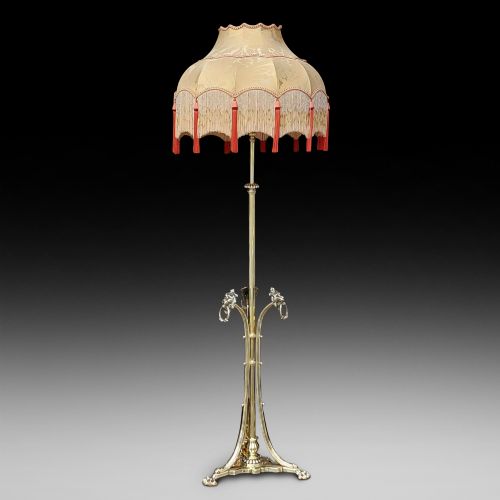
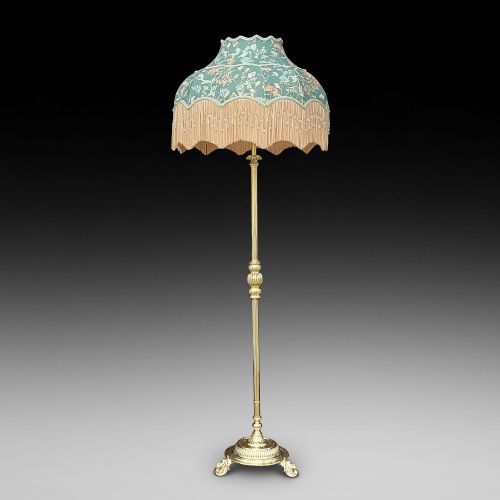
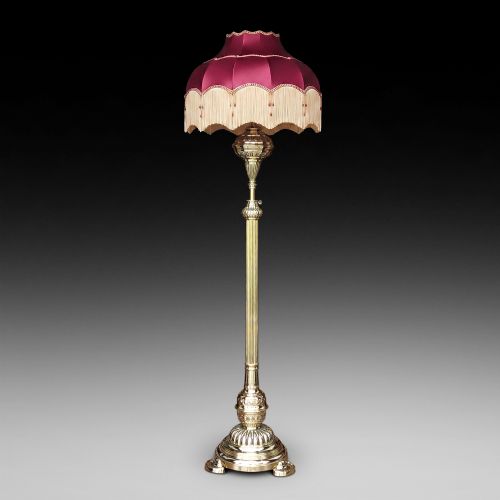
A brass oil floor lamp brings practical height and warm period character to a room, offering adjustable illumination rooted in nineteenth-century engineering.
Brass Oil Floor Lamp
When you search for a brass oil floor lamp, you encounter tall nineteenth-century standards designed to hold oil reservoirs aloft. These pieces span Victorian, Arts and Crafts, and Art Nouveau styles, often featuring telescopic mechanisms for height adjustment.
The most common examples on this page are Victorian brass standards, frequently incorporating extending shafts and heavy weighted bases. Many have been thoughtfully converted to electricity while retaining their original adjusting screws and proportions.
Alongside standard brass designs, you will find variants combining copper, wrought iron, and carved wood such as padouk and teak. Certain models include glass elements like cranberry or ruby reservoirs and shades.
How they were made
Makers constructed these tall standards primarily from heavy brass and copper tubing, often pairing them with cast iron internal rods to provide stability during height adjustments. Metal components were turned, spun, or cast, then joined mechanically or soldered.
Specialist workshops integrated functional mechanisms like telescopic collars and screw keys to allow the height to rise and fall smoothly. Decorative details were introduced through hand-hammering in Arts and Crafts examples or cast neoclassical enrichment in Victorian pieces.
Glass fonts and shades, including cranberry and white glass, were mouth-blown and occasionally cased or tinted during manufacture. Stands frequently relied on heavy metal bases or tripod feet to safely balance the extended vertical weight.
Listings feature standard lamps spanning the Victorian era, the Arts and Crafts movement, and Art Nouveau design, incorporating brass, copper, and wrought iron.
What varies in quality
The distinction between ordinary production and superior work rests on the weight of the metal and the precision of the telescopic mechanism. Heavier gauge brass and solid weighted bases provide stability that lighter, thinner standards lack.
Maker attribution elevates certain pieces, particularly those bearing the marks of established firms known for robust engineering and refined design. The integrity of original components, from the adjusting screws to the collars, distinguishes unaltered examples from later adaptations.
Hinks of B'ham·Messenger·W A S Benson
The Brass Oil Floor Lamp Glossary
- Telescopic
- Describing a standard lamp with a shaft that extends upwards to alter the overall height. This mechanism uses internal rods secured by a tightening screw.
- Standard lamp
- A term historically used interchangeably with floor lamp for a tall, freestanding lighting column. These stood beside seating to project light downward.
- Cranberry glass
- A rich pinkish-red glass created by adding gold chloride to the molten batch. It frequently appears in reservoirs and shades on late nineteenth-century lamps.
- Anglo-Burmese
- A nineteenth-century style combining British furniture forms with carved teak or padouk woodwork executed in the East. These pieces integrate carved timber sections into the standard design.
- Corinthian column
- A classical architectural order featuring an ornate capital decorated with acanthus leaves. This motif was frequently adopted for the shafts of formal Victorian floor lamps.
Brass Oil Floor Lamp: Frequently Asked Questions
Can I still burn oil in these lamps?
Most surviving examples listed here have been electrified for modern domestic use, meaning the original burner mechanisms are often adapted or replaced for safety.
Restoring one to burn oil requires a specialist examination of the font and collar to ensure no leaks or structural weaknesses exist in the vintage metalwork.
What is the difference between Victorian and Arts and Crafts styles here?
Victorian standards often display ornate cast decoration, Corinthian capitals, or polished brass and copper combinations designed for formal drawing rooms. Their aesthetic leans toward historic revival and visual richness.
Arts and Crafts examples emphasise simple lines, visible construction, and hand-hammered copper or brass surfaces that celebrate honest craftsmanship over applied ornament.
Are these lamps heavy enough to stand safely on carpets?
The original designs relied on heavy cast iron internal weighting within the base to keep the tall vertical structure stable. This substantial weight generally makes them secure on level floors, though thick carpets require careful placement.
Using a sturdy tripod base or a wide weighted foot helps prevent tipping when the lamp is fully extended to its maximum height.