


Glass Font Oil Lamp
These glass font oil lamp pieces combine Victorian utility with decorative coloured reservoirs, offering period lighting for the home.
Glass Font Oil Lamp
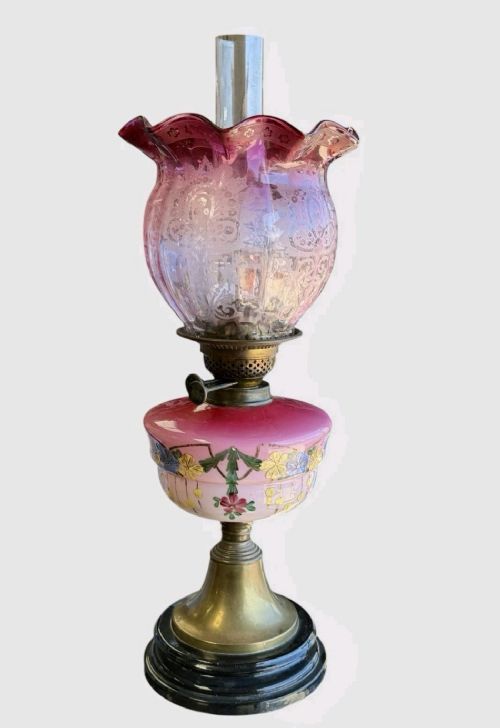
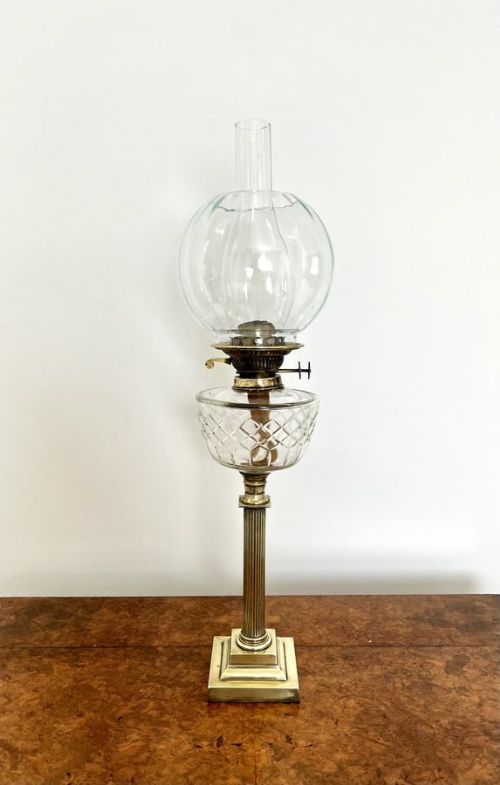
A glass font oil lamp brings together a decorative glass reservoir for paraffin and a sturdy base, most frequently seen from the Victorian and Edwardian eras. These lighting pieces combine functional metal columns or ceramic bases with coloured or cut glass vessels to catch the light.
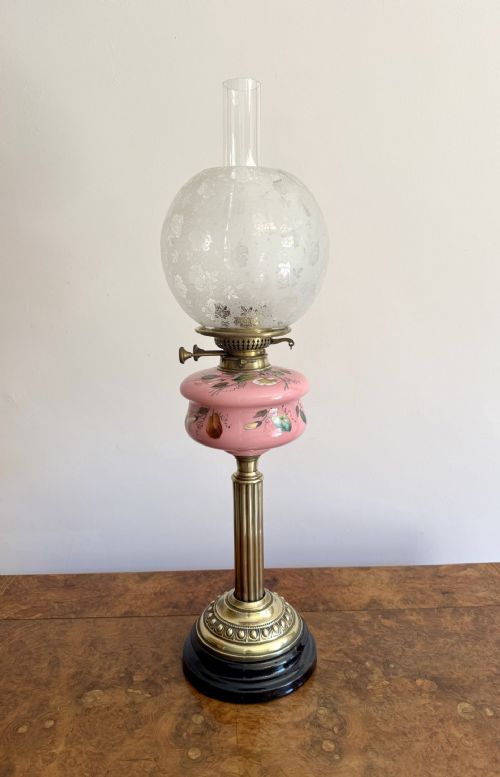
The versions most commonly found here date from the late nineteenth century and feature cranberry, milk, pink, blue, or green glass fonts. Many retain their original shades and brass burners, forming complete examples from the period.
How they were made
Makers combined heavy brass, slate, and ceramic materials to form stable columns and bases, often incorporating Corinthian capitals or telescopic mechanisms. These metal and stone structures support the upper reservoirs securely.
The reservoirs themselves utilise blown or moulded glass, sometimes enhanced with hand-painted enamel details or cut patterns. Cranberry glass and milk glass feature prominently among the techniques used to colour the vessels.
Victorian households relied on these heavy lamps to chase away the gloom, occasionally burning scented oils to mask the smell of paraffin.
What varies in quality
Quality rests on the depth of hand-painting on the glass and the crispness of the brass casting in the column. Finer examples show careful facet cutting on the glass font and heavier gauge metalwork in the base.
The presence of matching shades and robust materials like slate or cut glass distinguishes the more ambitious pieces. Simpler cottage lamps rely on straightforward ceramic or plain glass construction.
Young's
The Glass Font Oil Lamp Glossary
- Font
- The reservoir that holds the oil or paraffin fuel. It is typically made of coloured, cut, or hand-painted glass.
- Corinthian Column
- An architectural column style featuring ornate acanthus leaves on the capital, frequently utilised in brass lamp bases. This classical design adds height and stability.
- Cranberry Glass
- A rich red-pink transparent glass created by adding gold chloride to the molten batch. It is a signature material of the Victorian period.
- Milk Glass
- An opaque white glass used for lamp fonts and shades. It provides a soft backdrop for hand-painted floral enamel decorations.
Glass Font Oil Lamp: Frequently Asked Questions
How do I clean a glass font oil lamp?
Wash the glass reservoir gently with warm soapy water, avoiding harsh abrasives that might damage hand-painted enamel decoration. Keep moisture away from any remaining vintage wick mechanisms to prevent corrosion.
Polish the brass columns with a suitable metal cleaner using a soft cloth. Take care not to let cleaning fluids seep between the fitted metal and glass sections.
Are these lamps safe to use today?
Most buyers wire these lamps for electricity or display them as decorative historical objects rather than burning oil. Converting them requires running a cord through the central column without altering the antique appearance.
If used with oil, check the glass font carefully for hairline fractures before filling. Ensure the burner mechanism sits securely on the collar to prevent leaks.
How can I date a glass font oil lamp?
Examine the materials and manufacturing style, as Victorian examples often feature heavy brass columns and coloured cranberry or milk glass fonts. Standardised burner thumbscrews and maker names stamped on the brass also help pinpoint the decade.
Edwardian and later pieces from the early twentieth century sometimes introduce simpler ceramic bases or lighter copper elements. Comparing the collar threading and shade fitter types provides further clues.
Did these lamps originally come with shades?
Many Victorian table lamps paired coloured glass fonts with matching etched or hand-painted glass shades. These shades helped diffuse the light while completing the decorative scheme of the room.
Some surviving examples retain their original globes, while others are found with later replacements or as bare burners. Both configurations appear regularly in the historic record.