
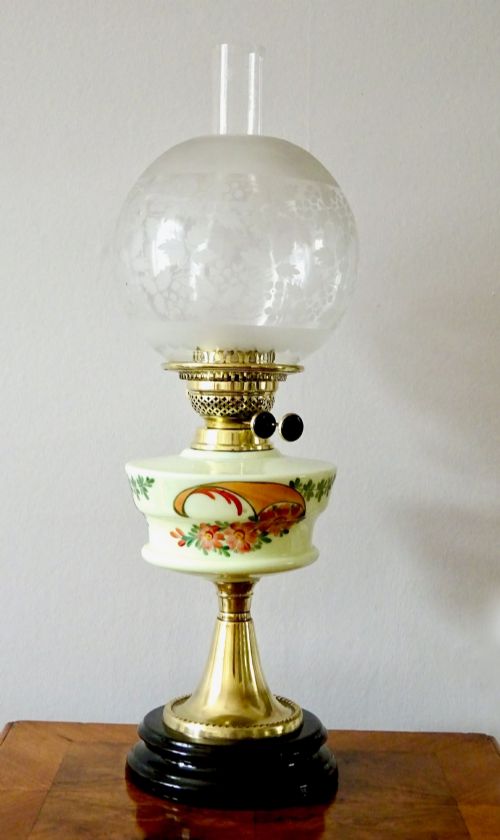


Painted Floral Oil Lamp
A painted floral oil lamp brings warm Victorian character and delicate botanical colour to a room.

Painted Floral Oil Lamp
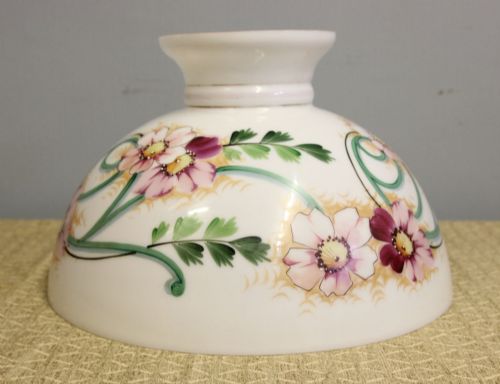
When you search for a painted floral oil lamp, you encounter domestic lighting pieces spanning the Victorian and Edwardian eras alongside later twentieth-century interpretations. These domestic objects combine functional reservoirs with botanical decoration, appearing as complete table lamps, hanging shades, and individual fonts.
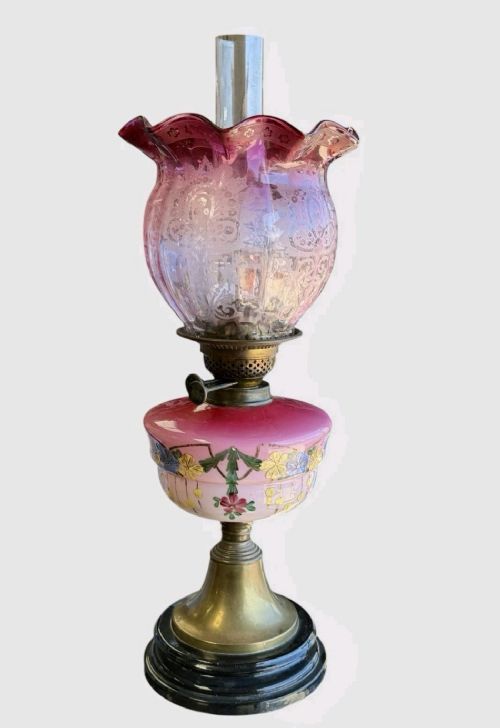
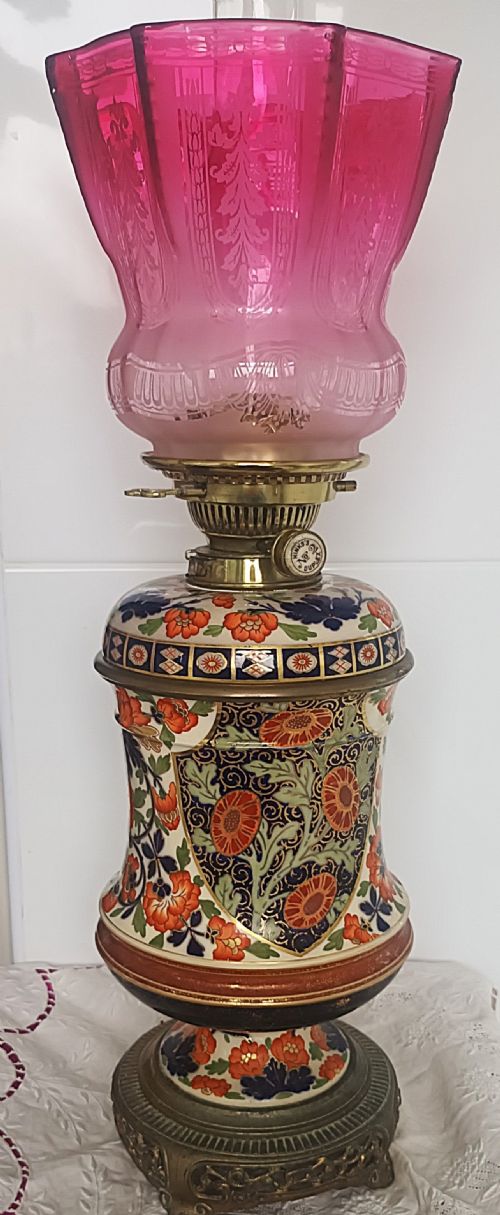
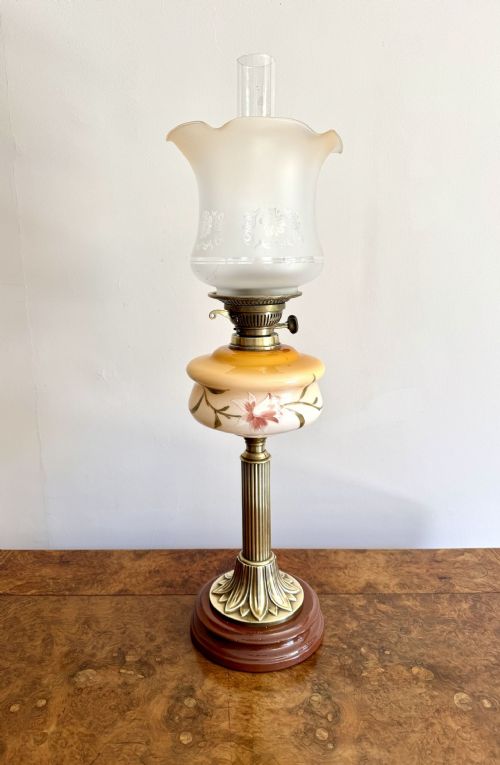
You are most likely to meet Victorian and Edwardian examples featuring hand-painted floral motifs on glass or ceramic bodies. The selection ranges from cranberry and opaline glass constructions to brass-mounted table pieces with decorative bowls.
How they were made
The construction of these lamps relies on combinations of brass, glass, and ceramic materials shaped into fonts, shades, and column bases. Glass varieties include cranberry, milk, opaline, and crystal, often enhanced with gilt decoration or hand-painted botanical details.
Makers utilised specialised techniques to apply enamelled and hand-painted floral designs directly onto glass and ceramic surfaces. Metal components, particularly in brass, provide structural support and house the burner mechanisms associated with nineteenth and early twentieth-century lighting.
Brass, ceramic, and multiple types of coloured glass form the material foundation of these pieces.
What varies in quality
Quality in these pieces rests upon the crispness of the hand-painted floral decoration and the integrity of the glass or ceramic body. Finer examples display meticulous brushwork on the font or shade, whereas simpler items show more standardised or faded application.
The harmony of materials also dictates the standard of the piece, particularly where brass mounts, gilt highlights, and coloured glass meet. Superior specimens maintain intact painted details and balanced proportions across the base, font, and shade.
Hinks·Taylor Tunnicliff
The Painted Floral Oil Lamp Glossary
- Font
- The reservoir that holds the oil within the lamp body. This is frequently decorated with hand-painted floral motifs.
- Cranberry Glass
- A rich pinkish-red glass created by adding gold chloride to the molten batch. It appears frequently in Victorian table lamps and shades.
- Opaline Glass
- An opaque, pale glass that provides a smooth background for painted floral scenes. It diffuses light softly through hanging and table shades.
- Duplex Burner
- A double-wick mechanism found on nineteenth-century oil lamps. It allowed for a brighter flame and greater control of the light.
Painted Floral Oil Lamp: Frequently Asked Questions
What periods do these lamps come from?
The evidence shows these lighting pieces spanning the Victorian and Edwardian periods, stretching from the eighteen-seventies into the early decades of the twentieth century.
Later twentieth-century examples also appear, reflecting mid-century interpretations alongside the primary nineteenth-century output.
How do I identify a hand-painted font?
A hand-painted font displays direct brushwork depicting floral subjects applied onto the glass or ceramic reservoir of the lamp. These painted botanical details often appear alongside gilt decoration or coloured glass bodies.
Close inspection reveals the subtle variations of individual brush strokes rather than printed or transfer-printed patterns.
Were these lamps used with shades?
Many examples were manufactured to include matching glass shades, such as opaline hanging shades or cranberry glass covers. These components worked in tandem with the oil reservoirs to diffuse and direct light.
Complete pieces often pair a decorated glass font with a corresponding shade sharing similar floral or coloured glass characteristics.